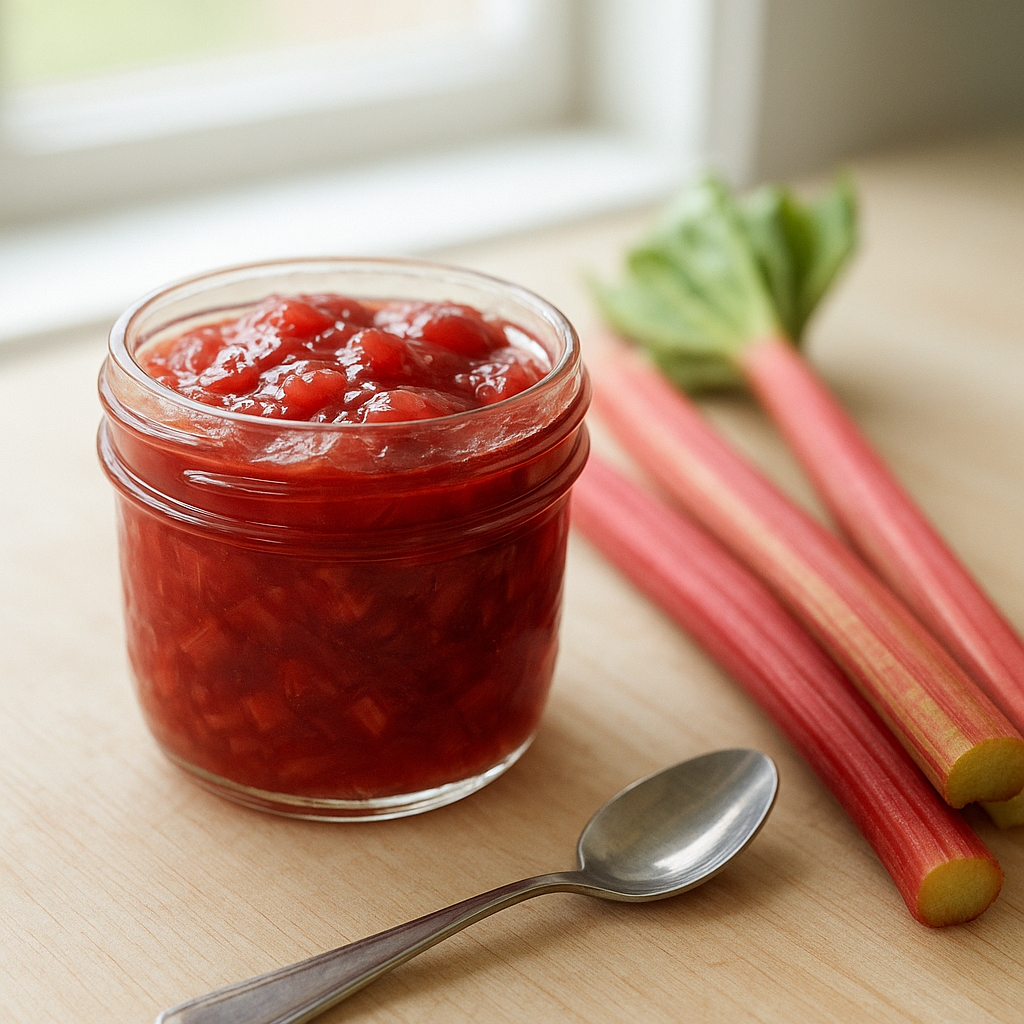
The Tart-Sweet Spoonful That Fixes Breakfast All Week
Rhubarb has a way of looking more urgent than it is. You bring home a bundle because the color is irresistible, then a few days later the stalks are still in the fridge while you keep half-thinking about pie. A small pot of compote is the easiest way to stop overcomplicating the decision.
Compote sits in the sweet spot between recipe and utility. It takes very little work, keeps well enough to stay useful, and gives you something bright, tart, and ready to spoon over yogurt, oatmeal, toast, ice cream, or pound cake. If you are not going to use all of your rhubarb this week, start by freezing rhubarb in small batches. For the stalks you want to eat now, compote is the move.
The short answer
- Cut the rhubarb into small pieces so it softens quickly and evenly.
- Cook it with a little sugar, a pinch of salt, and a splash of water or orange juice.
- Stop when the fruit is soft but not completely dull and muddy.
- Cool it and keep it in the fridge for easy breakfasts and simple desserts.
- If you want it less sharp, add more sweetener at the end instead of burying it from the start.
If you want one fast, practical use for spring rhubarb, make compote.
Why compote works so well with rhubarb
Rhubarb is intensely tart, but it also breaks down quickly once heat hits it. That makes it perfect for a loose spoonable sauce. You do not need perfect knife work, exact pastry timing, or a dessert plan. You just need a saucepan and ten to fifteen minutes.
Compote is also flexible. Keep it sharper for yogurt and oatmeal, or sweeten it a little more for shortcake, vanilla ice cream, and soft cake. If you later want to pair it with berries, it plays especially well with strawberries, whether fresh or from the freezer. Freakywood already has a guide to freezing fresh strawberries if spring fruit is getting ahead of you.
What you need
- about 4 cups chopped rhubarb
- 1/3 to 1/2 cup sugar, honey, or maple syrup
- a pinch of salt
- 2 to 4 tablespoons water or orange juice
- optional vanilla, orange zest, or a small knob of fresh ginger
The exact sweetness depends on the rhubarb and on how you plan to use it. Start lower if you want a brighter breakfast compote. Go higher if you know it is headed for dessert.
How to make rhubarb compote
- Trim and chop the rhubarb. Remove any leaves completely and cut the stalks into pieces about 1/2 inch wide.
- Combine everything in a saucepan. Add the rhubarb, sweetener, salt, and water or juice.
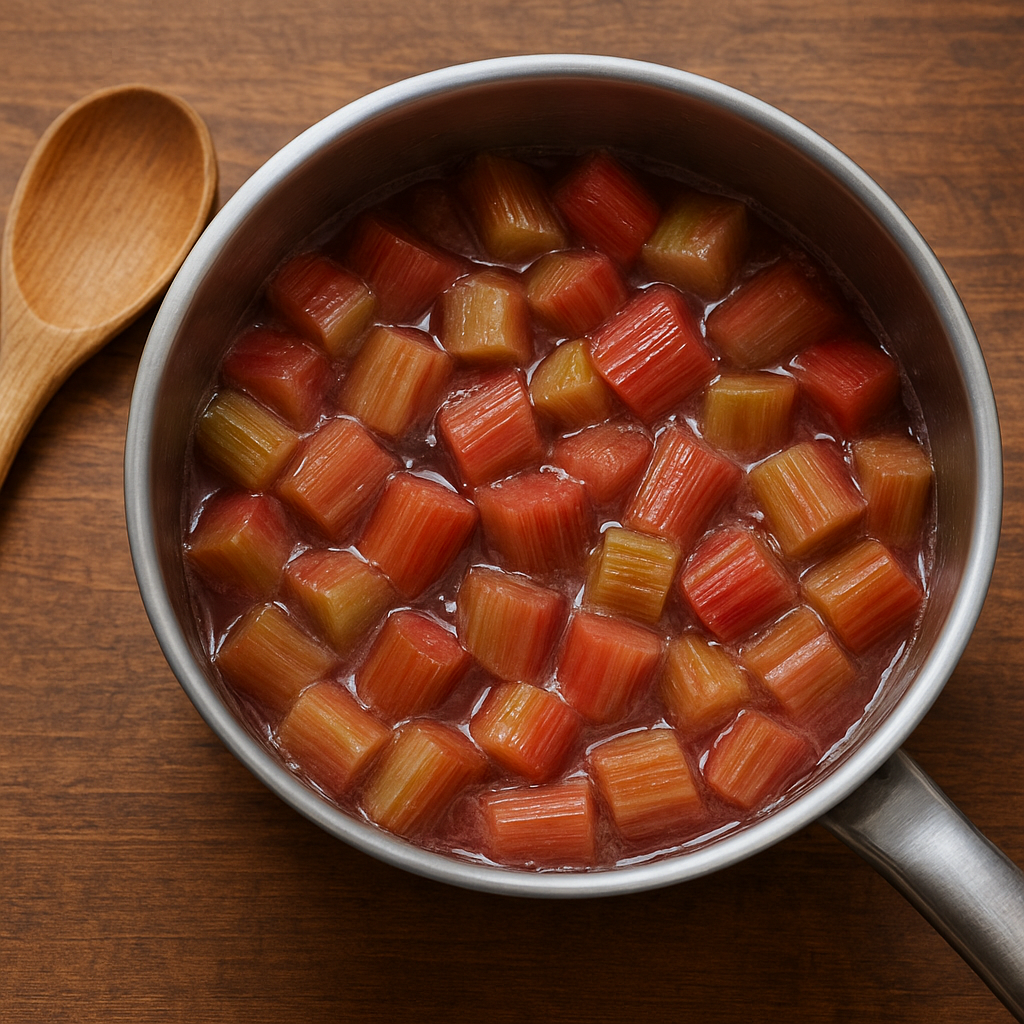
- Cook over medium to medium-low heat. Stir occasionally as the rhubarb starts releasing liquid.
- Lower the heat once it loosens. Let it bubble gently until the pieces soften and the mixture turns glossy.
- Taste and adjust. Add more sweetener if it is too sharp, or a little more liquid if it seems tight.
- Cool before storing. The compote thickens slightly as it cools.
Most batches are ready in about 10 to 15 minutes. The goal is soft fruit with some shape left, not a gray paste.
How sweet should it be?
Less sweet is usually better at the beginning. Rhubarb can surprise you after a few minutes of cooking, and you can always add more sugar, honey, or maple syrup later. It is much harder to back out of a batch that got cloying too early.
If you want a clean tart edge for breakfast, stop when it tastes lively. If you want a softer dessert version, add another spoonful of sweetener and a drop of vanilla at the end.
The easiest ways to use it
- spoon it over Greek yogurt
- swirl it into oatmeal or overnight oats
- pile it onto buttered toast or ricotta toast
- use it as a topping for pancakes or waffles
- serve it warm or cold over vanilla ice cream
- layer it with whipped cream and cake or biscuits
It is also a useful fridge component when breakfast needs help but you are not in the mood to invent anything complicated.
How to store it
Let the compote cool, then transfer it to a jar or container and refrigerate it. It is best while the flavor still tastes fresh and bright. If you made a larger batch, freeze it in small portions so you can thaw only what you need later.
If the real issue is that you have more raw rhubarb than you can cook this week, freeze the uncooked stalks separately first. That gives you more options later than cooking everything at once.
Common mistakes
Using too much sweetener at the start
It is easier to add sweetness than to rescue a batch that tastes flat and jammy.
Cooking it too hard
A rough boil can scorch the sugars and reduce the mixture faster than the rhubarb softens. Gentle bubbling works better.
Walking away too long
Rhubarb can go from nicely textured to fully collapsed quickly once it softens.
Expecting it to taste like jam
Compote should stay looser, fresher, and a little brighter than a preserved spread.
Troubleshooting
Mine is too tart
Stir in more sugar, honey, or maple syrup while it is still warm, then taste again.
Mine is too sweet
Add a squeeze of lemon or a little more chopped rhubarb and cook briefly to rebalance it.
Mine is too thin
Let it simmer another minute or two. It will also thicken a bit as it cools.
Mine turned to mush
You probably cooked it a little long, but it is still usable. Lean into it as a sauce for yogurt, ice cream, or cake.
FAQ
Do you peel rhubarb for compote?
No. Usually you just trim the ends and remove any tough or damaged outer strings if a stalk seems especially fibrous.
Can you make rhubarb compote without white sugar?
Yes. Honey or maple syrup both work well, though they change the flavor slightly.
Can you freeze rhubarb compote?
Yes. Freeze it in small containers or portions so it is easy to thaw for breakfast or dessert.
What spices go well with rhubarb compote?
Vanilla, ginger, orange zest, and a small pinch of cinnamon all work, but use a light hand so the rhubarb still tastes like rhubarb.
The low-effort spring answer
Rhubarb compote is what to make when you want the season to feel useful, not fussy. A small saucepan turns a bundle of stalks into something you will keep reaching for all week, which is a much better outcome than waiting for the perfect dessert plan to magically appear.