A Crisp Refrigerator Pickle for the Radishes You Cannot Finish Fresh
Radishes are one of those ingredients that go from exciting to excessive fast. A fresh bunch is great for a salad or a snack plate, but once the drawer fills up or the garden starts producing in waves, the question changes from should I buy radishes? to what am I actually going to do with all of these?
Quick-pickled radishes are one of the easiest answers. They stay crisp, turn pleasantly sharp instead of aggressively peppery, and make ordinary lunches taste more deliberate with very little work.
The short answer
- Slice fresh radishes thinly and pack them into a clean jar.
- Pour over a hot brine of vinegar, water, salt, and a little sugar.
- Cool the jar, then refrigerate it.
- Start eating them once they are chilled and the flavor has settled.
- Use them on tacos, grain bowls, sandwiches, salads, and eggs.
If you want the fastest way to make a spring bunch more useful, this is it.
Why quick-pickled radishes work so well
Fresh radishes are crisp and lively, but they can also pile up faster than most people want to eat them raw. Quick pickling takes the edge off without flattening the flavor. The brine softens the harsh bite, keeps the snap, and gives you a jar you can keep reaching into all week.
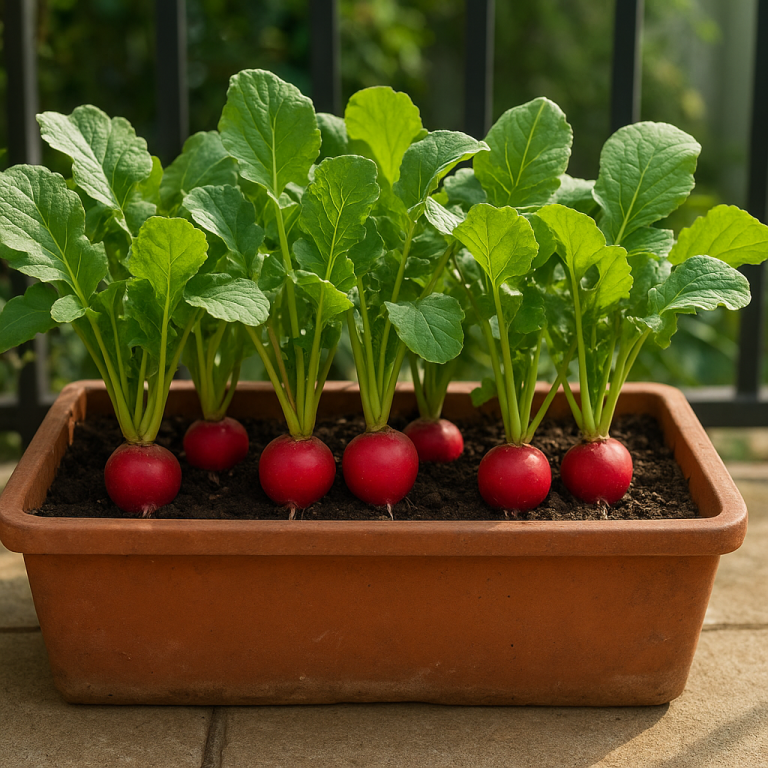
This is especially useful if your bunch came from your own containers. If you are harvesting more than you can use at once, growing radishes in pots and building a container salad garden both make a lot more sense when there is a low-effort way to deal with the overflow.
What you need
- 1 bunch radishes
- 1/2 cup vinegar
- 1/2 cup water
- 1 1/2 teaspoons sugar
- 1 teaspoon kosher salt
- 1 small garlic clove, sliced
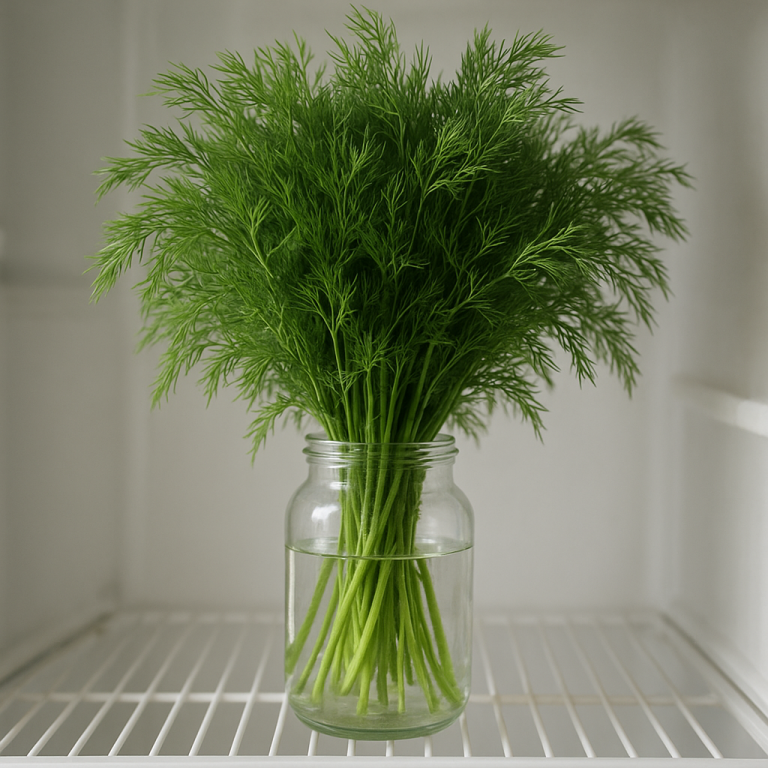
- optional black peppercorns, mustard seeds, or a small sprig of dill
- a clean pint jar with a lid
White vinegar gives the cleanest sharpness. Rice vinegar is a little softer. Apple cider vinegar works too, but it makes the flavor fruitier and the color slightly muddier.
How to make them
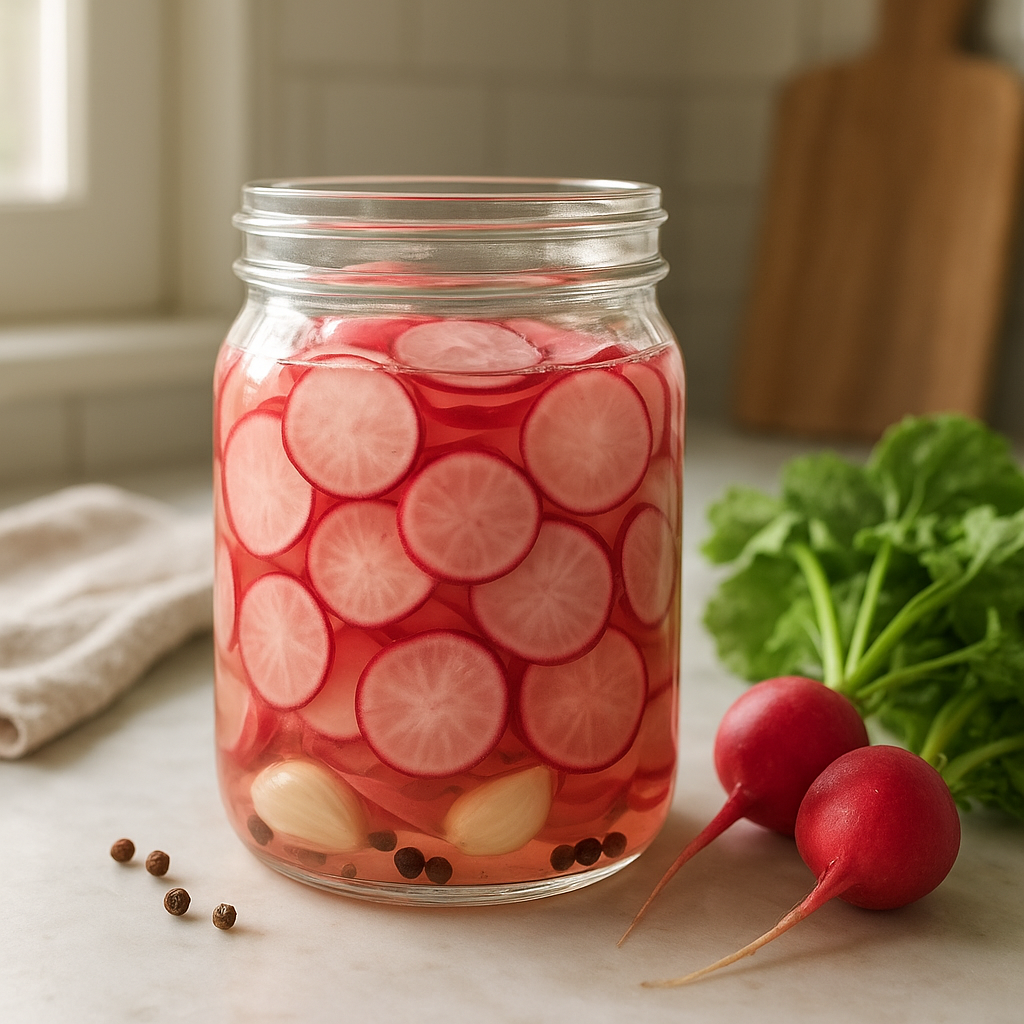
- Trim and slice the radishes. Thin rounds are the easiest place to start because they pickle quickly and fit neatly into a jar.
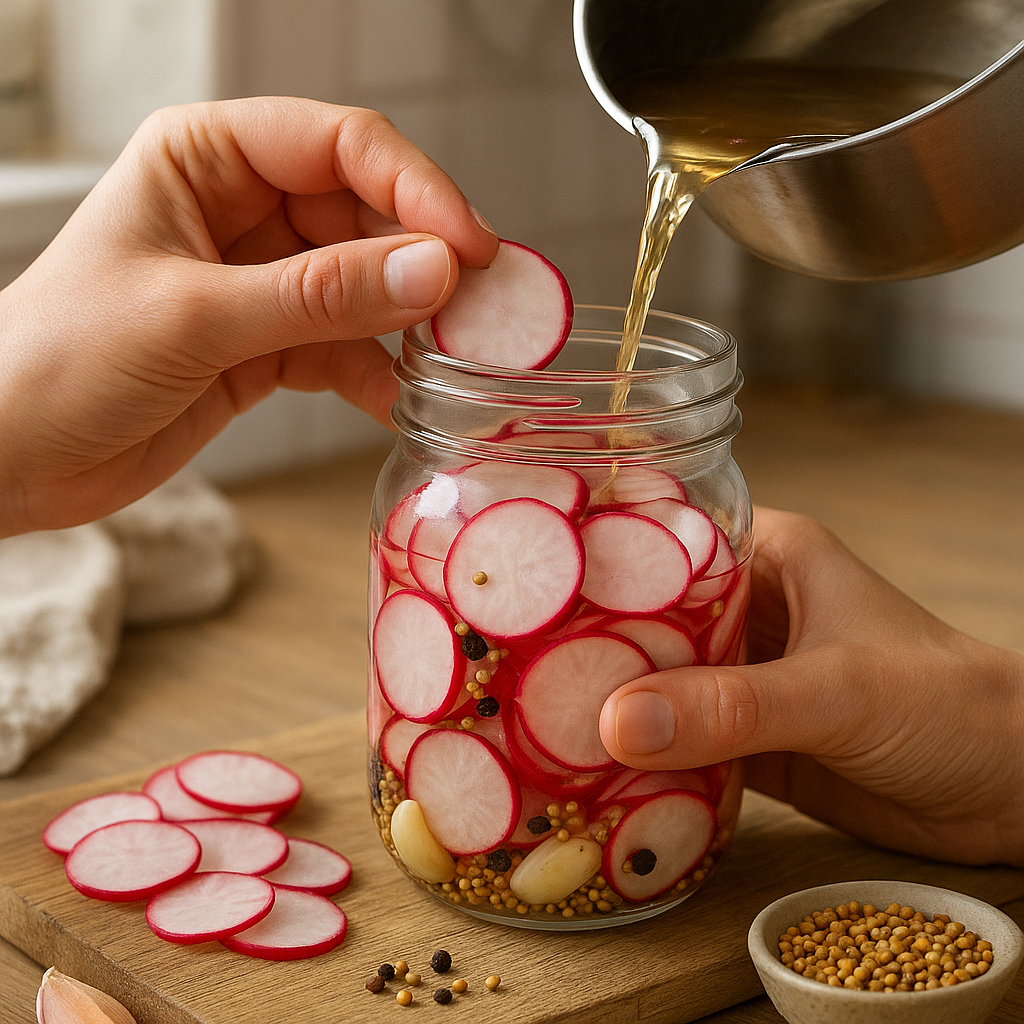
- Pack the jar. Add the radishes, garlic, and any spices or dill you want to use.
- Make the brine. Heat the vinegar, water, sugar, and salt just until the salt and sugar dissolve.
- Pour the hot brine over the radishes. Make sure the slices are fully covered.
- Cool, cover, and refrigerate. Once the jar is no longer hot, move it to the fridge.
They are usually good after a few hours, but they are better once they have had a little more time to settle.
How long before they taste right?
For thin slices, start checking after 4 hours. Overnight is usually the sweet spot for a better balance of crunch and tang. By the next day, the radishes should be vividly pink and pleasantly sharp without tasting raw in the middle.
These are refrigerator pickles, not a shelf-stable canning project. Keep them cold and treat them like something meant to be used while they still taste bright.
The best ways to use them
- pile them onto tacos or grain bowls
- add them to sandwiches instead of plain raw onion
- scatter them over avocado toast or eggs
- tuck them into salads when you want more crunch and acid
- serve them next to roast chicken, salmon, or beans
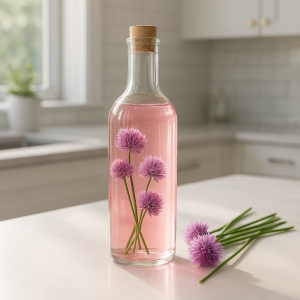
If you already have a jar of chive blossom vinegar going, the two make a very good spring pairing: one for dressings, one for crunch.
Which radishes are best?
Standard red spring radishes are the easiest choice because they slice neatly and color the brine well. French breakfast radishes also work nicely. Larger storage radishes can be pickled too, but they usually make more sense cut into matchsticks instead of rounds.
The best bunch is the one that still feels crisp and firm. If the radishes are already soft or spongy, pickling will not rescue them into greatness.
Easy flavor variations
- Dill and garlic: the classic savory version
- Mustard seed and peppercorn: a little more pickly and sharp
- Rice vinegar and ginger: lighter and a bit cleaner
- Honey instead of sugar: softer and rounder, though less neutral
Keep the first batch simple. Once you know how tart and salty you like the jar, it gets easy to adjust.
Common mistakes
Slicing them too thick
Thicker pieces stay harsher longer and take more time to absorb the brine.
Skipping the salt or sugar
The amount is small, but both matter for balance. Without them, the jar can taste flat and overly aggressive.
Using tired radishes
Pickling helps good radishes stretch further. It does not fully fix old, rubbery ones.
Expecting shelf-stable pickles
This method is for the refrigerator only. Keep the jar cold.
Troubleshooting
They taste too sharp
Use a little less vinegar next time or switch to rice vinegar for a softer edge.
They are not pink enough yet
Give them more time. The color deepens as the radishes sit in the brine.
They lost too much crunch
The slices were probably too thin or sat too long before you started using them. Aim for thin but not paper-thin rounds.
The flavor seems bland
Add a pinch more salt next time, or include garlic, peppercorns, or dill so the jar tastes more finished.
FAQ
How long do quick-pickled radishes last in the fridge?
They are best while they still taste bright and crisp, usually within about 1 to 2 weeks.
Can you pickle radishes without sugar?
Yes, but a small amount usually makes the brine taste more balanced.
Do pickled radishes stay crunchy?
Yes, if you start with fresh radishes and do not slice them too thin.
Can you use the greens too?
Not in the jar. Save fresh radish greens for another use, but keep them out of this pickle unless you want them to collapse immediately.
The jar worth keeping in the fridge
Quick-pickled radishes earn their place because they solve a real kitchen problem. They turn a bunch that might have languished in the drawer into something crisp, bright, and easy to add to meals without another full recipe getting involved.