A Simple Way to Keep Scallions Growing Longer
Green onions are one of the easiest kitchen scraps to regrow, but most failures come from the same few mistakes: too much water, not enough light, and waiting too long to move them into soil. If you want a quick second harvest instead of a smelly jar of mush, start them in shallow water, refresh the water often, and pot them up once fresh green growth appears.
You can regrow store-bought green onions from the white root ends, cut fresh leaves for cooking, and keep the plants going much longer if you move them into a pot after the first rebound. For anyone already growing herbs in containers, this fits nicely alongside guides for basil, cilantro, and parsley.
What You Need
- Green onion root ends with at least 1 to 2 inches of white stem attached
- A short glass or jar
- Fresh water
- A small pot with drainage holes
- Potting mix
- A bright windowsill or another spot with strong light
How to Start Regrowing Green Onions in Water
- Trim the green tops, leaving the white base and roots intact.
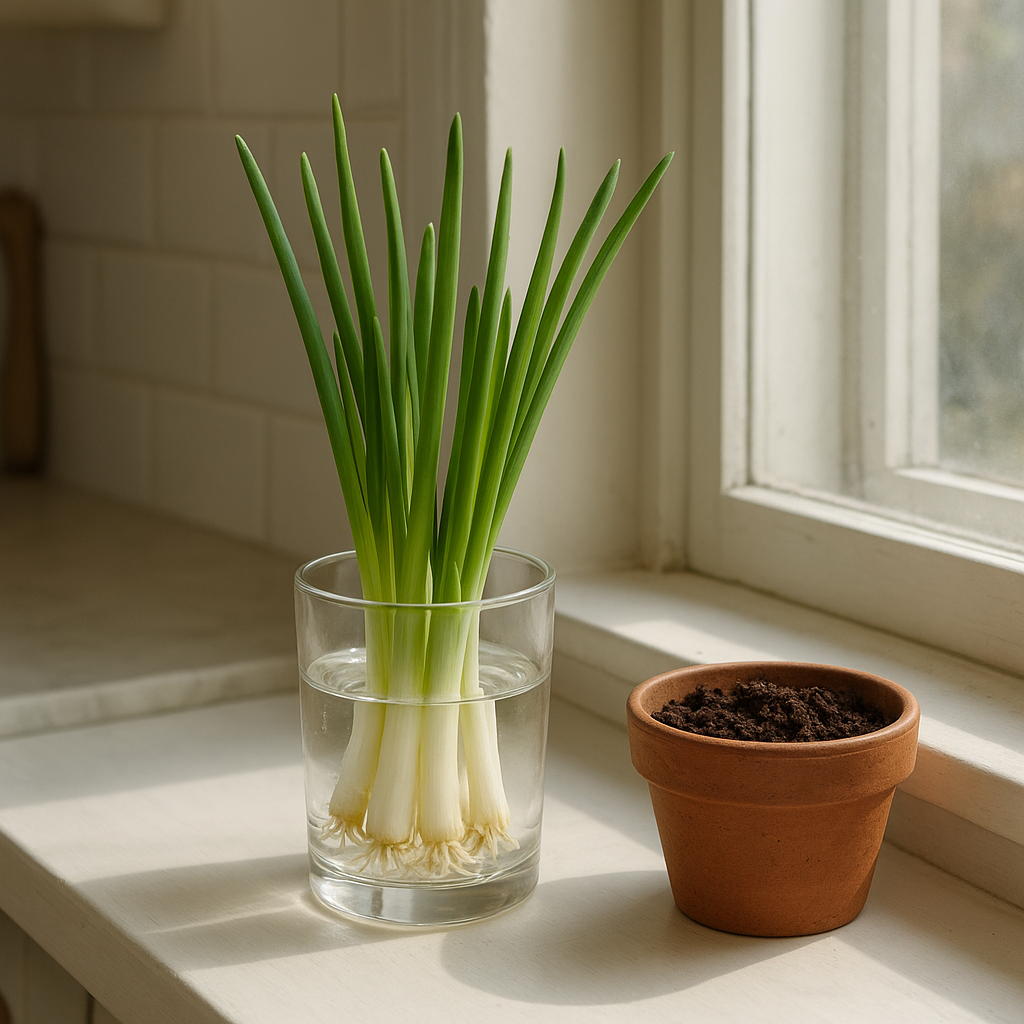
- Stand the root ends upright in a glass.
- Add just enough water to cover the roots, not the whole white stem.
- Place the glass in bright light.
- Change the water every day or every other day.
You should usually see fresh green tips within a few days. That first rebound happens because the plant is using stored energy in the stem base. It looks impressive, but it does not mean the plant can stay in water forever.
The most important detail is water depth. If the white stem stays submerged, it softens, smells bad, and starts rotting. Keep only the roots in water and give the stem plenty of air.
When to Move Green Onions From Water to Soil
Move them into soil once the roots look fresh and the tops have put on some new growth, usually after a few days to about a week. You can keep cutting a little from water-grown onions, but they stay much healthier and produce better repeat harvests in potting mix.
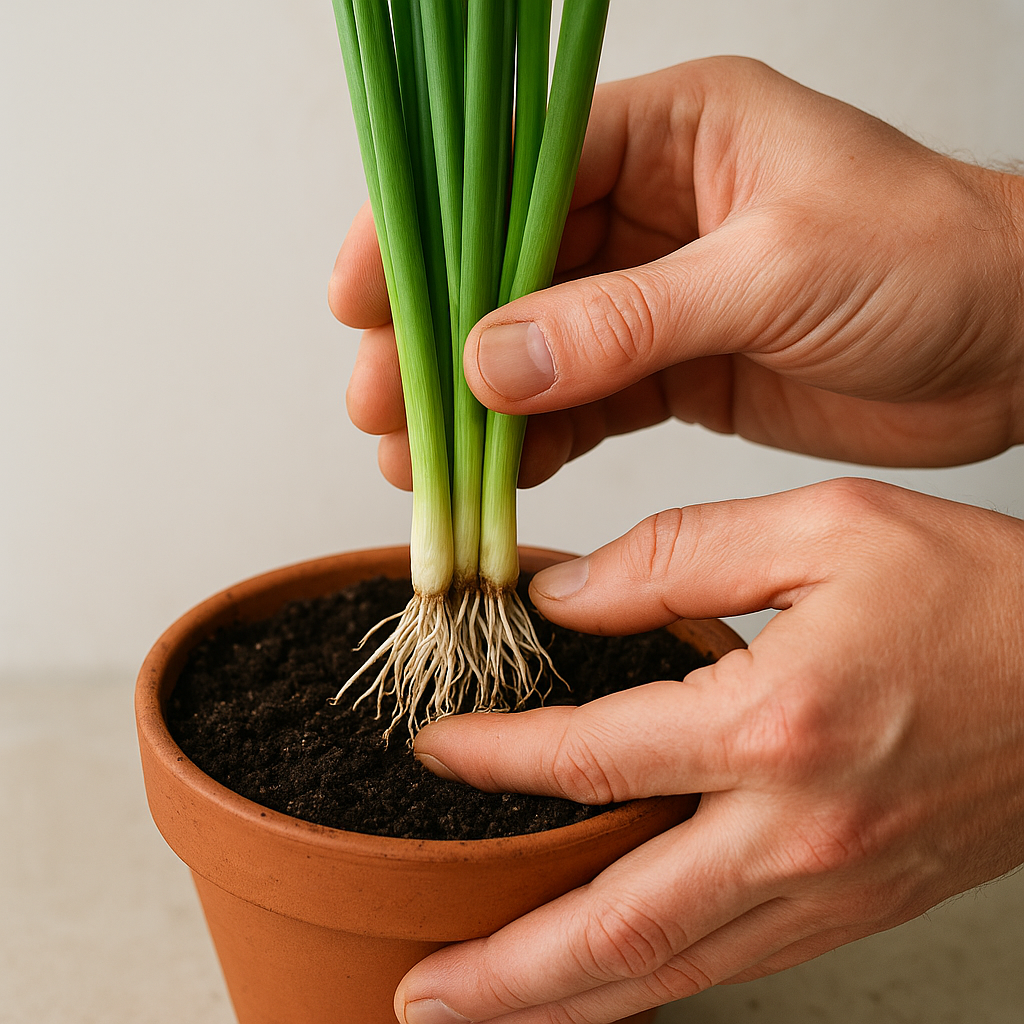
Use a small pot with drainage and plant the white section so the roots are buried while the green shoots stay above the soil line. Firm the mix gently, water it in, and place the pot back in bright light.
The Best Pot, Soil, and Light for Ongoing Harvests
Green onions do not need a huge container, but they do need good drainage and steady moisture. A pot around 6 to 8 inches deep works well for a small bunch. Standard potting mix is fine as long as it drains freely and does not stay soggy for days.
For stronger growth, give them as much sun as you reasonably can. A bright windowsill can work, but outdoor sun or a very bright patio usually gives thicker, sturdier leaves. If you are moving them outdoors, the same basic care principles from hardening off seedlings apply: do not take tender indoor growth straight into harsh full sun all day.
How to Water Without Causing Rot
After planting, keep the potting mix lightly moist but not swampy. Green onions like consistent moisture more than drought swings, but soggy roots are still the fastest way to ruin them.
- Water when the top of the mix starts to dry
- Do not leave the pot sitting in a saucer full of water
- Use a container with real drainage holes, not a decorative cup with trapped water
- If growth slows and the pot stays wet, back off and let the mix breathe
If you already deal with container watering problems in warm weather, the same general habits from watering container plants in hot weather will help here too, just on a smaller scale.
How to Harvest So the Plant Keeps Coming Back
Do not yank the whole plant out every time you want a garnish. Use scissors and cut the green tops, leaving at least 1 to 2 inches above the white base. That gives the plant enough leaf area to recover and push new growth.
If a clump gets crowded or starts producing thinner leaves, divide it and replant the pieces with a little more space. This is basically a tiny version of the same root-space problem covered in repotting without root damage.
Common Problems and Fast Fixes
The jar smells bad
Too much stem is underwater, or the water is not being changed often enough. Rinse the roots, trim off anything mushy, and reset them in shallow fresh water.
The new leaves are thin and weak
The plant usually needs more light or more nutrients than water alone can provide. Move it to a brighter spot and pot it up instead of leaving it in the jar.
Growth stopped after one or two cuts
That is common when people keep regrowing the same scraps in water too long. Once the stored energy is spent, the plant needs real rooting conditions. Fresh potting mix and strong light usually fix this.
The tips are yellowing
Check for weak light, soggy soil, or an overcrowded pot. If you see insects gathering on tender growth, start with the basic cleanup steps used for aphids, fungus gnats, and mealybugs.
Water Only or Soil Afterward?
If you only want a quick burst of regrowth for the next week or two, water is fine. If you want a steadier supply for cooking, move them into soil early. Water is the restart. Soil is what turns the restart into an ongoing plant.
FAQ
Can you regrow green onions from the grocery store?
Yes. As long as the root end is still attached and not dried out or rotten, grocery-store green onions usually regrow well enough to get started.
How long does it take to regrow green onions?
You can often see visible new growth in a few days. A useful cutting usually takes about a week or a little longer, depending on light and temperature.
Do green onions grow better in water or soil?
They rebound quickly in water, but they last longer and produce better repeat growth in soil.
Can you keep harvesting the same green onion plant?
Yes, if you cut the tops instead of pulling the whole plant and keep it in bright light with steady moisture.
For most people, the easiest routine is simple: restart the roots in water, move them into a pot before they get slimy, then cut the tops as needed. That gives you a cleaner counter setup, healthier plants, and better odds of getting more than one small harvest.