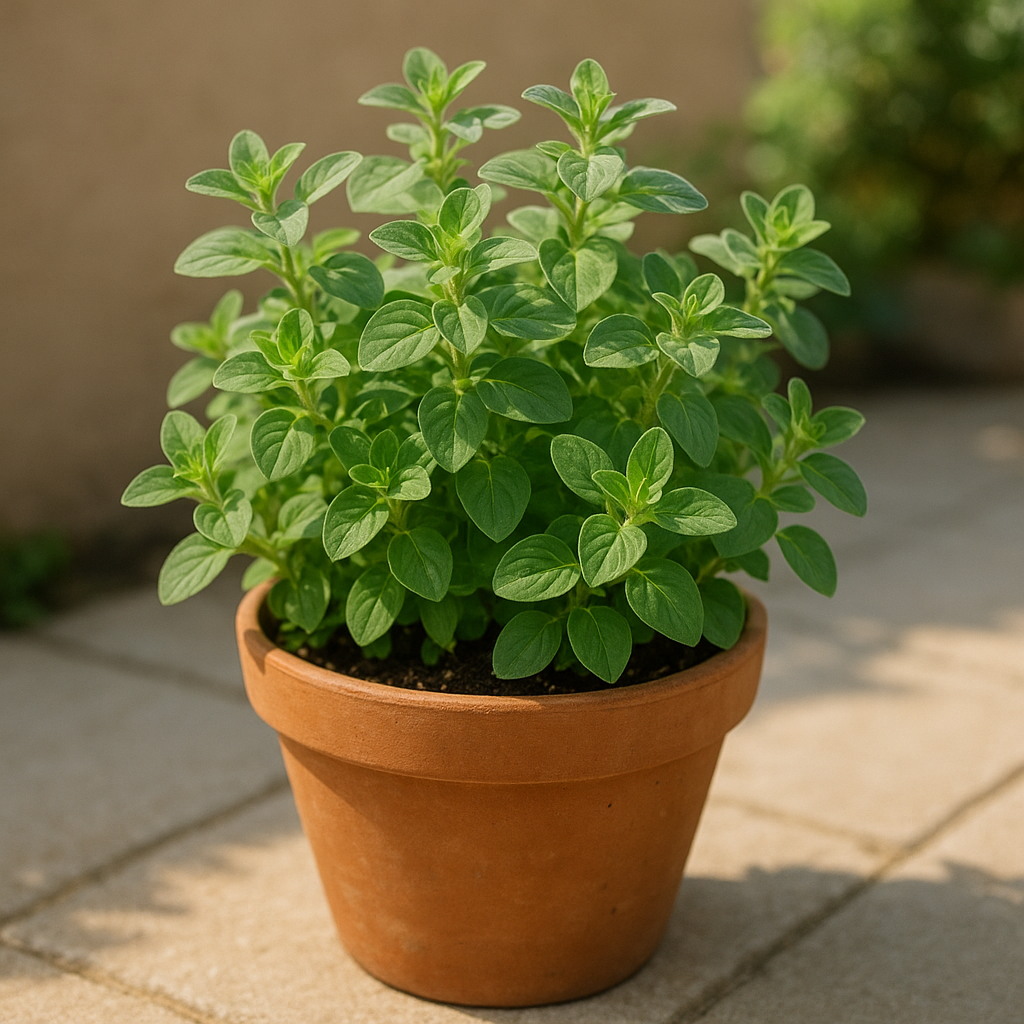
A Stronger Container Setup for Bushy, Fragrant Oregano You Will Actually Want to Harvest
Oregano is one of the easiest kitchen herbs to keep in a pot once you stop treating it like a thirsty leafy herb. Most failures come from the same mismatch: the plant gets too little sun, the roots stay damp too long, or the stems are left alone until the whole thing turns woody and sparse.
If you give oregano fast drainage, bright light, and regular tip harvesting, it usually responds with denser growth and better flavor. That matters more than fancy fertilizer or a huge container.
The short answer
- Grow one oregano plant in a pot at least 8 to 10 inches wide with drainage holes.
- Use a loose container mix that does not stay wet for long.
- Give it full sun or the brightest outdoor spot you have.
- Water thoroughly, then wait until the top of the mix has dried before watering again.
- Harvest the soft growing tips often so the plant branches instead of stretching out.
- Refresh crowded or tired pots before the center turns woody and bare.
When oregano struggles in a container, it is usually because the root zone is staying richer, darker, and wetter than the plant wants.
Why oregano gets leggy, bland, or patchy in pots
Oregano comes from dry, sunny conditions, so it performs best when the setup feels a little lean rather than constantly pampered. In containers, the common problems are heavy mix, weak light, overwatering, or a plant that has been left uncut until all the good growth is out on the tips.
- Too little sun: the stems stretch and the flavor softens.
- Slow-draining soil: roots stay wet and the base starts declining.
- Frequent light watering: the upper soil never really dries and the roots lose air.
- No regular harvesting: the plant grows open and woody instead of dense.
- An old crowded pot: growth gets uneven, tired, and less useful.
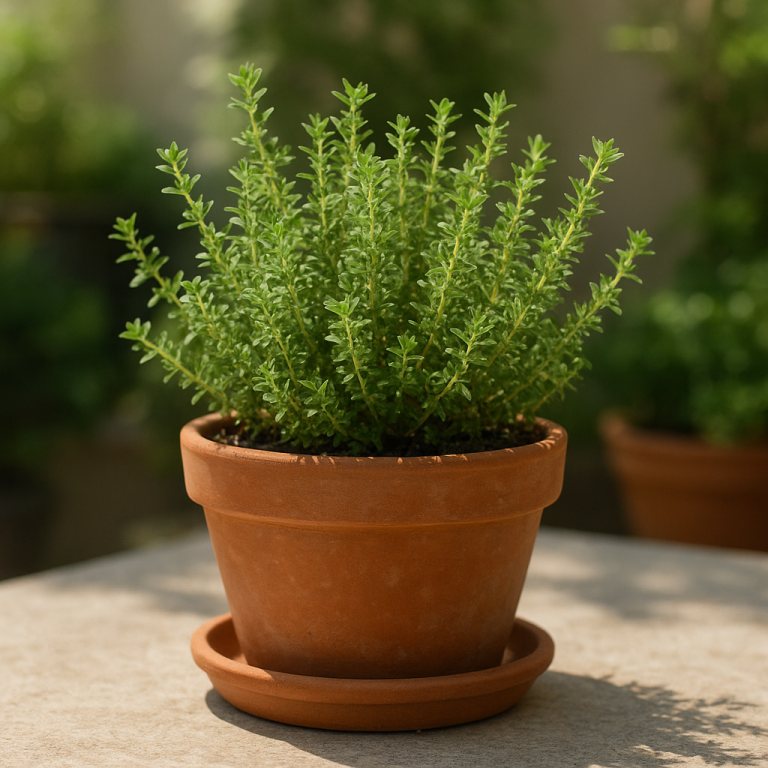
If you already grow thyme or rosemary, oregano wants a similar overall setup: bright light, quick drainage, and a little restraint with water.
Choose a pot that drains fast instead of one that stays damp forever
Oregano does not need a deep oversized container, but it does need reliable drainage. A small nursery pot can work for a while, though it usually dries out too fast in heat and gets rootbound quickly.
- Good minimum: 8 to 10 inches wide for one plant
- Helpful material: terracotta or another breathable pot
- Required: real drainage holes, not a decorative pot with trapped water at the bottom
- Avoid: self-watering herb pots unless you are very careful with moisture
If your plant is packed into a tiny store pot, move it up before hot weather makes the wet-dry swings more extreme. The same basic process in How to Repot a Plant Without Shock or Root Damage works well here.
Use loose potting mix, not heavy soil
Oregano usually grows better in a mix that drains fast than in one that stays lush and damp. The goal is a root zone with enough air, not a rich moisture reservoir.
- Use fresh potting mix made for containers.
- If it feels dense, loosen it with extra perlite, pumice, or coarse sand.
- Do not fill a pot with yard soil.
- Keep the crown at the same depth it was growing before.
This is one reason oregano often does better in its own pot than grouped with thirstier herbs. It can share space with Mediterranean herbs, but it is less happy beside plants that want steady moisture.
Give oregano as much sun as you can realistically provide
Flavor comes from light. Oregano grown in weak light may survive, but it tends to become thin and less aromatic. Outdoors in full sun is usually the best option. Indoors, it needs a very bright window and often still performs better after moving outside in season.
- Best: full sun for most of the day
- Workable: a bright balcony or patio with several hours of direct light
- Usually disappointing: a dim windowsill or shaded porch
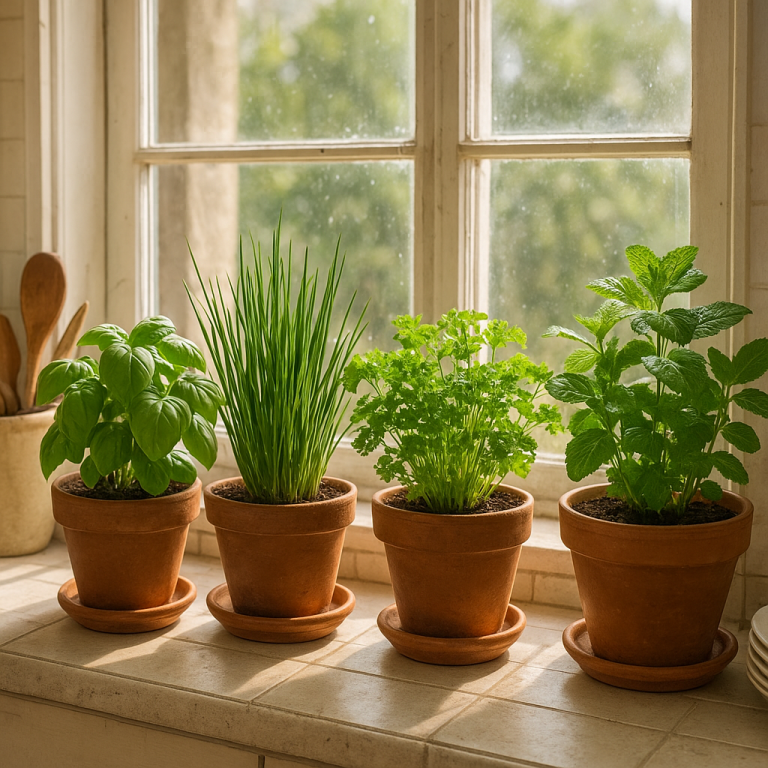
If you are starting herbs indoors first, this windowsill herb garden guide helps with the early setup, but oregano becomes much easier once it can live in stronger light.
Water deeply, then let the mix dry down
The easiest way to ruin container oregano is to keep giving it little drinks before it needs them. That keeps the top of the pot damp and gradually pushes the plant toward weak roots and tired growth.
- Check the mix with your finger before watering.
- If the top inch or two feels dry, water until excess runs out the bottom.
- Let the pot drain fully.
- Do not water again just because the surface looks a little pale.
In summer, the exact schedule changes with heat, wind, and pot size. Use the same practical approach in How Often Should You Water Container Plants in Hot Weather? instead of locking yourself into a fixed calendar.
Harvest often so the plant stays bushy instead of woody
Oregano responds well to light, repeated harvesting. If you keep taking the tender tips, the plant usually branches back and fills in. If you ignore it for too long, it stretches, toughens, and puts the best leaves farther from the base.
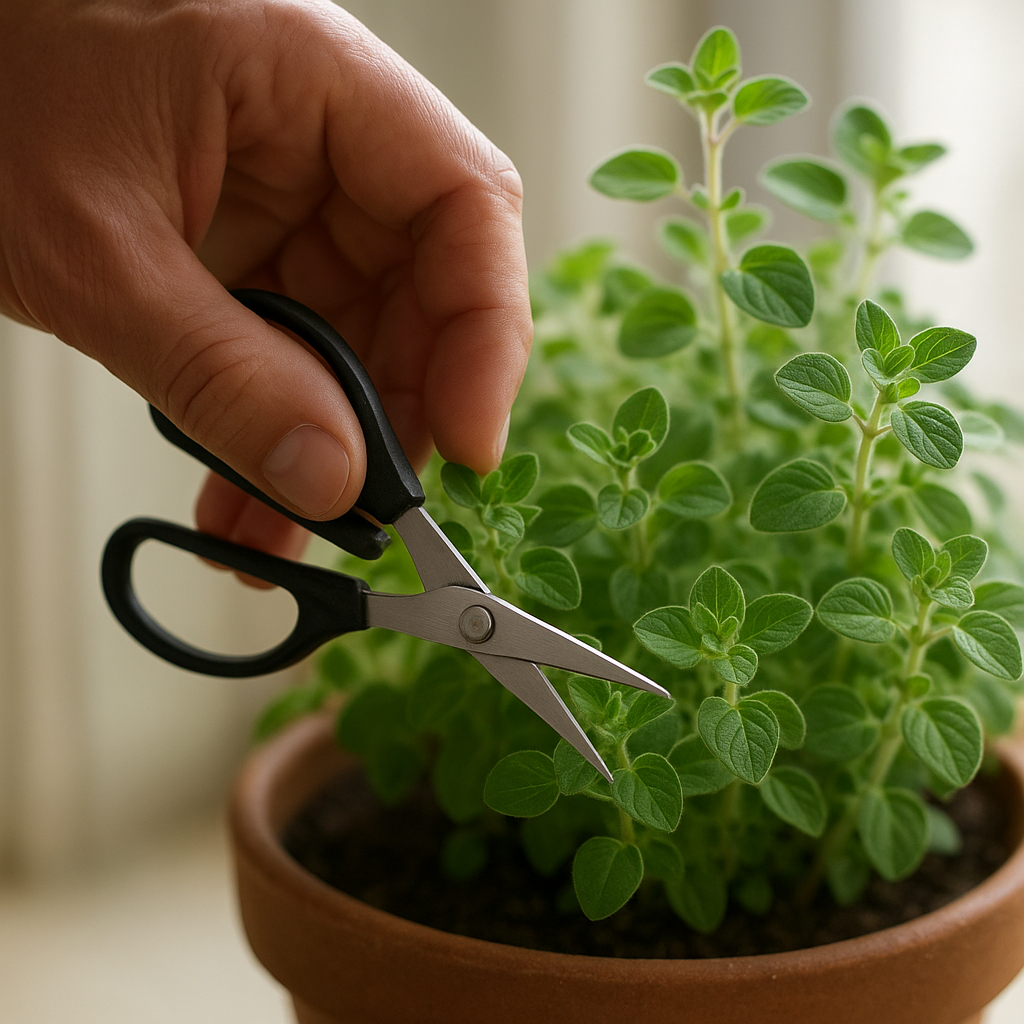
- Snip just above a leaf pair or node.
- Take soft new stems, not bare woody sections.
- Trim a little at a time during active growth.
- Cut back uneven stems before they dominate the whole plant.
If you are unsure where a recovery cut should happen, How to Prune Plants Without Cutting the Wrong Thing lays out the basic logic.
Starting oregano from seed, starts, or cuttings
The fastest route to a productive pot is usually a starter plant. Seed works, but oregano from seed takes longer to become the kind of full kitchen pot most people want right away.
- Starter plant: best for a quick seasonal setup
- Cuttings or division: useful when you already have a healthy plant
- Seed: fine if you want more plants, but slower
If you start small plants indoors and plan to move them outside, use the gradual process in How to Harden Off Seedlings Without Stunting or Sunburn so the leaves are not shocked by direct sun and wind.
How to keep older oregano from getting woody
Some woody growth is normal as oregano ages. The goal is not to keep it permanently soft. The goal is to stop the whole plant from turning into a few green tips on top of stiff brown stems.
- Keep harvesting during the growing season.
- Refresh the plant into new mix if the pot has become cramped.
- Replace very old exhausted plants when most of the useful growth is gone.
- Keep the plant in strong light so new stems stay tighter and leafier.
If you want more than one herb in the same general care zone, oregano pairs more naturally with thyme and rosemary than with moisture-loving herbs such as parsley.
Common oregano problems in pots and quick fixes
The stems are long and floppy
This is usually a light problem. Move the plant into stronger sun and begin harvesting the tips regularly once you see healthy new growth.
The leaves taste weak
Weak flavor often points to low light, too much water, or growth that is very soft and overfed. Brighter light usually improves aroma more than extra fertilizer does.
The base keeps thinning out
That usually means older woody growth, poor light, or roots sitting wet too often. Refresh the setup and keep cutting the newer stems instead of waiting for one big rescue trim.
The pot stays wet for too long
The mix is too heavy, the pot is too large for the current root system, or the drainage is poor. Fix the container setup instead of trying to water less forever.
Tender new growth has aphids
Stressed herbs can still attract pests. If you find clusters on the growing tips, use the steps in How to Get Rid of Aphids, Fungus Gnats, and Mealybugs before the problem spreads.
Quick FAQ
Does oregano grow well in pots?
Yes. Oregano is a strong container herb when the pot drains well and the plant gets plenty of sun.
How often should I water oregano in pots?
Water when the top of the mix has dried down, not on a fixed daily schedule. Heat, wind, and container size change the timing.
Can oregano stay outdoors year-round in a container?
Sometimes, especially in milder climates, but container roots are more exposed to wet winter soil and hard freezes than roots in the ground.
Why is my oregano turning woody?
That is part of aging, but weak light, infrequent harvesting, and an old exhausted pot make it happen faster and look worse.
The short version
Grow oregano in a sunny container with fast drainage, water deeply only when the mix has dried near the top, and keep trimming the tender tips so the plant stays bushy. That simple routine prevents most of the usual problems and gives you leaves with better texture and stronger flavor.