Fresh, Feathery Dill From a Container That Actually Works
Dill grows fast, tastes best when you cut it young, and does surprisingly well in a pot if you give it enough root depth and steady moisture. Most container problems come from three things: a shallow pot, hot dry swings that trigger early flowering, and crowding that leaves plants thin and floppy.
If you want a steady supply for eggs, potatoes, yogurt sauces, soups, and pickles, the goal is simple: start from seed, use a deep container, keep growth even, and sow a new round before the first planting fades.
Choose a pot that fits dill’s taproot
Dill looks delicate up top, but it sends down a long taproot. That means wide-and-shallow herb bowls are the wrong container for it.
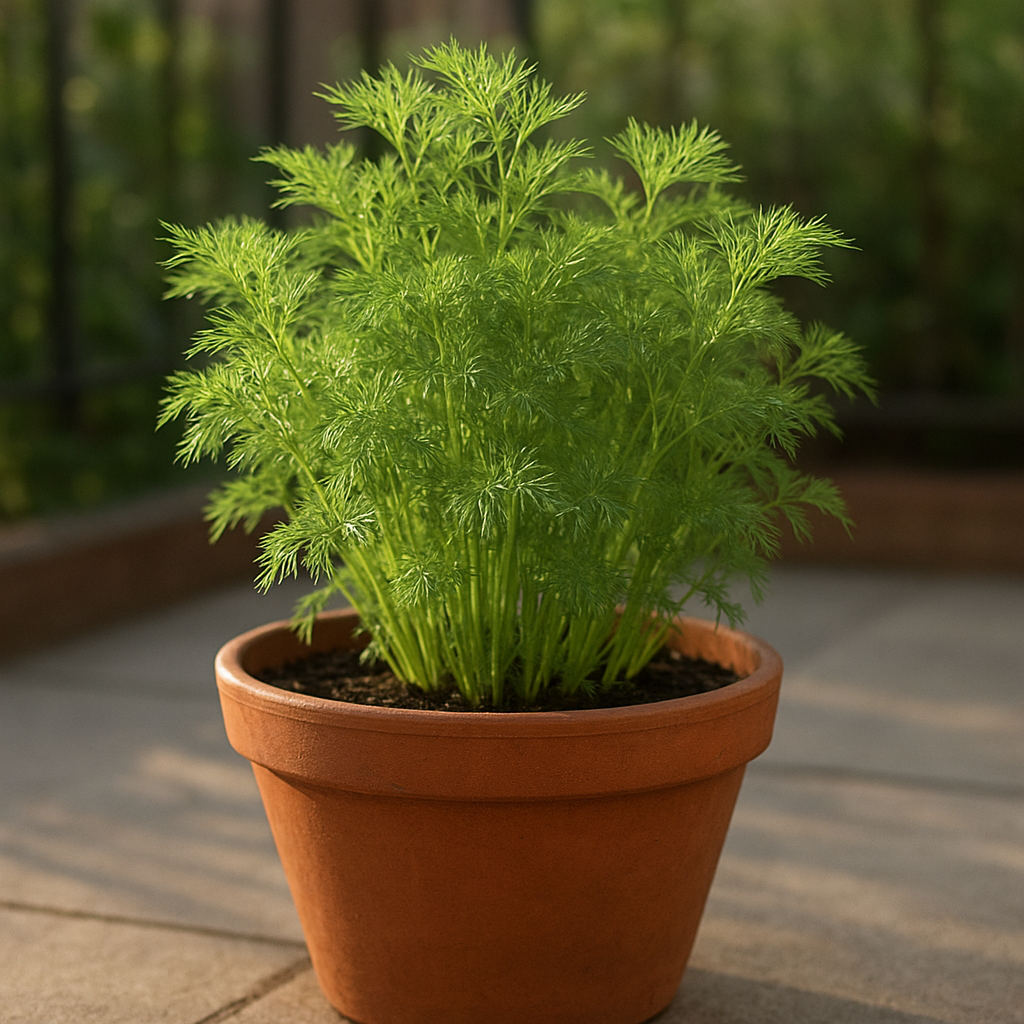
Use a pot that is at least 10 to 12 inches deep with drainage holes. A container about 10 to 14 inches wide is enough for one strong plant or a small clump that you thin early. Heavier pots help because mature dill can get top-heavy in wind.
If your dill usually falls over, the problem is often not just height. It is usually a mix of shallow rooting, low light, and overcrowding.
Start from seed instead of transplanting
Dill dislikes root disturbance more than many common herbs. Starting from seed in the final pot is usually easier than buying starts and trying to move them.
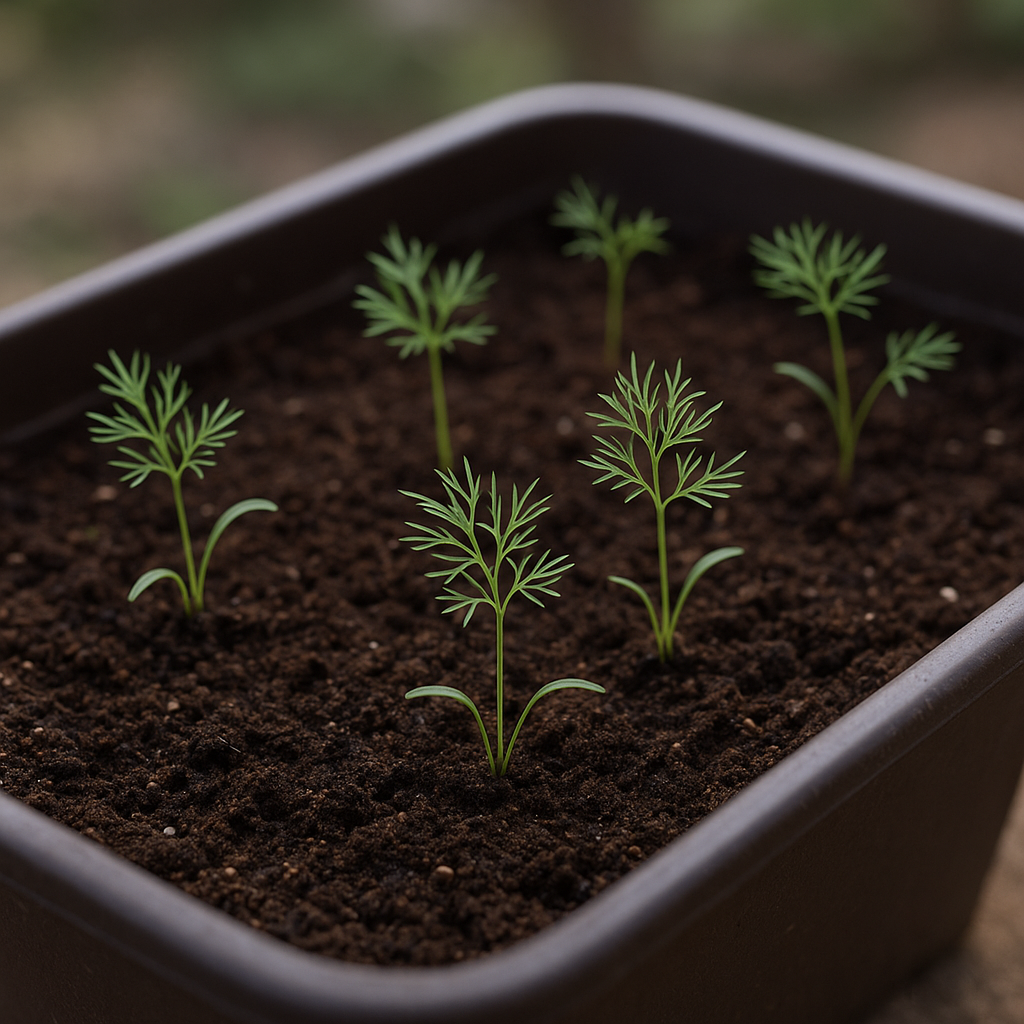
Fill the pot with loose potting mix, water it once, then sow seeds about 1/4 inch deep. Scatter lightly, cover, and keep the top layer evenly moist until seedlings appear. Once the seedlings are a few inches tall, thin them so air can move between plants. Crowded dill stretches fast and stays weak.
If you have been growing leafy herbs together, the same basic setup works here, but dill needs more depth than cilantro in pots and usually appreciates more elbow room than parsley in pots.
Give it full sun, but protect it from brutal heat
Dill wants at least 6 to 8 hours of direct sun. In cool spring weather, full sun is ideal. Once summer heat arrives, especially on reflective patios or balconies, intense afternoon heat can push dill to bolt.
If your pot sits in a hot spot, morning sun with a little protection from late-day scorch can keep leaves usable for longer. The goal is not shade all day. It is reducing the stress that turns leafy dill into flower stalks too quickly.
Water for steady growth, not constant sogginess
Dill grows best when the soil stays lightly and evenly moist. Letting the pot go bone dry between waterings can trigger stress and early flowering. Keeping it wet all the time can make roots stall and foliage yellow.
Check the top inch of soil. If it feels dry, water deeply until excess runs out the bottom. In warm weather, containers may need water more often than you expect. If you are still learning the rhythm of outdoor containers, this general guide on watering container plants in hot weather helps with the larger pattern.
A light mulch layer can help hold moisture, but keep it thin so the pot still drains and dries properly between soakings.
Do not overfeed it
Dill does not need aggressive fertilizing. Too much nitrogen can push soft, weak growth that flops easily and tastes less concentrated.
If your potting mix already contains nutrients, you may not need to feed at all for a short crop. For longer growth, a diluted liquid fertilizer once every few weeks is enough. Think gentle support, not heavy feeding.
How to keep dill from bolting too fast
Dill is naturally quick to flower, especially as days get longer and hotter. You cannot stop that forever, but you can stretch the leafy stage.
- Sow in cool spring weather instead of waiting for peak heat.
- Keep the pot evenly moist.
- Avoid root stress from shallow containers.
- Harvest lightly and often from the outer growth.
- Sow a fresh pot every 2 to 3 weeks if you want continuous leafy dill.
That last step matters most. Dill is one of those herbs that performs better as a repeat sowing than as a single all-season planting.
How to harvest without weakening the plant
Wait until the plant has enough feathery growth to spare, then snip outer fronds first. Avoid shaving the whole plant down at once. Repeated light cuts keep it useful longer.
If you want dill seed for pickling, let a few plants flower and set seed. If you only want tender leaves, pinch off flower buds as they form, knowing the plant will still eventually try to finish its life cycle.
Common problems and quick fixes
Tall stems falling over
Usually caused by low light, crowding, wind exposure, or a pot that is too shallow. Move the container to stronger sun, thin extra plants, and stake loosely if needed.
Yellow lower leaves
Usually a watering problem. Check whether the pot is drying too hard between waterings or staying wet for too long. Poor drainage and spent potting mix can also cause yellowing.
Plants flower while still small
Heat stress, drought stress, or transplant shock are common triggers. Direct sowing into a deep pot and keeping moisture more even usually helps.
Weak flavor
Dill tastes best when cut young and used fresh. Old foliage and heat-stressed growth lose quality fast.
FAQ
Can you grow dill indoors in a pot?
Yes, but it needs strong light. A bright window may not be enough on its own. Indoor dill often gets lankier unless you supplement with a grow light.
How many dill plants fit in one container?
For a medium pot, fewer is better. One strong plant or a few well-spaced plants usually performs better than a crowded patch.
Does dill come back after cutting?
It regrows after light harvests, but it is still an annual. Once it bolts and sets seed, leafy production drops hard.
Can dill share a pot with other herbs?
It can, but it is usually easier to give dill its own deep container. Its taproot, height, and fast life cycle make it less cooperative than compact herbs.
A simple setup that keeps dill usable longer
A deep pot, direct sowing, full sun, steady watering, and repeat sowing solve most dill problems before they start. If your first container bolts quickly, flops, or turns thin, do not overcomplicate it. The fix is usually a deeper pot, fewer plants, and more consistent moisture.
Once you get that rhythm right, dill becomes one of the easiest herbs to keep within reach.