A Deep, Loose Container Setup for Sweet, Straight Patio Carrots
Carrots seem simple until the roots come out forked, the shoulders turn green, or a whole container produces a handful of skinny stubs instead of something worth peeling. The goal is not just getting green tops. The goal is growing roots that have enough depth, space, and steady moisture to size up properly without splitting or turning woody.
The good news is that carrots can do very well in containers when the setup matches the crop. A deep pot, loose mix, careful thinning, and direct sowing at the right time solve most of the problems people blame on bad luck.
Choose carrot varieties that fit container growing
Long storage carrots can grow in pots, but containers are usually easier with shorter or blunt-ended types that do not need extreme depth to develop well. Round, mini, and shorter Nantes-style carrots are often the easiest place to start if you want reliable roots instead of a pot full of frustration.
- Best for small or medium containers: round, baby, or shorter Nantes-style carrots
- Best if you have a very deep planter: longer varieties with more root room
- Least forgiving setup: long carrots in a shallow or compacted container
If you are growing in a window box or patio planter instead of a tall container, shorter varieties are usually the smarter choice.
Use a container that is deep enough for real roots
Depth matters more for carrots than it does for lettuce or herbs. A shallow pot forces roots to twist, stall out, or stay tiny. Width matters too, because it lets you sow a useful row instead of crowding seedlings into one tight clump.
- Good minimum depth: about 12 inches for shorter carrot types
- Better for more options: 12 to 16 inches deep
- Best shapes: deep window boxes, tall raised planters, and nursery pots with drainage holes
- Avoid: shallow bowls, heavy garden soil, and containers that stay waterlogged
If you are building a cool-season edible container setup, carrots pair naturally with crops like lettuce in pots and spinach in pots, which like the same general weather window.
Fill the pot with loose mix, not garden dirt
Carrot roots need a mix they can push through without hitting hard clods, rocks, or compacted layers. Fresh container mix works much better than scooping soil out of the yard. Dense soil is one of the fastest ways to get forked, stunted, or badly shaped roots.
- Use a light potting mix meant for containers.
- Break up any chunks before filling the container.
- Water the mix so it is evenly moist before sowing.
- Avoid fresh manure or heavy high-nitrogen amendments right before planting.
That loose texture matters from the first day. Once carrot roots hit resistance, they usually do not correct themselves later.
Direct sow early and keep the surface from drying out
Carrots are a cool-season crop and they do best when they start in mild weather. They also dislike root disturbance, so direct sowing into the final container is better than trying to transplant seedlings later.
- Best timing: early spring and again toward late summer for a fall crop
- Sowing depth: very shallow, just enough mix to cover the seed
- Early care: keep the top layer lightly moist until seedlings are up
Carrot seed can be slow and uneven to germinate if the surface dries out. That waiting period is where a lot of container carrot attempts fail. The top inch should stay gently damp, not saturated and not bone dry.
Thin early or you will grow tops instead of roots
Carrot seedlings always look too small and harmless to thin. Then a few weeks later the container is crowded, the roots have no room to swell, and everything stays thin. If you want proper carrots, thinning is not optional.
- Thin once seedlings are large enough to handle.
- Keep the strongest seedlings and remove the extras cleanly.
- Do a second thinning if roots still look crowded as they size up.
- Snipping extras at the soil line can disturb neighboring roots less than yanking.
One of the simplest ways to avoid tiny harvests is to accept that fewer carrots in the pot usually means better carrots in your hand.
Give carrots enough sun, but do not let the container bake
Carrots grow best with strong light, especially while the tops are building enough energy to feed the roots. In cool spring weather, full sun is usually ideal. When late spring turns hot, container roots can heat up faster than people expect, especially on patios surrounded by concrete.
- Cool weather: full sun is usually best
- Warmer stretches: keep an eye on containers exposed to harsh reflected heat
- Hot patios: larger pots and steadier watering help keep roots from stressing
If your containers start drying faster than expected once the weather shifts, this guide on watering container plants in hot weather gives a better framework than guessing from tired-looking tops.
Keep moisture even so roots stay sweet and do not crack
Container carrots need steady moisture, especially once the roots begin thickening. Long dry spells followed by a heavy soaking can lead to splitting, rough texture, or stalled growth. The fix is not keeping the pot soggy. The fix is avoiding big swings.
- Water deeply when the top layer starts drying.
- Check pots more often in wind and sudden heat.
- Use a light mulch if the surface is drying too quickly.
- Make drainage work before you plant, not after roots are already in trouble.
Even moisture usually gives you smoother, sweeter carrots than a feast-or-famine watering pattern.
Feed lightly and stop chasing huge leafy tops
Rich potting mix is usually enough to get carrots started. If the tops are pale and weak, a light balanced feed can help. If the tops are already huge and the roots stay skinny, pushing more nitrogen is usually the wrong move.
Carrots need steady growth, not a fertilizer binge. Too much nitrogen can encourage a lot of foliage without giving you better roots underneath.
Harvest when the shoulders look ready, not just when the packet says so
Seed packets give a rough maturity window, but container carrots are easiest to judge by size at the top of the root. Brush back a little mix and check the shoulder width instead of pulling everything early out of impatience.
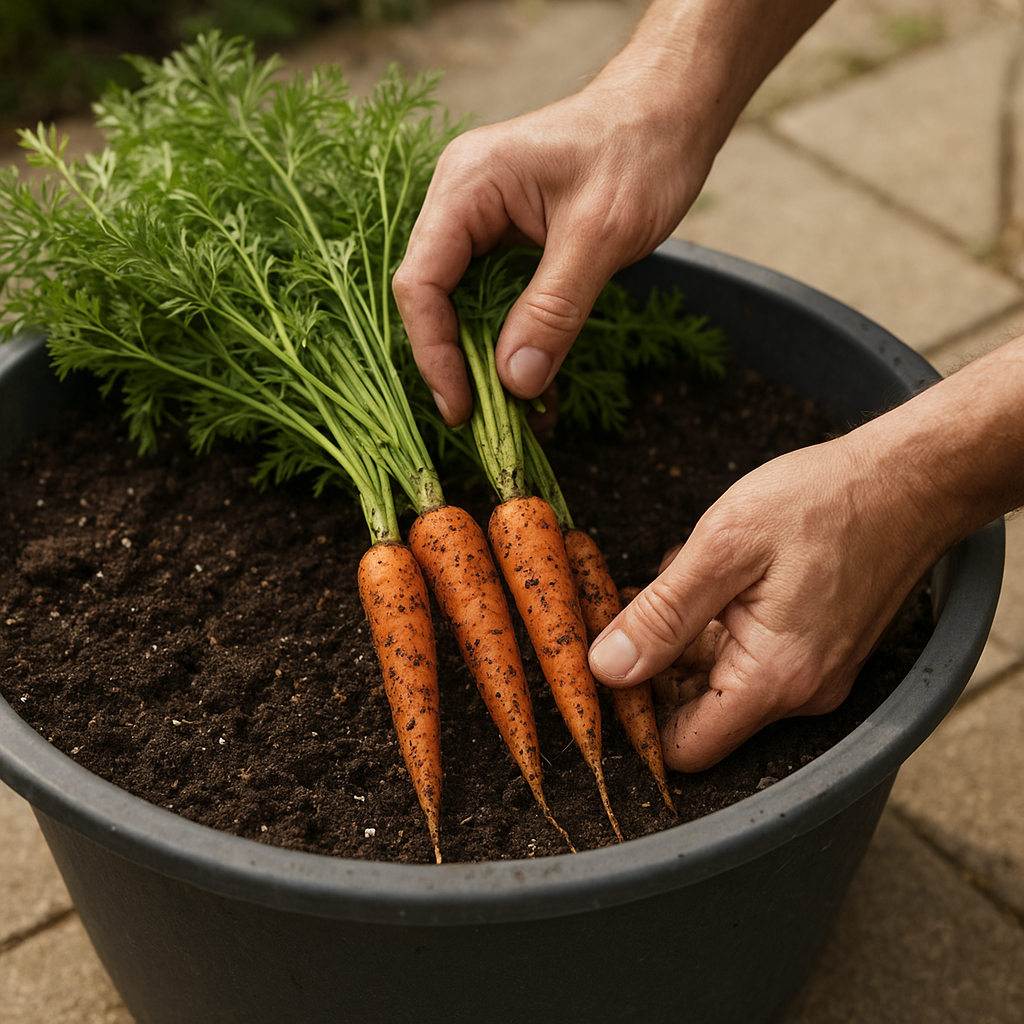
- For baby carrots: harvest earlier while roots are slim and tender
- For fuller roots: wait until the shoulders reach a useful diameter
- Before pulling: water the container if the mix is dry so roots lift more cleanly
You do not have to harvest the whole pot at once. Pull the largest roots first and let the rest keep sizing up if spacing allows.
Common carrot problems in pots and the fastest fixes
Forked or twisted roots
This usually points to compacted mix, obstacles in the root zone, or rough handling early on. Use looser mix next time, skip garden soil, and direct sow instead of transplanting.
Tiny carrots with big tops
Most often, the container is overcrowded, the roots do not have enough depth, or the plants got too much nitrogen. Thin harder and use a deeper planter.
Cracked roots
Cracking usually happens when dry roots suddenly take up a lot of water. Try to keep moisture steadier, especially as roots approach harvest size.
Green shoulders
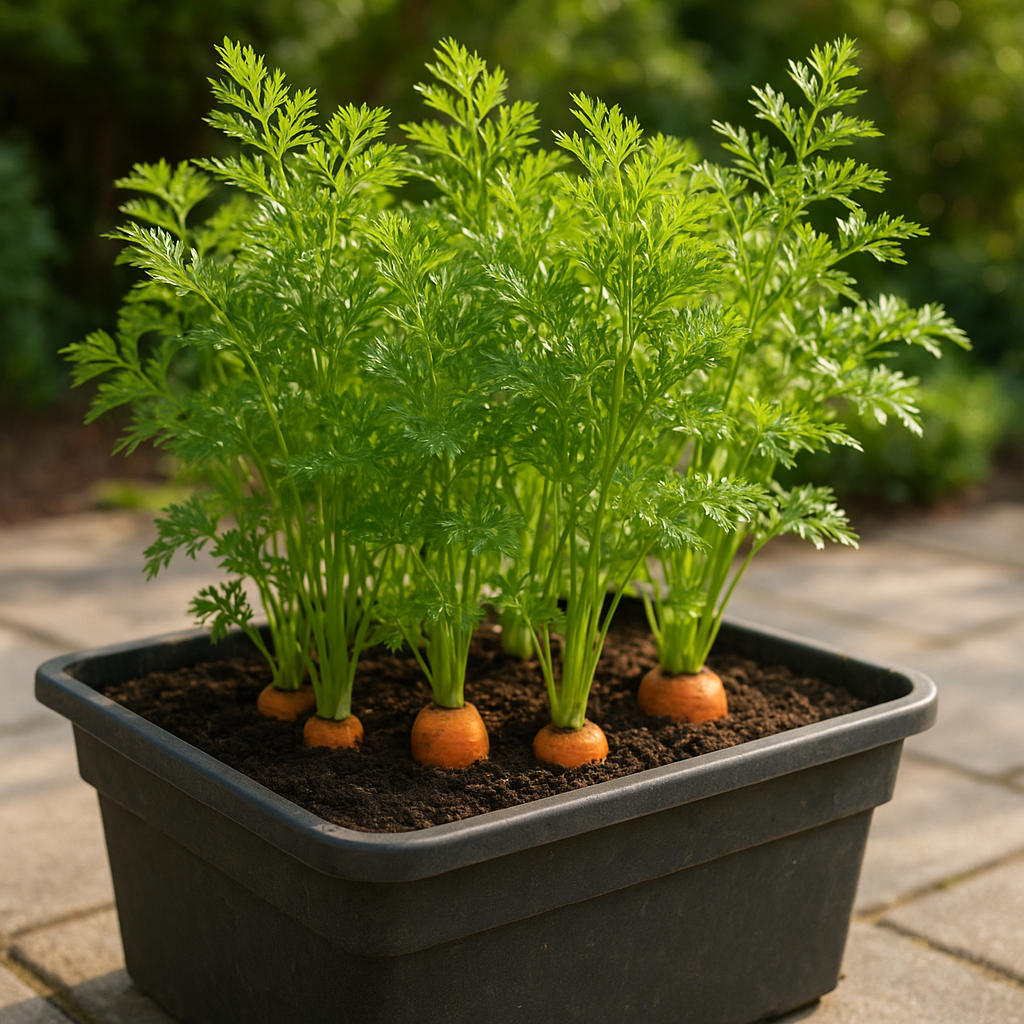
If the top of the root pushes above the mix and sits in the light, it can turn green and bitter. Add a little extra potting mix or mulch around exposed shoulders as roots expand.
Slow germination or patchy rows
Carrot seed needs steady surface moisture. If the top layer dries out between waterings, germination can be slow and uneven. Focus on keeping the seed zone lightly damp until the row is up.
Aphids on the tops
If new growth starts curling or feeling sticky, inspect the tops and the undersides of leaves. This guide on getting rid of common plant pests covers the inspection and cleanup basics that help before a small infestation spreads.
Quick FAQ
Can carrots really grow well in pots?
Yes, as long as the container is deep enough and the mix stays loose. Shorter carrot varieties are often the easiest choice for containers.
How deep should a pot be for carrots?
About 12 inches is a solid minimum for shorter types, and 12 to 16 inches gives you more room for better root development.
Why are my carrots all tops and no roots?
The usual causes are crowding, shallow containers, or too much nitrogen pushing leafy growth instead of root size.
Do carrots in pots need full sun?
In cool weather, usually yes. In hotter stretches, the bigger concern is keeping the container from overheating and drying out too hard.
Can you leave carrots in the pot and harvest as needed?
Yes. Pull the biggest roots first and let smaller ones keep growing if the container is not overcrowded.
The short version
Use a deep container, loose potting mix, direct sowing, and steady thinning. Keep moisture even, do not overfeed, and judge harvest by the root shoulders instead of guessing. That combination prevents most of the classic container carrot problems before they start.