A Safer, Cleaner Way to Repot Plants Without Setting Them Back
Repotting sounds simple until a healthy plant suddenly looks limp, stalled, or stressed a few days later. That is why so many people worry about transplant shock. The good news is that most repotting problems come from timing, rough handling, or bad aftercare, not from the act of moving the plant itself.
If your plant has outgrown its pot or the soil has stopped working well, repotting can help more than it hurts. The key is to change as little as necessary while giving the roots better conditions.
When a Plant Actually Needs Repotting
- Roots circling the pot or growing out of drainage holes
- Soil drying out unusually fast
- Water running straight through with poor absorption
- Stalled growth during the active growing season
- The plant becoming top-heavy or unstable
Not every plant needs a dramatic pot upgrade. Many only need fresh mix or a slightly larger container, not a jump to a huge pot.
The Best Time to Repot
Spring and early summer are usually best because most plants are actively growing and recover faster. Repotting during dormancy can still work, but it is generally less forgiving unless the plant clearly needs intervention.
If a plant is already heat-stressed, dehydrated, or infested, fix the obvious stress issue first when possible instead of stacking problems.
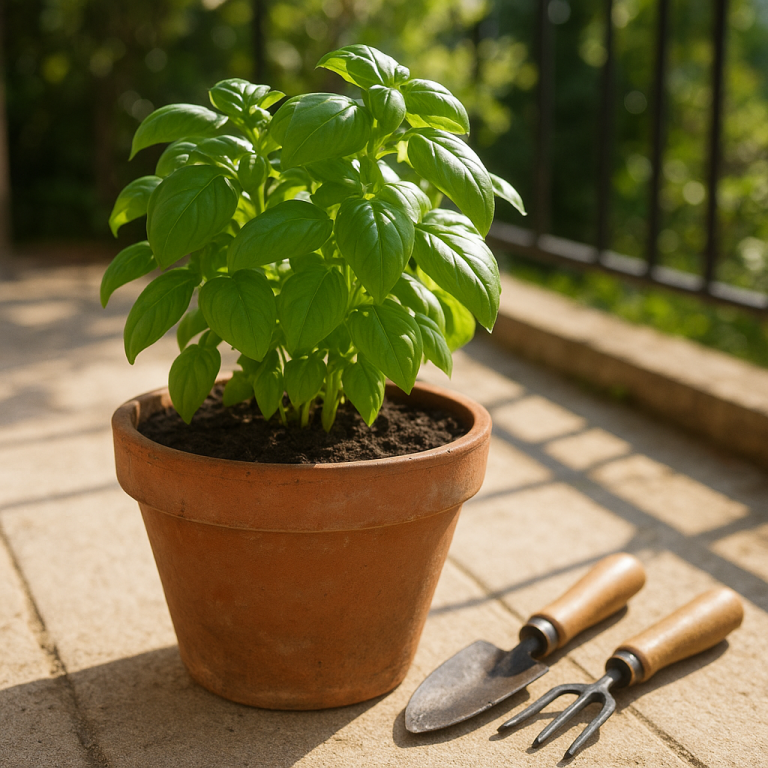
What You Need Before You Start
- A new pot with drainage
- Fresh potting mix that fits the plant type
- Gloves if you want them
- A trowel or scoop
- Water
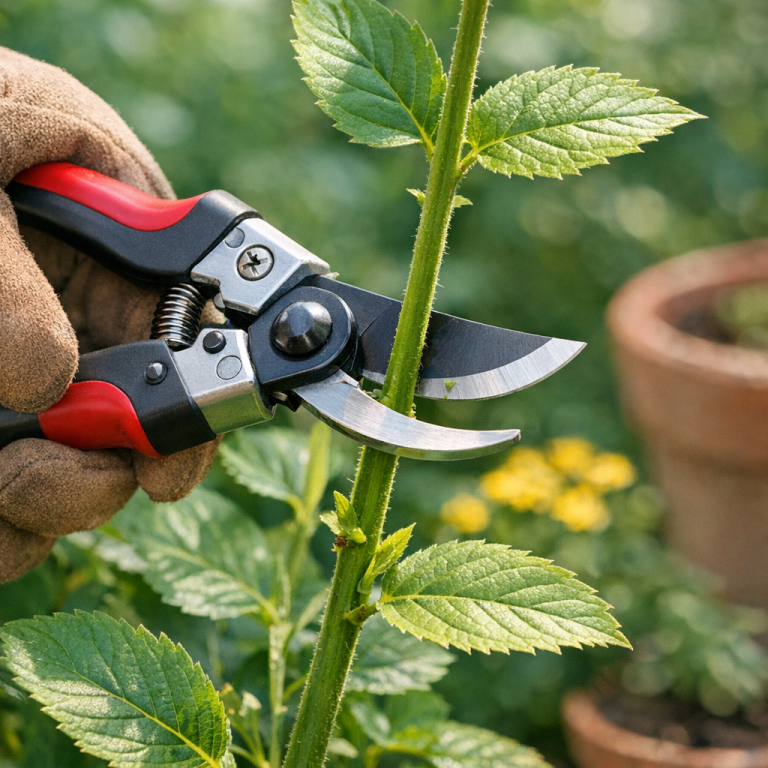
- Scissors or pruners for damaged roots if truly needed
The new pot should usually be only 1 to 2 inches wider than the old one. Going too large can leave roots sitting in excess wet soil, which creates a different set of problems.
How to Repot a Plant Safely
- Water the plant a day before if it is very dry. Slightly hydrated roots handle the move better.
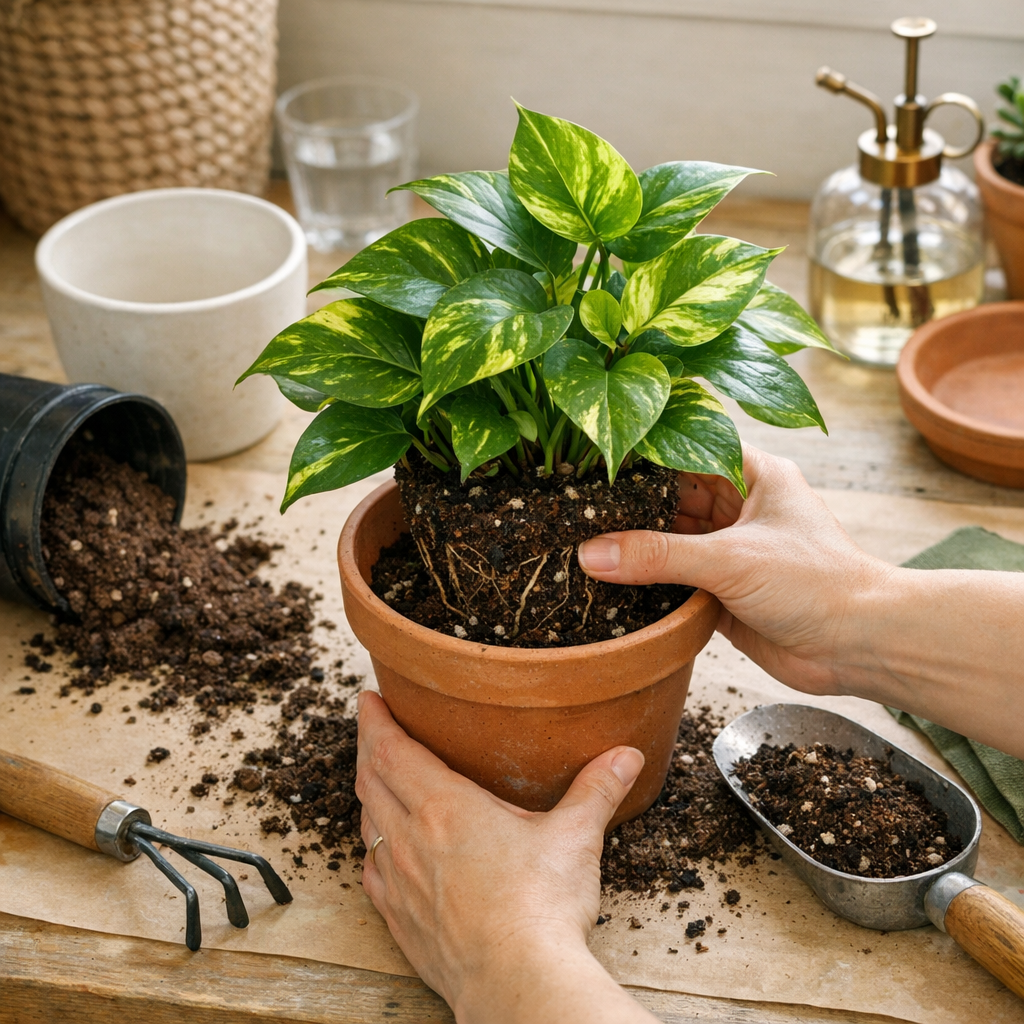
- Slide the plant out gently. Tip the pot, support the base, and avoid yanking by the stem.
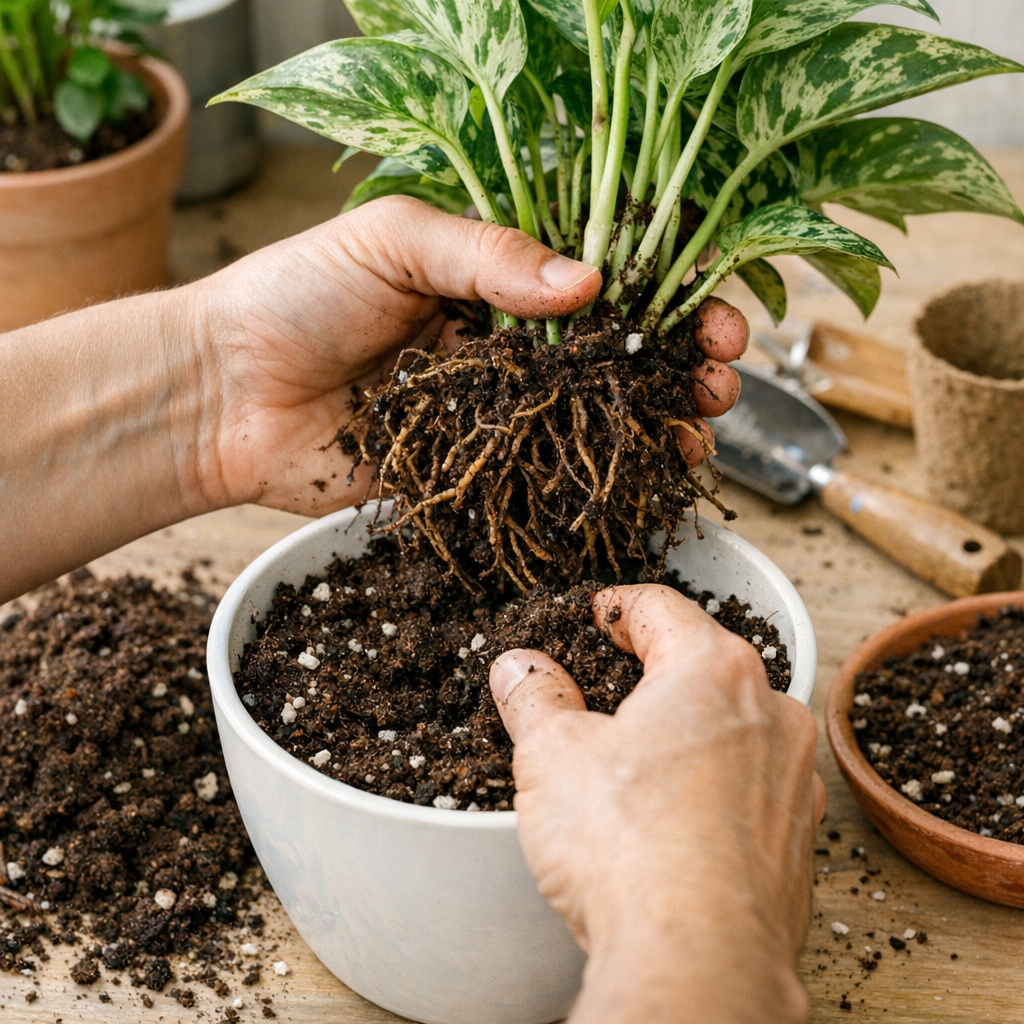
- Inspect the roots. Loosen only the outer circling roots if needed. Do not aggressively rip the root ball apart.
- Add a base layer of fresh mix. Set the plant so it sits at roughly the same height as before.
- Fill around the sides with fresh mix. Firm lightly, but do not pack the soil into concrete.
- Water thoroughly after repotting. This settles the mix around the roots.
What Causes Transplant Shock?
- Root disturbance that is rougher than necessary
- Sudden shifts in light or temperature
- Repotting during extreme heat
- Overwatering after repotting
- Underwatering after repotting
A little temporary droop is not unusual. True transplant shock usually shows up as prolonged wilting, stalled growth, yellowing, or a plant failing to rebound after basic care.
How to Reduce the Risk of Shock
- Keep the plant out of harsh direct sun for a few days if it seems stressed.
- Do not fertilize immediately unless the plant clearly needs it and the mix is inert.
- Keep watering consistent, not extreme.
- Use the right soil type instead of a generic mix for everything.
- Do not combine heavy root pruning with a stressful seasonal moment unless necessary.
Common Repotting Mistakes
Using a pot that is far too big
Bigger is not always better. Oversized pots can trap too much moisture around a root system that is not ready to use it.
Breaking up the entire root ball aggressively
Unless the roots are badly bound, unnecessary roughness just creates more recovery work for the plant.
Changing everything at once
Repotting, pruning hard, moving to brighter light, and changing watering habits all at once can make it harder to tell what the plant is reacting to.
What to Do Right After Repotting
- Water deeply once after the move.
- Let the plant settle before making more changes.
- Monitor leaf firmness, soil moisture, and drainage.
- Keep an eye out for stress-related pest problems, especially if the plant was already struggling.
If overwatering is already a weak point in your setup, review how watering habits change with container size and heat. Repotting success and watering discipline are closely connected.
FAQ
Should I loosen the roots when repotting?
Lightly, if they are circling heavily. The goal is to encourage new growth outward, not to tear the plant apart.
How long does transplant shock last?
Mild stress may pass in a few days. If the plant keeps declining for weeks, the issue may be roots, watering, or environment rather than simple adjustment.
Can I repot a plant in summer?
Yes, but avoid the hottest stretch if possible, especially for already stressed container plants.
Final Thoughts
Repotting should support growth, not reset it. If you choose the right timing, avoid oversized containers, handle roots with more restraint than drama, and water properly afterward, most plants transition just fine.
When you treat repotting as a careful adjustment instead of a dramatic overhaul, most plants handle it well. Better timing, gentler root handling, and steadier aftercare usually matter more than anything fancy.