A Simple Patio Zucchini Setup for Healthy Plants and Frequent Harvests
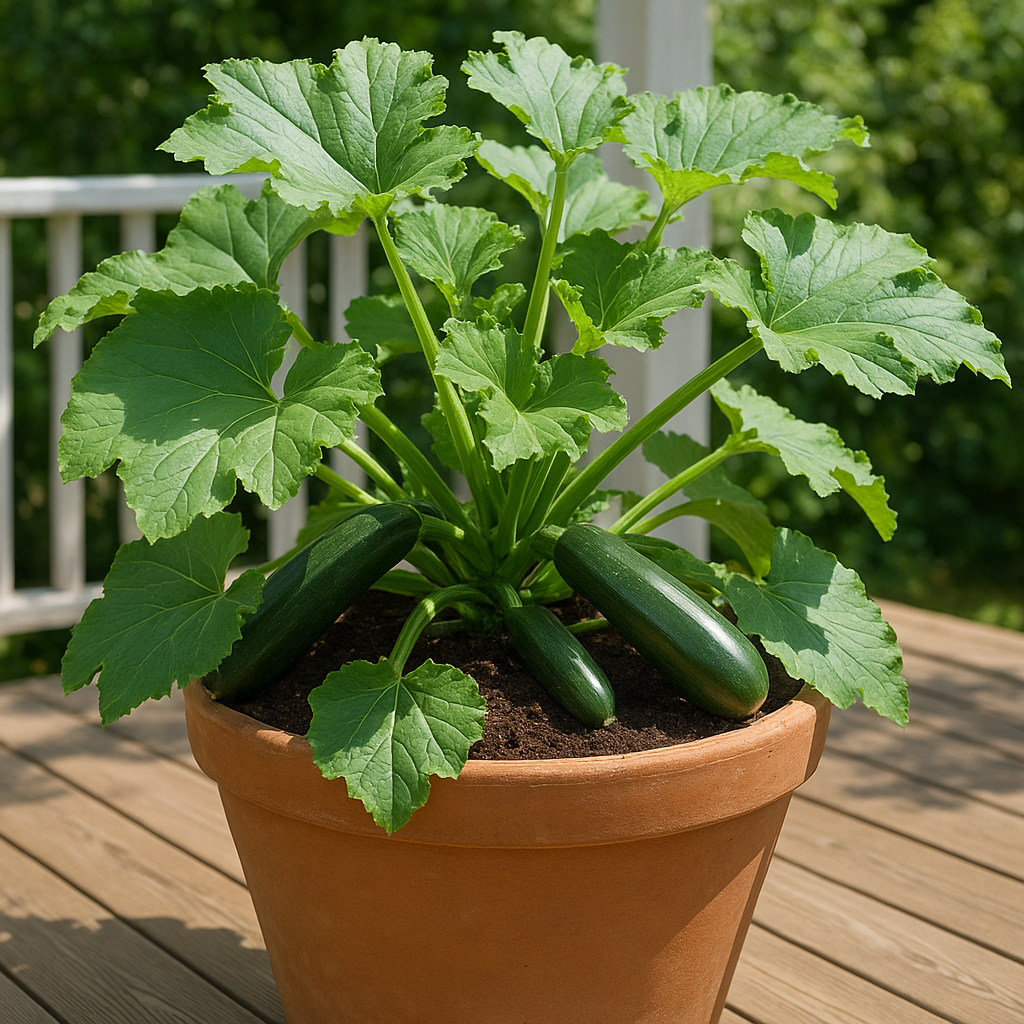
Zucchini can be surprisingly productive in a container, but it is not a crop you can cram into a tiny decorative pot and forget about for three hot days. When roots get cramped, leaves stay wet, or flowers are poorly pollinated, the plant responds fast with yellowing fruit, mildew, or a lot of drama and very little dinner.
The good news is that one well-grown zucchini plant can produce a lot from a patio, deck, or sunny corner. The key is choosing a container that actually supports the plant, keeping moisture even, and understanding why flowers and young fruit sometimes fail before they ever size up.
If you are moving seedlings outdoors instead of direct sowing, make the transition gradual. This guide on hardening off seedlings will help you avoid the setback that comes from sudden wind, sun, and temperature swings.
Choose a zucchini variety that fits a pot
Not every zucchini is a good container plant. Some varieties stay more compact and behave well in a large pot. Others sprawl hard, overwhelm their space, and make every watering problem worse.
- Best for containers: bush, compact, or patio zucchini varieties
- Possible with more room: standard zucchini in a very large pot
- Least forgiving: vigorous sprawling types in undersized containers
If the plant tag or seed packet says compact, patio, bush, or container-friendly, you are usually looking at the easier option. One strong plant is better than trying to force multiple zucchini plants into the same pot.
Use one very large container and treat it like a real growing bed
Zucchini is a heavy feeder with big leaves, fast growth, and serious water needs once summer heat arrives. It does not want a small pot. For containers, bigger is not a luxury. It is what keeps the plant stable enough to perform.
- Good minimum: about 15 gallons for one plant
- Better: 20 gallons or more for steadier moisture and less root stress
- Useful shape: a wide, sturdy pot with strong drainage holes
- Best rule: one zucchini plant per container
A large container also gives you more time to catch watering needs before the plant goes limp and starts dropping young fruit. If you are building out a patio vegetable setup, the same big-pot logic shows up in this guide on growing peppers in pots.
Start with fresh potting mix, compost, and mulch
Use a quality potting mix meant for containers, not soil scooped from the yard. Garden soil compacts too easily in pots, and compacted soil plus heavy watering is exactly how roots end up stressed and oxygen-starved.
- Fill the pot with fresh container mix.
- Blend in compost if you want a stronger nutrient base.
- Plant at the same depth the seedling was growing before.
- Add mulch after planting to slow moisture loss and reduce soil splash.
Mulch matters more than people think with zucchini. Those giant leaves use a lot of water, and containers heat up quickly in full sun. A mulched surface helps keep the root zone calmer.
Give zucchini full sun and wait for real warm weather
Zucchini is a warm-season crop. It wants strong sun, mild nights, and a root zone that is not sitting cold and wet. Planting too early often leads to stalled growth and a weak start that the plant never fully shakes off.
- Aim for: at least six to eight hours of direct sun
- Wait until: frost danger has passed and nights are reliably mild
- Watch for: reflective heat off walls, railings, and concrete once summer builds
If the plant is getting enough sun but still looks stalled, cold nights or root stress are usually more likely than a mysterious fertilizer problem.
Water deeply and keep the pot from swinging between bone dry and soaked
Zucchini in containers grows fastest when moisture stays even. That does not mean keeping the pot swampy. It means watering thoroughly, then checking again before the plant is stressed enough to wilt hard and sulk.
- Water slowly until excess drains from the bottom.
- Check the container daily once weather turns warm.
- Expect to check morning and evening during heat waves.
- Do not rely on a fixed schedule when wind and temperature keep changing.
When summer weather starts drying every pot faster than expected, this guide on watering container plants in hot weather gives a better framework than waiting for droopy leaves.
Feed it like a heavy-producing plant, not a houseplant
Zucchini grows fast and produces repeatedly, so a single container can run short on nutrition well before the season is over. Rich potting mix helps at the start, but regular feeding usually matters once the plant is established and flowering.
A balanced fertilizer at label rate is usually enough. If leaves are pale and growth is sluggish, feed more consistently. If the plant is all leaf and no fruit, the issue may be pollination or temperature rather than a lack of fertilizer.
Understand the flowers or you will think the plant is failing when it is not
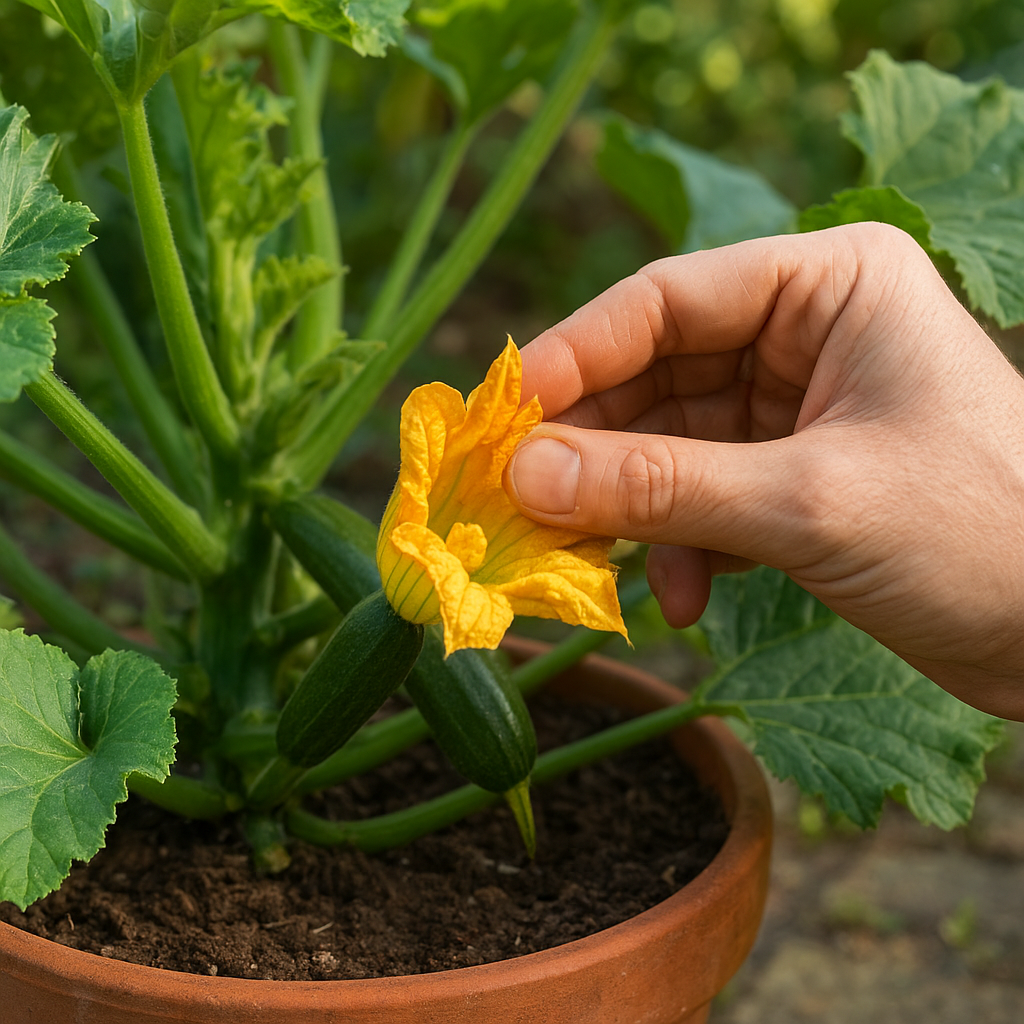
Zucchini plants produce male and female flowers. Male flowers usually appear first. Female flowers have a tiny swelling behind the blossom that looks like a baby zucchini. If a female flower is not pollinated well, that tiny fruit often yellows, shrivels, and drops instead of growing.
- Male flowers: on thin stems, no mini fruit behind the blossom
- Female flowers: a baby zucchini is visible behind the blossom
- Common early-season confusion: lots of flowers but no harvest yet because the plant is still producing mostly males
If pollinators are scarce on a balcony or covered patio, hand pollination can help. Use a small brush or gently transfer pollen from a freshly opened male flower to the center of a female flower in the morning.
Support the plant and open up airflow before mildew shows up
Zucchini is not a climbing cucumber, but it still benefits from a little structure. A tomato cage, stake, or simple support ring can keep leaves off the container edge, reduce breakage, and make watering and harvesting less chaotic.
You do not need to strip the plant bare, but it helps to remove badly damaged leaves, old lower leaves dragging across the soil, and anything clearly trapping moisture around the base. If pruning decisions tend to get messy, this guide on pruning plants without cutting the wrong thing covers the basic judgment that matters.
Common zucchini problems in pots and the fastest fixes
Lots of flowers but no zucchini
Sometimes the plant is still early and producing mostly male flowers. Sometimes female flowers are opening but not getting pollinated well enough. Give it a little time, watch for female blossoms, and hand pollinate if pollinator activity is weak.
Tiny fruit turns yellow and rots at the end
This is usually incomplete pollination rather than a watering issue alone. The fruit starts forming, then collapses because the flower was not fertilized properly. Check flowers early in the day and hand pollinate if needed.
Powdery mildew on older leaves
Powdery mildew shows up as a pale, dusty coating, usually once the plant is large and airflow gets worse. It spreads faster when leaves stay crowded and stressed.
- Water the soil, not the leaves.
- Remove badly affected foliage early.
- Keep the plant spaced and supported so air can move.
- Avoid letting one container-grown zucchini turn into a tangled wall of leaves.
Wilting in the afternoon
A big zucchini plant may droop slightly in intense afternoon heat even when the soil is still moist, then recover by evening. That is different from a plant that stays limp because the pot is genuinely too dry. Check the soil before assuming which problem you have.
Chewed leaves or pests on new growth
Aphids can gather on tender stems and leaf undersides, especially when growth is lush and soft. Inspect the plant often instead of waiting until leaves distort. This guide on getting rid of common plant pests covers the cleanup habits that help before the problem spreads.
Harvest early and often for the best texture
Container zucchini is best when you harvest it before it becomes enormous. Smaller fruit is usually more tender, less watery, and easier on the plant. Once zucchini gets oversized, the plant starts shifting energy into seed production instead of staying in a steady harvest rhythm.
- Best size for most varieties: around 6 to 8 inches long
- Check often: fruit can size up fast in warm weather
- Use pruners or a knife: avoid twisting hard on thick stems
Quick FAQ
Can zucchini really grow well in pots?
Yes, as long as the container is large enough, the plant gets full sun, and watering stays consistent. One healthy plant in a big pot can produce surprisingly well.
How many zucchini plants should go in one container?
One plant per container is the safest rule. Zucchini gets large quickly and does not share root space gracefully.
Why does my zucchini flower but not make fruit?
Usually because the plant is still producing mostly male flowers, or because female flowers are not getting pollinated well enough.
Does zucchini in pots need a cage?
It does not absolutely require one, but light support makes the plant easier to manage and can improve airflow around the base.
The short version
Use one large container, rich potting mix, strong sun, even watering, and steady feeding. Learn the difference between male and female flowers, help with pollination if needed, and harvest fruit while it is still small and tender. That combination prevents most container zucchini problems before they turn a promising plant into a giant leafy disappointment.