A Simple Container Cucumber Setup for Crisp Fruit and Fewer Midseason Problems
Cucumbers can do very well in containers, but they punish a weak setup faster than a lot of patio crops. A cramped pot, inconsistent watering, or a flimsy support can turn a promising plant into a tangled, thirsty mess that gives you bitter fruit and disease trouble just when it should be producing.
The good news is that container cucumbers are not complicated when you get the basics right. Pick the right type, give it a large pot, keep the roots evenly moist, and get the vines climbing early instead of sprawling into chaos.
If you are moving seedlings outside, do not rush them straight from indoor conditions into full weather. This guide on hardening off seedlings will help you avoid a rough start.
Choose a cucumber that actually fits a pot
The biggest beginner mistake is treating every cucumber variety like it belongs in a container. Some do. Some become enormous vines that need more root room and support than most patios can handle.
- Best for small spaces: bush, compact, patio, or pickling varieties
- Possible in larger containers: vining slicers with a strong trellis
- Least forgiving: large vigorous vines in undersized pots
If the seed packet or plant tag says compact, bush, patio, or container, you are usually looking at a better fit for a balcony or deck. If it says the vine gets long, plan on a much larger pot and a real support structure.
Use a big pot and only one plant per container
Cucumbers grow fast, drink heavily, and resent root stress. A small decorative pot dries out too quickly and leaves you trying to rescue the plant every hot afternoon.
- Good minimum: 5 gallons for a compact variety
- Better: 7 to 10 gallons for steadier moisture and better summer performance
- Must have: drainage holes and enough weight or stability that the pot will not tip once a trellis is full of vines
One cucumber plant per container is the safer rule. Crowding two plants into one pot usually means weaker growth, more humidity around the leaves, and faster drying at the roots.
If you are building out a small patio food garden, the same logic applies to other heavy feeders too. This guide on growing cherry tomatoes in pots covers a similar one-plant-per-pot mindset.
Start with fresh potting mix and install support immediately
Use container potting mix, not soil dug from the yard. Garden soil is too dense for a patio pot and tends to create drainage and disease problems. Cucumbers like a mix that drains well but still holds enough moisture to avoid daily root stress.
- Fill the pot with quality potting mix.
- Mix in a little compost if you want extra nutrient buffer.
- Add mulch after planting to slow moisture loss.
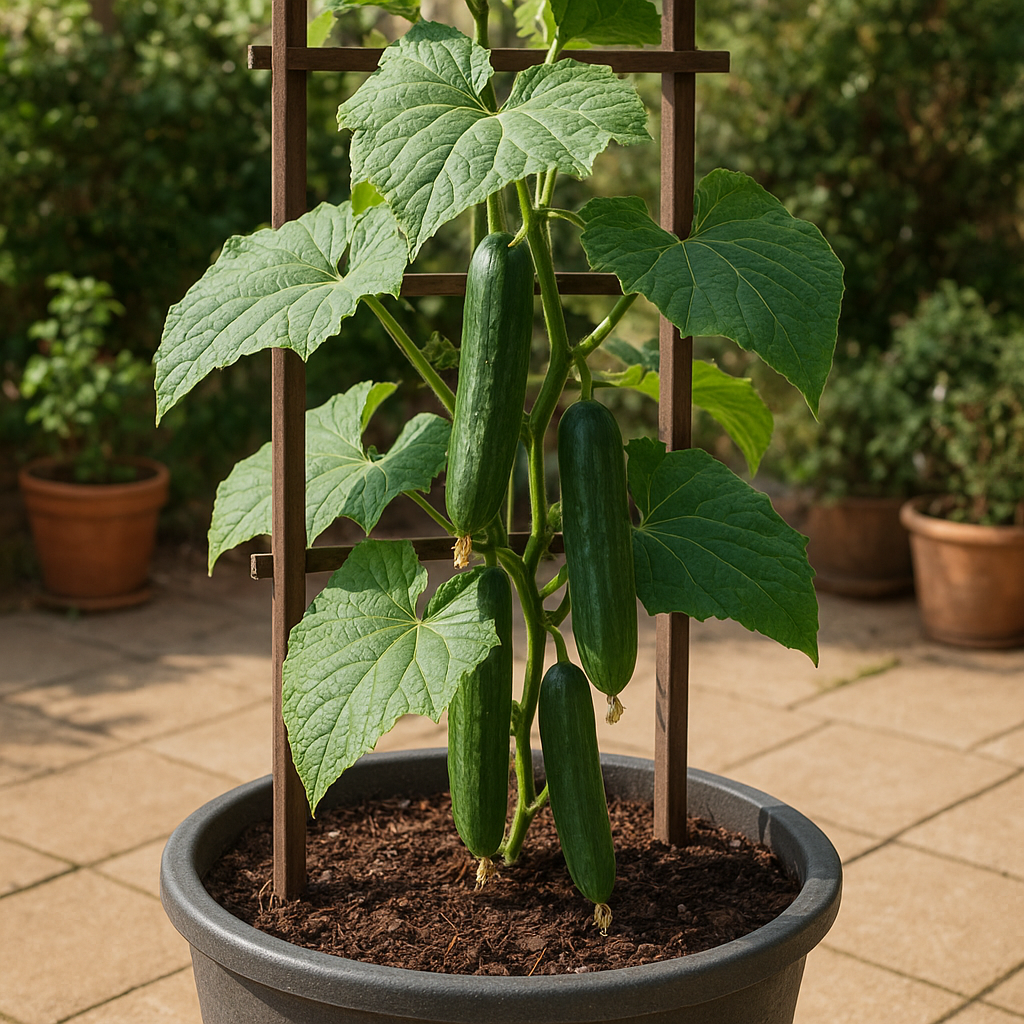
- Install the trellis or cage before the roots spread.
A trellis matters even for many compact cucumbers. It keeps leaves drier, makes fruit easier to spot, improves airflow, and stops the plant from swallowing the whole container area. A tomato cage can work for smaller types, but a sturdier vertical trellis is usually easier once the vines start climbing.
Plant after nights are warm enough
Cucumbers are warm-season plants. If nights are still cold, the plant may sit still, yellow, or never really recover its momentum. Wait until the weather is reliably warm before leaving them outside full time.
- Direct sowing: best once the potting mix is warm and frost danger has passed
- Transplants: useful if you want a head start, but handle roots gently
- Cold nights: can stall growth even when afternoons feel pleasant
If you start from transplants, avoid rough root handling. Cucumbers are less forgiving than some herbs or flowers when their roots get disturbed.
Water for steady growth, not emergency recovery
In containers, inconsistent watering is what drives a lot of cucumber disappointment. The plant looks fine, then suddenly droops, flowers stall, and the fruit tastes harsh or bitter. Deep, consistent watering is more important than fancy fertilizer schedules.
- Water slowly until excess runs from the bottom of the pot.
- Check the pot daily once weather turns warm.
- Expect faster drying in wind, full sun, and fabric pots.
- Do not rely on a rigid every-two-days schedule.
When summer heat really starts pushing containers hard, this guide on watering container plants in hot weather gives a better framework than guessing from wilted leaves alone.
Feed regularly, but do not push all leaf and no fruit
Cucumbers are fast growers, so potting mix can run short on nutrition by the time the plant is trying to climb, flower, and set fruit all at once. A balanced fertilizer at label rate is usually enough for container growing.
If the plant turns into a huge leafy vine with very little fruit, you may be overdoing nitrogen. Back off heavy feeding and focus on light, steady support instead of trying to force growth.
Help the vines climb and keep airflow open
Guide young vines onto the trellis early. Once they latch on, they usually know what to do, but a little direction at the start prevents the plant from sprawling across the pot and tangling around itself.
You do not need to prune cucumbers aggressively, but it helps to remove badly damaged leaves, dead lower growth, and any foliage that is clearly trapping moisture at the base. Good airflow is one of the simplest ways to make mildew less likely.
If you are never quite sure what should be removed, this guide on pruning plants without cutting the wrong thing covers the basic decision-making that keeps you out of trouble.
Common container cucumber problems and the fastest fixes
Bitter fruit
Bitter cucumbers are usually a stress signal. In containers, the usual cause is erratic watering, especially when the pot gets too dry between soakings. Some varieties are also more prone to bitterness than others, so variety choice matters.
The fix is simple even if the weather is not: water more consistently, mulch the surface, and do not let the pot swing between bone dry and soaked.
Flowers but no cucumbers
The first flowers are often male, so early blossoms dropping is not automatically a problem. If the plant keeps flowering without setting fruit, poor pollination is a common reason. Cold, rainy, or very hot weather can interfere, and fewer pollinators on a balcony can slow things down too.
If you are growing a non-parthenocarpic variety, keep flowers accessible to pollinators and avoid spraying anything that would bother them.
Powdery mildew
This usually starts as a pale powdery coating on leaves and can spread fast once airflow gets poor. Crowded growth, wet foliage, and a plant that is already stressed make the problem worse.
- Keep vines supported instead of piled up.
- Water the soil rather than the leaves.
- Remove badly affected leaves early.
- Avoid crowding more than one plant into a pot.
Chewed leaves and sudden wilting
Cucumber beetles are one of the big troublemakers. They chew foliage, bother flowers, and can spread bacterial wilt. If a healthy-looking plant suddenly starts wilting from one section and then collapses, that is more serious than simple thirst.
Inspect the plant often, especially early in the season. Hand-removing beetles, protecting young plants, and staying ahead of damage matters more than waiting for the problem to become obvious. For general plant-inspection habits, this guide on common plant pests is a useful companion.
Yellow leaves
A few older leaves fading out is normal. More widespread yellowing can mean overwatering, underwatering, nutrient stress, cold nights, or disease pressure. Look at the whole pattern before assuming one cause.
If the pot is staying soggy, fix drainage first. If the plant is drying out hard every day, increase your watering checks. If yellowing comes with spots, distortion, or white growth, think disease rather than fertilizer alone.
Harvest while the fruit is still young and tender
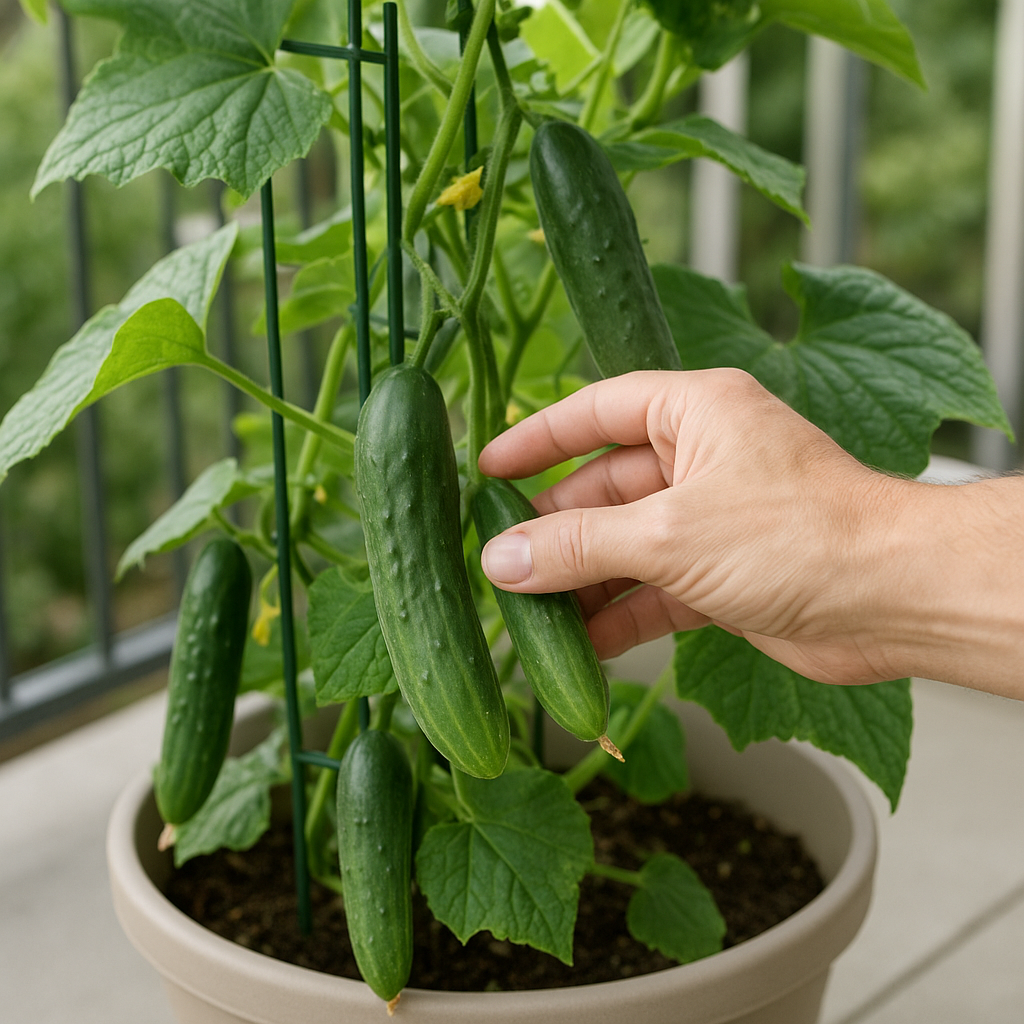
Do not wait for container cucumbers to become oversized. Harvesting at the right stage keeps flavor better, seeds smaller, and the plant producing instead of slowing down.
- Pick slicing cucumbers before they become thick and seedy.
- Pick pickling types young and consistently.
- Use scissors or pruners if the vine is delicate instead of yanking fruit off by hand.
Quick FAQ
Can you grow cucumbers in pots on a balcony?
Yes, if the balcony gets strong sun, the container is large enough, and the plant has a secure trellis. Balconies can be windier and hotter than people expect, so watering usually needs closer attention.
How many cucumber plants should go in one pot?
One plant per container is the simplest rule for healthy growth and better airflow.
Do cucumbers in pots need a trellis?
Usually yes. Even compact varieties are easier to manage with support, and vining types really need it.
Why are my cucumbers bitter?
Most often because the plant has been stressed by inconsistent watering or heat. Variety can also play a role.
The short version
Use one large pot, one plant, a sturdy trellis, fresh potting mix, and steady watering. That combination prevents most of the usual container cucumber problems before they start and gives you a much better shot at crisp, productive vines through the season.