A Simple Patio Tomato Setup That Produces All Summer
Cherry tomatoes are usually the easiest tomatoes to grow in containers, but they still go wrong fast when the pot is too small, the soil dries out every afternoon, or the plant has nowhere to climb. The goal is not just keeping the plant alive. The goal is getting steady clusters of fruit without cracked skins, blossom-end rot, or a tangled mess by midseason.
If you are starting from seedlings, get them ready for outdoor life before planting. This guide on hardening off seedlings will help you avoid the usual transplant setback.
Start with the right variety
For containers, cherry and grape tomatoes are usually the safest bet. They set fruit faster, recover better from heat swings, and put less strain on a patio-sized setup than big slicing tomatoes.
- Best for small spaces: compact or dwarf cherry varieties
- Best for longer harvests: indeterminate cherry tomatoes with a cage or stake
- Hardest in containers: large beefsteak types unless you have a very big pot and full sun
If the plant tag says the vine keeps growing all season, plan on more support and more pruning. If it says determinate or bush, expect a shorter, more compact plant.
Use a container that is bigger than you think
Most tomato problems in pots start with root stress. A tiny decorative container dries too quickly and leaves no room for steady growth. One healthy cherry tomato plant should usually get its own pot.
- Minimum size: 5 gallons for compact plants
- Better size: 7 to 10 gallons for stronger growth and steadier moisture
- Must have: drainage holes and enough depth for a solid root system
Fabric pots work well if you can stay on top of watering. Plastic and glazed containers hold moisture longer, which is often easier for beginners.
Plant deeply in quality potting mix
Do not use heavy garden soil in a patio pot. Use fresh potting mix meant for containers, then mix in compost if you want a little extra nutrient buffer. Tomatoes can root along buried stem sections, so it helps to plant them deeper than they were in the nursery cell or starter pot.
- Remove the lowest leaves before planting.
- Bury part of the stem if the seedling is tall and leggy.
- Water deeply right after planting so the mix settles around the roots.
- Add mulch on top to slow drying and reduce soil splash.
If your seedling is already stretched and floppy, avoid extra stress during the move. A careful transplant matters just as much indoors as out, and the same basics from repotting without root damage still apply.
Give the plant support on day one
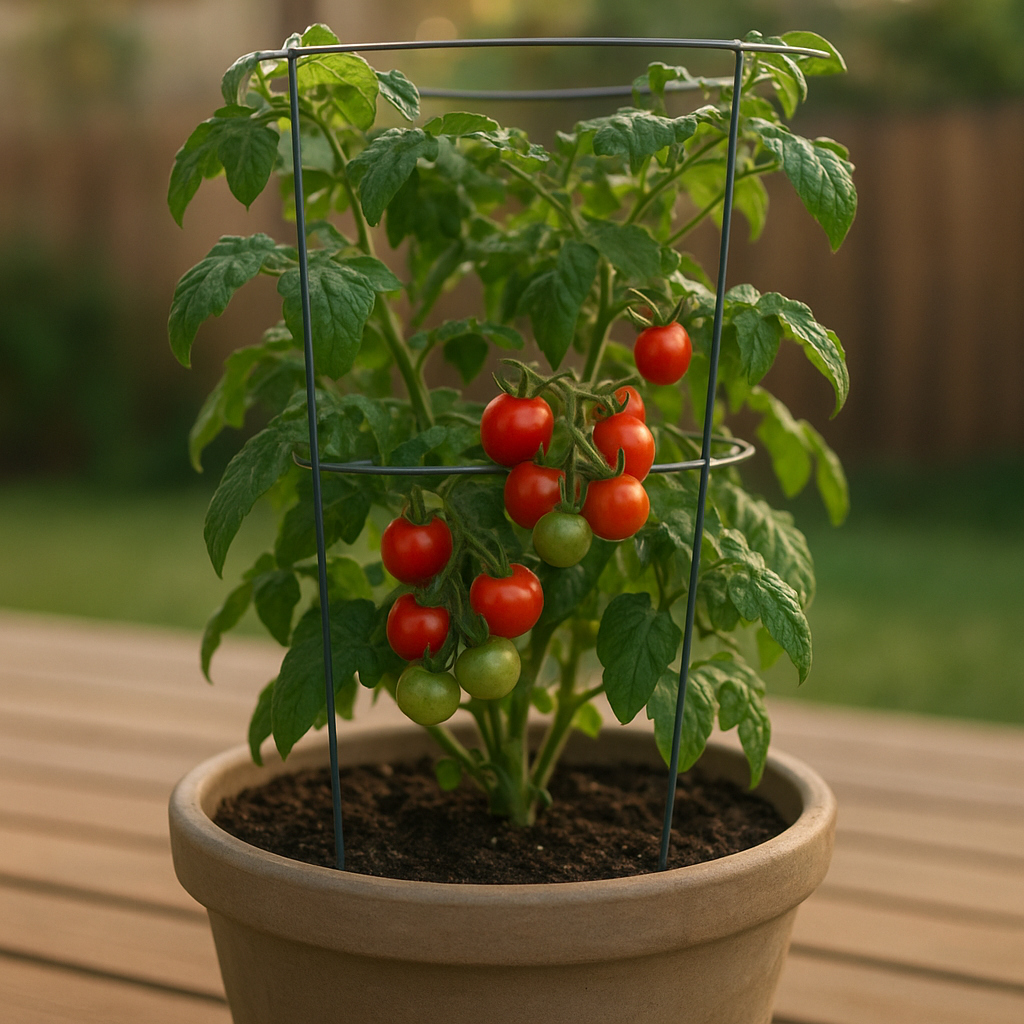
Put the stake, spiral support, or tomato cage in the pot at planting time. Waiting until the plant is loaded with stems and flowers makes it much easier to damage roots and snap branches.
A simple cage is enough for many cherry tomatoes. For taller indeterminate types, one strong stake with soft ties can be easier to manage on a deck or balcony.
Keep watering steady instead of heroic
Container tomatoes hate wild swings between bone dry and soaked. That is when fruit splits, leaves curl, and calcium-related issues show up. Water thoroughly, then let the top inch or so of mix guide the next watering instead of using a rigid calendar.
- Cool or mild weather: check once a day
- Hot, windy weather: expect to check morning and evening
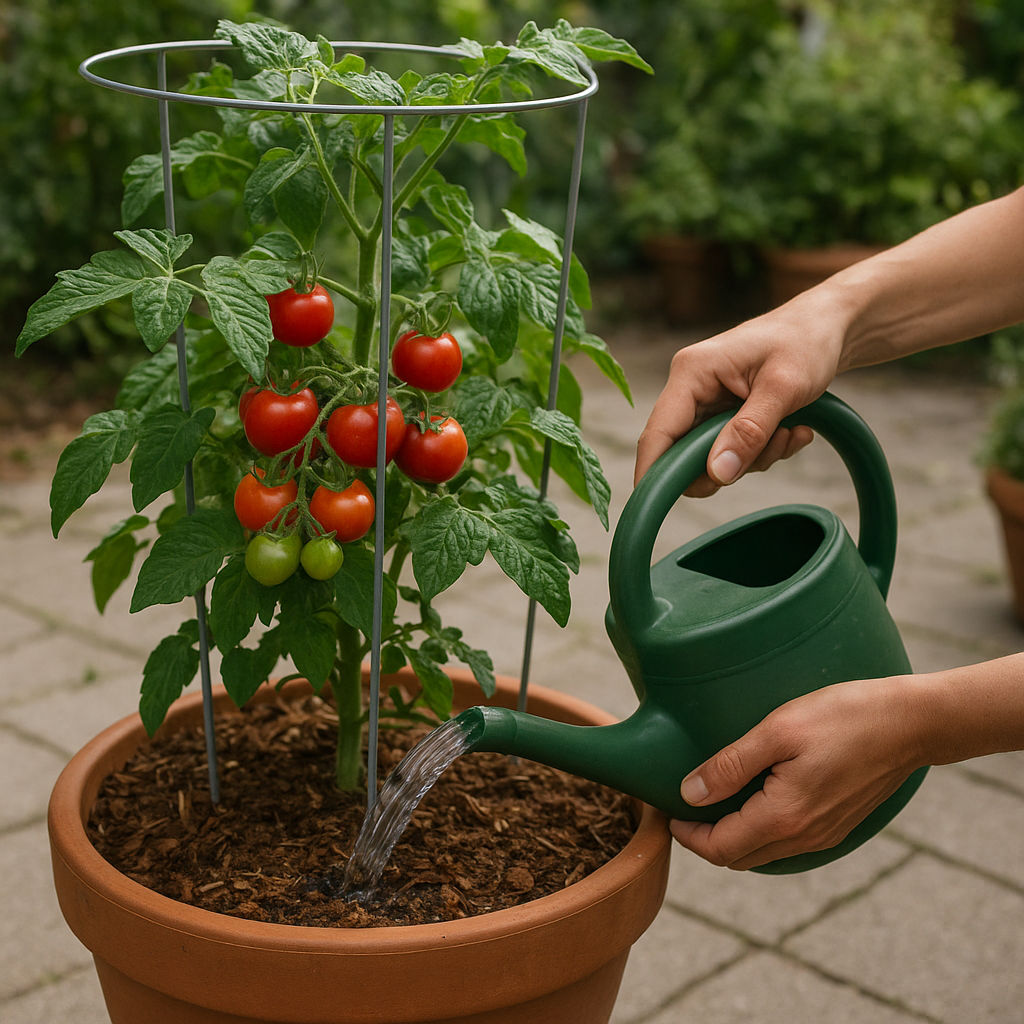
- Best method: water the soil slowly until excess drains out the bottom
- Avoid: quick surface splashes that leave dry roots underneath
When summer heat ramps up, this guide on watering container plants in hot weather gives a better way to judge what the pot actually needs.
Feed lightly but consistently
Potting mix does not stay rich forever. Once the plant is established and pushing new growth, use a balanced fertilizer or a tomato fertilizer at label rate. After flowering starts, a steady feeding rhythm usually works better than occasional heavy doses.
Too much nitrogen gives you a giant leafy plant with fewer tomatoes. If the plant looks lush but is slow to set fruit, ease up on feeding and make sure it is getting enough direct sun.
Prune for airflow, not perfection
Cherry tomatoes do not need aggressive pruning, especially bush types. Focus on removing damaged lower leaves, any stems rubbing at the base, and dense growth that traps moisture near the soil line. The point is better airflow and easier management, not sculpting the plant into something dramatic.
If pruning still feels a little vague, this guide on how to prune plants without cutting the wrong thing covers the basic mindset that keeps you out of trouble.
Common problems and the fastest fixes
Flowers but no fruit
This usually comes down to temperature stress, low pollination, or too much nitrogen. Tomatoes can pause fruit set when nights are too cool or daytime heat gets intense. Keep the plant watered evenly and give flowering stems a gentle shake during dry, calm weather to help pollen move.
Fruit splitting
Usually caused by uneven watering, especially after the plant dries out and then gets soaked. Mulch helps, but the real fix is more consistent moisture.
Blossom end rot
This shows up as a dark, sunken patch on the bottom of the fruit. It is often triggered by inconsistent watering more than a simple fertilizer shortage. Keep moisture even, avoid root damage, and do not let the plant cycle between severe drought and saturation.
Yellow lower leaves
A few older leaves fading near the bottom is normal once the plant gets going. Widespread yellowing can mean the pot is staying too wet, the plant needs feeding, or the roots have outgrown the container.
Pests on new growth
Aphids and other soft-bodied pests often gather on tender tips. Catch them early and act before the plant is sticky and distorted. This guide to getting rid of common plant pests covers the least chaotic way to respond.
When to harvest
Pick cherry tomatoes when they are fully colored and slightly soft to the touch, not rock hard. Frequent harvesting keeps the plant producing and prevents ripe fruit from splitting on the vine after heavy watering or rain.
Quick FAQ
Can two cherry tomato plants share one pot?
Usually not if you want reliable production. One plant per container is simpler and gives the roots enough room to stay evenly watered.
Do cherry tomatoes need full sun?
Yes. Aim for at least six to eight hours of direct sun. More is usually better as long as you stay ahead of watering in peak heat.
Should you pinch off the first flowers?
If the seedling is still tiny and recently transplanted, removing the first few flowers can help it settle in. If the plant is already sturdy and rooted well, it is usually fine to let it fruit.
The short version
Use a large pot, fresh container mix, support from the start, steady watering, and enough sun. That basic setup solves most container tomato problems before they start and gives cherry tomatoes the best chance to produce for months instead of fizzling out after a few frustrating weeks.