A Simpler Container Setup for Patios, Balconies, and Small Sunny Spaces
Grow bags make vegetable gardening possible in places where a raised bed or in-ground plot is not realistic. They are light, easy to move, and simple to store when the season ends. They also fail fast when the setup is too small, the mix dries out hard, or tall plants become top-heavy in the wind.
If you want grow bags to work, think less about the bag as a magic product and more about it as a container system. Size matters. Potting mix matters. Watering matters. Crop choice matters. When those four things line up, grow bags can be one of the easiest ways to grow food in a small space.
The short answer
- Use a bag that is larger than you think you need.
- Fill it with fresh potting mix, not garden soil.
- Grow one major crop per bag unless the plants stay small.
- Place the bag where it gets enough sun and does not sit in trapped runoff.
- Water slowly and deeply whenever the root zone starts drying, not on autopilot.
- Feed long-season crops steadily because nutrients wash out faster in containers.
If those six things are in place, most grow-bag problems get easier to avoid.
Why people like grow bags
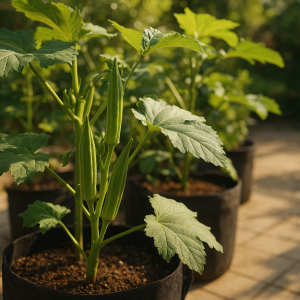
Fabric grow bags are popular for good reasons. They are easier to handle than large ceramic or plastic pots, and they work well for renters, balconies, patios, porches, driveways, and sunny corners that would otherwise go unused.
- Good drainage: excess water escapes more easily than it does in many rigid containers.
- Easy storage: empty bags fold flat at the end of the season.
- Flexible placement: you can build a small food garden almost anywhere with enough light.
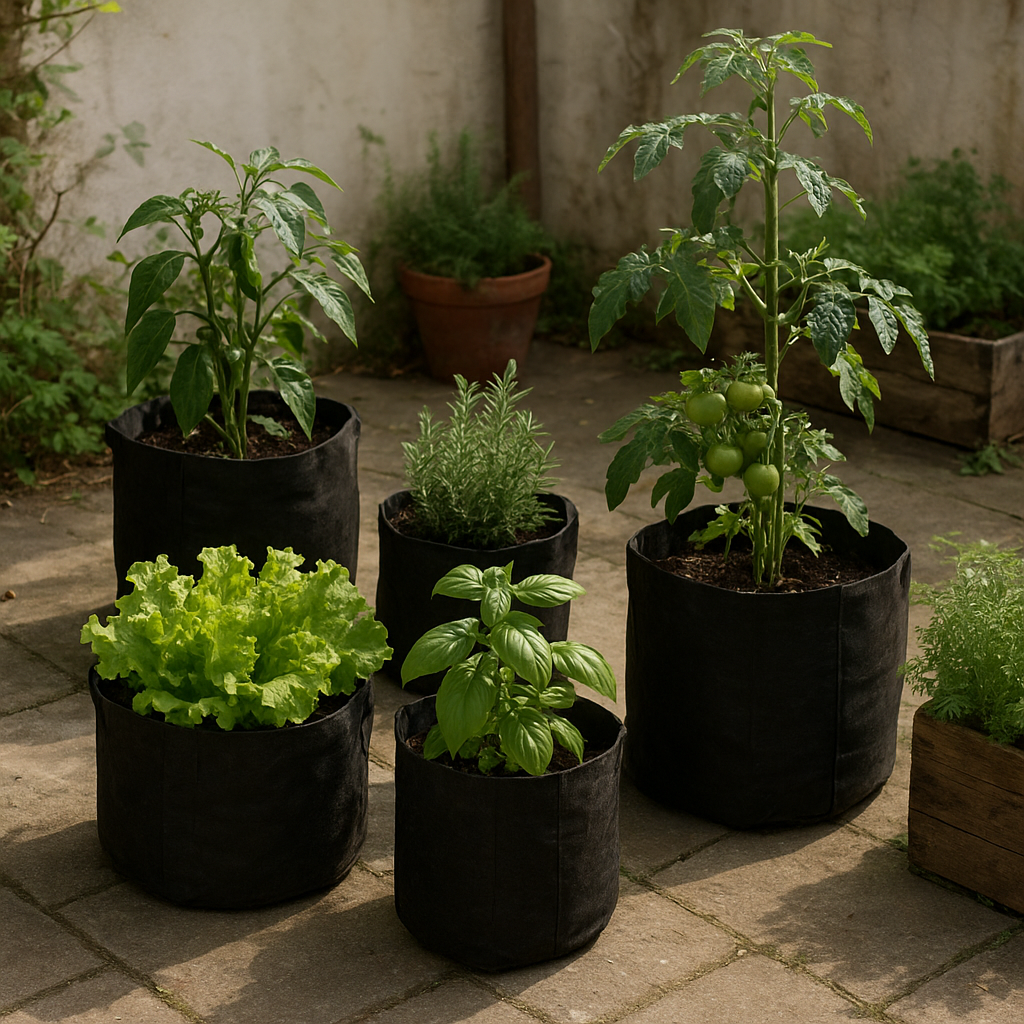
- Useful for many crops: herbs, greens, tomatoes, peppers, potatoes, beans, and cucumbers can all work in the right size bag.
The main tradeoff is moisture loss. Fabric sides let air in, which is useful for roots, but it also means the potting mix can dry faster in heat and wind.
What size grow bag should you use?
This is where most people make the season harder than it needs to be. Small bags are tempting because they cost less and fit anywhere, but they dry quickly and leave less room for roots. Bigger bags hold moisture longer, stay more stable in wind, and give you more margin when the weather gets hot.
- 1 to 3 gallons: best for herbs, cut-and-come-again greens, and quick crops.
- 5 gallons: workable for compact peppers, basil, and a few shallow-rooted vegetables, but not very forgiving in hot weather.
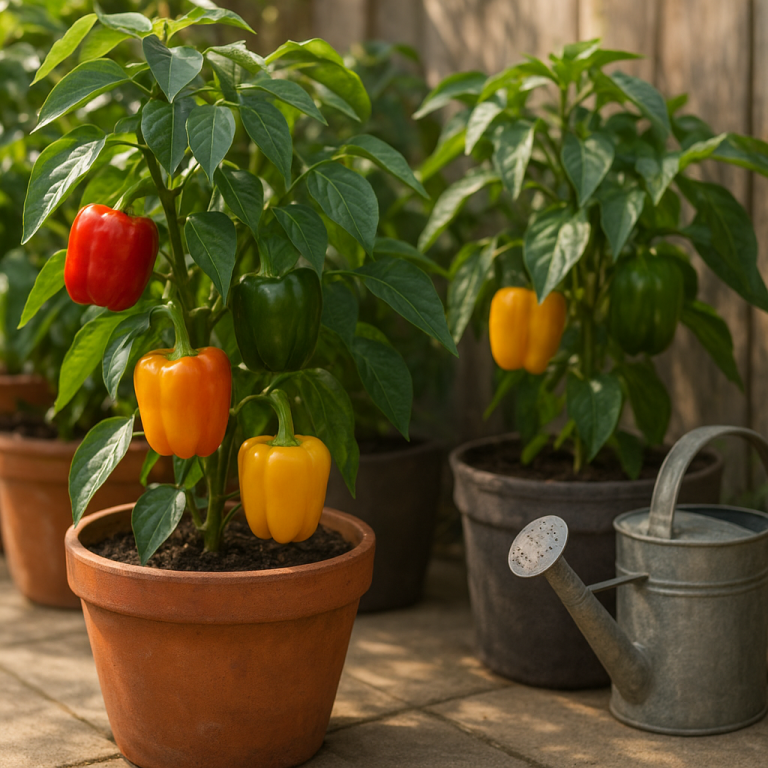
- 7 to 10 gallons: a good starting point for bush beans, cucumbers, eggplant, and many pepper plants.
- 10 to 15 gallons: better for tomatoes, potatoes, and any crop that gets large or fruits over a long season.
- 20 gallons and up: useful for vigorous tomatoes, hot windy sites, or gardeners who want more moisture buffer.
If you are using grow bags for fruiting vegetables, larger is usually better. This is especially true for crops like tomatoes in grow bags and potatoes in grow bags, where small containers create fast moisture swings and weaker harvests.
Best vegetables for grow bags
Grow bags work best when the crop matches the container size and the conditions on your patio or balcony.
- Very good choices: lettuce, arugula, basil, parsley, cilantro, chives, radishes, bush beans, peppers, and potatoes.
- Good choices with the right support: tomatoes, cucumbers, peas, and eggplant.
- Lower-margin choices: very large squash, melons, or giant indeterminate tomatoes in undersized bags.
If you are just starting out, grow one crop per bag and choose something you already use in the kitchen. Greens and herbs are forgiving. Peppers and bush beans are manageable. Big vining crops need more support, more water, and more planning.
For mixed small-space growing, a few bags of greens and herbs can also tie into a broader setup like a container salad garden or a balcony herb garden.
Use potting mix, not soil from the yard
Grow bags need a loose container mix that drains well but still holds enough moisture between waterings. Heavy garden soil tends to compact, drain unevenly, and stay soggy at the bottom while drying out on top.
- Use fresh potting mix made for containers.
- Add compost if you want more body, but do not turn the bag into heavy mud.
- Leave a little space at the top so water does not spill out immediately.
- Add a light mulch layer after planting to slow evaporation.
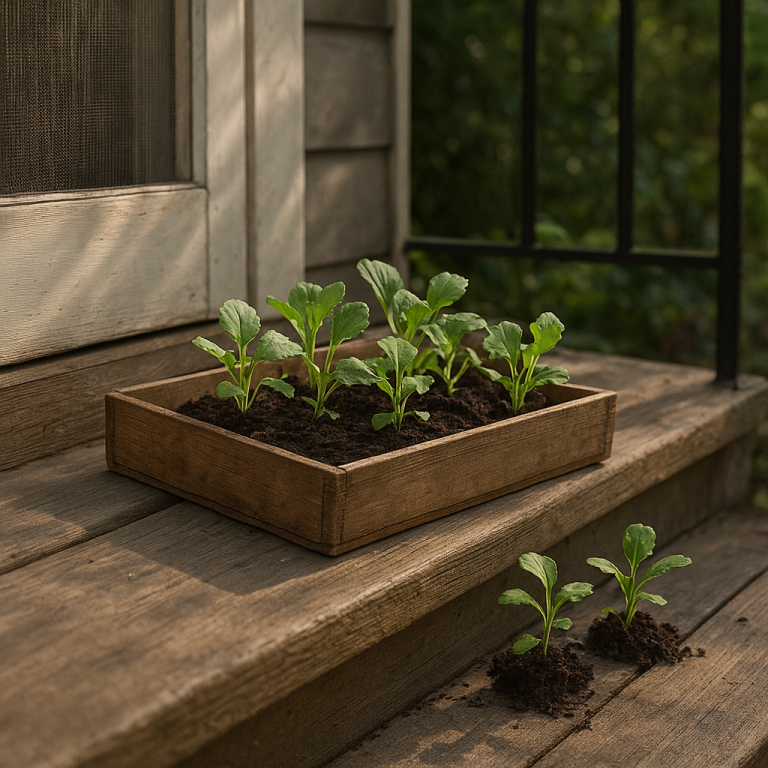
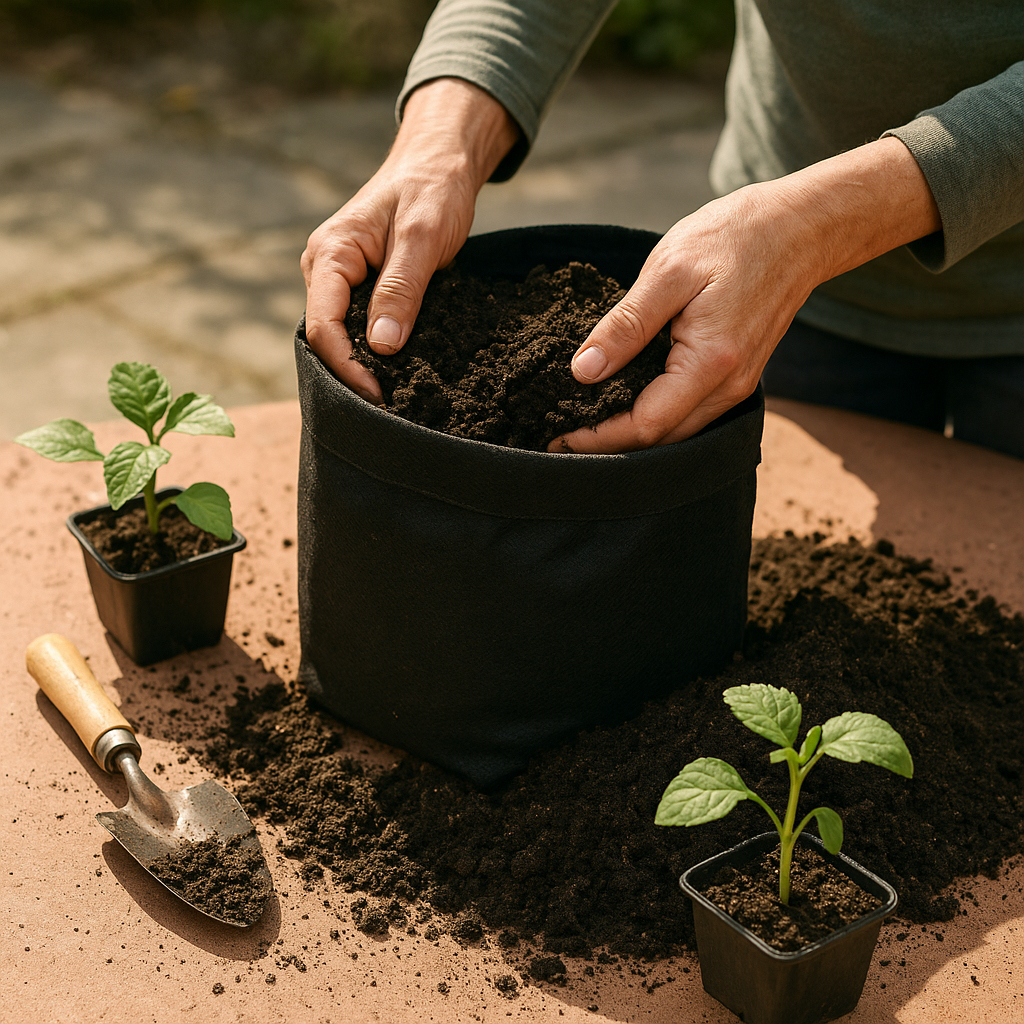
If you are planting seedlings, settle the mix gently around the roots and water thoroughly after planting. Rough handling creates transplant stress before the plant ever starts growing. If you need a refresher, this guide on transplanting vegetable seedlings without shock covers the part that usually goes wrong.
How to set up a grow bag the right way
- Choose a bag large enough for the mature crop.
- Place it where it will get the right amount of sun before you fill it, because large bags get heavy fast.
- Fill with fresh potting mix, leaving about 1 to 2 inches at the top.
- Plant the seedling or seeds at the proper depth.
- Water slowly until the full root zone is moistened.
- Add mulch and support right away if the crop will climb or get top-heavy.
For tall vegetables, install the support early instead of trying to force stakes or cages into a fully rooted bag later.
Where grow bags should go
Most vegetables still need the same basic conditions they would need in any other container. The bag does not change the crop’s light requirements. Fruiting vegetables usually want full sun. Greens and herbs can tolerate a little less.
- Use the sunniest stable spot you have for tomatoes, peppers, cucumbers, beans, and potatoes.
- Give leafy greens a little protection from punishing late-afternoon heat if your summers are intense.
- Avoid trapped runoff under the bag, especially on solid patios where puddling can keep the bottom too wet.
- Watch for wind tunnels on balconies and corners, because fabric containers and tall crops can dry out or tip over fast.
Container shape matters, not just volume. A tall top-heavy plant in a narrow setup can become unstable even when the bag size seems acceptable.
Watering is where most grow-bag problems start
Grow bags are not difficult because they are fabric. They are difficult when the watering pattern swings from dry to soaked to dry again. That pattern stresses roots, slows growth, and creates the usual chain of problems: blossom-end rot, split fruit, bitterness, wilt, and stalled plants.
Check the bag regularly with your finger and by weight if you can lift it. Water when the root zone is starting to dry, not because the calendar says it is watering day.
- Water slowly so the mix absorbs moisture instead of letting it rush out the sides.
- Keep watering until excess drains from the bottom.
- Mulch the surface to reduce evaporation.
- Expect heat, wind, and large fruiting plants to speed everything up.
During summer, watering needs can change very quickly. This guide on how often to water container plants in hot weather is the best companion if your bags keep drying faster than expected.
Do grow bags need fertilizer?
Usually yes, especially for crops that stay in the bag for months and produce a lot of leaves, flowers, or fruit. Containers hold a limited amount of nutrition, and every deep watering moves some of it out of the mix.
- Greens and herbs: often need only light, steady feeding in fresh mix.
- Tomatoes, peppers, cucumbers, and eggplant: usually need more consistent feeding through the season.
- Potatoes: want support, but not a huge nitrogen push that makes all top growth and weak tuber development.
A simple plan works better than a shelf full of random products. Start with quality potting mix, use a balanced slow-release fertilizer if needed, and add light liquid feeds for long-season fruiting crops. This guide on fertilizing vegetables in pots goes deeper on the feeding side.
Common grow-bag mistakes and quick fixes
The bag dries out every day
The bag may be too small, the crop may be too large for it, the site may be windy, or the mix may need deeper watering. The usual fix is more soil volume and slower watering, not panic.
The plant is tall and keeps falling over
Add support earlier next time and think about the shape of the whole setup. Tall fruiting crops need a lower, more stable footprint or stronger staking.
The plant looks pale and stalls out
Check feeding, but also check whether the bag is staying too dry. Root stress and hunger often look similar in containers.
The bottom of the bag stays soggy
The potting mix may be too dense, runoff may be pooling underneath, or the bag may be getting watered before it actually needs it.
You tried to fit two or three large vegetables in one bag
Crowding sounds efficient, but it usually leads to weaker growth and more water stress. One healthy crop per bag is easier to manage than several competing plants.
Are grow bags better than pots?
Not always. They are better for some gardeners and some spaces. Rigid pots hold shape and often hold moisture a little longer. Grow bags are lighter, easier to store, and often drain better. The right choice depends on your climate, wind exposure, crop choice, and how closely you can keep up with watering.
If you miss waterings often, a larger rigid pot may feel more forgiving. If drainage and flexibility matter most, grow bags are a strong option.
Quick FAQ
How many plants fit in one grow bag?
For major vegetables, usually one plant per bag is easiest. Small greens and herbs can be planted more densely, but fruiting crops do better with their own root space.
What size grow bag is best for tomatoes and cucumbers?
A 10 gallon bag is often the practical minimum, and 15 gallons is more forgiving in hot weather.
Can you reuse grow bags?
Yes, if the fabric is still in good shape. Empty them, clean off old debris, and refresh the potting mix rather than planting into exhausted material year after year.
Do grow bags work on balconies?
Yes, but wind and weight matter. Use stable bag sizes, avoid top-heavy combinations, and be ready for faster drying in exposed spots.
The short version
Grow bags work well for vegetables when the bag is big enough, the potting mix is loose and fresh, the crop matches the container, and watering stays steady. Most failures come from undersized bags, crowded planting, and fast moisture swings. Start larger, keep the care simple, and let the bag support the crop instead of fighting it.