A Smarter Storage Setup for Rosemary You Want to Use All Week
Rosemary lasts longer than basil, dill, or mint, which makes it easy to get overconfident. A fresh bunch looks sturdy enough to survive a rough trip home, a few days in the produce drawer, and maybe another week shoved behind the yogurt. Then the needles start drying out, the stems lose their spring, and the whole thing smells flatter than it should.
If you want rosemary to stay fragrant and worth reaching for, the goal is not to keep it wet. The goal is to keep it cool, lightly protected, and as dry as possible without letting it turn brittle.
The short answer
- Keep fresh rosemary in the refrigerator, not on the counter for long storage.
- Wrap the sprigs loosely in a dry or barely damp paper towel.
- Place the bundle in a partially open bag or container so moisture does not get trapped.
- Do not wash rosemary until you are ready to use it unless it is visibly dirty.
- If you have a large bunch, freeze or dry part of it early instead of trying to stretch every sprig in the fridge.
Rosemary usually keeps best when it stays cool and protected without sitting in a humid little greenhouse.
Why rosemary spoils even though it feels sturdy
Rosemary is a woody herb, but it is still fresh plant material. The needles can dry out if the fridge pulls too much moisture from them, and they can also turn soft or musty if they sit in trapped dampness. The usual problem is not that rosemary needs more water. It is that it needs a steadier middle ground than a sealed produce bag or a wet bundle can provide.
If the rosemary came from your own pot, that sturdier texture can be misleading too. Freshly cut sprigs still lose quality fast once they are indoors. If you are trimming from a patio or windowsill plant, this rosemary grow guide covers how to keep the plant productive in the first place.
The most reliable fridge method
- Sort the bunch first. Pull out any blackened, crushed, or dried sprigs so one bad patch does not drag down the rest.
- Keep the rosemary dry. If it is damp from rinsing or condensation, pat it dry thoroughly.
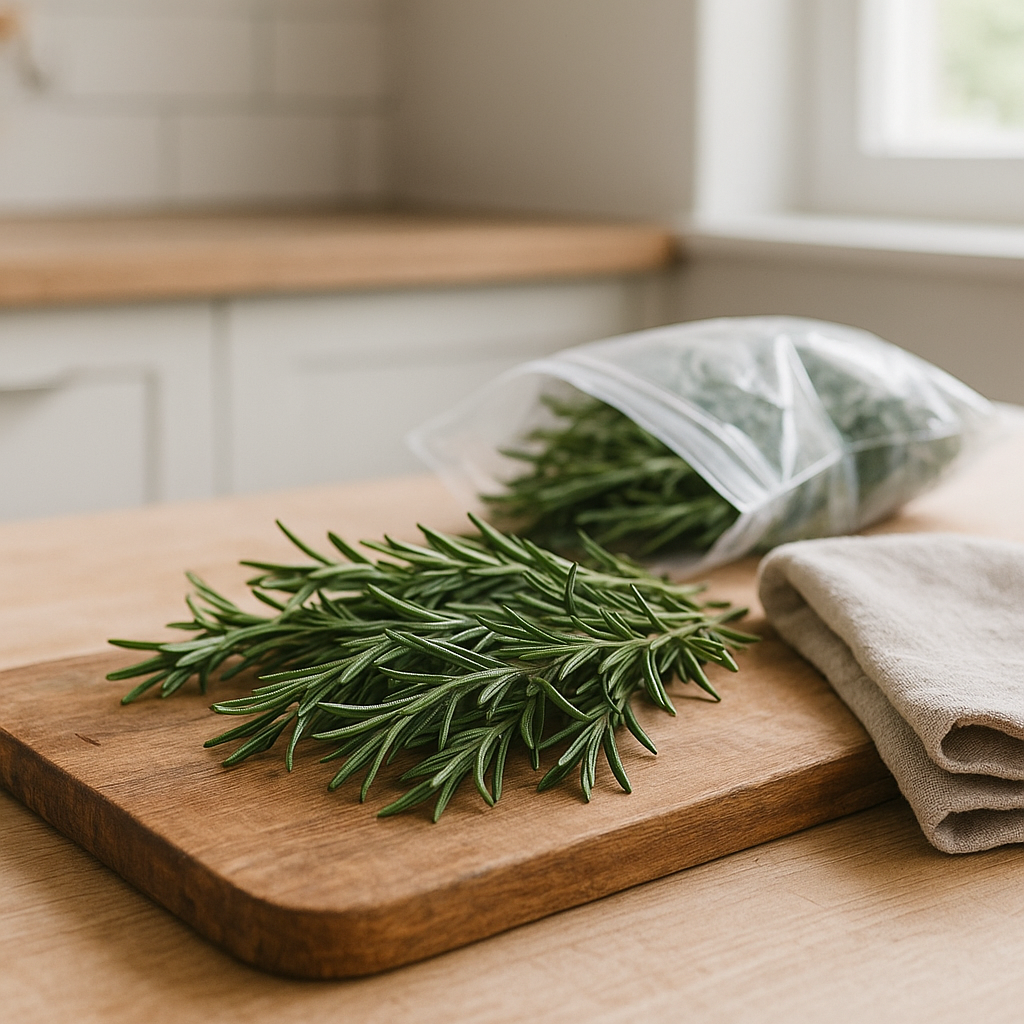
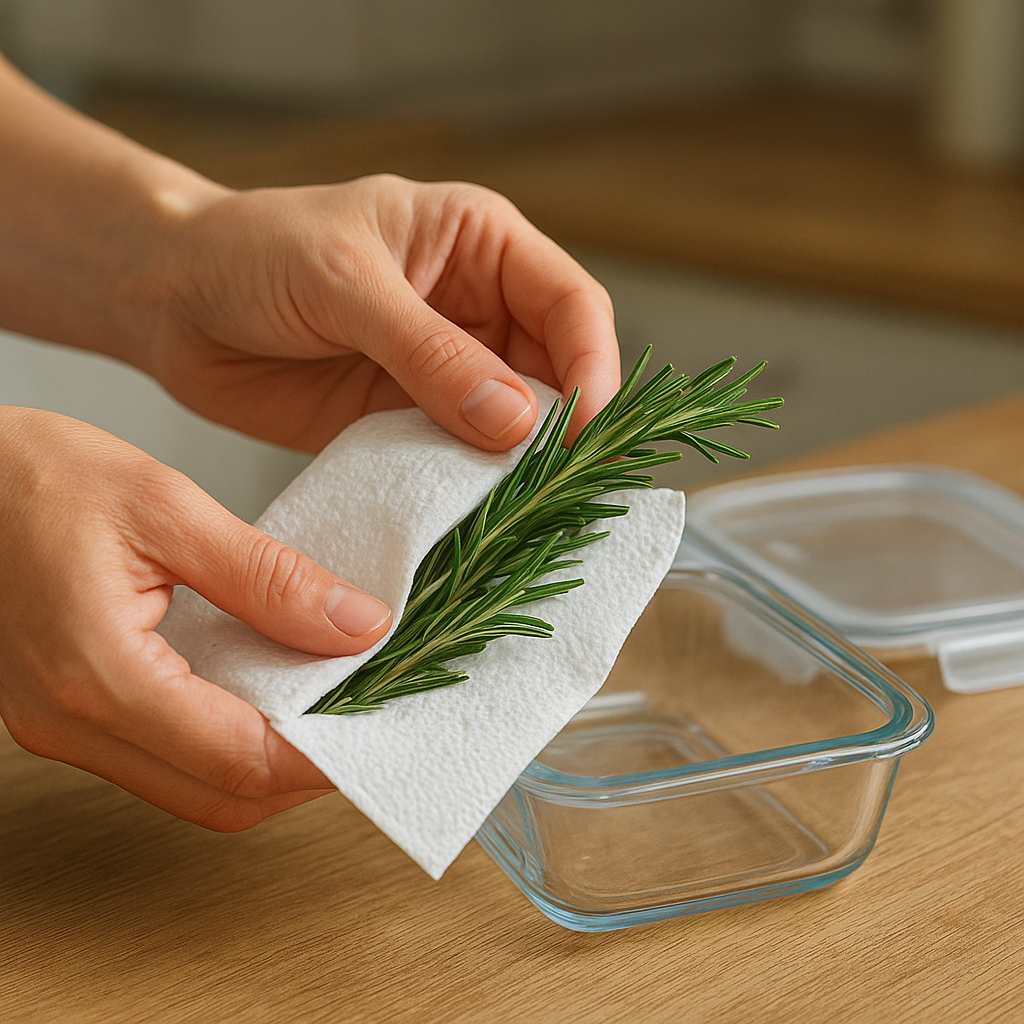
- Wrap it loosely. Use a dry or barely damp paper towel. The towel should feel almost dry, not soft and wet.
- Bag it without sealing it tight. A partially open zip bag or a container with a little airflow works better than a fully sealed pouch.
- Store it where it will not get crushed. A flat shelf is usually better than a crowded produce drawer.
This setup protects the needles from cold dry air without trapping the kind of moisture that makes herbs go swampy.
When the jar method is worth using
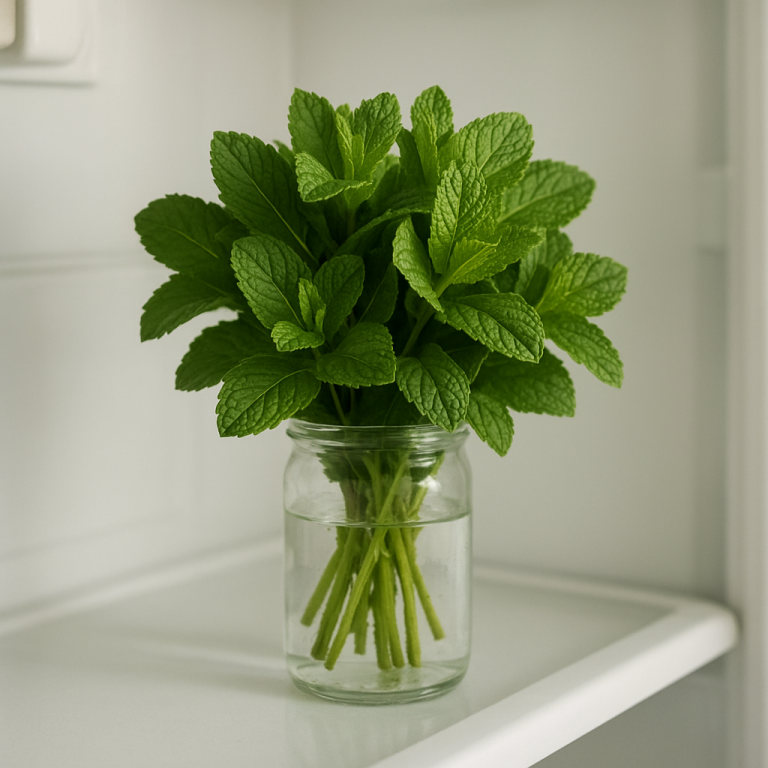
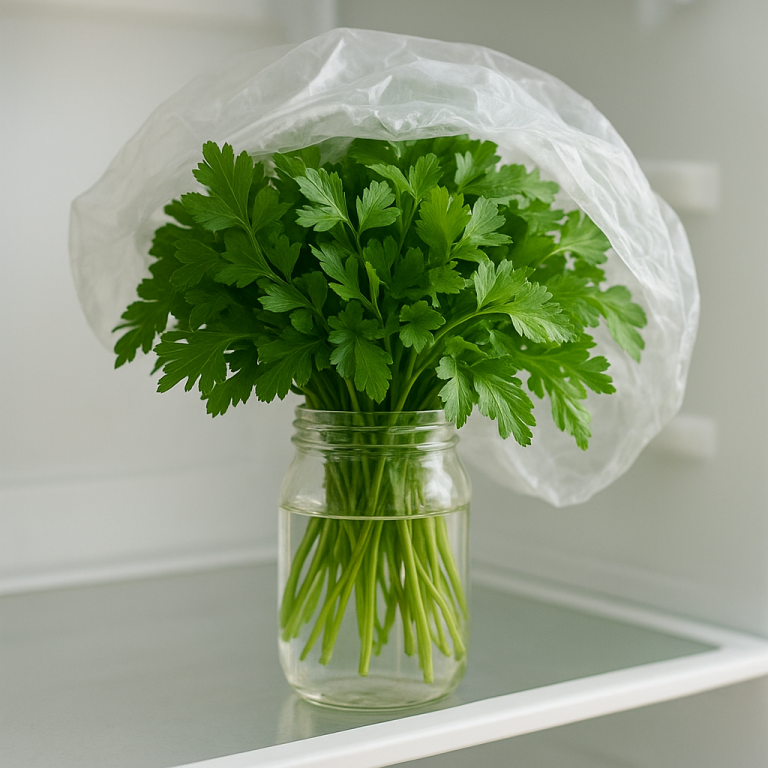
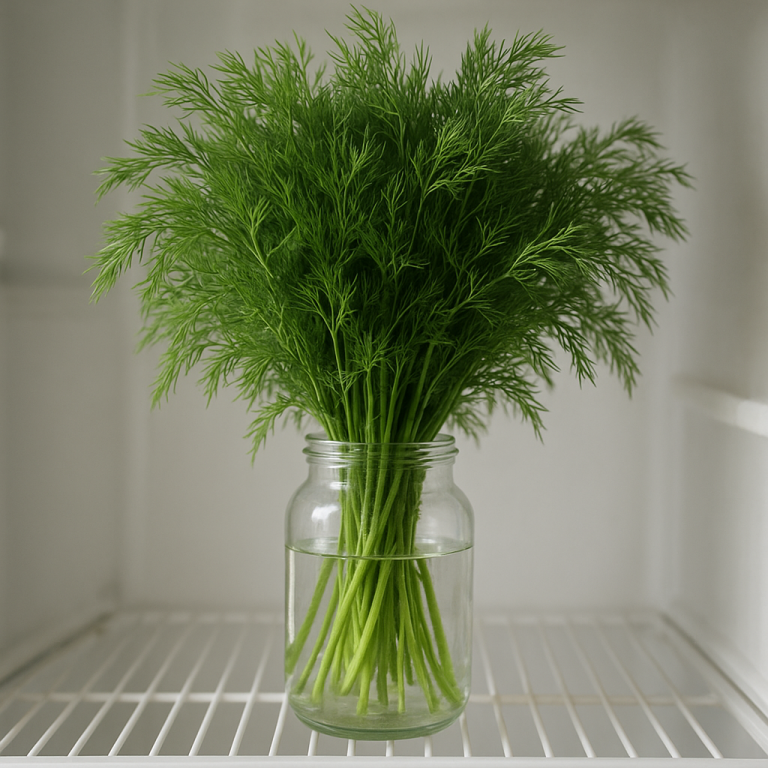
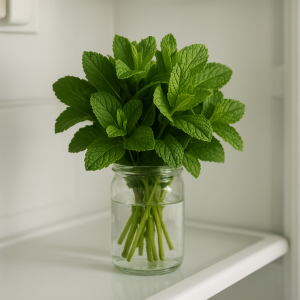
If you cut long, fresh stems from the garden and plan to use them within a day or two, a jar with a little water can work. It is more of a short-term holding pattern than the best long-term storage method. For a grocery-store bunch or anything you want to keep for the week, the towel-and-bag setup is usually more reliable.
Rosemary is not as thirsty as tender herbs. If you want the side-by-side difference, this herb storage guide explains why mint, parsley, and dill need a wetter setup than woody herbs do.
Should you wash rosemary before storing it?
Usually no. Wash it right before cooking. Early washing leaves water between the needles and along the stems, which raises the odds of mildew, dark spots, or a stale smell in the fridge.
If the rosemary is gritty enough that you need to rinse it immediately, dry it very thoroughly before you put it away. This is one of those herbs where a little leftover moisture causes a lot of trouble.
What to do with extra rosemary before it turns tired
Rosemary often arrives in larger bunches than one meal needs, especially if you buy it for roasted potatoes, bread, soup, or chicken. Split the bunch early instead of trying to stretch all of it in the fridge.
- Freeze whole dry sprigs for stews, roasts, and sheet-pan dinners.
- Chop some with oil or butter for quick cooking portions.
- Dry the oldest-looking sprigs first if you want a small jar for later use.
- Turn a mixed herb surplus into herb butter if you also have parsley, thyme, chives, or sage hanging around.
Making that decision on day one is much easier than trying to rescue rosemary after the aroma has already faded.
Common mistakes that shorten rosemary’s life
Trapping it in a sealed wet bag
Too much moisture is a faster problem than dryness for most fresh rosemary. A sealed, damp bag invites soft needles and musty smells.
Leaving it loose in the fridge
Cold airflow dries the needles quickly, especially if the bunch is already a little old.
Washing the whole bunch on day one
That sounds efficient, but it usually shortens the storage window unless you dry every sprig extremely well.
Keeping every stem fresh for too long
Once rosemary starts losing aroma, it is better to freeze or dry what is left than to keep pretending it will taste the same next week.
Troubleshooting
The needles feel soft instead of springy
The bundle was probably too damp or too tightly sealed. Remove the soft sprigs and reset the rest with a drier wrap and more airflow.
The rosemary dried out in the fridge
The wrap was likely too dry, or the bunch sat in direct cold airflow. A barely damp towel and a little more protection usually helps.
It smells weak even though it still looks fine
Rosemary can look usable after the strongest aroma has already faded. Use those sprigs soon in cooked dishes, then preserve the rest.
I cut too much from the plant outside
Keep a smaller fresh bundle for the next few meals and freeze or dry the rest the same day. Rosemary is forgiving, but the flavor is best when you preserve it before it gets limp or dull.
FAQ
How long does fresh rosemary last in the fridge?
It often stays useful for a week or more when it is stored well, though the exact time depends on how fresh it was when you bought or cut it.
Can you store rosemary in water?
Yes, but that works best as a short-term method for very fresh stems. For longer fridge storage, a loose towel wrap is usually steadier.
Can you freeze fresh rosemary?
Yes. Whole sprigs and chopped rosemary frozen in oil both work well for cooking.
Is dried rosemary better than old fresh rosemary?
Usually yes. Once fresh rosemary has lost most of its scent, dried rosemary often gives you better flavor.
The useful version
Fresh rosemary keeps best when it stays cool, lightly wrapped, and almost dry. Give it a little protection, skip the wet produce-bag routine, and preserve the extra sprigs before they lose their punch.