A Reliable Indoor Seed-Starting Setup for Strong, Stocky Seedlings
Starting seeds indoors sounds simple until the trays turn patchy, stems stretch toward the window, or everything looks great for ten days and then collapses. Most problems come from the same few causes: starting too early, using weak light, keeping the mix too wet, or crowding seedlings long after germination.
If you want seedlings that are actually ready for garden beds, raised beds, or patio containers, the goal is not maximum speed. The goal is steady growth with enough light, enough warmth, and just enough moisture to keep roots moving without inviting disease.
The short answer
- Start only the crops that benefit from an indoor head start.
- Count backward from your last expected spring frost instead of sowing everything at once.
- Use a clean tray setup, fresh seed-starting mix, and containers with drainage.
- Give seedlings strong light close to the canopy as soon as they sprout.
- Keep the mix lightly moist, not soggy, and provide airflow after germination.
- Thin, pot up, and harden off on time so seedlings do not stall in crowded cells.
If those six things are handled well, indoor seed starting gets much less chaotic.
Which seeds should start indoors and which should not
Not every crop needs an indoor head start. The easiest indoor sowing plan focuses on plants that need more time than your outdoor season easily provides or that benefit from getting established before the weather fully warms.
- Usually worth starting indoors: tomatoes, peppers, eggplant, basil, parsley, kale, lettuce, onions, and many annual flowers.
- Often easier to direct sow outside: radishes, carrots, beans, peas, and many root crops that dislike transplanting.
- Use caution with fast vines: cucumbers, squash, and melons can be started indoors, but they outgrow trays quickly and dislike rough handling.
If you want crop-by-crop follow-up after the seedlings are ready, the site already has deeper guides for basil, kale, tomatoes in grow bags, and jalapenos in pots.
Time sowing from your last frost date, not from impatience
The cleanest way to avoid overgrown seedlings is to work backward from your average last spring frost date. Different crops need different lead times, so one sowing day for everything usually creates a mess.
- About 8 to 10 weeks before last frost: onions, parsley, and slower growers.
- About 6 to 8 weeks before last frost: tomatoes, peppers, eggplant, basil, and many herbs.
- About 3 to 5 weeks before last frost: lettuce, kale, cucumbers, squash, and other crops that size up fast.
If a tray is ready long before outdoor conditions are ready, the plants do not pause politely. They stretch, tangle roots, and become harder to move. Once the timing lines up, the next steps are hardening off seedlings and transplanting them without shock.
The simplest indoor seed-starting setup that works
- A tray or small pots with drainage holes
- A bottom tray to catch water
- Fresh seed-starting mix instead of heavy garden soil
- Labels that will still make sense three weeks later
- A bright window only as backup, not as the main light source
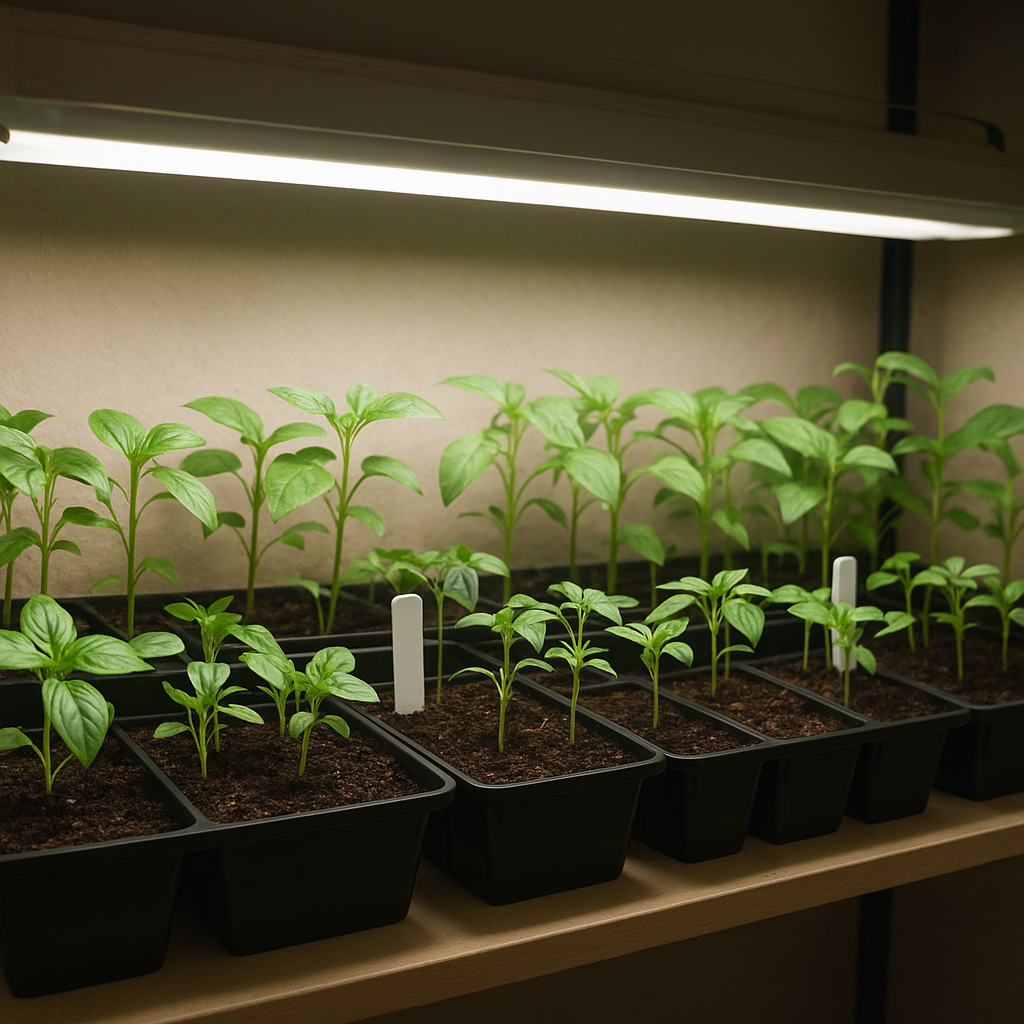
- A grow light that can stay just a few inches above the seedlings
- A small fan or some airflow after germination
You do not need a giant indoor greenhouse. You do need more light than most windows provide on their own. Seedlings grown under weak light are the ones that topple, lean, and never quite recover into sturdy plants.
How to sow seeds indoors step by step
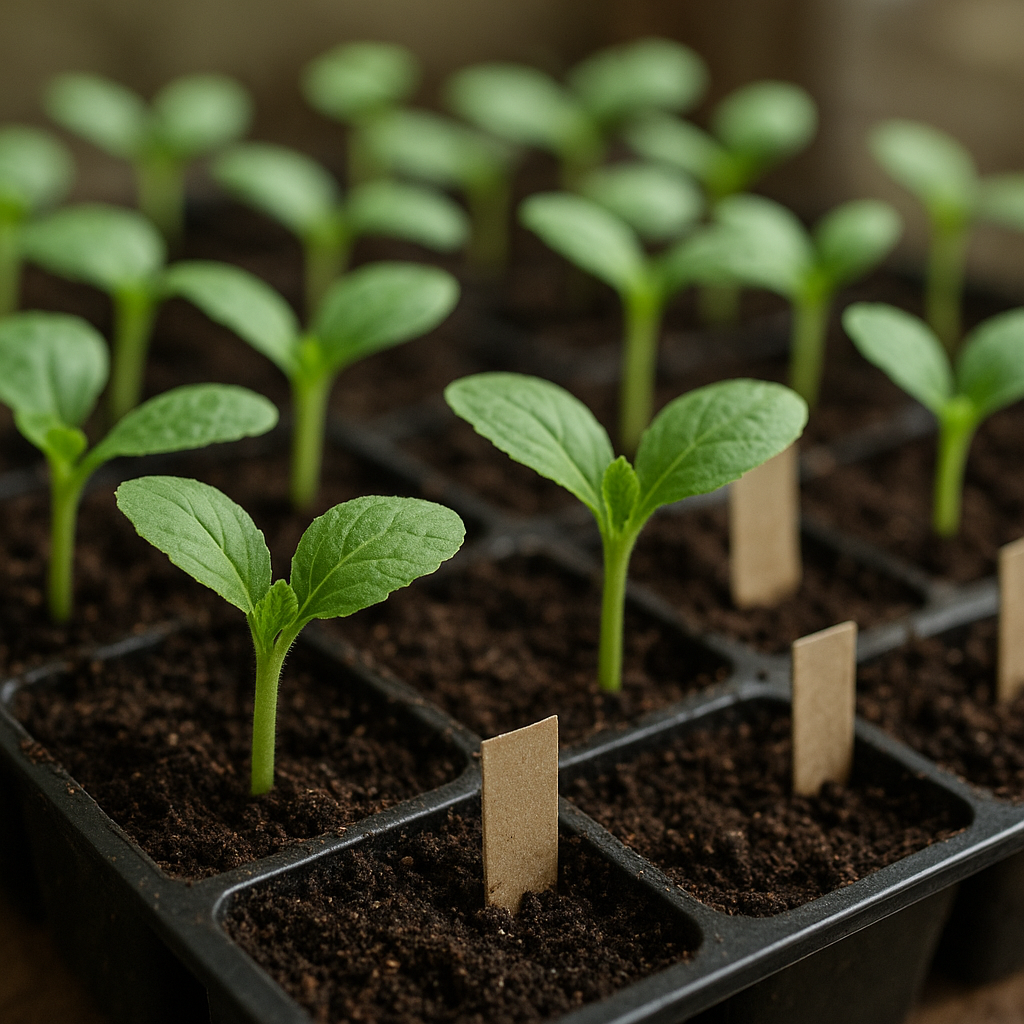
- Moisten the mix first. It should feel evenly damp, not muddy.
- Fill containers loosely. Do not pack the mix into a brick.
- Sow at the proper depth. A common rule is about two to three times the seed width, but always check the packet if the seed is unusual.
- Label immediately. A tray full of identical green loops is not the time to trust memory.
- Cover lightly if needed. Some seeds need darkness; some only need surface contact.
- Water gently. Bottom watering or a gentle mist keeps seeds from washing into one corner.
- Move trays under lights as soon as seedlings emerge. Waiting even a day too long can create stretch.
Once seedlings are up, the process shifts from germination to growth. The biggest difference is that light and airflow matter more than extra warmth.
Light, warmth, and airflow after germination
Light
Keep grow lights close enough that seedlings stay compact without touching the bulbs or fixture. If the light is too far away, seedlings stretch toward it and develop weak stems.
Warmth
Most seeds germinate faster with moderate warmth, but seedlings do not need to be cooked once they are up. Very warm, dim conditions are a reliable way to produce lanky growth.
Airflow
Gentle airflow helps dry leaf surfaces, strengthens stems, and reduces the stale, wet conditions that invite mold and damping off. A small fan on a soft setting is usually enough.
How to water without causing mold or collapse
Seedlings need consistent moisture, but they do not need permanently soaked cells. That is the line many indoor setups cross.
- Water when the surface is starting to dry, not just because the calendar says so.
- Bottom water when possible so stems and leaves stay drier.
- Empty standing water from trays instead of leaving roots submerged all day.
- Do not keep humidity domes on long after germination.
If stems pinch at the soil line or seedlings suddenly topple, that often points to damping off or another disease problem rather than simple thirst. Clean containers, fresh mix, airflow, and less soggy watering habits do most of the prevention work.
Thin and pot up before the tray turns crowded
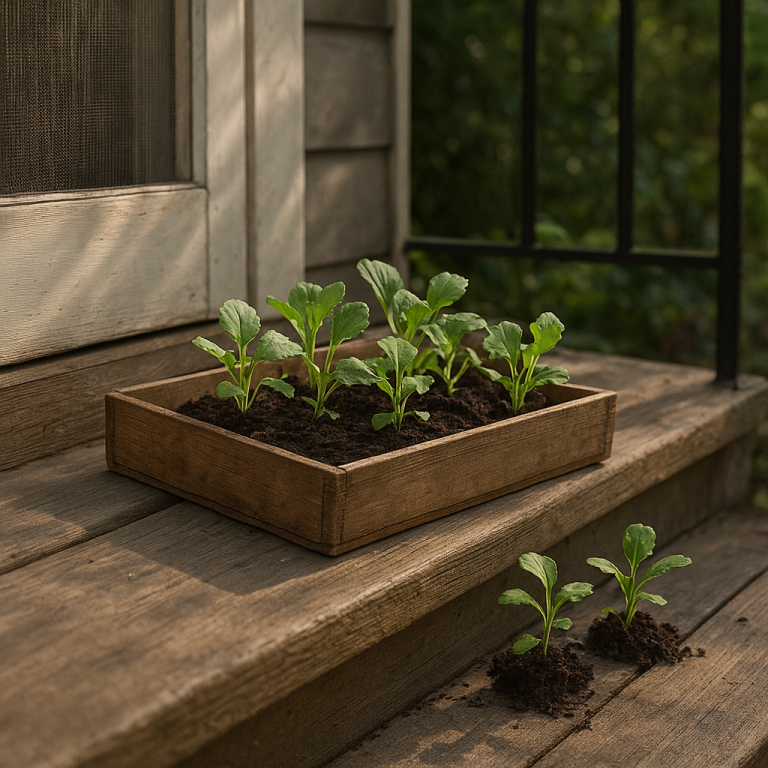
Indoor trays go downhill fast when too many seedlings are left competing in one cell. Thin early so one strong seedling can use the space, light, and moisture properly.
- Thin crowded cells early: snip extras at the soil line instead of ripping roots apart.
- Pot up when roots fill the cell: move seedlings into a larger pot before they circle heavily or dry out twice a day.
- Handle the root ball gently: the same low-disturbance logic matters later during transplanting too.
Once seedlings move into larger pots, you can treat them more like young container plants. The same caution about moisture balance applies in bigger containers, especially during warm spells.
Common indoor seed-starting mistakes
Starting too early
This creates giant seedlings with nowhere to go. Bigger is not better if outdoor conditions are still wrong.
Relying on weak window light
A bright room is not the same as enough direct light for compact growth. Most leggy seedlings are simply underlit.
Leaving humidity covers on too long
Covers help with germination, but after emergence they can trap the kind of stale moisture that causes trouble.
Keeping every cell too wet
Soggy mix blocks airflow around roots and encourages rot. Moist is good. Waterlogged is not.
Skipping the next transition steps
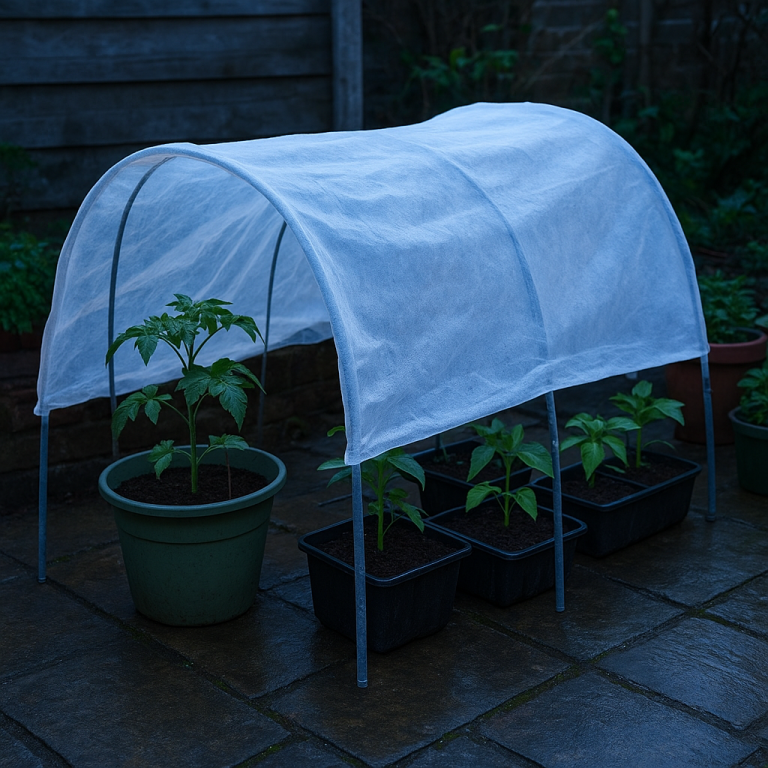
Strong indoor seedlings still need a careful move outdoors. Use a short, deliberate hardening off plan before planting them into beds, pots, or grow bags.
When seedlings are ready to leave the indoor setup
- They have several true leaves, not just seed leaves.
- The stems are short and sturdy rather than pale and floppy.
- The root ball holds together without becoming a tight knot.
- The weather outside matches the crop, especially at night.
At that point, the move outdoors becomes a timing problem rather than an indoor-growing problem. If the final home is a porch pot or balcony container, related guides on balcony herb gardens and container salad gardens can help with layout and crop combinations.
Quick FAQ
How early should you start seeds indoors?
That depends on the crop, but many common vegetables and herbs start about 6 to 8 weeks before the average last spring frost. Slow growers may start earlier, while fast growers often need much less time.
Why do seedlings get leggy indoors?
Usually because the light is too weak or too far away. Warmth without enough light makes the problem worse.
Do you need a grow light to start seeds indoors?
For consistently sturdy seedlings, usually yes. A sunny window can help, but it often does not provide strong enough light for compact growth over several weeks.
Should you fertilize seedlings right away?
Not heavily. Seedlings need light, air, and sane watering first. Once they have true leaves and are growing steadily, a mild feeding program can make sense depending on the mix and crop.
The short version
Start the right crops at the right time, use stronger light than you think you need, keep the mix evenly moist instead of soaked, and move seedlings along before trays become crowded. That combination prevents most of the classic indoor seed-starting failures and gives you sturdier plants for the next step outdoors.