A Small-Space Pollinator Setup That Keeps Blooming
You do not need a full yard to grow a container that feeds bees, butterflies, and other pollinators. What you do need is a pot large enough to stay stable, plants that actually belong in your conditions, and a layout that does not peak for one week and then turn into a tired box of leaves.
The strongest native pollinator containers are built around a simple idea: match the plants to your light, use a container that holds moisture without staying soggy, and combine bloom times so something useful is happening for more than a few days. Once that part is right, maintenance gets much easier.
The Short Version
- Use a wide container at least 14 to 18 inches across for better moisture control and root space.
- Pick plants native to your region, not just plants labeled pollinator-friendly.
- Match the pot to the site: full-sun natives for hot patios, shade-tolerant natives for porches and softer light.
- Combine one early bloomer, one midseason bloomer, and one later bloomer if possible.
- Mulch the surface lightly and water deeply instead of sprinkling the top every day.
- Skip heavy feeding. Native plants in containers usually do better with restraint than with constant fertilizer.
What Makes a Good Native Pollinator Container Garden
A good container garden for pollinators is more than a pot full of flowers. The planting needs to stay upright in wind, hold enough moisture to avoid daily collapse, and offer nectar or pollen across a useful stretch of the season.
That usually means avoiding tiny decorative pots, avoiding random plant combinations from different moisture zones, and paying attention to bloom sequence instead of buying everything that happens to be flowering on the same garden-center bench.
Start With the Right Container
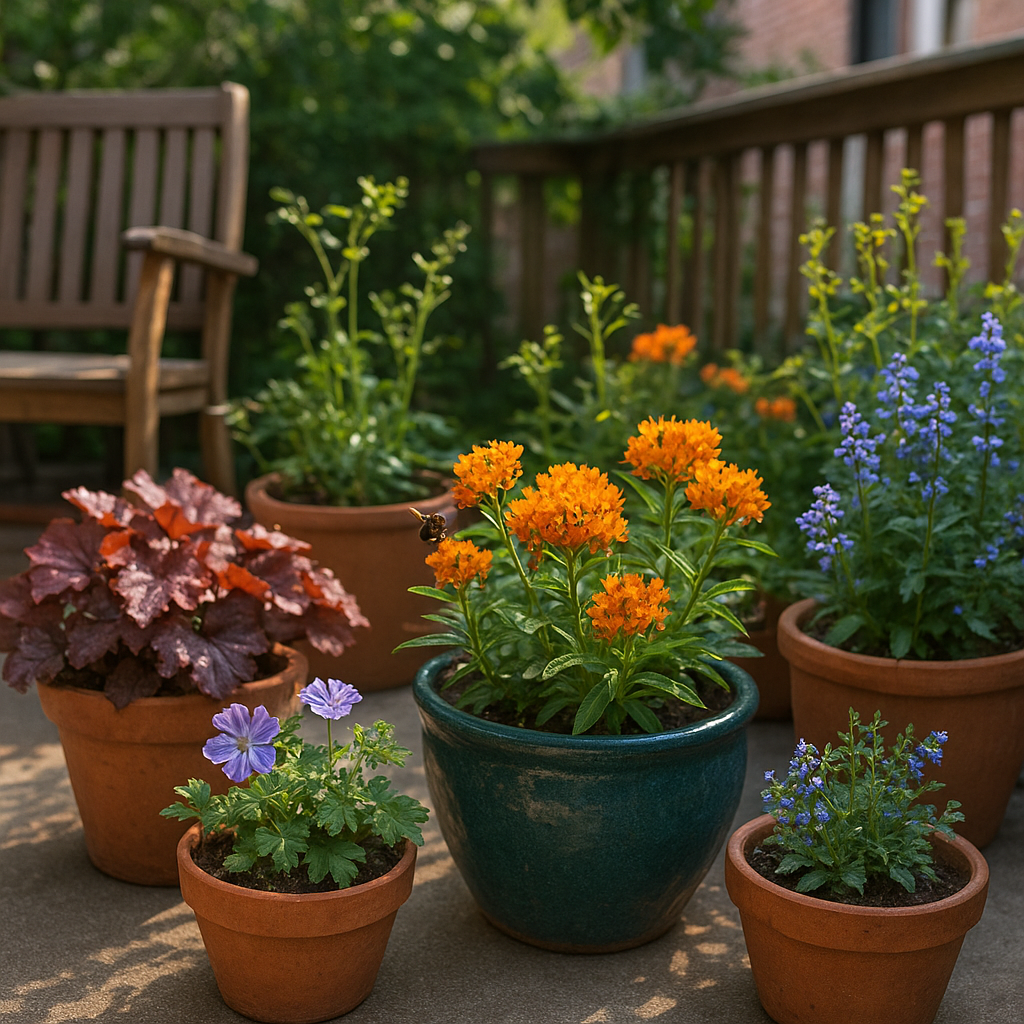
Small pots dry fast, heat up fast, and force roots into a hard cycle of stress and recovery. For most native pollinator mixes, start with a container at least 14 to 18 inches wide and about the same depth. Bigger is usually better if the pot has drainage.
- Terracotta: looks good and breathes well, but dries faster in heat.
- Glazed ceramic: steadier moisture, heavier, and good for windy patios.
- Resin or composite: lighter to move and often easier in harsh sun.
- Window boxes or trough planters: useful if you want a longer planting with repeated bloom.
Make sure the container drains freely. A beautiful pot that traps water will turn a native planting into a root problem very quickly.
Use Potting Mix, Not Garden Soil
Containers need a loose, fast-draining potting mix. Garden soil compacts too easily in pots, which slows roots and makes drainage unpredictable. A basic quality potting mix with a little compost blended in is usually enough.
If your patio gets very hot and windy, a little extra compost can help hold moisture. If your containers tend to stay wet after rain, keep the mix lighter and skip anything that turns muddy.
Choose Plants for Your Region and Light
The word native only helps if the plant is native to your area and suited to the actual conditions on your patio, porch, or balcony. Start local. Look for plants native to your state or region, then narrow the list by sun exposure, container size, and moisture needs.
For a full-sun container, choose plants that can handle reflected heat and a drier root zone. For a shaded porch, choose woodland or shade-tolerant natives that will not scorch by noon.
- One upright anchor: something structural that gives the pot height and a clear center.
- One or two filler plants: bloomers that carry the main show through the middle of the season.
- One edge plant: a softer grower that fills the rim without smothering everything else.
If you are unsure where to begin, buy fewer plants and space them properly. A crowded pot may look impressive on planting day, but it usually turns into airflow problems and root competition by summer.
Build for Bloom Sequence, Not One Big Moment
One of the most common mistakes is building the whole container around plants that peak at the same time. That gives you a brief burst of color and then a long quiet stretch.
Try to include an earlier bloomer, a plant that carries the middle of the season, and something that stays useful later. That creates a container that looks better for longer and gives visiting pollinators a steadier reason to return.
How to Plant the Container
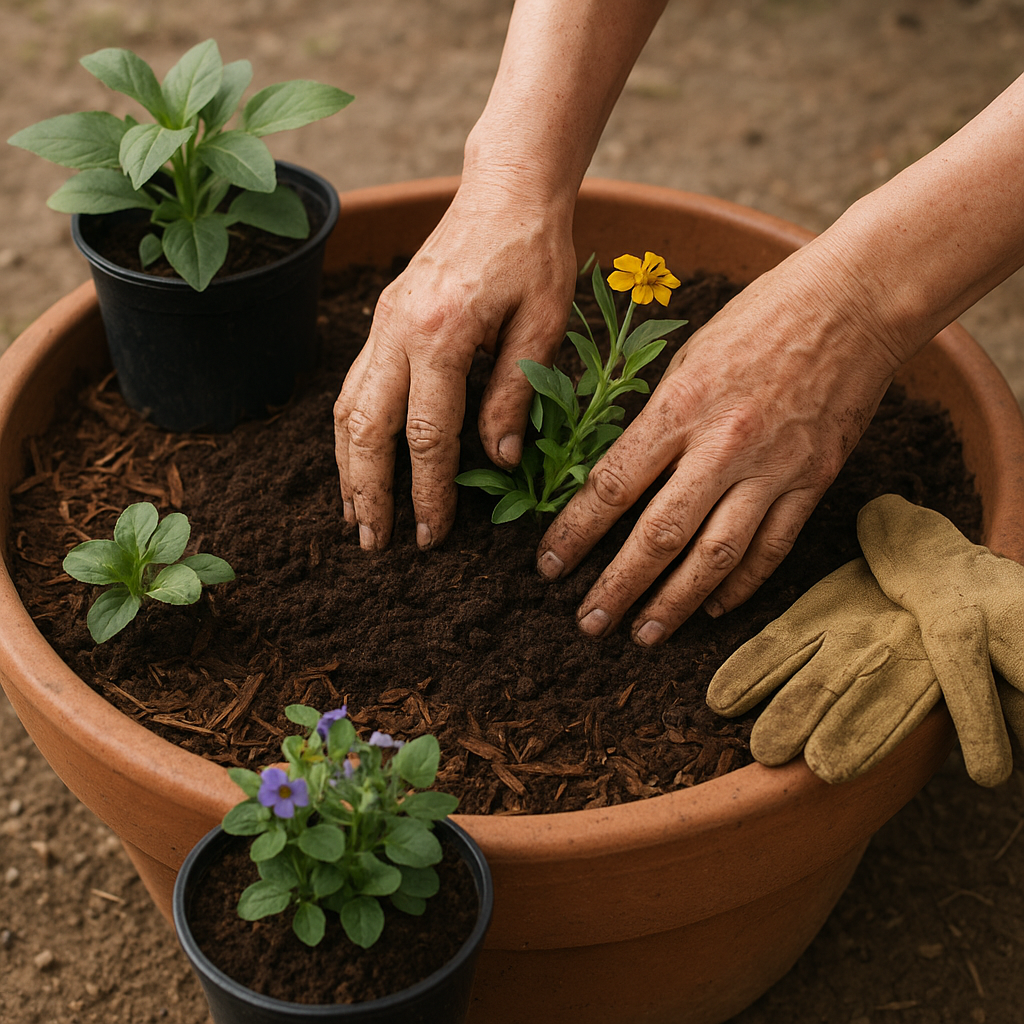
- Water the nursery pots before planting so the root balls are evenly moist.
- Fill the container most of the way with potting mix, leaving room for the root balls.
- Set the plants in place while they are still in their pots so you can test spacing and height.
- Plant at the same depth they were growing before. Do not bury the crowns.
- Backfill gently and firm the mix just enough to remove big air gaps.
- Water deeply until moisture drains from the bottom.
- Add a light layer of mulch on top to slow surface drying, but keep it away from the plant crowns.
If you are moving plants into a larger pot after purchase, the same basic handling rules from repotting without root damage still apply.
Water Deeply and More Slowly Than You Think
Newly planted containers need more frequent checks until the roots move into the surrounding mix. After that, deep watering works better than shallow daily splashing.
Stick a finger into the top inch or two of the potting mix. If it feels dry there, water thoroughly until excess drains out. Then let the container breathe before watering again. Exact timing changes with wind, heat, pot size, and plant maturity.
If your containers swing from wilted by noon to soggy at night, this guide on watering container plants in hot weather will help you steady the rhythm.
Do Native Plants in Pots Need Fertilizer?
Usually less than people think. Heavy feeding can push soft, floppy growth and reduce the sturdy habit many native plants are valued for. Start with decent potting mix, then watch the planting before adding anything.
If growth is clearly weak after the plants settle in, use a light hand and avoid constant high-nitrogen feeding. The goal is a healthy container, not maximum leaf production at any cost.
Keep the Container Tidy Without Overworking It
Native plant containers usually need less fuss than mixed annual planters, but they still benefit from a little cleanup. Remove spent blooms if the plant responds well to deadheading, trim damaged growth, and thin only when one plant starts swallowing the rest.
If you are unsure what to cut, use the same cautious approach outlined in how to prune plants without cutting the wrong thing. It is much easier to remove a little than to fix a hard cut you regret.
Common Problems and Fixes
The pot dries out every day
The container may be too small, too porous, or packed with plants that outgrew it. Move up in size, mulch the surface lightly, and group containers together if the site is very windy.
The plants look lush but do not bloom much
Too much fertilizer is a common reason. Pull back on feeding and make sure the plants are getting the light level they actually need.
One plant is taking over the whole container
That usually means the original spacing was too tight or one plant was much more vigorous than the rest. Thin it, divide it later if appropriate, or move it into its own container.
Leaves are getting chewed or distorted
Check the undersides of leaves and the new growth before reaching for a spray. Aphids and other common pests often show up first on soft new stems. This guide on aphids, fungus gnats, and mealybugs covers the main troublemakers and what to do next.
The container looks good in spring and tired by midsummer
Most often, the bloom window was too narrow or the watering rhythm fell apart in heat. Rebuild next time with a better bloom sequence and more root space.
Good Companion Containers Nearby
If you want more useful pots around the same space, a balcony herb garden can sit nearby without competing for the exact same role. Herbs give you kitchen use, while the native pollinator pot keeps the space active for visiting insects.
FAQ
Can native plants really grow well in containers?
Yes, as long as you choose species that tolerate container conditions and give them enough root space, drainage, and the right light.
How many plants should go in one pot?
Fewer than most people think. A large patio pot often looks better long term with three to five well-spaced plants than with a crowded instant display.
Should I use annuals with native plants?
You can, but it helps to keep moisture and light needs compatible. A mixed pot is much easier when all the plants want the same general conditions.
Do I need to deadhead everything?
No. Some plants benefit from it, while others are better left alone for seed heads or natural form. Learn the habits of the plants you picked instead of cutting everything by default.
A native pollinator container works best when the setup is simple: enough soil, the right plants for the site, and a bloom sequence that does not disappear after one flush. Get those three things right and the pot becomes much easier to keep useful through the season.