A Beginner-Friendly Garlic Planting Guide for Bigger, Better Bulbs
Garlic is one of the simplest high-reward things you can grow. Plant one clove, wait through the season, and you get back a full bulb that is far more satisfying than it should be for such a low-complexity crop.
If you’ve ever thought, “Can I just plant garlic from the grocery store?” — yes, but we’ll get to that.
First: Timing Is Everything
Plant garlic in the fall if you want big bulbs. Like, around Halloween. Garlic likes to chill — literally. The cold helps it split into cloves underground. But if you missed that window (hey, life happens), you can sneak in a spring planting, ideally by mid-April, knowing the bulbs might end up smaller but still tasty.
Choose Your Fighter: Hardneck vs. Softneck
There are two types of garlic, and yes, they matter:
- Hardneck: Better for cold climates, has a strong flavor, and sends up a cool-looking flower stalk called a scape (which is edible and great in pesto).
- Softneck: Grows well in warmer zones, stores longer, and is the kind you see in grocery store braids.
Pick what works for your climate or, you know, grab both and live a little.
Don’t Plant Grocery Store Garlic (Unless You’re Desperate)
Yes, it can grow. But a lot of store-bought garlic is sprayed with stuff to prevent sprouting. Plus, you don’t know where it’s been. Get seed garlic from a local nursery or order online. It’s certified disease-free and chosen for growing, not shipping.
Location, Location, Location
Garlic wants:
- Full sun (6+ hours a day)
- Well-drained soil (think fluffy, not swampy)
- A little space to stretch
Pro tip: Add compost or aged manure if your soil looks like tired coffee grounds or compacted clay.
How to Plant It (Finally)
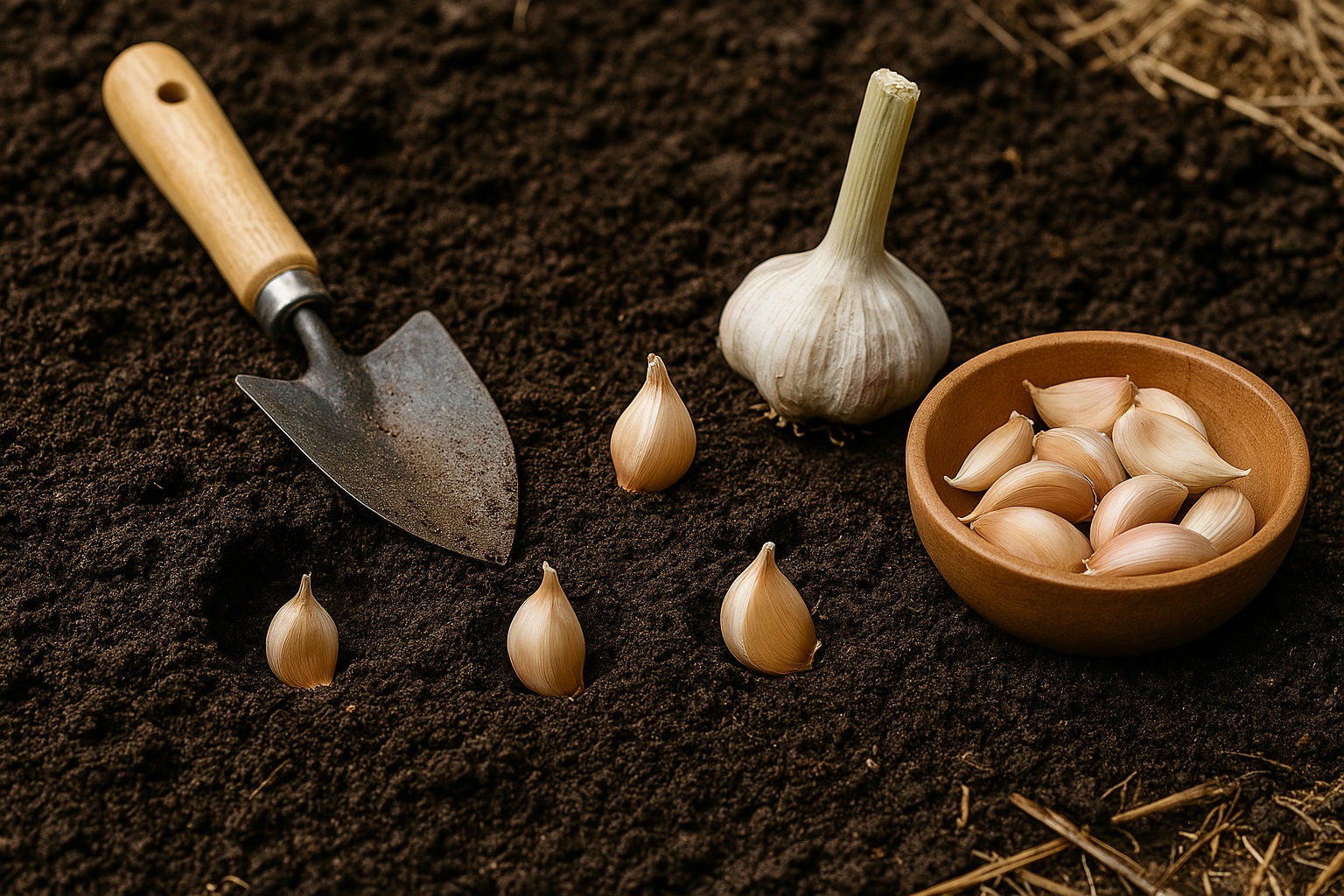
- Break the bulb into individual cloves. Keep the papery skin on.
- Plant each clove pointy-side up, 2 inches deep, 4-6 inches apart.
- Cover with soil and mulch like a maniac — straw, leaves, or grass clippings work. This helps retain moisture and keeps weeds from staging a coup.
If you plant in fall, the cloves will chill out over winter and get going early spring. If you plant in spring, they’ll jump into action right away.
Garlic Is a Low-Maintenance Roommate
- Water: Keep it moist but not soggy. Think “damp sponge,” not “drowned hopes.”
- Weed: Garlic hates competition.
- Fertilize: A little boost in spring with compost tea or a balanced organic fertilizer helps.
Harvest Time: When the Leaves Look Depressed
Sometime in mid-summer, when the lower leaves start to yellow and dry up (but the top ones are still green), it’s showtime.
Gently loosen the soil and lift the bulbs — don’t yank. Brush off dirt, cure them in a shady spot with good airflow for a few weeks, and boom: you’ve got garlic for months.
Final Thoughts (a.k.a. Garlic Wisdom)
Planting garlic is the kind of delayed gratification that actually pays off. You throw something in the ground during hoodie season, ignore it for most of winter, and get rewarded with something that makes every dish better — from roasted chicken to angry date-night breath.
Want to flex on your neighbors? Hang a garlic braid by the door. Want to never buy bland, sprouty garlic again? Grow your own.