A heat-loving container crop that thrives with sun, space, and quick harvesting
Okra can do surprisingly well in containers if you treat it like the hot-weather crop it is. Give it a large pot, full sun, loose soil, and steady moisture, and it will keep pushing out pods when many other summer vegetables start to sulk. Most container failures come from starting too early, using a cramped pot, or waiting too long to harvest.
If you want crisp, tender pods instead of woody ones and sturdy plants instead of lanky, stalled growth, the setup matters more than anything else. Here is how to grow okra in pots from sowing to harvest.
What okra needs in a container
- Heat: Okra wants warm days and warm nights. Wait until frost danger has passed and the weather has settled before planting outside.
- Sun: Aim for at least 8 hours of direct sun. Six can work, but yields usually drop.
- Root room: One plant per pot is easiest to manage. Crowding leads to weak stems and more moisture stress.
- Fast drainage with moisture retention: Potting mix should drain well but not dry into a brick by noon.
- Frequent harvests: Pods turn tough quickly, especially during hot weather.
Best pot size, soil, and placement
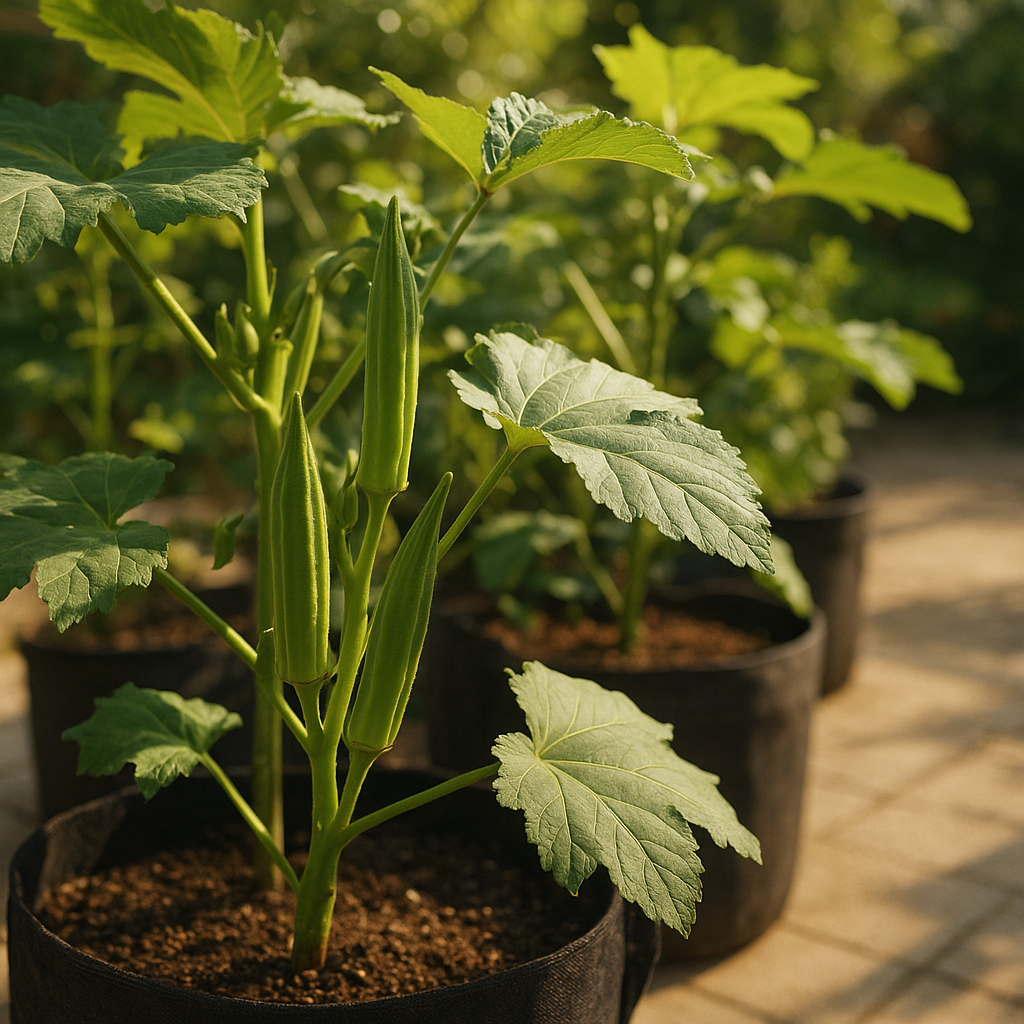
Use a container that is at least 12 to 16 inches wide and about as deep, though bigger is better if you live in a hot climate. A 7 to 10 gallon pot gives the roots enough room and helps keep moisture more stable. Fabric containers work well if you stay ahead of watering. If you use them, the same basic setup from this grow bag guide applies here too.
Fill the pot with a quality potting mix rather than yard soil. Mix in compost if you want a little extra water-holding capacity, but do not make the blend heavy or muddy. Okra hates sitting in soggy soil. Set the container where it will get the longest, hottest, brightest stretch of the day, preferably near a wall or surface that reflects some warmth.
Direct sow or transplant?
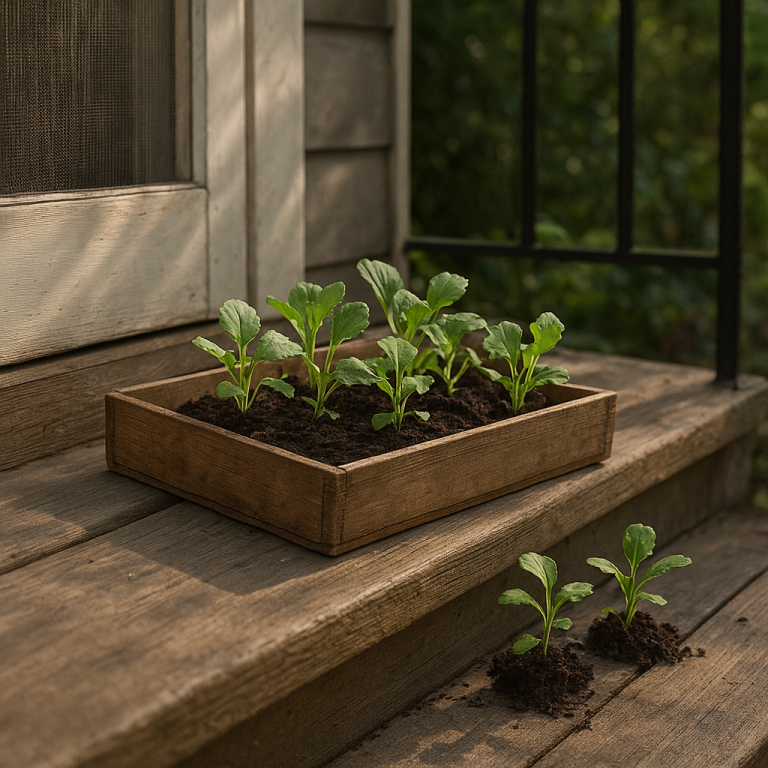
Direct sowing is often easiest because okra dislikes root disturbance. Plant seeds about 1/2 to 1 inch deep, then thin to the strongest seedling once they are up. If your season is short, you can start seeds indoors and move them out carefully. If you do that, follow the same gentle timing used in hardening off and transplanting vegetable seedlings so the roots are disturbed as little as possible.
Do not rush the planting date. Okra sulks in cool soil and often sits still for days or weeks if nights are still chilly. A later planting into warm conditions usually catches up fast and produces better plants.
How often to water okra in pots
Keep the pot evenly moist but never swampy. In mild weather that may mean watering every couple of days. In peak summer heat it may mean watering daily, especially with dark containers, fabric pots, or windy patios. The goal is to prevent deep drought swings that stress the plant and make pods fibrous.
Check moisture by sticking a finger into the mix a couple of inches down. If it feels dry at that depth, water deeply until excess runs out the bottom. If the top looks dry but the root zone still feels cool and damp, wait. This is the same general logic used for watering container plants in hot weather, but okra needs more consistency once it starts flowering and setting pods.
Feeding for steady growth and better pods
Okra is not the heaviest feeder in the garden, but container plants still run out of nutrients faster than in-ground plants. Start with fresh potting mix, then feed lightly once the plant is established. A balanced slow-release fertilizer at planting time works well. After flowering begins, a diluted liquid feed every 1 to 2 weeks can help maintain production.
If the plant grows tall and leafy but makes very few pods, ease back on high-nitrogen feeding. If growth looks pale or stalls early, review the basics from this container vegetable fertilizing guide and make smaller, steadier applications rather than one heavy dose.
Do okra plants need support?
Many compact varieties hold themselves upright, but taller plants in exposed patios can lean once they start growing fast. A single stake or small cage is usually enough. Put support in early so you do not damage the roots later. Support is especially useful in windy spots or if the plant is getting slightly less sun than ideal and stretches upward.
When to harvest for tender pods
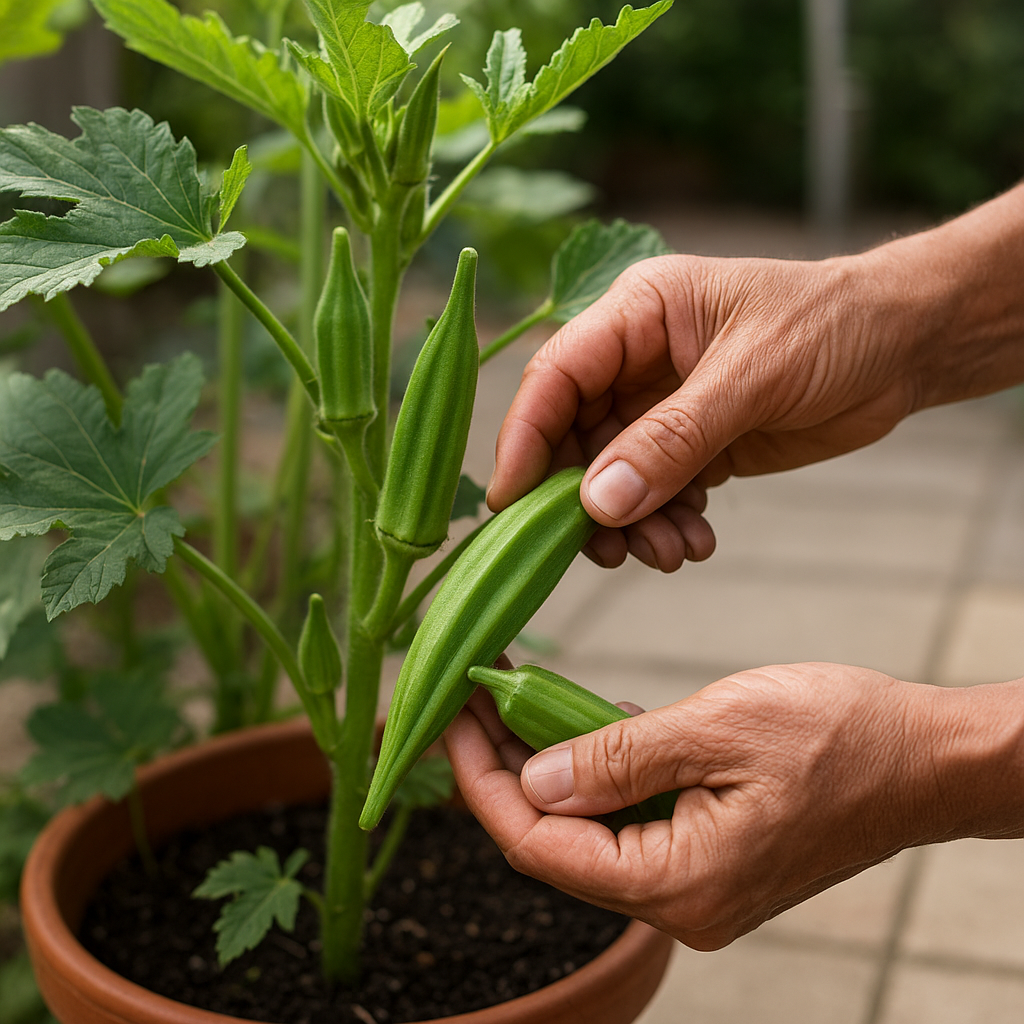
This is where container growers either win or lose. Pick pods when they are about 2 to 4 inches long unless your variety is known for staying tender at a larger size. In hot weather, a pod can go from perfect to tough in just a day or two. Check plants often once production starts.
Use scissors or pruners if the stems are prickly or tough. Frequent harvesting encourages more pods, and it keeps the plant focused on production rather than maturing oversized fruit.
Common problems and fixes
Pods are tough and stringy
The pods stayed on the plant too long. Harvest younger pods and check the plant more often during hot spells.
Plants are tall but not producing much
This usually points to not enough sun, too much nitrogen, or cool weather early in the season. Move the pot to the brightest spot possible and keep feeding moderate.
Leaves are curling or sticky
Aphids are a common culprit. Inspect the undersides of leaves and growing tips. A hard spray of water, repeated checks, and quick action usually keep them from taking over. If pests spread, the methods in this pest guide are the next step.
Flowers drop without many pods forming
Brief heat stress, dry soil, or a weak young plant can cause this. Improve watering consistency and give the plant time. Okra usually settles into production once the weather stays hot.
Lower leaves yellow early
A few older leaves aging out is normal. If yellowing climbs quickly, check for dry root balls, nutrient depletion, or a container that drains too slowly.
Good okra varieties for pots
Look for compact or productive varieties rather than the tallest heirlooms if space is limited. Dwarf selections, spineless types, and any variety described as suitable for containers are good bets. If you have room for a larger pot and strong sun, standard varieties can still do well, but they may need staking earlier.
Quick FAQ
Can you grow okra in a 5 gallon bucket?
Yes, but it is close to the minimum for one plant. You will need to stay more consistent with watering and feeding than you would in a larger container.
How many okra plants per pot?
One plant per medium to large pot is the cleanest setup. Two plants in one container usually compete for light, water, and root space.
Does okra need full sun?
Yes. The more sun and warmth it gets, the better it typically performs.
Why is my okra not growing in the pot?
The usual reasons are cool weather, a pot that is too small, uneven watering, or not enough direct sun.
Bottom line
Okra is one of the better summer vegetables for containers once the heat arrives. Start with one strong plant in a roomy pot, keep the soil evenly moist, feed lightly, and harvest pods young. Do that, and a patio okra plant can stay productive far longer than most people expect.