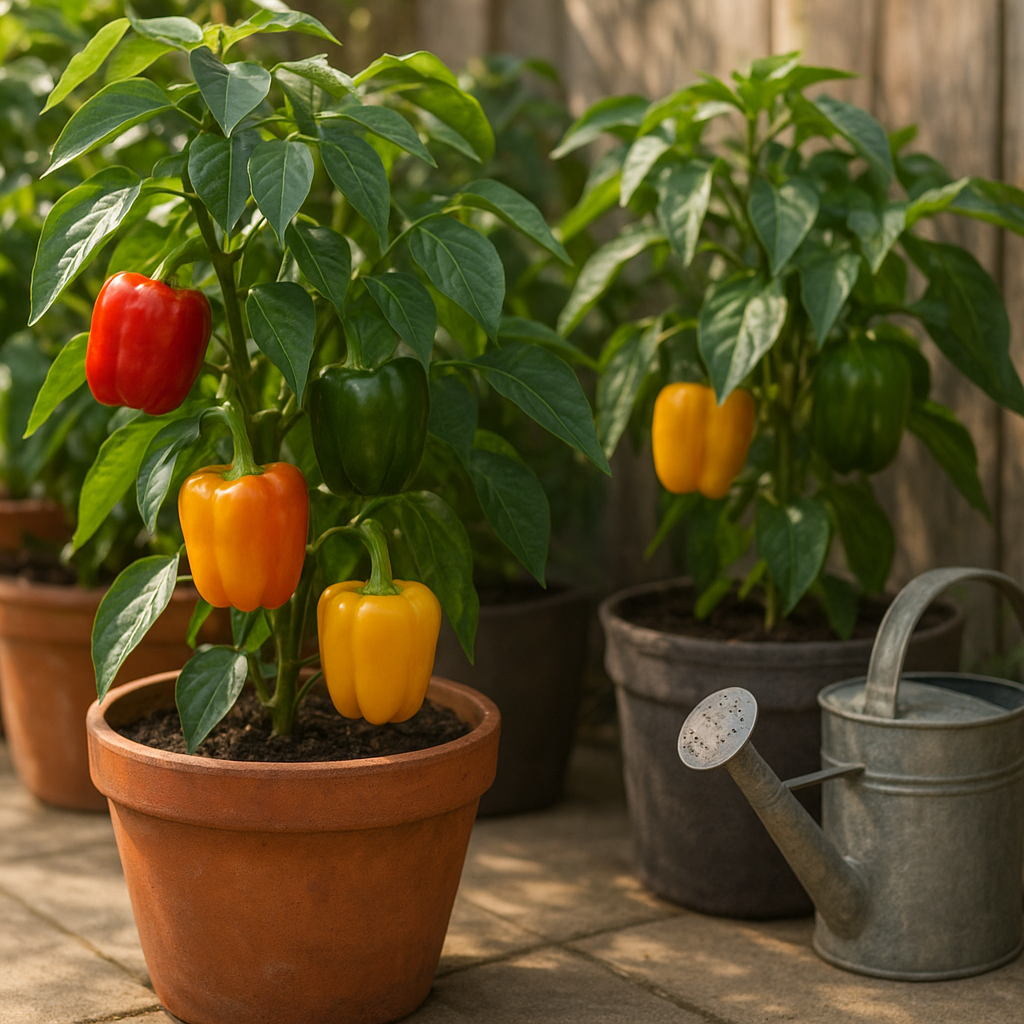
A Better Patio Setup for Thick-Walled, Sweet Bell Peppers
Bell peppers can do very well in containers, but they are less forgiving than herbs or fast salad crops. When something is off, the plant often keeps looking alive while the harvest stays disappointing. You get a few flowers that drop, fruit that never sizes up, or peppers that turn pale and papery on one side before they ever reach full color.
The fix is usually not a mystery product. It is a steadier setup: enough root room, real warmth, even moisture, moderate feeding, and support before the branches get heavy. If you handle those basics early, container bell peppers are much easier to keep productive.
If your pepper plants are still in small starter pots, move them carefully. This guide on transplanting vegetable seedlings without shock helps prevent the rough start that can stall peppers for weeks.
The short answer
- Grow one bell pepper plant per container in a pot that holds at least 5 gallons.
- Wait until the weather is genuinely warm, especially at night, before leaving the plant outdoors full time.
- Use fresh potting mix, full sun, and a spot with decent airflow.
- Water deeply and consistently so the root zone does not swing from dusty dry to drenched.
- Feed moderately instead of pushing lots of leafy growth with heavy nitrogen.
- Support the plant early and harvest peppers at the right stage for the color and flavor you want.
That covers most of what container bell peppers need to stay steady instead of stressed.
Why bell peppers can be harder than hot peppers in pots
Bell peppers usually need a little more patience than smaller hot peppers because they are trying to make thicker-walled fruit. That means the plant needs enough time, warmth, leaf area, and water to keep each pepper developing properly. A jalapeño can still give a respectable harvest from a modest setup. Bell peppers are more likely to punish shortcuts.
If you want the broader container-pepper framework, this guide on growing peppers in pots covers the shared basics. Bell peppers just ask for more consistency once fruit starts forming.
Use a pot big enough to stay stable
The biggest container mistake is trying to grow bell peppers in a pot that is technically possible but constantly stressed. Small pots heat up faster, dry out faster, and leave very little buffer when the plant starts setting fruit.
- Minimum: 5 gallons for one bell pepper plant.
- Better: 7 gallons if your patio gets intense sun or wind.
- Best habit: one plant per pot instead of crowding two together.
- Non-negotiable: drainage holes and a container wide enough not to tip over.
Fabric pots, nursery pots, and sturdy terracotta all work if you adjust your watering to the material. Fabric pots dry faster. Dark pots heat faster. Decorative pots without enough drainage are rarely worth the trouble.
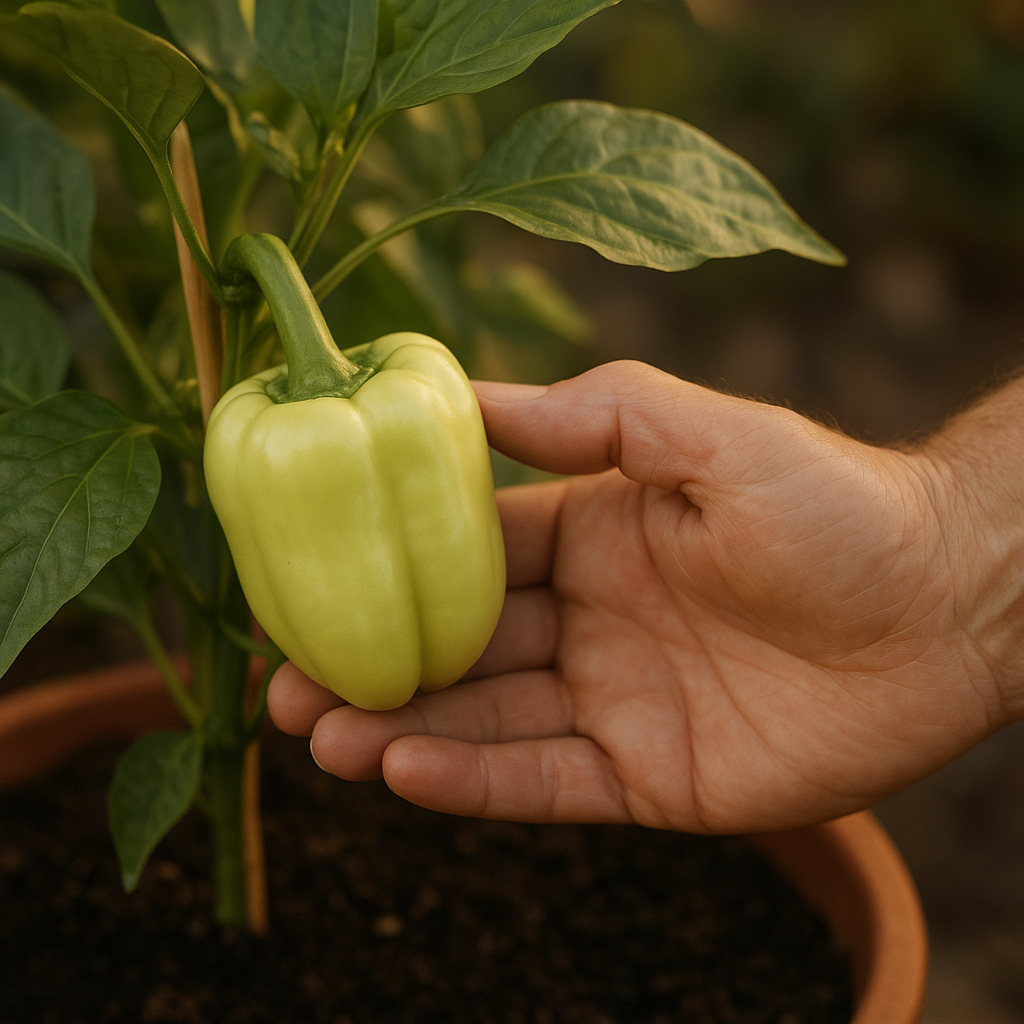
Wait for warm nights, not just warm afternoons
Bell peppers are warm-season plants. They can survive a cool spell better than they can grow through one. If nights keep dipping too low, the plant often stalls, flowers poorly, and develops that yellow-green, annoyed look that makes people reach for fertilizer too early.
- Aim for: settled weather after frost danger has passed.
- Watch for: exposed balconies, windy corners, and cold spring nights.
- Remember: peppers react to overnight conditions more than one sunny afternoon.
If a plant goes outside too early, it may survive but lose momentum. Bell peppers are slow enough already. Starting with cold stress just makes the season feel shorter.
Use fresh potting mix and mulch the surface lightly
Bell peppers need a potting mix that drains well while still holding enough moisture between waterings. Heavy garden soil compacts in containers and makes it much easier to end up with weak roots and erratic growth.
- Use a quality potting mix meant for containers.
- Mix in a little compost if you want a broader nutrient buffer.
- Leave headspace at the top so water can soak in instead of running off.
- Add a thin mulch layer once the plant is established to slow moisture loss.
Mulch is not magic, but it does help reduce the moisture swings that lead to blossom problems and uneven fruit development.
Give the plant full sun without cooking the root zone
Bell peppers want strong sun, usually at least six to eight hours a day. The problem is that containers can turn harsh in midsummer, especially against walls, on concrete, or in dark pots that soak up heat. You want bright light on the plant, not a root zone that bakes every afternoon.
- Place the pot where it gets long direct sun, preferably with some airflow.
- Avoid reflective corners that trap heat around the leaves and container.
- If extreme heat arrives, light afternoon protection can help prevent stress without turning the plant leggy.
Water for consistency or expect blossom drop and misshapen fruit
Bell peppers hate big moisture swings. A plant that dries hard and then gets flooded keeps interrupting its own fruit set. That is when peppers stay small, develop thin walls, or form awkward lopsided shapes.
- Water slowly until excess drains from the bottom.
- Check the pot often once the weather turns hot and the plant is fruiting.
- Do not trust only the surface because the top inch can look fine while the lower root zone is already dry.
- Adjust for pot material, wind, and fruit load instead of following a rigid calendar.
If your whole patio garden starts drying faster than expected, this guide on watering container vegetables in hot weather is the better way to think about it.
Feed enough to support fruit, not enough to create a leaf factory
Bell peppers are productive plants, but they are easy to overfeed. Too much nitrogen gives you a dark green plant with lots of leaves and not much urgency about setting or sizing fruit.
- Start with fresh mix instead of trying to rescue tired old mix.
- Use a balanced fertilizer at label rate once the plant is established.
- Stay moderate if the plant is already lush and healthy-looking.
- Focus on steady feeding rather than dramatic boosts.
This guide on fertilizing vegetables in pots goes deeper on keeping long-season container crops productive without overdoing it.
Support bell pepper branches before they start leaning
Bell peppers often look compact at first, then suddenly get top-heavy when several fruits start enlarging at once. A small stake, ring, or short cage added early is easier than trying to rescue split branches later.
You usually do not need hard pruning. Remove damaged leaves and badly crowded inner growth if needed, but bell peppers are usually better served by support, airflow, and stable watering than by aggressive cutting.
Common bell pepper problems in pots and the fastest fixes
Flowers drop without making peppers
Temperature stress is the usual reason. Cool nights, sudden heat, drought stress, and rough wind can all interfere with fruit set. Better stability fixes more blossom drop than extra feeding does.
Fruit stays small or looks stubby
This usually points to limited root space, uneven watering, or a plant that set more fruit than its current leaf area can support. Bigger containers and steadier care matter more than chasing size with fertilizer.
Peppers get pale, papery patches
That is often sunscald. Fruit exposed too directly during intense heat can bleach on one side and turn thin or papery. Good leaf cover, moderate plant stress, and avoiding harsh overheating all help.
The plant looks leafy but is not producing much
Look at fertilizer, temperature, and light before anything else. A pepper plant that is too cool or too heavily fed can stay attractive while remaining stubbornly unproductive.
Leaves are sticky or curled
Aphids often target tender pepper growth. This guide on getting rid of common plant pests covers the cleanest first response before the problem spreads.
When to harvest bell peppers for the best flavor
You can harvest bell peppers green once they reach usable size and feel firm, but most varieties get sweeter and fuller in flavor as they ripen to their mature color. That may be red, yellow, orange, purple, or chocolate depending on the variety.
- Pick green if you want a firmer texture and earlier harvest.
- Wait for full color if you want the sweetest flavor.
- Use pruners or scissors instead of twisting hard on heavy fruit.
- Harvest regularly so older peppers do not sit on the plant forever.
If you are growing other container peppers too, jalapeños in pots and shishito peppers in pots need many of the same habits with slightly different harvest timing.
Quick FAQ
Can bell peppers really grow well in pots?
Yes. They do well in containers when the pot is large enough, the weather is warm, and watering stays consistent.
How many bell pepper plants should go in one pot?
One plant per pot is the safest rule for good root space and easier moisture control.
Why are my bell peppers flowering but not making fruit?
Most often because of temperature swings, dry stress, or a plant that is growing lots of leaves under heavy feeding without stable fruit-setting conditions.
Should you pick bell peppers green or wait for color?
Either is fine. Green peppers are earlier and firmer, while fully colored peppers are usually sweeter and more developed in flavor.
The short version
Bell peppers in pots need warmth, root room, steady water, and moderate feeding more than they need constant intervention. Give the plant one roomy container, keep the root zone stable, support the branches early, and let the fruit ripen at a sensible pace. That is what turns a patio bell pepper from a temperamental plant into a harvest worth repeating.