A Simple Feeding Plan for Productive Container Vegetables
Vegetables in pots run out of food faster than vegetables in the ground. Every watering flushes nutrients through the mix, and the crops that seem happiest in containers, like tomatoes, peppers, cucumbers, salad greens, and herbs, can go from strong growth to pale leaves and stalled harvests surprisingly fast.
The fix is not pouring on fertilizer every time the plant looks unhappy. The fix is using the right potting mix, starting with a simple feeding plan, and adjusting before the plant swings into burn, salt buildup, or a lot of leafy growth with not much to harvest.
The short answer
- Use fresh potting mix made for containers, not garden soil.
- Start with a slow-release fertilizer mixed into the potting mix or added at planting time if the mix is not already charged.
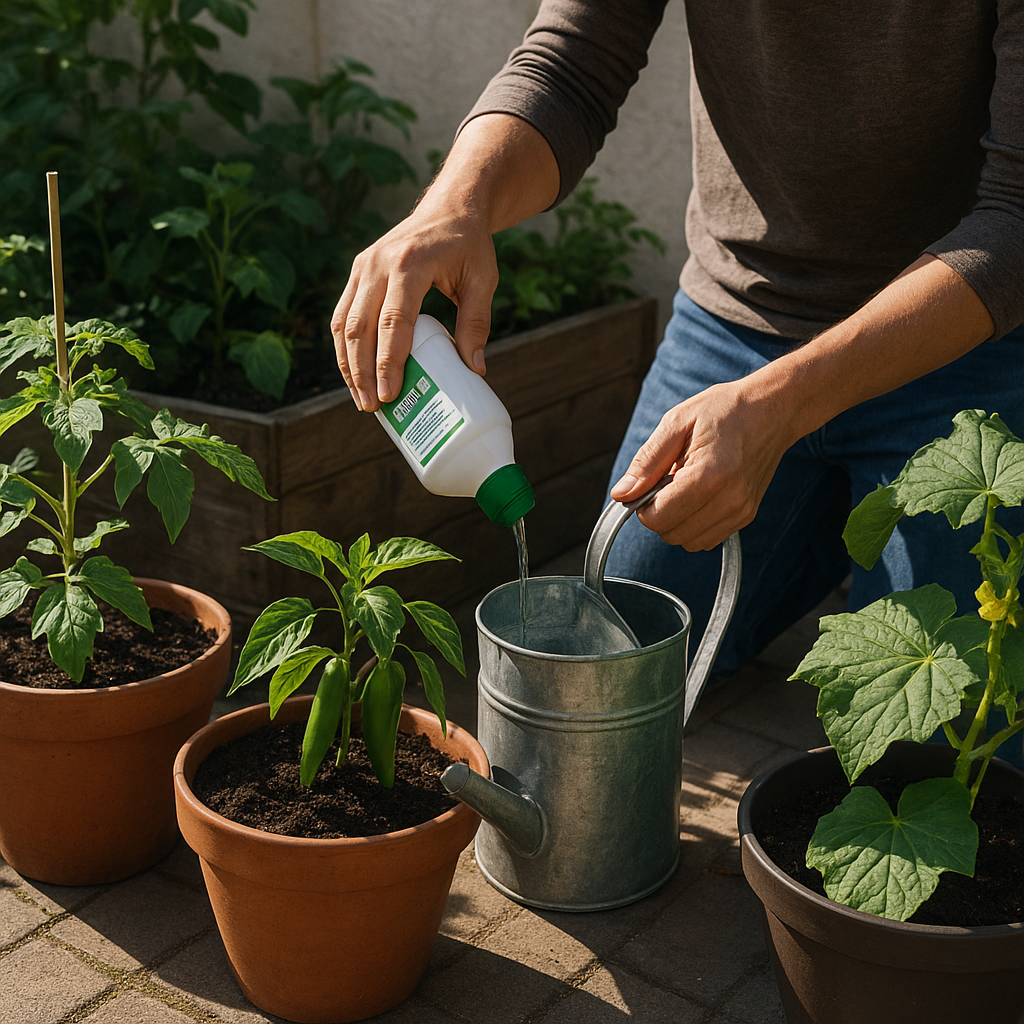
- For long-season crops like tomatoes, peppers, and cucumbers, add a diluted liquid feed on a steady schedule once the plant is actively growing.
- Water first if the pot is dry. Never dump strong fertilizer into bone-dry mix.
- Follow label rates and stay skeptical of the urge to feed more just because growth slows.
- Back off if the plant turns deep green and leafy but flowers or fruiting lag behind.
If you do those six things, most container feeding problems get much easier to avoid.
Why potted vegetables need regular feeding
Container vegetables live in a small, finite root zone. That is good for patios, balconies, and small yards, but it also means the plant cannot keep searching outward for more nutrients the way it can in a garden bed. Frequent watering speeds up the problem because nutrients move out of the pot along with excess water.
This is the same reason container care gets more demanding as the season warms up. If your watering rhythm is already increasing, this guide on watering container plants in hot weather pairs closely with feeding because both habits change at the same time.
Start with the potting mix before you blame the fertilizer
Fertilizer cannot rescue a bad container setup. If the pot is undersized, the mix is compacted, or drainage is poor, feeding harder usually makes the plant more stressed, not less.
- Use fresh potting mix meant for containers.
- Do not use heavy garden soil in a patio pot.
- Make sure the container drains fully.
- Choose a pot large enough that roots can stay moist and stable between waterings.
If you are building out your patio crop lineup, these guides on cherry tomatoes, peppers, and cucumbers go deeper on container size and setup.
Choose one simple feeding plan instead of stacking random products
Most home container gardens do best with one of two simple approaches. You do not need a shelf full of specialty bottles.
Option 1: Slow-release fertilizer as the base plan
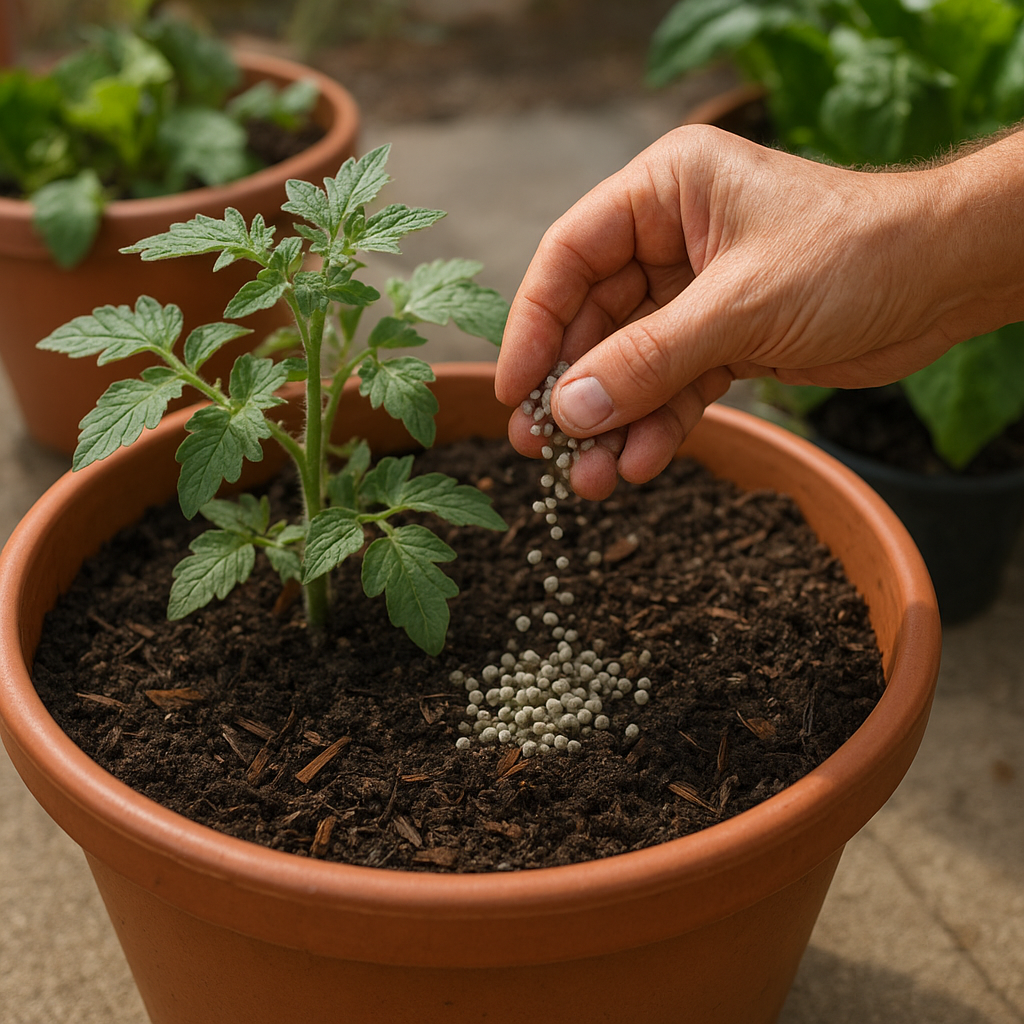
This is the easiest system for most people. Mix a slow-release fertilizer into the potting mix at planting time, or top-dress it according to label directions once the seedlings are settled in. Every watering releases a small amount of nutrition, which keeps the plant from swinging between feast and famine.
This option is especially useful if you are growing several containers and do not want to remember a liquid-feed routine every few days.
Option 2: Slow-release plus a light liquid feed for long-season crops
Tomatoes, peppers, cucumbers, and other fruiting plants often need more sustained feeding once they are actively growing and setting flowers. A light liquid fertilizer every 1 to 2 weeks is usually enough if the plant is otherwise healthy. The point is steady support, not a dramatic boost.
If the potting mix already contains fertilizer, let the plant use that first for a few weeks before adding more. Feeding too early is one of the fastest ways to burn tender roots.
When to start fertilizing after planting
Seedlings and recent transplants need a little time to settle before heavy feeding. If you used fresh mix with fertilizer already included, wait until the plant is clearly growing before adding anything else. If you used plain potting mix, a slow-release fertilizer at planting time usually covers the first stretch without much guesswork.
For plants you started indoors, avoid compounding transplant stress. This guide on hardening off seedlings helps keep that transition smoother before feeding becomes part of the routine.
Match the feeding rhythm to the crop
Heavy feeders
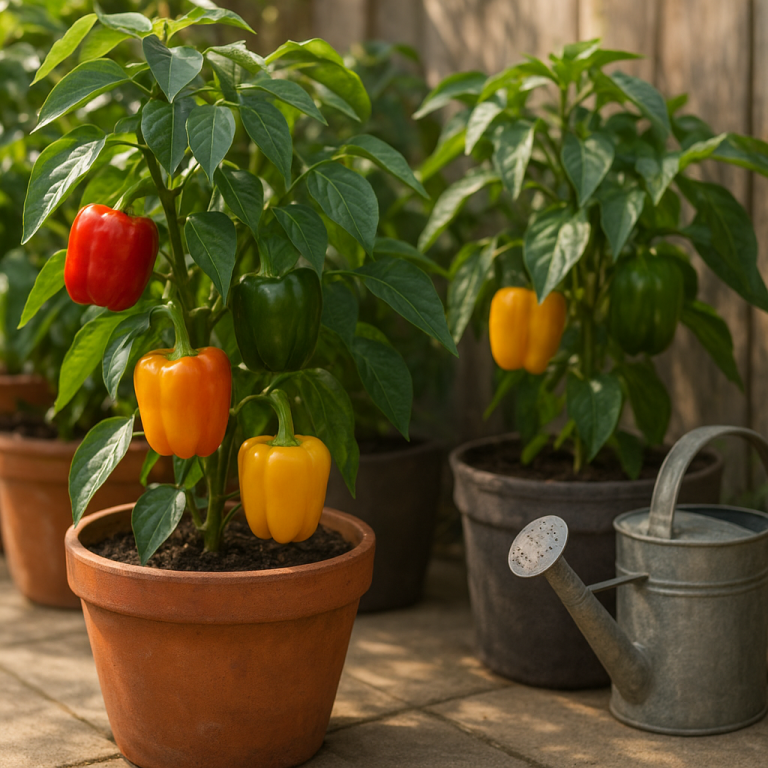
Tomatoes, peppers, cucumbers, eggplant, and other long-season fruiting vegetables usually need the most consistent feeding in containers. They are building foliage, flowers, and fruit over a long stretch, so they burn through nutrients quickly.
- Use a slow-release base fertilizer.
- Add light liquid feeds during active growth and fruiting if the plant starts fading or slowing.
- Do not chase every slowdown with extra fertilizer before checking light, watering, and pot size.
Moderate feeders
Leafy greens, herbs, and salad containers still need nutrition, but they usually do better with gentler feeding. Too much fertilizer can make greens soft, bland, or overly lush.
If you are growing mixed greens and herbs together, this container salad garden guide is a good companion for spacing and harvest rhythm.
Short-season roots and quick crops
Radishes and other fast crops often need less extra feeding than people expect, especially in fresh mix. More fertilizer does not automatically mean better roots. In many cases it just means more top growth.
How to fertilize without burning roots
- Water the pot first if the mix is dry.
- Apply fertilizer at label rate, not by guesswork.
- Keep granular fertilizer off stems and leaves when possible.
- Water again lightly if the product directions call for it.
- Do not double the dose because the plant looks pale.
Burned roots often come from concentration, not from fertilizer existing at all. Dry mix plus a strong dose is where people get into trouble.
Signs your container vegetables need feeding
- Older leaves start paling faster than normal.
- New growth looks smaller and weaker than it did earlier in the season.
- Flowering and fruiting slow even though light and watering are consistent.
- The plant seems to stall in a pot that used to support stronger growth.
These signs do not automatically mean fertilizer is the only answer. Check the full setup first. A root-bound plant, a drying pot, or poor sun exposure can look like hunger.
Signs you are overfeeding
- Very dark green leaves and lots of leafy growth with weak flowering.
- Leaf edges turning brown or crispy soon after feeding.
- White crust or salt buildup on the surface of the potting mix.
- A plant that looks lush up top but is oddly slow to fruit.
This shows up often in tomatoes and peppers. If the plant is all leaves and attitude, feeding harder is usually the wrong move.
Common container feeding mistakes
Using garden soil and hoping fertilizer fixes it
Dense soil creates weak roots, poor drainage, and nutrient problems that fertilizer will not solve.
Feeding on a panic schedule
Plants rarely recover because you gave them three products in one weekend. They recover when care becomes steadier.
Forgetting that watering and feeding work together
Containers that dry hard between waterings struggle to use nutrients properly. Before changing fertilizer, make sure the watering pattern makes sense.
Treating every crop like a tomato
Fruiting plants usually need more long-term feeding than radishes, salad greens, or quick herb containers.
Quick FAQ
How often should you fertilize vegetables in pots?
That depends on the crop, the potting mix, and the fertilizer type. A slow-release fertilizer often covers the base need, while long-season fruiting crops may also need a light liquid feed every 1 to 2 weeks once they are actively growing.
What is the best fertilizer for container vegetables?
A balanced slow-release vegetable fertilizer is usually the easiest place to start. For heavy-feeding fruiting plants, a diluted liquid fertilizer can be added during the season if needed.
Can you overfertilize tomatoes and peppers in pots?
Yes. Overfeeding can burn roots, create salt buildup, and push too much leafy growth at the expense of flowers and fruit.
Should you fertilize every time you water?
Usually no. A steady, measured schedule is safer than turning every watering into a feeding. Follow the product label and adjust only when the plant gives you a clear reason.
The short version
Container vegetables need a simple, repeatable feeding plan because the potting mix cannot supply nutrients forever. Start with fresh mix, use a slow-release base fertilizer, add light liquid feeds only when the crop and season call for them, and keep watering steady enough that the roots can use what you give them. That combination grows better harvests than either neglect or panic-feeding ever will.