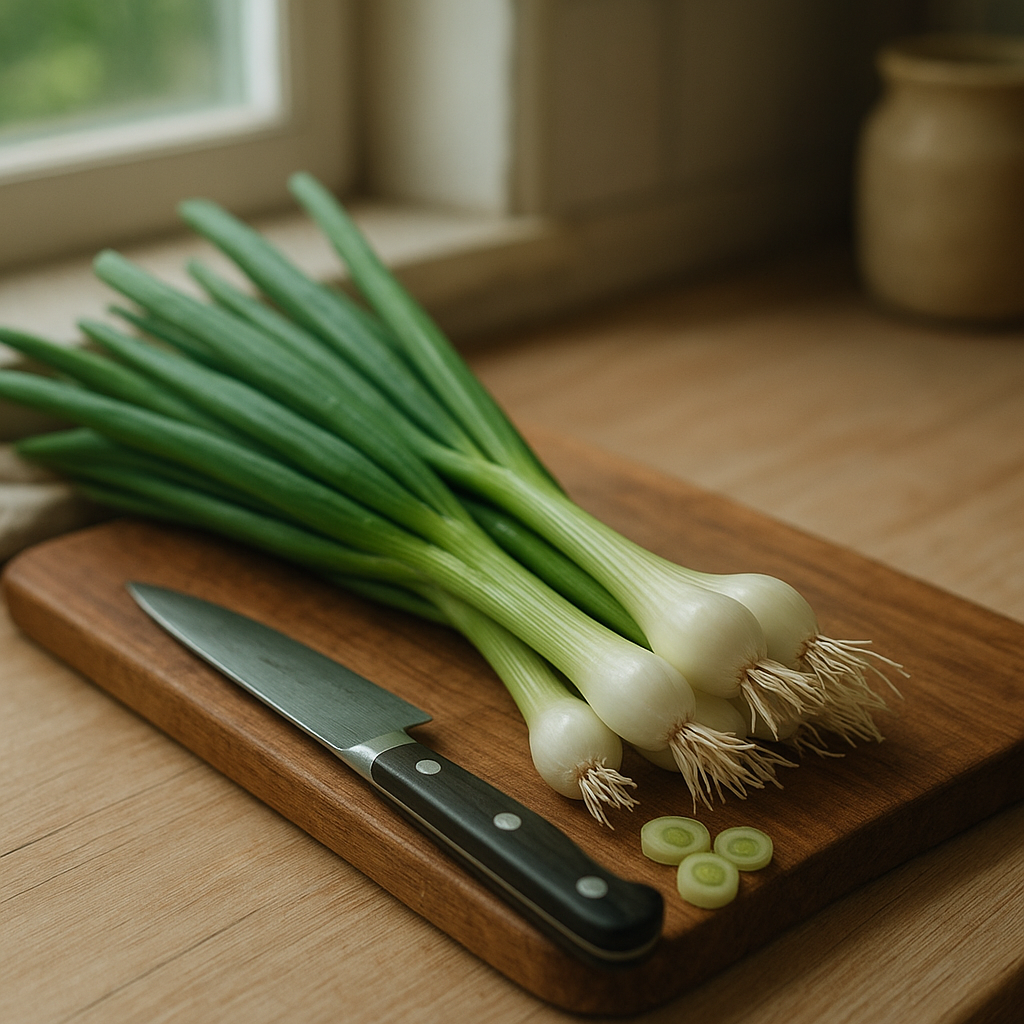
A Better Way to Turn a Spring Bunch Into Dinner
Green garlic looks like a young leek crossed with a scallion, but many home cooks still treat it like a mature garlic bulb and end up wasting what makes it special. Its flavor is fresher, sweeter, and much less harsh than a dry clove, which means it responds better to gentle heat than to aggressive mincing or browning.
If you picked up a bunch at the market and already read how to store green garlic, the next useful question is what to do with it before the season disappears. The good news is that the answer is simple: slice it, soften it slowly, and use it the way you would use scallions, ramps, or a mild onion rather than trying to force it into regular garlic duty.
The short answer
- Use the white and pale green parts for the deepest flavor, and the darker green tops where they still feel tender.
- Slice it thinly instead of crushing it through a press.
- Cook it gently in butter or olive oil until soft and fragrant, not browned and crisp.
- Add the dark green tops later so they stay sweet instead of turning stringy.
- Use it in eggs, rice, beans, pasta, soups, or spooned over fish and vegetables.
If you want one default move that almost always works, make a soft green garlic skillet base and build dinner from there.
What green garlic actually tastes like
Green garlic is younger and wetter than cured garlic, so the flavor lands in a different place. It still tastes unmistakably like garlic, but it also carries some of the grassy sweetness you get from scallions or young onions. That makes it especially good in spring cooking, where you usually want brightness rather than deep roasted heaviness.
That softer flavor is why a bunch from the garden or market often works better in quick weeknight food than in long, robust braises. If you grow your own bulbs, the same timing instincts that matter in garlic container growing matter in the kitchen too: younger garlic needs a lighter hand.
What parts to use
- White base and pale green stalk: best for sauteing, folding into grains, or starting soups
- Darker green tops: use when still tender, but add them later in cooking
- Tough outer layer: peel it off if it feels leathery or dirty
- Root end: trim it away completely
If the top half feels fibrous, do not force it into the pan just because it is there. Use the tender lower portion and compost the stringy part. Green garlic is forgiving, but not every inch of the stalk belongs in the same dish.
The easiest base method
- Trim and wash it well. Dirt likes to hide between the layers near the base.
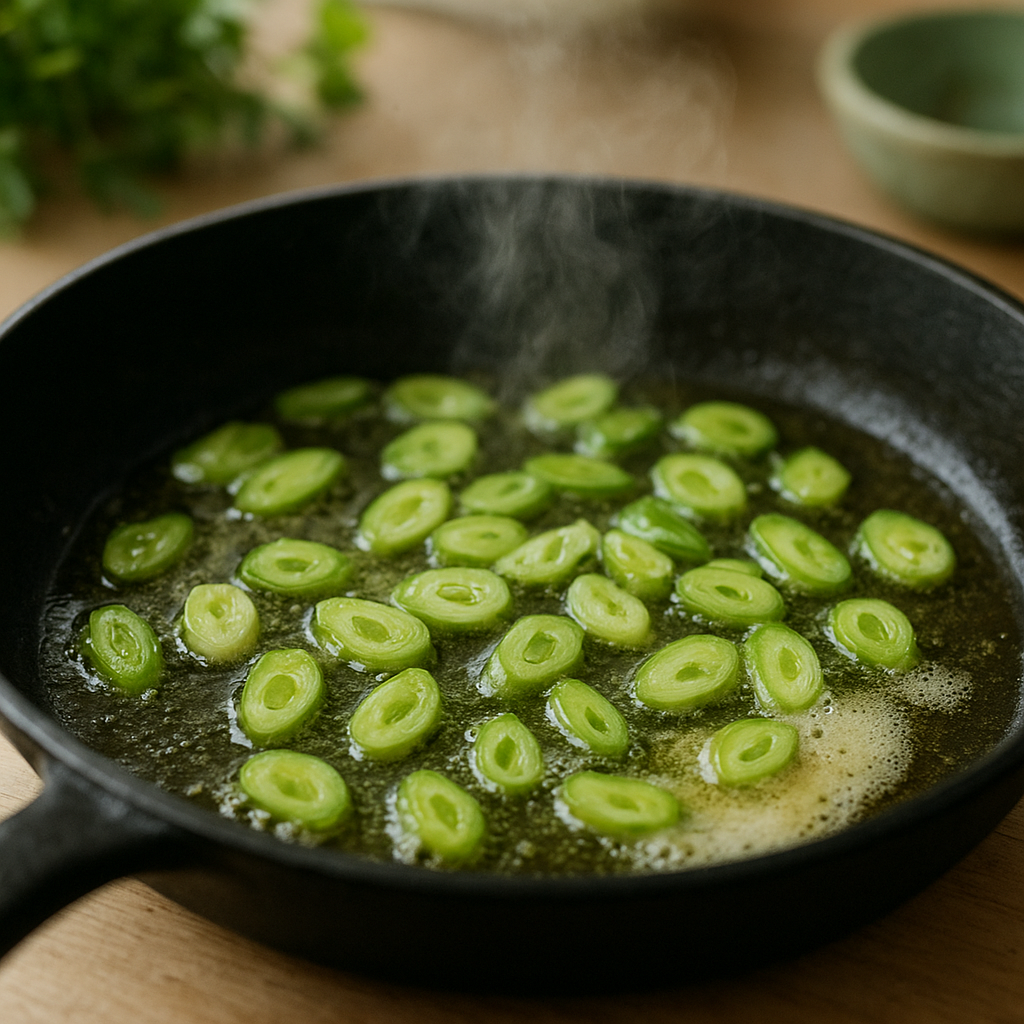
- Slice the white and light green parts thinly. Keep any tender darker greens separate.
- Warm 1 to 2 tablespoons of olive oil or butter in a skillet over medium-low heat.
- Add the pale slices with a pinch of salt. Cook for 3 to 5 minutes, stirring now and then, until soft and glossy.
- Add the tender green tops for the last minute or two. They should wilt, not fry.
- Use the mixture immediately. Spoon it into eggs, over toast, into beans, through rice, or under a piece of fish.
The pan should smell sweet and savory, not toasted or sharp. If it starts catching color fast, the heat is too high. Green garlic gets bitter when pushed too hard.
Five good ways to use it this week
1. Fold it into eggs
Softened green garlic is excellent in scrambled eggs, omelets, or a quick frittata. It gives you garlic flavor without the raw bite that can take over breakfast.
2. Stir it through rice
Once the skillet base is ready, fold it into hot rice with a little butter, lemon zest, or chopped parsley. It is an easy way to make a plain pot of rice feel like a planned side dish instead of an afterthought.
3. Add it to white beans
Warm canned or cooked white beans in the pan with a splash of water or broth, then finish with olive oil and black pepper. Green garlic gives the beans enough lift that they can sit under roasted vegetables or on toast for lunch.
4. Spoon it over salmon
A quick pan of softened green garlic, butter, and lemon is a very good finish for oven salmon. It tastes fresher than a heavier cream sauce and fits the season better.
5. Build a fast toast or pasta sauce
Loosen the skillet with a splash of pasta water or broth, then add Parmesan, white beans, or wilted greens. Or spoon the same mixture over toast with ricotta for a small lunch that tastes more expensive than it is.
Common mistakes
Cooking it like mature garlic
If you mince it too fine and hit it with high heat, it can go from fragrant to bitter before the rest of dinner is ready.
Using the whole stalk without checking texture
The darkest top can be great, but only while it is tender. Older bunches often need a little trimming judgment.
Skipping the wash
Green garlic grows close to the soil, and the inner layers often hold grit.
Trying to make it do all the work raw
Small amounts are nice in dressings or yogurt sauces, but most bunches show their best side after a brief, gentle saute.
Troubleshooting
Mine tastes bitter
The pan was probably too hot, or the slices browned more than they softened. Start over with lower heat and a little more fat.
Mine tastes weak
Use more of the white and pale green portion, and salt the pan lightly at the start so the flavor opens up.
The tops turned stringy
The bunch was a little older, or the top section cooked too long. Next time, use only the most tender green part and add it at the end.
I still have extra green garlic
Keep the remaining bunch properly chilled and dry, then come back to it within a few days. If you need a storage reset first, use this green garlic storage method before the stalks lose their snap.
FAQ
Can you use green garlic raw?
Yes, especially the tender inner parts, but its texture and sweetness usually improve with a quick saute.
Can you substitute green garlic for regular garlic cloves?
Yes, but it behaves more like a small allium than a concentrated clove. Use more of it and expect a softer result.
What does green garlic pair well with?
Eggs, beans, potatoes, rice, pasta, spring vegetables, soft cheeses, chicken, and fish all work well with it.
A short-season ingredient worth using gently
Green garlic does not need a complicated recipe to earn its place in the kitchen. It just needs the right treatment. Slice it, soften it, and let that mild garlic flavor do what dry cloves cannot always do so gracefully: make a fast spring meal taste fuller without taking over the whole plate.