The Fastest Way to Save Half a Bunch
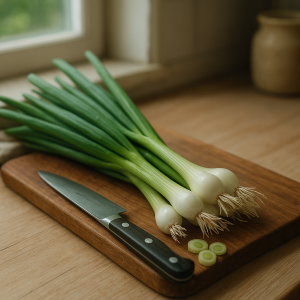
Green onions always look easy to use up until they are suddenly not. You buy a bunch for fried rice, eggs, tacos, soup, or a quick noodle bowl, use three stalks, and then the rest starts softening in the drawer while you pretend you have a plan for them.
If you know you are not going to finish the bunch while it still feels crisp, the smartest move is to slice the extra portion and freeze it early. Frozen green onions will not come back as a fresh garnish, but they are excellent in hot food and much more useful than a limp bunch you waited too long to save.
The short answer
- Freeze green onions while they are still firm, dry, and bright.
- Slice them before freezing so you can grab a small amount at a time.
- Dry them well if you rinse them first.
- Freeze them loose in a thin layer or in small portions so they do not weld into one solid brick.
- Use frozen green onions in cooked dishes, not as a crisp raw topping.
If you still expect to use the bunch fresh this week, start with a better fridge setup for green onions. Freezing is the move for the portion you already know is headed toward waste.
When the freezer is the better call
Freezing makes the most sense when one of these is true:
- you bought a bunch for one meal and only needed a few stalks
- the dark green tops are still fresh but you will not use them in time
- you like green onions in cooked food but rarely finish a full bunch raw
- you want a ready-to-grab ingredient for eggs, rice, noodles, soups, and savory sauces
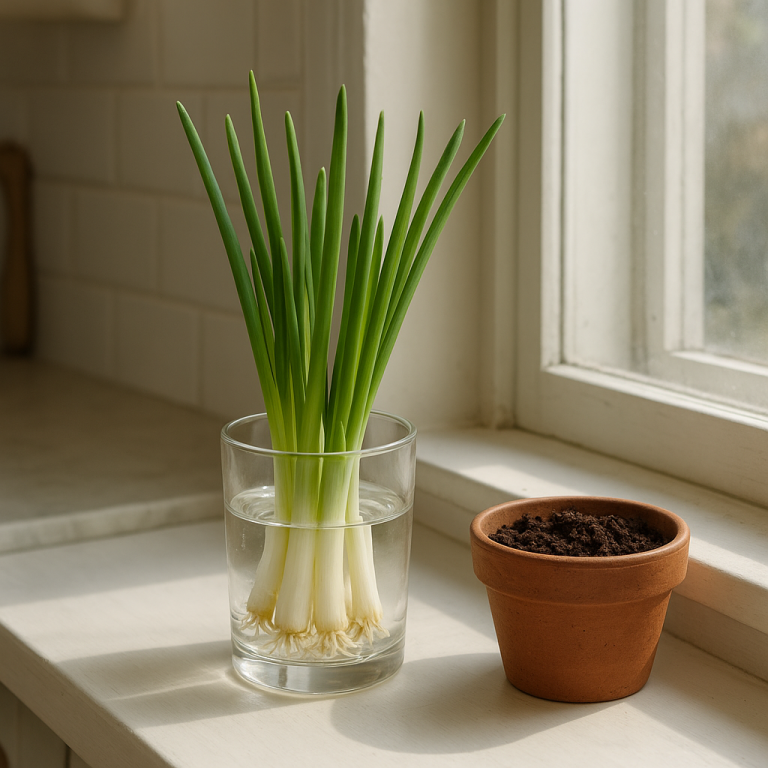
It is also a good back-pocket habit if you regrow the roots at home. Use the good tops, freeze the overflow, and then regrow the root ends instead of tossing them.
The best green onions to freeze
- crisp white ends
- bright green tops with no slime
- a clean onion smell, not a sour or swampy one
- dry surfaces without trapped water between the layers
Do not wait for the bunch to get tired. Freezing is a way to keep a good ingredient useful, not a way to rescue one that is already collapsing.
How to freeze green onions so they stay easy to use
- Split the bunch first. Keep only the portion you will realistically use fresh in the next few days. The rest goes to the freezer.
- Trim away anything damaged. Remove slimy tops, dried ends, or bruised sections before they go any further.
- Rinse only if needed. If they are gritty, rinse quickly, then dry them thoroughly with a towel. Surface moisture is what turns a freezer bag into a frosty clump.
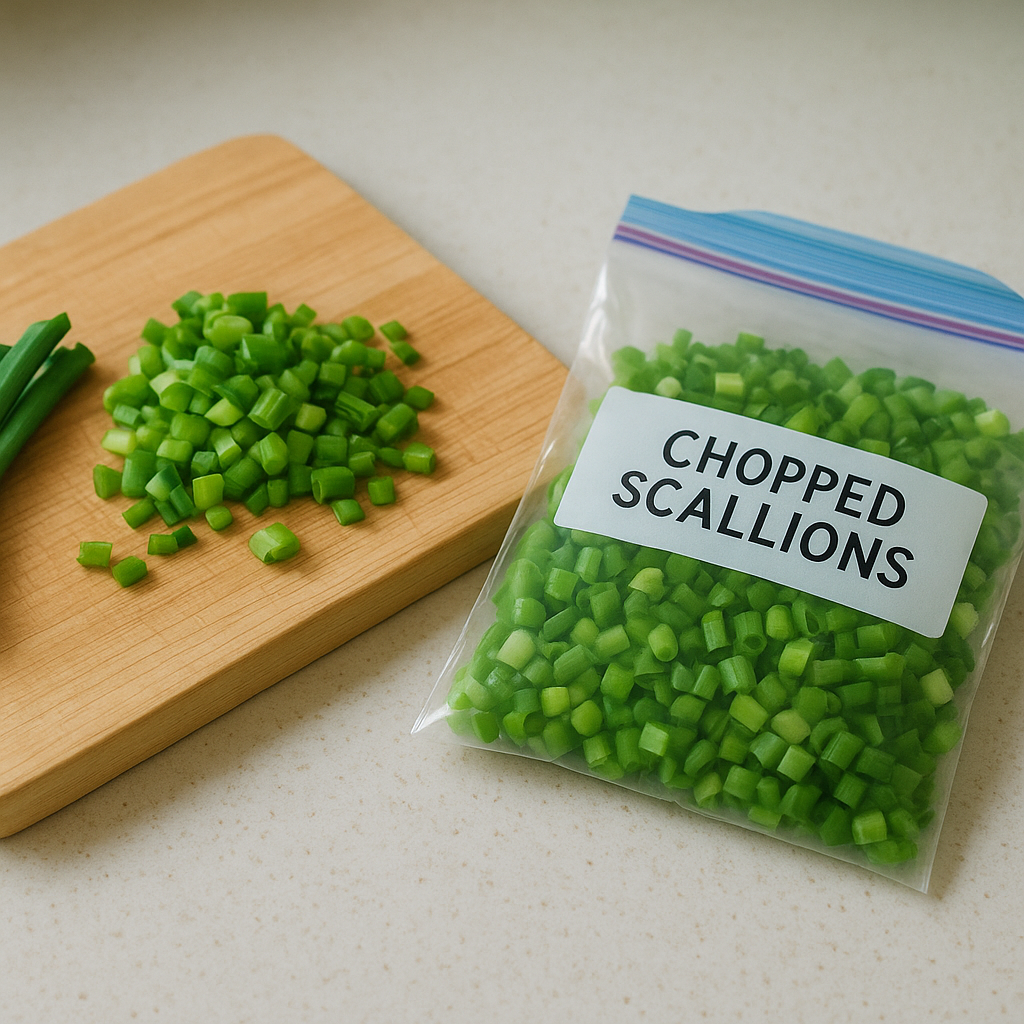
- Slice them into the size you actually cook with. Small rings are the most flexible for eggs, rice, soup, stir-fries, and dumpling fillings.
- Freeze them in a shallow portion. A small freezer bag or container works best when the layer is thin instead of packed deep.
- Label and freeze. Once they are cold and firm, they are ready to shake straight into hot food.
Should you freeze them loose or in little portions?
Either works. If you use green onions constantly, a small loose bag is usually enough. If you prefer more control, pack them in very small portions so you can use one quick handful at a time. The right choice is the one that matches how you cook on an ordinary weeknight.
If you already freeze herbs in butter or oil, you can also stir chopped green onions into a little softened butter for potatoes, rice, or eggs. The same practical logic behind freezer-friendly herb butter works here too.
What frozen green onions are good for
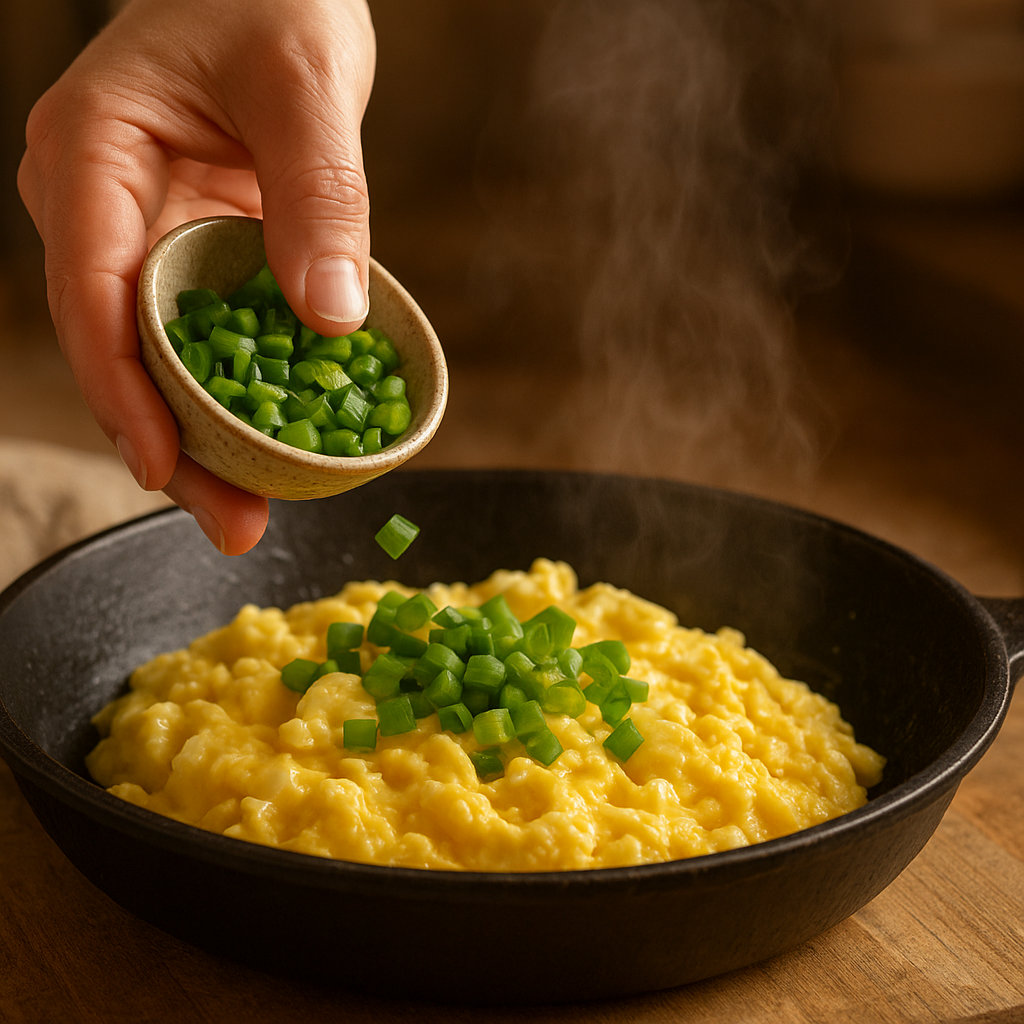
- scrambled eggs and omelets
- fried rice and grain bowls
- soups, brothy noodles, and ramen
- stir-fries and quick skillet dinners
- savory pancakes, fritters, and dumpling fillings
- baked potatoes and warm bean dishes
- compound butter, cream cheese, and cooked sauces
Add them directly from frozen near the end of cooking when you want the flavor to stay brighter.
What frozen green onions are not good for
They are not ideal for crisp finishing work. Once thawed, the texture softens and the dark green tops lose the springy snap that makes fresh scallions good on tacos, cold noodles, salads, and dips. Keep a few fresh if that is the job you need them to do.
Common mistakes
Freezing them wet
Moisture creates ice, clumps, and duller texture. Dry them better than you think you need to.
Waiting until the bunch is already limp
The freezer preserves what is there. It does not rewind tired produce.
Packing one huge bag
A thick frozen mass is annoying to portion. Smaller, flatter storage is easier to live with.
Expecting fresh garnish texture later
Use frozen green onions where heat helps them, not where crispness matters.
Troubleshooting
My green onions froze into one block
They probably went in too wet or in too thick a pile. Break off what you can for cooking, then freeze future batches flatter and drier.
The flavor seems weak
The bunch may have been old before it ever reached the freezer. Freeze them sooner next time.
I only use a teaspoon at a time
Slice them smaller and store them in a flatter bag or a very small container so you can tap out a little instead of prying off a chunk.
I want both freezer portions and fresh green onions
That is usually the best system. Store a few stalks fresh for garnish and freeze the rest before the whole bunch declines together.
FAQ
Can you freeze green onions without blanching them?
Yes. For everyday home cooking, green onions freeze well without blanching as long as they go into the freezer clean, dry, and already sliced.
Do frozen green onions get mushy?
They soften after freezing, which is why they are better for cooked dishes than for raw garnish use.
How long are frozen green onions worth keeping?
They are best while the flavor still tastes bright and oniony, not after they have drifted to the back of the freezer for ages.
The low-effort habit that saves the bunch
Green onions are one of those ingredients that feel cheap enough to waste until you realize how often you buy them and how often half the bunch dies the same way. Slice the extra portion early, freeze it while it is still in good shape, and you get a small kitchen win that keeps showing up in dinner later.