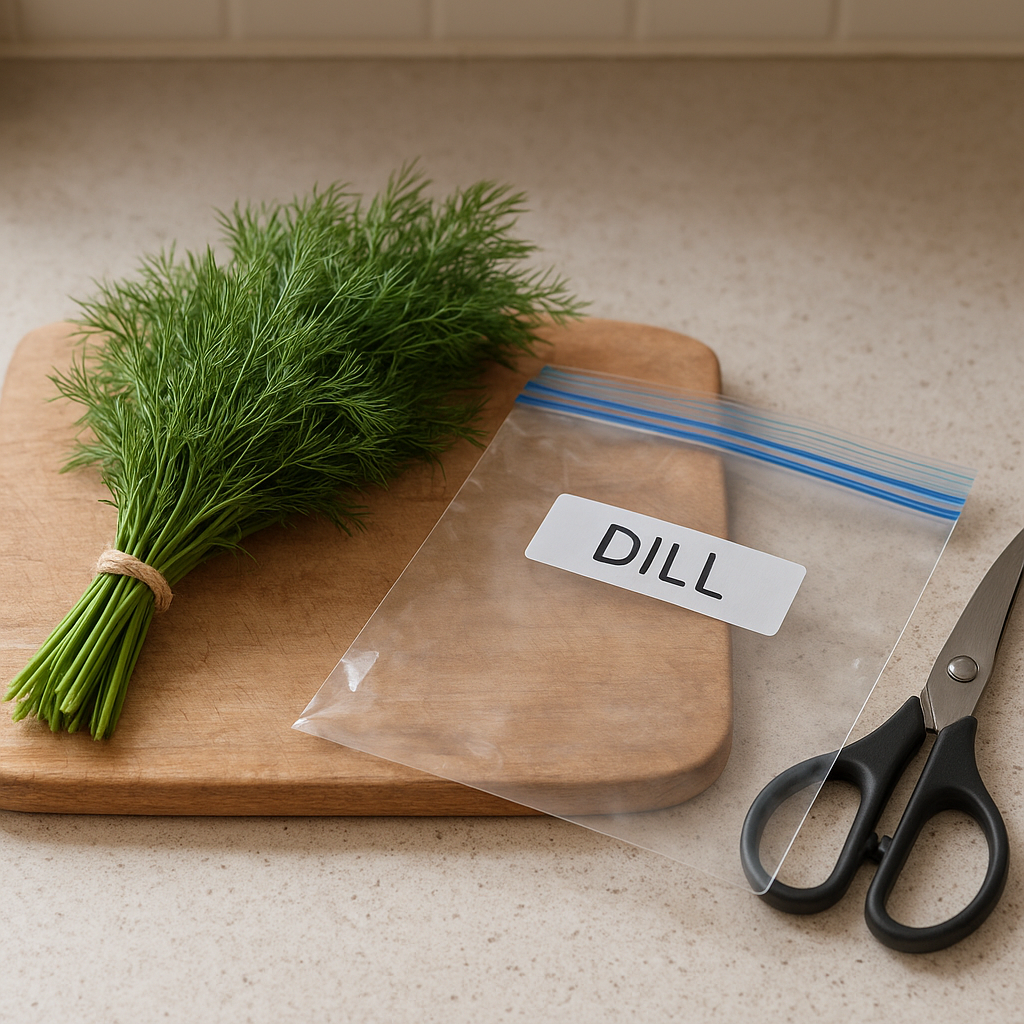
A Better Save for the Half-Bunch You Will Not Finish This Week
Dill has a tiny window where it feels abundant and useful, then suddenly fragile. One market bunch, one generous garden harvest, or one recipe that needed only a few sprigs can leave you with a lot of feathery green fronds headed for a quick collapse in the fridge.
Freezing is the easiest way to catch that extra dill while it still smells clean and lively. The goal is not to preserve the exact fresh-garnish texture. It is to keep the flavor ready for potatoes, salmon, eggs, soups, rice, yogurt sauces, and quick weeknight cooking later on.
The short answer
- Freeze dill while it is still bright, dry, and fragrant.
- Wash only if you need to, then dry it extremely well.
- Chop it before freezing if you want easy spoonful-sized portions.
- Freeze it either dry in a thin layer or in small oil-based cubes for cooked dishes.
- Use frozen dill where flavor matters more than crisp texture.
If your bunch is still in good shape and you only need a few more days, start with a better way to store fresh dill. If you already know you will not finish it, the freezer is the smarter move.
Why dill is worth freezing early
Dill bruises easily, traps moisture in all those fine leaves, and tends to turn from airy to swampy faster than sturdier herbs. Once that slide starts, the freezer does not fix it. Freezing works best when you do it before the bunch goes limp, dark, or wet.
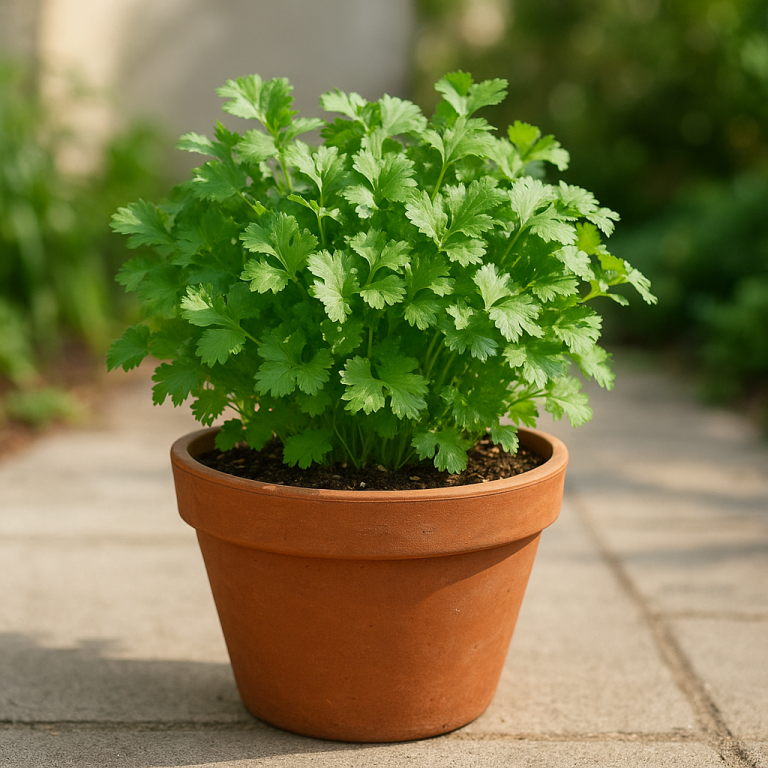
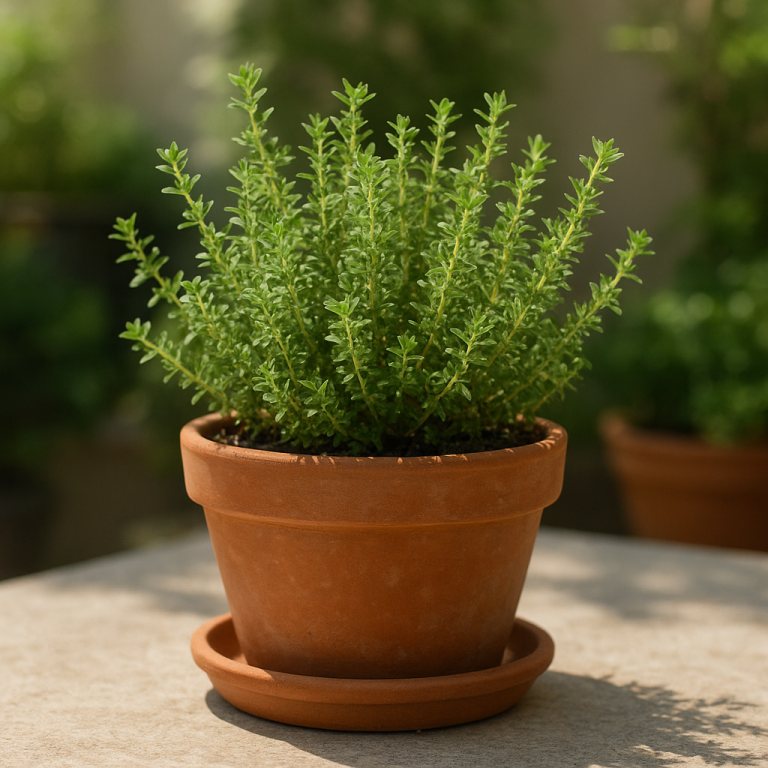
This is especially useful if dill is coming from your own containers or garden beds. A healthy patch can give you more at once than one meal can reasonably absorb, which is a better problem to have than not enough. If you are still on the growing side of that problem, growing dill in pots well makes the freezer question show up fast.
The best dill to freeze
- bright green fronds with a clean fresh smell
- dry leaves with no slick patches
- tender stems that are not yellowing or collapsing
Skip any mushy, blackened, or sour-smelling parts. Freeze the good portion and discard the rest.
Method 1: Freeze chopped dill dry
- Wash only if needed. If the dill is already clean, do not add extra moisture just for the ritual of it.
- Dry it thoroughly. Spin it, pat it, and let it air-dry until the fronds no longer feel damp.
- Remove the thickest lower stems. Tender upper stems are fine to keep if you like.
- Chop the dill to the size you actually cook with. Small flecks are easier to grab from the freezer than long feathery strands.
- Pack it in a thin layer. A small freezer bag or shallow container works best when the dill is spread out instead of packed into a thick lump.
- Freeze it fast. Lay the bag flat until solid so you can break off a little at a time later.
This is the most flexible method if you want to add a spoonful to eggs, rice, potato salad, soup, or a pan sauce without thawing a whole block.
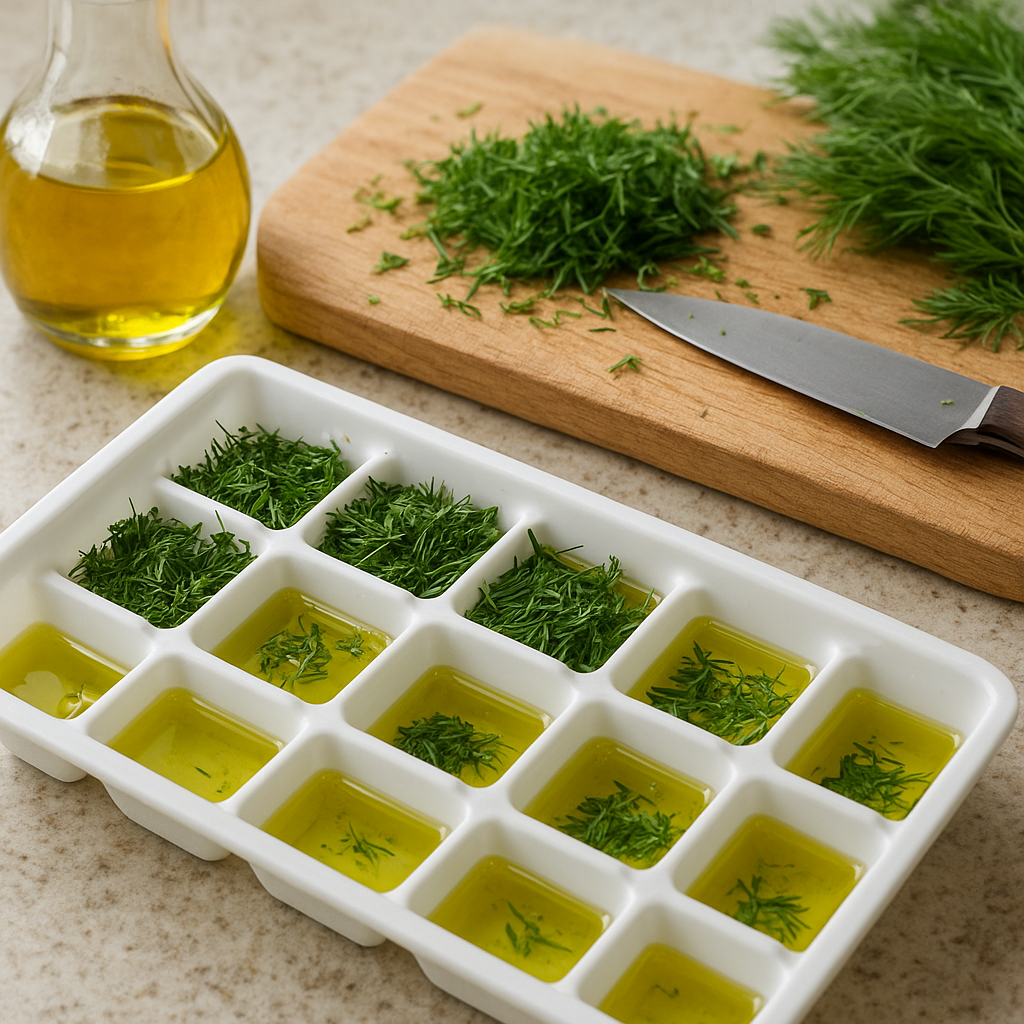
Method 2: Freeze dill in olive oil portions
If you mostly use dill in cooked dishes, dressings, or quick sauce bases, small oil-based portions are convenient. Stir chopped dill with just enough olive oil to lightly coat it, spoon it into a mini ice cube tray or small silicone mold, and freeze until solid. Then move the pieces to a freezer bag.
This method works well for skillet potatoes, salmon, warm beans, soups, and pan sauces. If you have other herbs to use up at the same time, herb butter is another strong freezer option.
What frozen dill is actually good for
- scrambled eggs and omelets
- salmon and other fish dishes
- boiled or roasted potatoes
- rice, grains, and savory yogurt sauces
- cream soups and vegetable soups
- compound butter or sour cream mixtures
Add it near the end of cooking when you want the flavor to stay brighter. If you are already freezing other herbs, this works much like freezing parsley in small portions or freezing fresh chives, but dill softens even faster once thawed, so it is best treated as a cooked-food herb.
What frozen dill is not good for
Frozen dill is not the best choice when you want a fluffy fresh garnish over deviled eggs, a cold platter, or a salad where the herb itself needs to look lively. Once thawed, it goes soft. Keep a little fresh for garnish jobs and freeze the overflow.
Common mistakes
Freezing it wet
Wet dill turns into icy clumps and loses the easy portioning that makes freezing useful in the first place.
Waiting until it is already collapsing
The freezer pauses the decline. It does not reverse it.
Freezing one giant wad
A big frozen mass is technically preserved, but much harder to use. Thin layers and small portions win.
Expecting it to behave like fresh garnish
Frozen dill keeps flavor better than texture. Plan for cooked dishes and sauces.
Troubleshooting
My dill froze into a solid block
It likely went in too wet or too thick. Let it sit for a minute at room temperature, break off what you need, and freeze future batches flatter and drier.
The flavor seems weak
The dill may have been old before freezing. Start earlier next time and add the herb later in cooking so the aroma stays clearer.
I only ever use a teaspoon at a time
Freeze it in a very shallow bag or tiny mold so you can pull out smaller amounts without waste.
I have more dill than I can freeze neatly
Split the pile. Freeze some plain, then turn the rest into a richer freezer backup like herb butter.
FAQ
Can you freeze fresh dill without blanching it?
Yes. For everyday home cooking, drying it well and freezing it promptly is usually enough.
Is it better to freeze dill whole or chopped?
Whole sprigs are fine if you plan to chop later, but chopped dill is usually easier to portion for regular cooking.
Can you freeze dill in oil?
Yes. Small oil-based portions are especially useful for soups, potatoes, fish, and quick skillet meals.
How long does frozen dill stay useful?
It is best while the aroma still smells bright when you open the bag. Small, well-sealed portions hold flavor better than a large half-empty bag that keeps getting reopened.
The useful version
Freeze dill while it still smells like dill. Dry it well, portion it small, and use it where flavor matters more than texture. That turns one fragile bunch into a much more practical ingredient instead of another green tangle fading in the back of the fridge.