A Small-Batch Freezer Method for the Extra Chives You Will Not Finish in Time
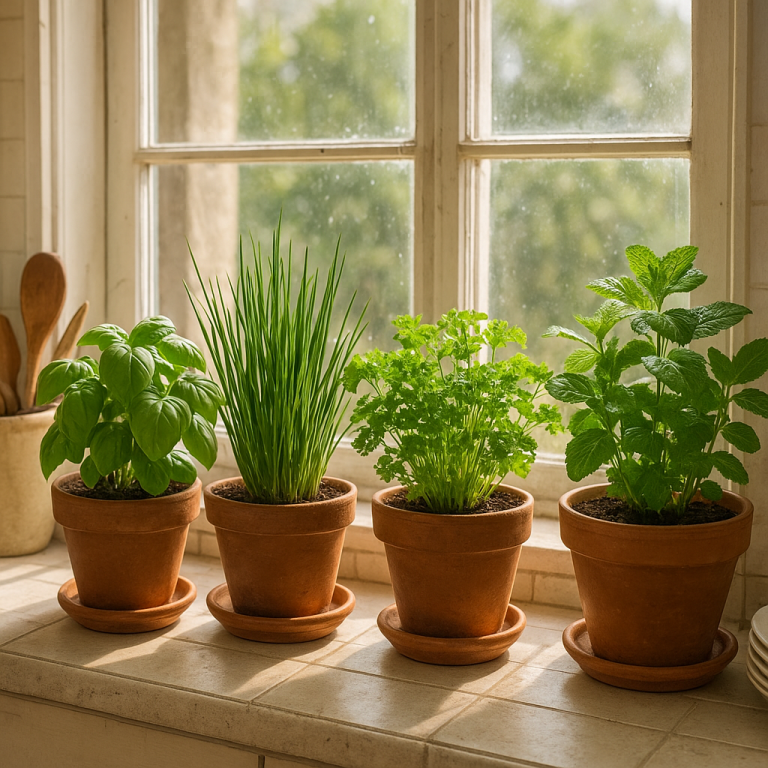
Chives have a way of looking manageable right up until they do not. One garden snip, one market bunch, or one pot on the patio can leave you with far more than you need for eggs and baked potatoes this week. Because the blades are so thin, they go from bright and useful to limp and damp fast.
If you know you are not going to use the whole bunch while it still tastes fresh, freezing is the easiest save. The goal is not to preserve the delicate raw garnish texture. It is to keep the clean oniony flavor ready for cooked food, quick sauces, and compound butter later on.
The short answer
- Freeze chives as soon as you know you will not use the bunch fresh.
- Wash only if needed, then dry them extremely well.
- Snip or chop before freezing so you can use small amounts at a time.
- Freeze them either loose in a small container or in little oil-based portions for cooking.
- Use frozen chives in cooked dishes, not as a crisp finishing garnish.
Frozen chives are at their best in eggs, soups, potato dishes, rice, savory sauces, and butter-based finishes.
When freezing is smarter than trying to stretch the bunch
Fresh storage buys you a little time, but it does not change the fact that chives are delicate. If half the bunch is already more than you can use in the next few days, split it early. Keep one portion fresh and freeze the rest while it is still bright and dry.
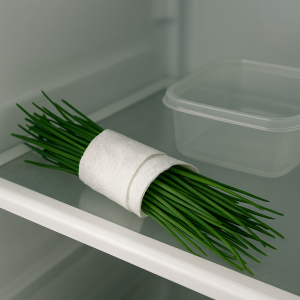
If you need the short-term fridge setup first, use a drier storage method for fresh chives. If the problem is a pot that keeps producing, that is really a good gardening problem to have, and healthy potted chives tend to create it quickly.
The best chives to freeze
- firm, dry, bright green blades
- fresh oniony smell with no sourness
- no slime, blackened tips, or wet clumps
Do not wait for the bunch to become tired. Freezing is most useful when you do it early, not after the texture has already started to slide.
Method 1: Freeze chopped chives dry
- Clean only if needed. If the chives are clean from the garden or package, skip the rinse. If they need washing, rinse quickly and dry them very thoroughly.
- Dry them completely. Spread them on a towel and let surface moisture disappear. Damp chives freeze into a clump.
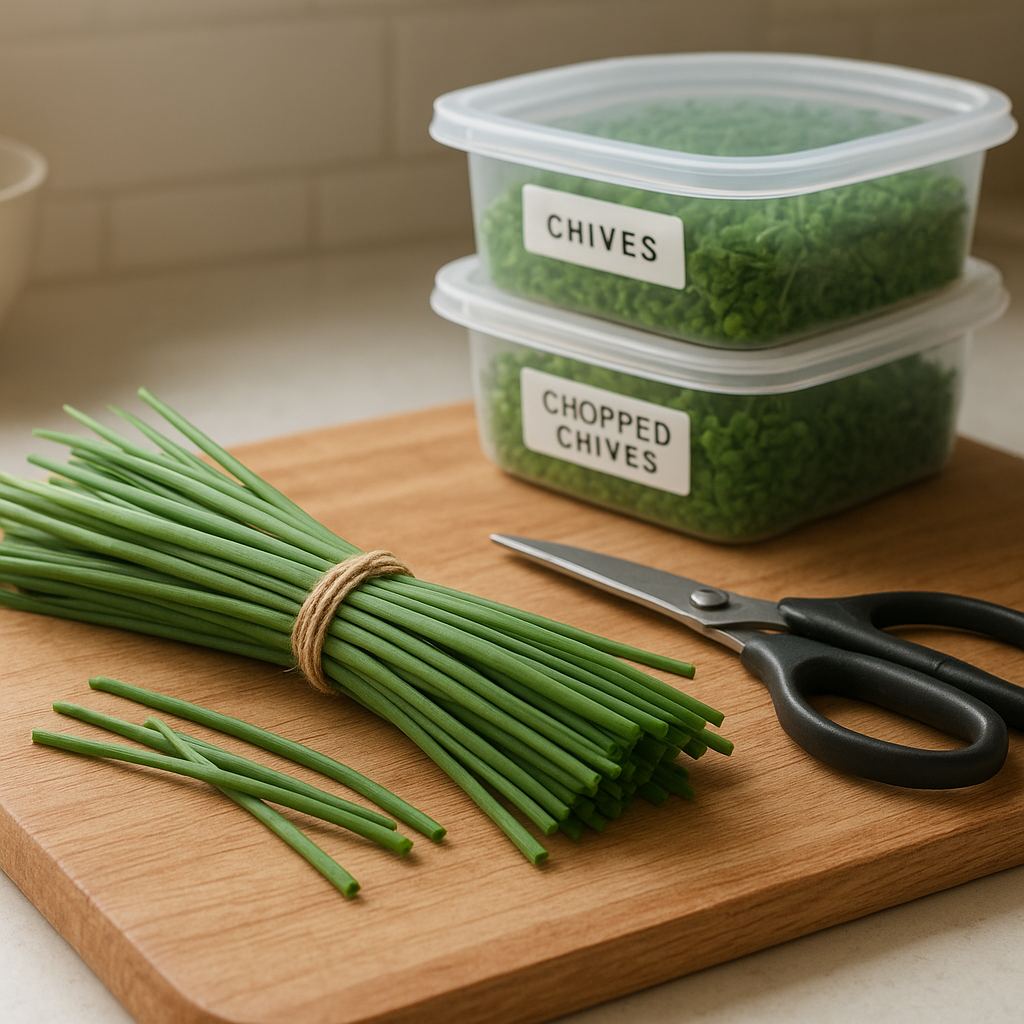
- Snip into the size you actually use. Small rings are easier to grab from the freezer than long blades.
- Pack into a small container or freezer bag. Press out excess air if you are using a bag.
- Freeze flat if possible. A flatter layer is easier to break apart later.
This is the most flexible method if you want to shake out a spoonful at a time for eggs, soups, or pan sauces.
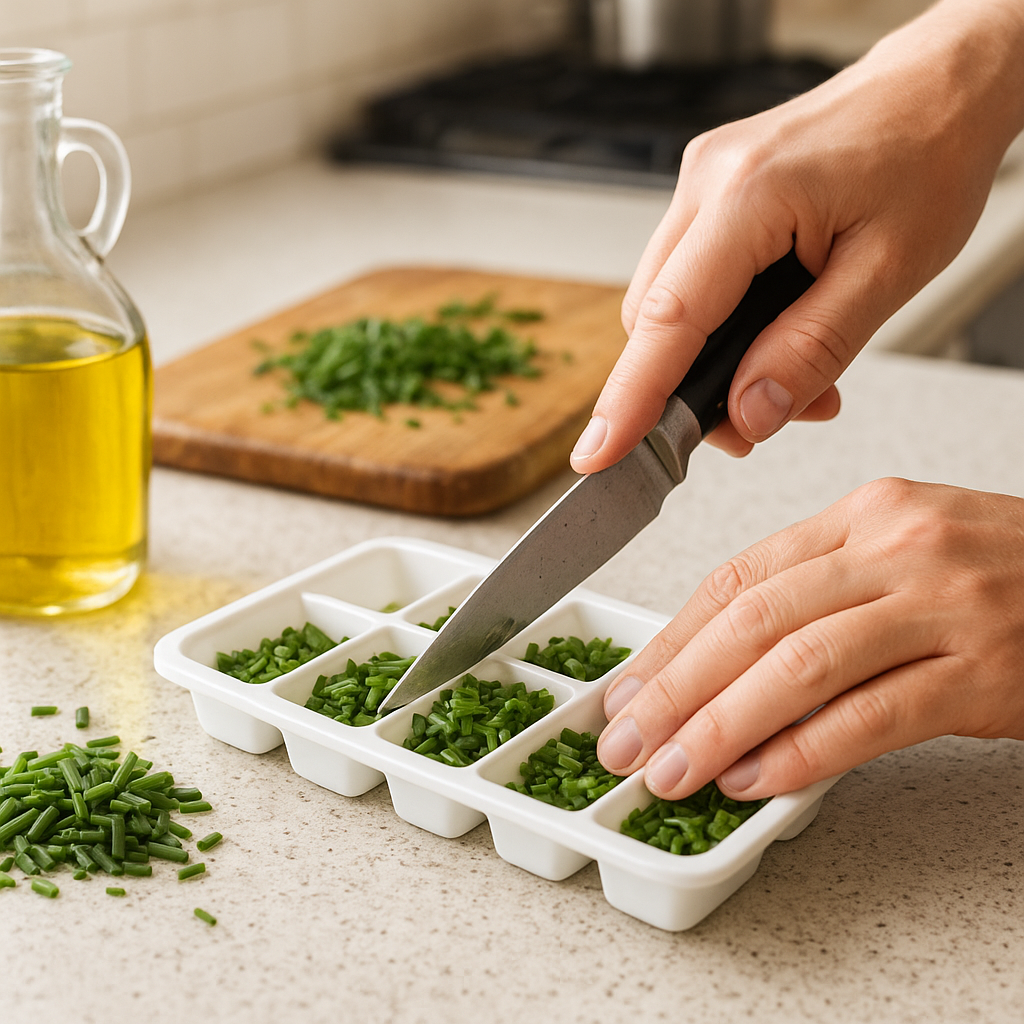
Method 2: Freeze chives in oil or butter portions
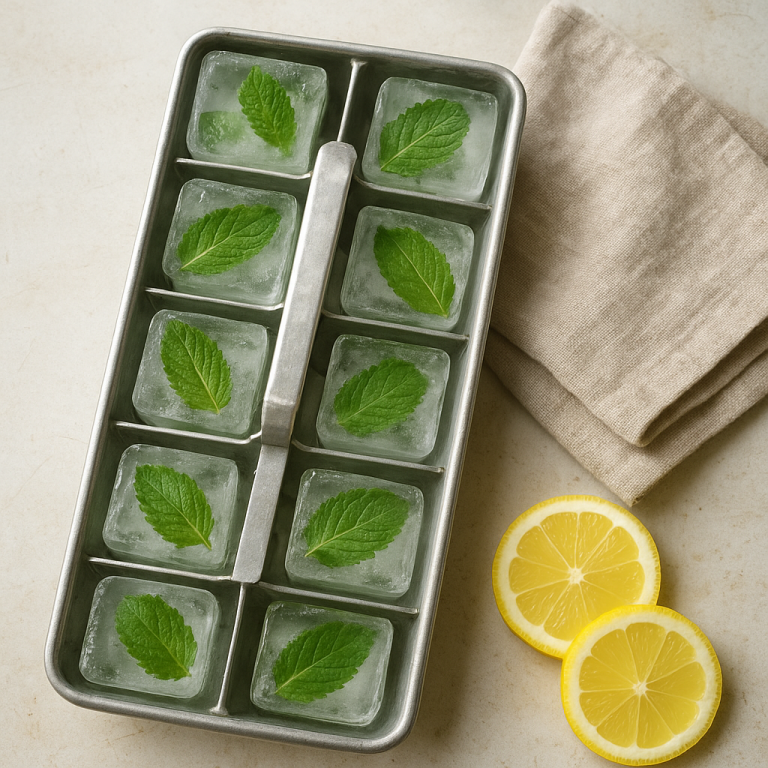
If you mostly use chives in cooked foods, freezing them in small fat-based portions is even more convenient. Stir chopped chives into a little olive oil or soft butter, then portion the mixture into a mini ice cube tray or small lined container.
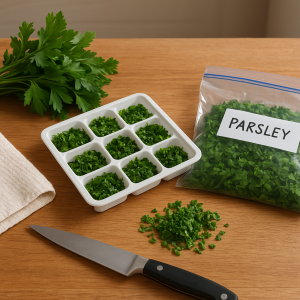
This works especially well when you already know the chives are headed for potatoes, vegetables, rice, or eggs. It is also a simple bridge to freezer-friendly herb butter if you have parsley, dill, or other herbs to use up at the same time.
What frozen chives are good for
- scrambled eggs and omelets
- potato soup or baked potato filling
- rice, grains, and savory oatmeal
- pan sauces for salmon or chicken
- softened butter, sour cream, or yogurt sauces
- vegetable sautés and quick noodle dishes
Add them near the end of cooking when you want the flavor to stay brighter.
What frozen chives are not good for
They are not the best choice when you want a crisp, fresh-looking garnish scattered over deviled eggs or a cold dip. Once thawed, chives soften and lose the tidy texture that makes fresh snipped chives feel sharp and lively. For raw finishing, keep a small portion fresh and freeze only the overflow.
Common mistakes
Freezing them wet
Extra moisture creates icy clumps and duller flavor. Drying matters more than people think.
Freezing one giant bundle
A solid frozen mass is annoying to portion. Chop first so the chives stay usable.
Saving them too long before freezing
If the bunch is already limp or slimy, freezing will not rescue it.
Expecting garnish texture later
Frozen chives are a cooked-food ingredient, not a perfect stand-in for freshly snipped chives.
Troubleshooting
My frozen chives turned into a block
They likely went in too wet or in too thick a mass. Break off what you can and use it for cooked dishes, then freeze future batches flatter and drier.
The flavor seems weak
The bunch may have been old before freezing. Start with brighter, fresher chives next time and freeze them sooner.
I only use tiny amounts
Freeze very small portions. A mini tray, shallow bag, or thin flat container is easier than a deep tub.
I have both blossoms and blades
Freeze the blades and use the blossoms another way. If you have enough flowers, chive blossom vinegar is a better use for them than the freezer.
FAQ
Can you freeze fresh chives?
Yes. Chives freeze well for cooked dishes as long as they go into the freezer clean, dry, and chopped.
Do you need to blanch chives before freezing?
No. Chives are delicate enough that blanching is unnecessary for this kind of everyday kitchen use.
Is it better to freeze chives dry or in oil?
Dry freezing is more flexible. Oil or butter portions are more convenient if you already know how you plan to cook with them.
How long do frozen chives stay useful?
They are best when used while the flavor still tastes bright and clean rather than left to drift to the back of the freezer indefinitely.
The useful version
Freezing chives is not about making them identical to fresh. It is about catching extra spring flavor before it collapses in the fridge. Chop them, dry them well, freeze them in small portions, and they become the kind of freezer ingredient that quietly improves a lot of ordinary meals.