A Better Freezer Routine for Peak Spring Spears
Asparagus has a very short stretch when it tastes sweet, grassy, and worth buying in bunches. Then one dinner gets postponed, the refrigerator fills up, and a bundle you meant to roast tonight starts looking tired by the weekend.
If you already know you are not going to use the whole bunch while it is still at its best, freezing it early is the smarter move. The trick is to freeze asparagus in a way that keeps the pieces easy to grab for soup, pasta, risotto, and quick sautés later instead of turning them into a frosty, waterlogged block.
If your bunch still has a few fresh days left, start with the best way to store asparagus. And if you are trimming thick stalks as you prep, save the tougher ends for asparagus ends soup instead of throwing them out.
The short answer
- Freeze asparagus while it is still firm and bright, not after the tips soften or the stalks go rubbery.
- Wash it, trim away the woody bottoms, and cut it into the lengths you actually cook with.
- Blanch small spears for 2 minutes, medium spears for 3 minutes, and thick spears for 4 minutes.
- Cool it fast in ice water, then dry it thoroughly.
- Tray-freeze first if you want loose pieces instead of one frozen clump.
- Pack in small bags or containers so you can use only what you need.
A quick blanch is what helps frozen asparagus keep a better color and flavor. Skipping it usually gives you a flatter, mushier result.
When asparagus is worth freezing
The freezer is for asparagus that is still good, just more than you can use in time. Look for firm stalks, tight tips, and a clean fresh smell.
- Good freezer candidates: bright green spears with firm stalks and closed tips
- Use soon instead: asparagus that is slightly bendy but still smells fresh
- Skip freezing: slimy tips, sour smell, obvious mold, or stalks that are already mushy
Freezing preserves a decent cooked texture, but it will not rescue a bunch that is already going bad.
Whole spears or cut pieces?
Both work. The better choice is the one you will actually use later.
- Whole or long spears: best if you want asparagus for roasting, sheet-pan dinners, or larger sautés
- Short pieces: easier for pasta, frittatas, soup, fried rice, and risotto
- Tips and stalks separated: handy if you want to add the tips late to keep them from overcooking
If the lower stalks feel fibrous, snap or trim them first. Those tougher trimmings can go into a freezer bag for soup later rather than into the main freezing batch.
How to freeze fresh asparagus step by step
- Sort the bunch. Remove any damaged or slimy spears and group the rest loosely by thickness.
- Wash well. Rinse under cool water to remove grit, especially around the tips.
- Trim the woody ends. Cut or snap off the tough bottoms.
- Cut to size if needed. Leave the spears long or slice them into pieces that fit the way you cook.
- Blanch by size. Boil small spears for 2 minutes, medium spears for 3 minutes, and large spears for 4 minutes.
- Cool immediately. Transfer the asparagus straight into ice water for about the same amount of time it was blanched.
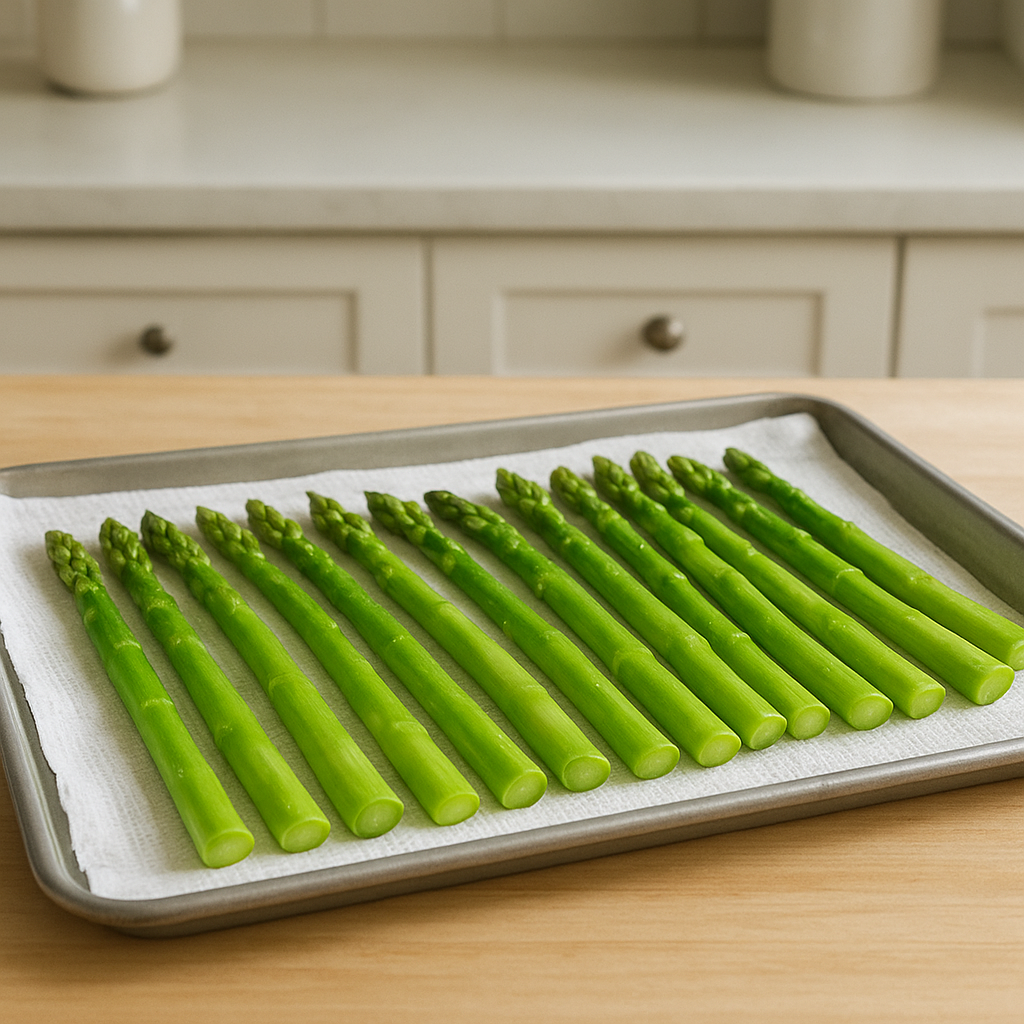
- Drain and dry very well. Spread the spears on a towel or tray until the surface moisture is gone.
- Tray-freeze if you want loose pieces. Arrange in a single layer and freeze until firm.
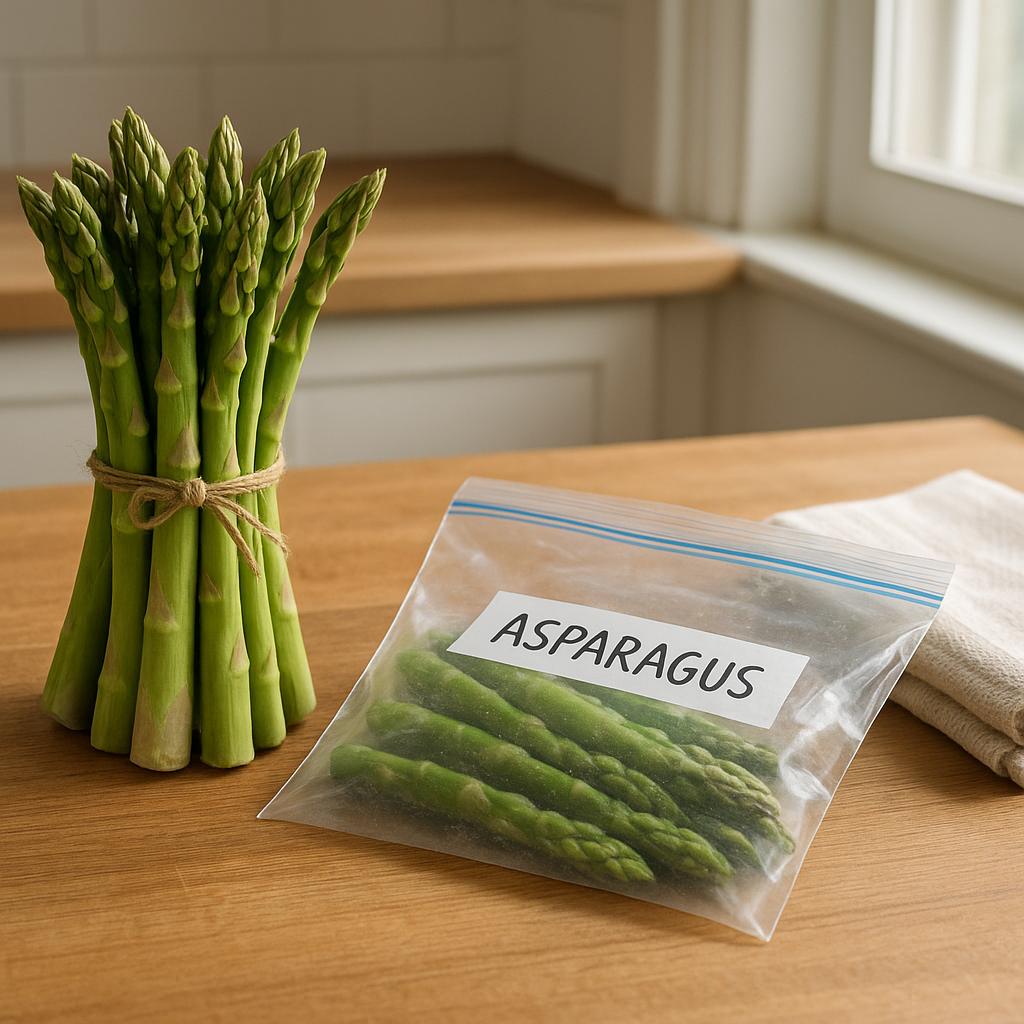
- Pack and label. Move the frozen asparagus into small bags or containers, press out excess air, and mark the date.
The blanching times that matter
Asparagus varies a lot by thickness, so one blanket time is not ideal. Thin pencil spears need less time than thick market bunches.
- Small spears: 2 minutes
- Medium spears: 3 minutes
- Large spears: 4 minutes
If you overdo the blanch, the asparagus can become soft before it even reaches the freezer. If you underdo it, the freezer quality drops faster.
The packing choice that makes frozen asparagus easier to use
Small flat bags are usually the most practical option. A giant bag sounds efficient until you only need a handful for a quick dinner.
- 1-cup portions: good for eggs, pasta, and small skillet meals
- 2-cup portions: better for soup, risotto, or a family side dish
- Flat bags: freeze faster, stack neatly, and thaw more evenly than deep containers
If you freeze other spring produce too, the same small-batch setup works well for fresh peas and rhubarb.
How to use frozen asparagus
Frozen asparagus is best in cooked dishes. It will not keep the same crisp snap as raw or freshly roasted spears, so aim it toward recipes where tenderness works in your favor.
- stir it into risotto or pasta near the end of cooking
- add it to soup straight from frozen
- fold it into a frittata or scrambled eggs
- sauté it quickly with butter, garlic, and lemon
- add it to a sheet-pan dinner once it has thawed just enough to separate
You usually do not need to thaw small pieces first. Whole spears are easier to handle if they sit out for a few minutes before cooking.
Common mistakes that make frozen asparagus disappointing
Freezing it too late
Once the tips are going soft and the stalks are rubbery, the best texture is already gone.
Skipping the blanch
Raw asparagus can look fine at first, but it loses quality and flavor faster in the freezer.
Bagging it while wet
Surface moisture turns into frost. That leads to clumping and a wetter result in the pan.
Packing one huge bag
A big bag encourages repeated thawing and refreezing around the edges. Smaller portions are easier to use well.
Expecting it to roast like fresh asparagus
Frozen asparagus is excellent in cooked dishes, but it will usually be softer than fresh when roasted on its own.
Troubleshooting
The asparagus froze into a solid block
It was probably packed before it was dry enough or skipped the tray-freeze step. Dry it longer next time and freeze in a single layer first.
The asparagus tastes watery
It may have been overcooked during blanching or thawed too long before cooking. Keep the blanch brief and cook from frozen when possible.
The color looks dull
That usually means the asparagus was either over-blanched or cooled too slowly. Ice water should be ready before the asparagus goes into the pot.
The texture is too soft for a side dish
Use that batch in soup, eggs, pasta, or risotto instead of trying to serve it like fresh roasted spears.
FAQ
Do you need to blanch asparagus before freezing?
Yes, for the best quality. Blanching helps preserve color, flavor, and texture better than freezing asparagus raw.
Can you freeze asparagus whole?
Yes. Whole spears freeze well if they fit your container and match how you plan to cook them later.
How long does frozen asparagus keep?
It is best within about a year if it stays well sealed and fully frozen, though the best quality is usually in the earlier months.
Do you thaw frozen asparagus before cooking?
Usually no for cut pieces. Whole spears may be easier to separate and handle after a short thaw.
Freeze asparagus while it still feels like spring produce, not after it starts feeling like cleanup. That small timing shift is what turns an extra bunch into an easy future dinner instead of refrigerator regret.