A Better Fridge Setup for Spring Spears
Asparagus has a short season when it is genuinely worth buying in bunches. Then the reality sets in: you use half for dinner, slide the rest into the refrigerator, and find the tips soft, the stalks rubbery, or the whole bundle smelling swampy a few days later.
The fix is simple. Asparagus keeps best when you treat it less like a loose vegetable and more like a cut stem. Give the bottom ends a little moisture, keep the tips dry, and stop trapping the bunch in a wet plastic sleeve. Done right, a bunch stays useful long enough to roast, shave into salad, or turn into soup instead of becoming an annoying fridge cleanup project.
The short answer
- Trim a very thin slice from the bottom ends if they look dry.
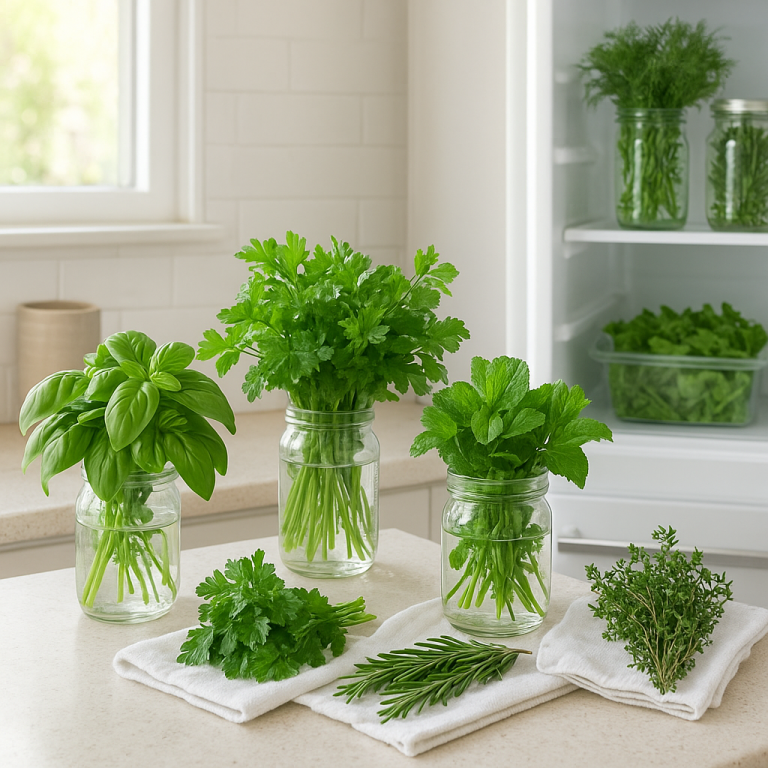
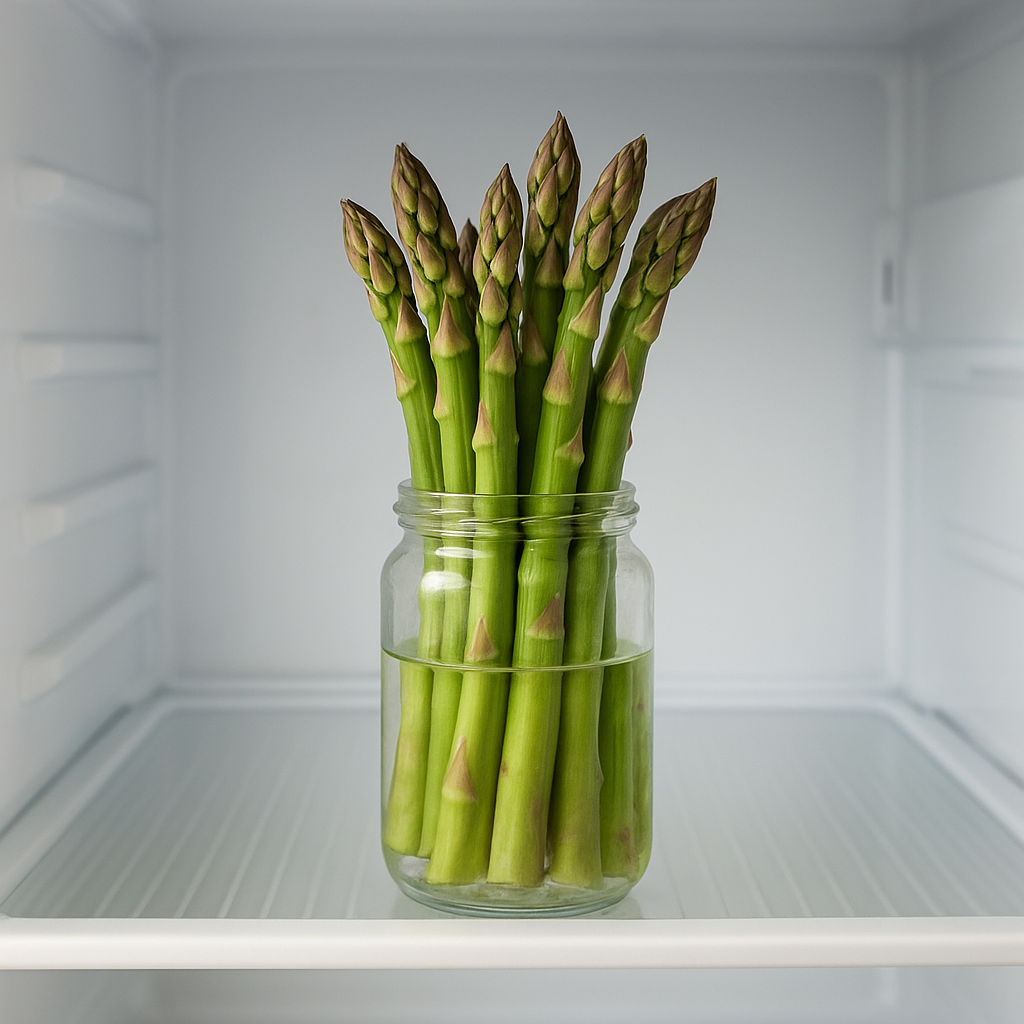
- Stand the asparagus upright in a jar or glass with about an inch of cold water.
- Loosely cover the tops if your fridge runs dry, but do not seal the bunch tightly.
- Store it in the refrigerator and change the water if it turns cloudy.
- Use the bunch while the tips still feel tight and the stalks still snap cleanly.
If asparagus keeps going limp in your kitchen, it is usually because it dried out, sat in trapped moisture, or got crushed in the crisper.
Why asparagus goes bad so quickly
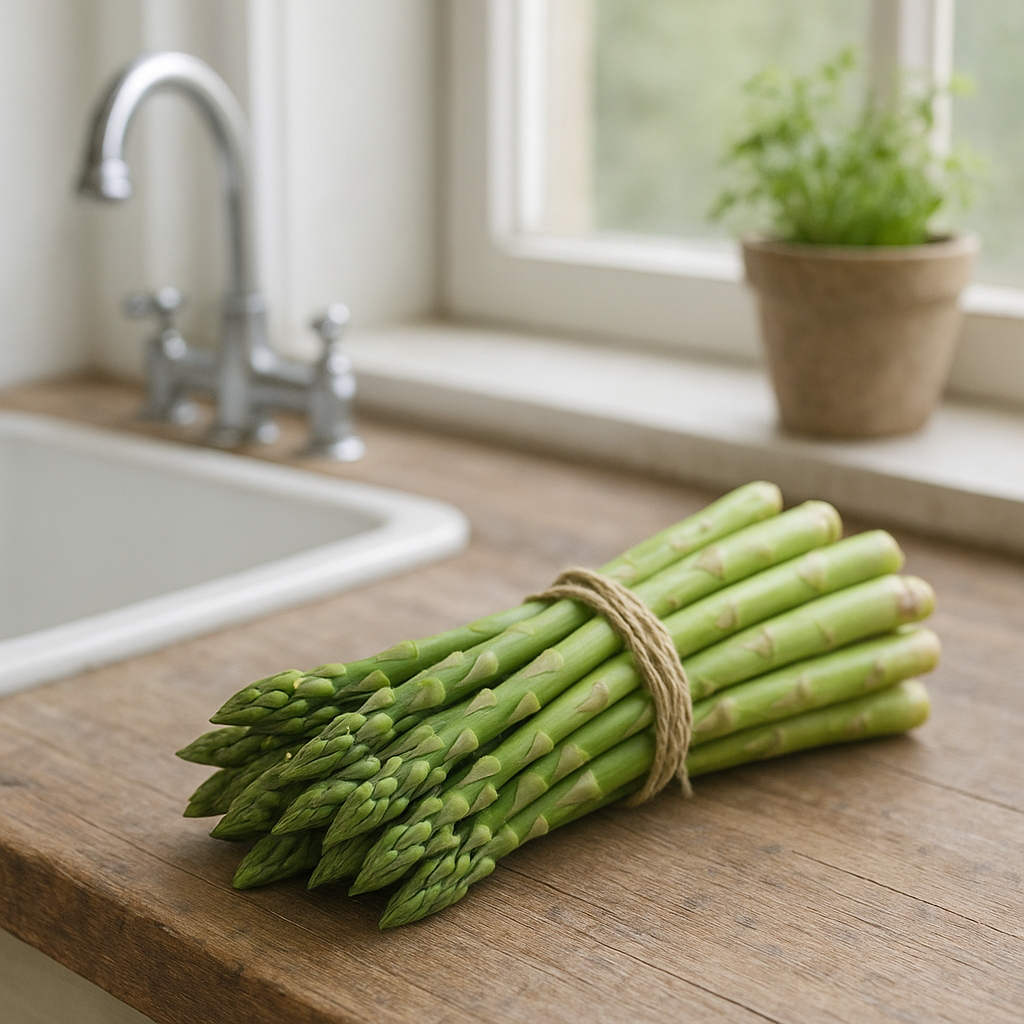
Fresh asparagus is full of moisture, but it loses that moisture fast once it is cut from the field. The stalks dry from the bottom up, while the tips are delicate enough to rot if they stay wet or pressed against condensation. That is why the original store band and produce bag often make things worse instead of better.
This matters even more in spring, when it is easy to bring home a thick bunch from the store or cut more than expected from the garden. If one dinner only uses the tender tops, the tougher lower pieces can still go toward this asparagus ends soup instead of heading straight for the bin.
The best way to store asparagus in the fridge
- Take off any tight band or packaging. A pinched bundle bruises faster and traps uneven moisture.
- Trim only the driest bottom edge. You are not peeling or prepping for cooking yet. Just remove the paper-dry end if needed.
- Stand the spears upright in a jar. A wide-mouth glass or jar works well if it keeps the bunch from slumping over.
- Add a small amount of cold water. About an inch is enough. You want the cut ends hydrated, not half the stalk soaking.
- Keep the tops loose. If your refrigerator dries produce out quickly, drape a produce bag loosely over the tips rather than sealing the bunch tightly.
- Refrigerate and check once midweek. Change the water if it looks cloudy and remove any spear that is already softening.
This method works for both supermarket asparagus and bunches that came in from a backyard patch or farmers market. The point is to keep the stems from drying out without turning the tips into a damp mess.
Should you wash asparagus before storing it?
Usually no. Extra water clinging around the tips and scales can push asparagus toward rot faster than you expect. If the spears are visibly gritty, rinse them right before cooking instead of right before storage. If you do have to wash them first, dry them thoroughly before they go into the fridge.
The same moisture rule shows up all over the produce drawer. It is what makes salad greens and fresh herbs fail so quickly when they are stored wet.
If you do not want a jar in the fridge
The jar method is the most reliable one, but it is not the only workable option. If refrigerator space is tight, wrap the bottom ends in a barely damp paper towel, place the bunch in a loose bag, and keep it in the crisper. That is better than leaving it naked in the drawer, but it usually buys you less time than storing it upright in water.
What does not work well is sealing asparagus in a wet bag, jamming it flat under heavier groceries, or leaving the rubber band on while the stalks sweat against each other.
How to tell when asparagus is still good
- Good signs: firm stalks, closed tips, fresh grassy smell, cut ends that do not look slimy
- Use soon signs: slight bendiness, tips beginning to feather, cut ends drying out
- Discard signs: sour smell, slime, collapsed tips, obvious mold, or a stalk that feels mushy instead of springy
Minor dryness at the base is easy to trim away. Soft, wet, or funky-smelling asparagus is the real warning sign.
The easiest ways to use it before it slips
- roast the whole bunch with oil, salt, and lemon
- slice it into a quick pasta or risotto
- shave raw spears into a spring salad
- fold chopped asparagus into eggs or a frittata
- save the lower stalks for soup while using the tender tops elsewhere
If the refrigerator is already full of spring odds and ends, asparagus also pairs well with sharp small-batch fixes like quick-pickled radishes or a spoonful of radish greens pesto.
Common mistakes
Letting the bunch sit dry in the crisper
The cut ends dehydrate quickly, which is why the stalks start to feel rubbery.
Soaking too much of the stalk
You only need enough water to cover the bottom ends. Too much standing water makes the lower stalks soft and unpleasant.
Washing first and storing wet
Wet tips and trapped condensation shorten the useful life of the bunch.
Ignoring one bad spear
A slimy or moldy stalk should come out right away instead of staying pressed against the healthy ones.
Troubleshooting
The asparagus went limp
It probably dried out. Trim the bottoms and stand the bunch in fresh water. If the spears are only slightly bendy, they may perk up enough to cook well.
The tips turned mushy
There was too much moisture around the top of the bunch or the asparagus was already aging when you bought it. Dry the tips, remove damaged spears, and keep the cover looser.
The cut ends smell unpleasant
Change the water, trim back to fresh tissue, and discard any stalk that feels slick. Cloudy water left too long is usually the reason.
I bought too much for one week
Cook the most tender spears first and save the tougher lower parts for soup. If the bunch is clearly more than you will use fresh, blanching and freezing is better than letting it rot in the drawer.
FAQ
Should asparagus be stored in water?
Yes. Standing the cut ends in a little water is one of the best ways to keep the stalks firm longer in the refrigerator.
Can you store asparagus in the crisper drawer?
Yes, but it usually does best in a jar or glass rather than loose in the drawer. If you skip the jar, wrap the ends lightly and keep the bunch protected.
How long does asparagus last in the fridge?
It depends on how fresh it was when you bought it, but good storage usually buys you several useful days instead of a quick slide into limp stalks and soggy tips.
Can you freeze asparagus?
Yes, but it is best blanched first and used later for cooked dishes rather than expecting the texture of fresh spears.
The small fix that saves the bunch
Asparagus does not need special produce gadgets or a complicated prep routine. It just needs the stems lightly hydrated, the tips kept dry, and a little attention before the whole bundle goes soft. Make that shift once, and spring asparagus becomes something you actually finish instead of something you rescue too late.