A Better Way to Keep Spring’s Wild Leeks Crisp for Dinner
Ramps have a way of making it home from the market feeling special and then turning into a damp, fragrant problem by the next night. The leaves bruise easily, the bulbs hold onto field moisture, and the whole bunch can make the refrigerator smell like an allium cellar if you just toss it into the crisper loose.
The good news is that ramps do not need complicated treatment. They just need to be kept cold, lightly protected, and dry enough that they do not rot before you get around to cooking them. A simple storage setup buys you enough time to turn a bunch into eggs, potatoes, pasta, beans, or butter instead of watching a short season go bad in the drawer.
The short answer
- Store ramps in the refrigerator, not on the counter.
- Do not wash them for storage unless they are truly muddy.
- Wrap the bunch loosely in a dry or barely damp towel.
- Slide the wrapped ramps into an open bag or loosely covered container.
- Use them within about 3 to 5 days for the best texture and flavor.
- If the leaves are already softening, cook them soon instead of trying to stretch another week out of them.
Ramps keep best when the bulbs stay firm, the leaves stay dry-leaning instead of wet, and the bunch is protected from both direct fridge air and trapped condensation.
Why ramps spoil so quickly
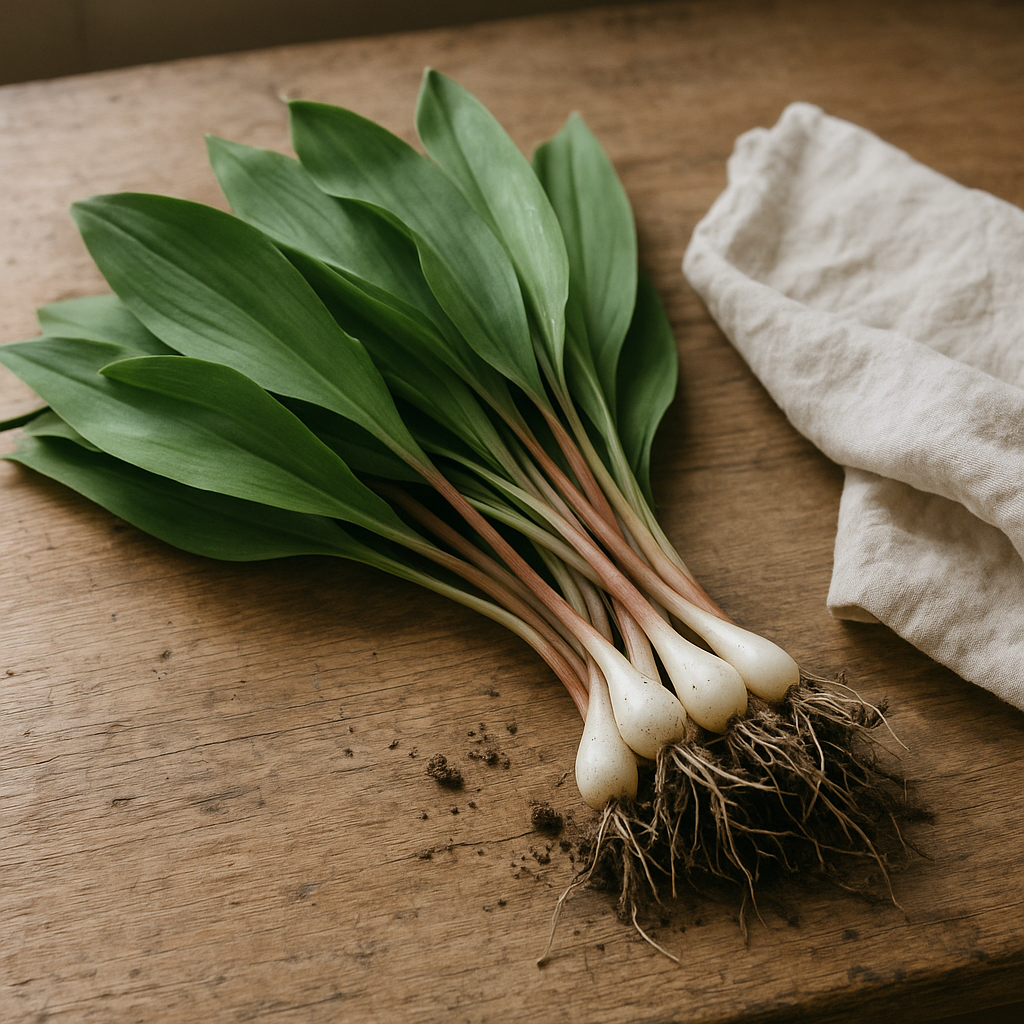
Ramps are more delicate than they look. The white bulb end is sturdy enough, but the leaves are tender and bruise fast, especially if they are pressed into a wet bag or wedged under heavier produce. Because ramps often come from a field, a forest edge, or a farmers market table instead of a polished grocery display, they may also arrive with extra moisture or grit that speeds up decline if you store them carelessly.
They also have a strong smell. That does not mean they are bad. It just means a loose bunch can perfume everything nearby if it is not wrapped and contained. If you are bringing home other spring alliums too, the same general refrigerator logic from this green garlic guide and this green onion storage fix applies here as well.
The best way to store ramps
- Leave the bunch mostly intact. Do not trim the roots, separate the leaves, or slice the bulbs ahead of time unless you are cooking right away.
- Brush off obvious dirt. If there is a clump of soil at the roots, shake or brush it away gently. Skip the rinse for now unless the bunch is muddy enough that you cannot reasonably wait.
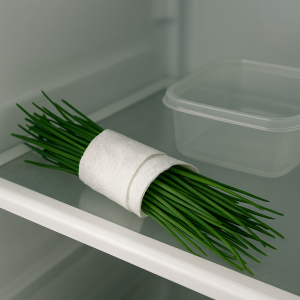
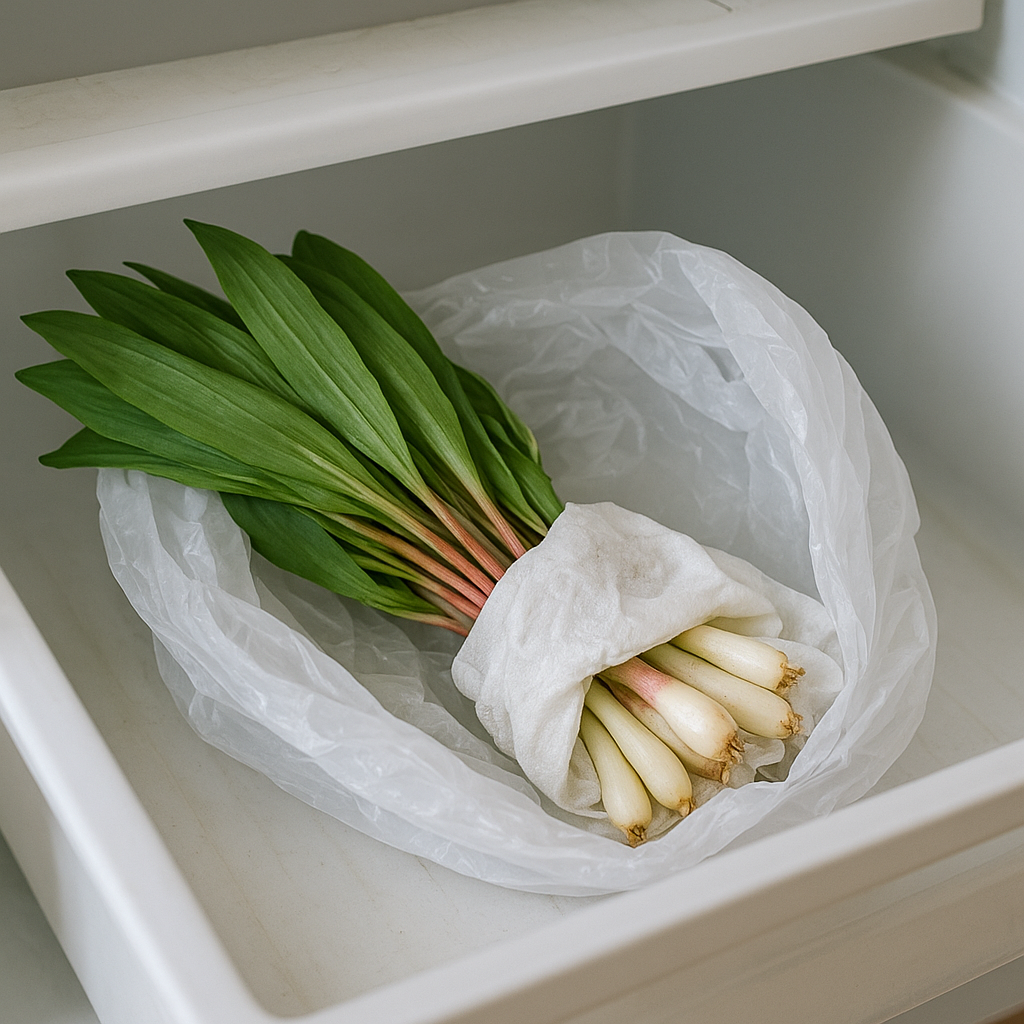
- Wrap loosely. Use a clean kitchen towel or paper towel. If your refrigerator runs very dry, the towel can be barely damp. If your refrigerator tends to hold moisture, keep the wrap dry.
- Give the bunch light containment. Put the wrapped ramps in an open produce bag or a container with the lid set on loosely rather than snapped tight.
- Store them in the crisper drawer. Keep them cool and protected, but not crushed under heavier vegetables.
This setup helps with two problems at once: it slows moisture loss from the leaves while also stopping the bulbs and stems from sweating inside a sealed plastic trap.
Should you wash ramps before storing them?
Usually no. Washing adds surface moisture that the leaves do not handle well unless you dry them thoroughly. If your bunch is only lightly dusty, wait and wash right before cooking. If it is very muddy, rinse quickly, dry it carefully, then wrap it before it goes into the refrigerator.
This is one of the same reasons tender herbs collapse so quickly when they are stored wet. If your produce drawer is full of fragile spring ingredients, a better herb-storage routine helps for the leafy side of the problem too.
How to keep ramps from taking over the whole fridge
A little odor is normal. If you want to contain it better, keep the towel-wrapped bunch inside a lidded container, but avoid sealing it up with puddled moisture. The goal is gentle containment, not a swampy chamber. If the bunch smells sour, fermented, or unpleasantly rotten rather than just garlicky, that is different and usually means it is past its best.
How to tell when ramps are still worth using
- Good signs: firm bulbs, leaves that still feel alive and flexible, clean garlic-onion smell, no slime
- Use-soon signs: drooping leaves, slight yellowing at the edges, bulbs still firm but not crisp
- Discard signs: mushy bulbs, slick stems, sour smell, blackened leaves, or visible mold
The leaves usually go first. If the bulbs are still solid and the bunch still smells clean, you may be able to trim the roughest parts and cook the rest that day.
Easy ways to use a bunch before it fades
- Sauté sliced ramps in butter and fold them into scrambled eggs.
- Cook the bulbs first, then add the leaves at the end for pasta or white beans.
- Stir chopped ramps into potatoes, rice, or mushroom toast.
- Blend the leaves into a quick compound butter, similar in spirit to this herb butter approach.
- Use them with other spring produce, especially if you are already storing asparagus properly for the same week’s meals.
Ramps are stronger than scallions but gentler than mature garlic, which makes them especially useful when you want one ingredient to carry the aromatic work in a simple meal.
Common mistakes
Leaving them loose in the crisper
The leaves dry out or bruise, and the smell spreads to everything nearby.
Washing first and storing wet
Extra moisture shortens the useful life of the bunch, especially around the leaves and stem base.
Sealing them tightly in plastic
That controls odor, but it also traps condensation. Odor control is useful only if you are not creating rot conditions at the same time.
Waiting for the perfect recipe
Ramps have a short season and a shorter storage window. A good-enough weeknight use is better than wasting them while you overplan.
Troubleshooting
The leaves went limp overnight
The bunch was either too warm before refrigeration or too dry in the fridge. Wrap it a little more protectively and cook it soon.
The bulbs feel slimy
There was too much trapped moisture. Discard any slick or sour-smelling parts right away.
The bunch smells very strong
That can be normal for fresh ramps. If the smell is clean and the bulbs are firm, improve the container setup rather than tossing them.
I know I will not use them in time
Cook them into butter, a quick pesto, or another cooked base sooner rather than trying to hold them fresh for too long.
FAQ
Can you freeze ramps?
Yes, but they are better frozen for cooked use than for anything where you want fresh leaf texture.
Do ramps need to be refrigerated?
Yes. They are too tender and perishable for countertop storage.
How long do ramps last in the fridge?
Usually a few useful days, depending on how fresh they were when you bought them and how dry they went into storage.
Can you eat both the bulbs and the leaves?
Yes. The bulbs and lower stems take heat well, while the leaves are better with shorter cooking.
The short-season version that works
Ramps are worth handling a little more carefully than a standard bunch of green onions. Keep them cold, keep them loosely wrapped, avoid extra moisture, and use them while the bunch still feels lively. That is usually all it takes to turn an expensive spring impulse buy into a few very good meals.