A Small-Batch Freezer Routine for Garden and Market Peas
Fresh peas have a very short peak. One day they taste sweet and green and worth shelling. A day or two later, the same bowl can start tasting dull, starchy, or tired, especially if it has been sitting in the refrigerator while you keep meaning to deal with it.
If you already know you are not going to cook them this week, freezing them early is the easiest way to keep that spring flavor around. The goal is not just to stash them. The goal is to freeze them in a way that keeps them loose, bright, and easy to use in quick dinners later.
If the peas came from your own containers, this also gives you a good next step after growing sugar snap peas in pots. And if your spring produce pile keeps growing, Freakywood also has guides on freezing rhubarb and freezing fresh strawberries before they slip.
The short answer
- Freeze peas while they still taste sweet and fresh, not after they turn starchy or leathery.
- Shell garden peas before freezing. Snap peas and snow peas can be frozen whole or sliced after trimming.
- Blanch shelling peas for 1 1/2 minutes. Blanch small edible pod peas for 1 1/2 minutes and larger pods for 2 minutes.
- Cool them fast in ice water, drain well, and dry them before packing.
- Tray-freeze first if you want loose peas instead of one solid frozen clump.
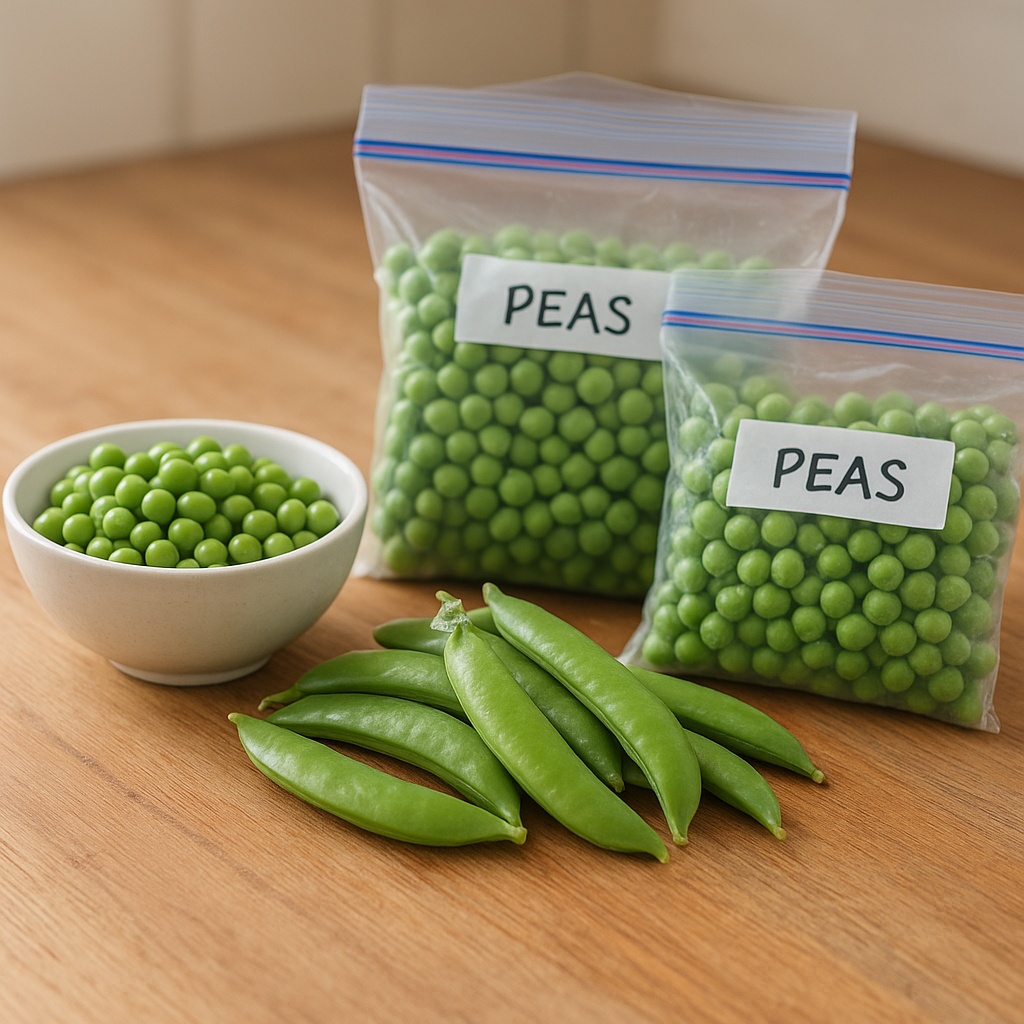
- Pack in small labeled bags so you can grab only what you need.
The quick blanch matters. It helps peas keep their color and better flavor in the freezer instead of fading fast.
Which peas are worth freezing
Freeze peas when they are still young and lively. For shelling peas, that means full pods with tender peas inside, not pods that have gone puffy and starchy. For sugar snaps and snow peas, it means bright green pods that still snap cleanly instead of bending and feeling leathery.
- Good freezer candidates: shelling peas, snow peas, and sugar snap peas that still taste sweet and fresh
- Use soon instead: peas that are a little oversized but still edible
- Skip freezing: peas that are yellowing, limp, mealy, or already old in flavor
The freezer can hold peas at their best, but it does not improve a batch that has already gone past it.
Shell first or freeze the whole pod?
It depends on the type.
- Garden or English peas: shell them first, then blanch and freeze just the peas.
- Sugar snap peas: trim the stem end and any tough string, then freeze the pods whole or sliced.
- Snow peas: trim and freeze as pods, again whole or sliced depending on how you cook with them.
If the edible pod peas have become thick and overdeveloped, treat them more like beans in the kitchen rather than expecting the tender snap of a younger pod.
How to freeze fresh peas step by step
- Sort the batch. Pull out any yellow pods, tough oversized ones, or anything already soft.
- Prep by type. Shell garden peas. Trim stem ends and strings from snap peas or snow peas.
- Wash well. Rinse under cool water and let the excess water drain off.
- Blanch briefly. Drop shelling peas into boiling water for 1 1/2 minutes. For edible pod peas, blanch 1 1/2 minutes if the pods are small and 2 minutes if they are larger.
- Cool immediately. Move them straight into ice water so the cooking stops quickly.
- Drain and dry thoroughly. Spread the peas on a towel or sheet pan until the surface moisture is gone.
- Tray-freeze if you want loose pieces. Spread them in a single layer and freeze until firm.
- Pack and label. Move the frozen peas into freezer bags or containers, press out excess air, and mark the date and amount.
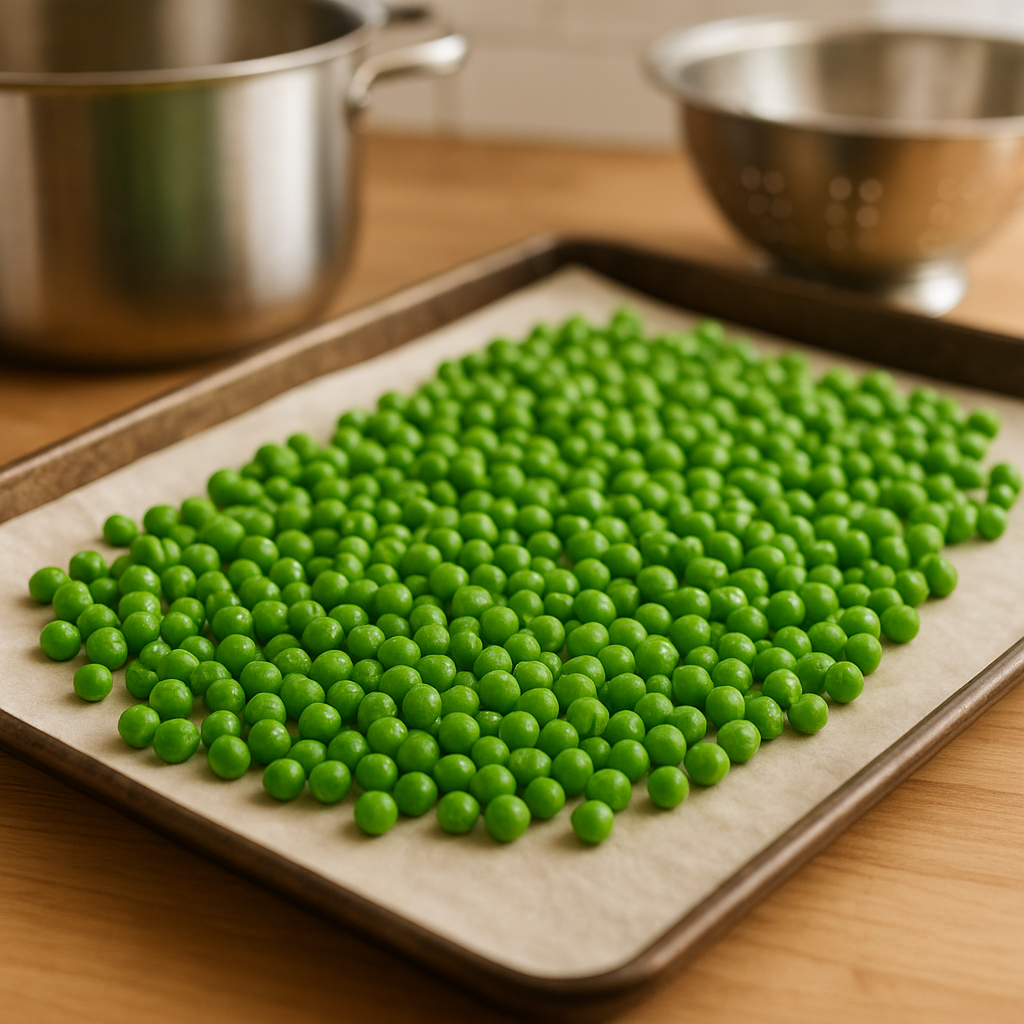
The packing choice that makes peas easier to use later
Big freezer bags sound efficient until you only need a handful. Small portions are much more useful.
- 1-cup bags: good for fried rice, pasta, quick soup, or weeknight vegetables
- 2-cup bags: useful for a side dish or a larger pot of soup
- Flat bags: stack neatly, freeze faster, and thaw more evenly than deep containers
If you freeze a lot of spring produce, keeping peas in measured amounts saves you from hacking away at a frozen brick later.
How to use frozen peas
Frozen peas are best in cooked dishes rather than anything that depends on a raw crisp bite. Most of the time, you do not need to thaw them first.
- stir them into pasta, fried rice, or risotto near the end
- add them straight to soup or a quick vegetable saute
- fold them into pot pie filling or a spring frittata
- steam or microwave them briefly with butter, lemon, and salt
- slice frozen snap peas into stir-fries once they thaw just enough to separate
Use only what you need and return the rest of the bag to the freezer quickly so the peas do not keep softening and refreezing.
Common mistakes that make frozen peas disappointing
Freezing them too late
Once peas taste starchy, the freezer will not bring the sweetness back. Freeze them early.
Skipping the blanch
Raw peas may look fine at first, but they lose quality faster in the freezer. The brief blanch gives a better result.
Leaving them wet
Water on the surface turns into frost and clumping. Dry peas pack and pour much better.
Packing huge random bags
A giant mixed-up bag is harder to use well. Small measured portions are more practical.
Forgetting the date
You do not need a perfect label system, but you do want to know whether the bag is from this spring or last year.
Troubleshooting
The peas froze into one solid mass
They were packed before they were dry enough or skipped the tray-freeze step. Let the next batch dry longer and freeze it in a single layer first.
The peas turned dull olive instead of bright green
They were likely overcooked during blanching or left too long before cooling. Keep the blanch brief and move fast to the ice water.
The peas taste bland after freezing
They may have been older than they seemed before freezing, or the bag held too much air. Freeze the freshest batch you can and press out extra air before sealing.
The snap peas are tougher than expected
They were probably overgrown before freezing. Save the tenderest pods for freezing and use the oversized ones right away in a cooked dish.
FAQ
Do peas need to be blanched before freezing?
For the best freezer quality, yes. A brief blanch helps preserve color and flavor better than freezing them raw.
Can you freeze sugar snap peas whole?
Yes. Trim the ends and any strings, blanch briefly, cool, dry, and freeze them whole or sliced.
How long do frozen peas keep?
They are best within about a year if they stay well packed and fully frozen, though the best flavor is usually in the earlier months.
Do you thaw frozen peas before cooking?
Usually no. Most dishes work better if you add them straight from frozen near the end of cooking.
Freeze peas when they still taste sweet, and they stay useful long after the vines or market tables move on. That is a better outcome than finding a bowl of tired peas in the refrigerator and wishing you had dealt with them two days earlier.