A Better Fridge Setup for Tender Greens
Salad greens have a talent for looking full of promise when you bring them home and exhausted by the time you are ready to use them again. One wet corner in the bag, a little trapped heat, or a rushed rinse that never dried properly, and your future lunch turns into a limp, slick mess.
The fix is less about buying a special gadget and more about controlling moisture. Salad greens stay crisp longer when they are cool, dry on the surface, protected from bruising, and not packed into a swampy bag. Once you get that setup right, a box of greens becomes something you can use across several meals instead of something you apologize for throwing out.
The short answer
- Wash salad greens only if you have time to dry them thoroughly.
- Store them in a container or roomy bag lined with dry paper towels or a clean dry towel.
- Replace the towel if it turns damp.
- Keep greens cold, but away from the wettest part of the crisper.
- Use damaged leaves first so one bad patch does not drag down the rest.
If your greens keep turning slimy, trapped moisture is usually the real problem.
Why salad greens collapse so fast
Lettuce, spring mix, arugula, spinach, and other tender greens are mostly water held inside delicate cell walls. They lose quality quickly when they are bruised, sealed up while wet, or left pressed under heavier groceries. Too little humidity can make them wilt, but too much trapped moisture is what usually pushes them toward slime.
This matters whether the greens came from the store or your own containers. If you are growing your own leaves, the same fast turnover shows up in potted lettuce and a container salad garden once harvest starts coming in faster than one meal can handle.
The best storage setup for crisp greens
- Pick through the leaves first. Remove any crushed, slimy, or yellowing pieces before they contaminate the rest.
- Wash only when needed. If the greens are already clean and you will use them soon, it is often better to leave them dry until serving time.
- Dry them completely. A salad spinner helps, but a clean kitchen towel works too. The leaves should feel dry, not just less wet.
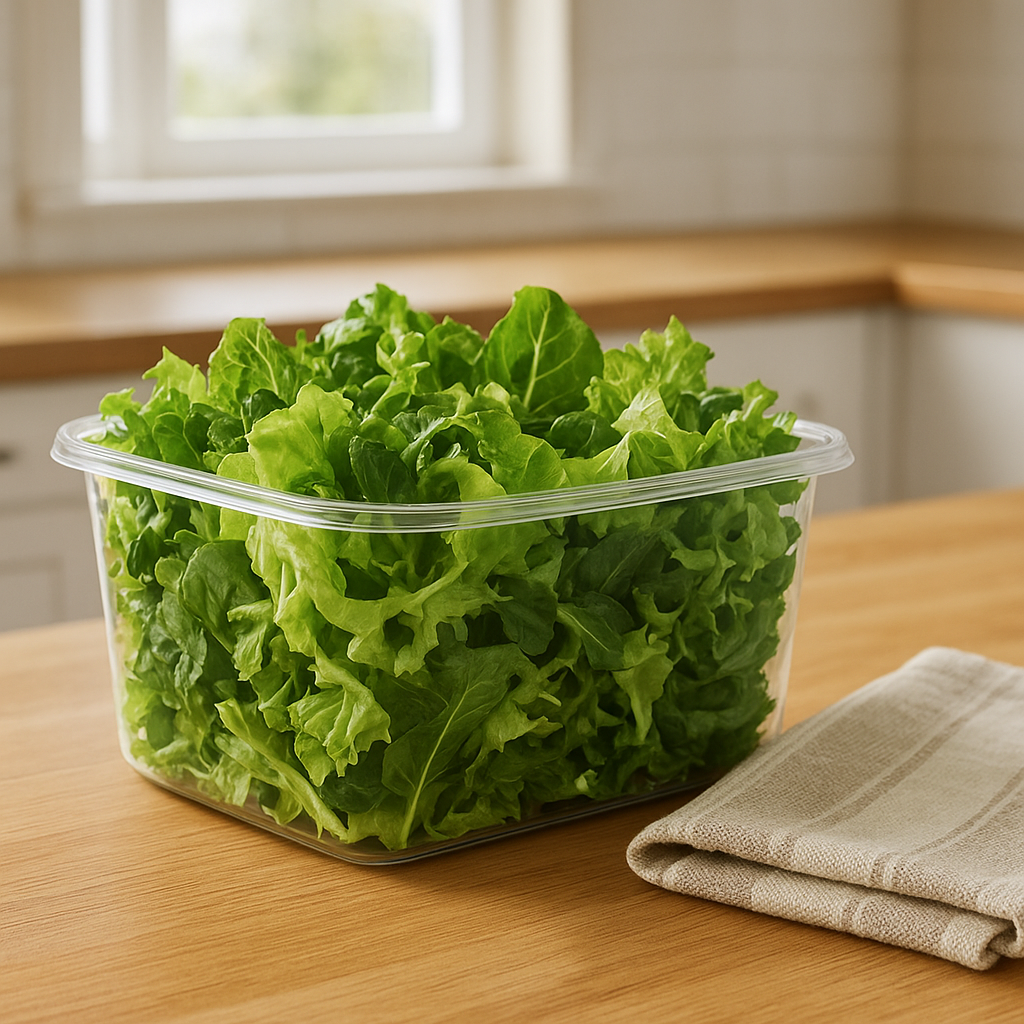
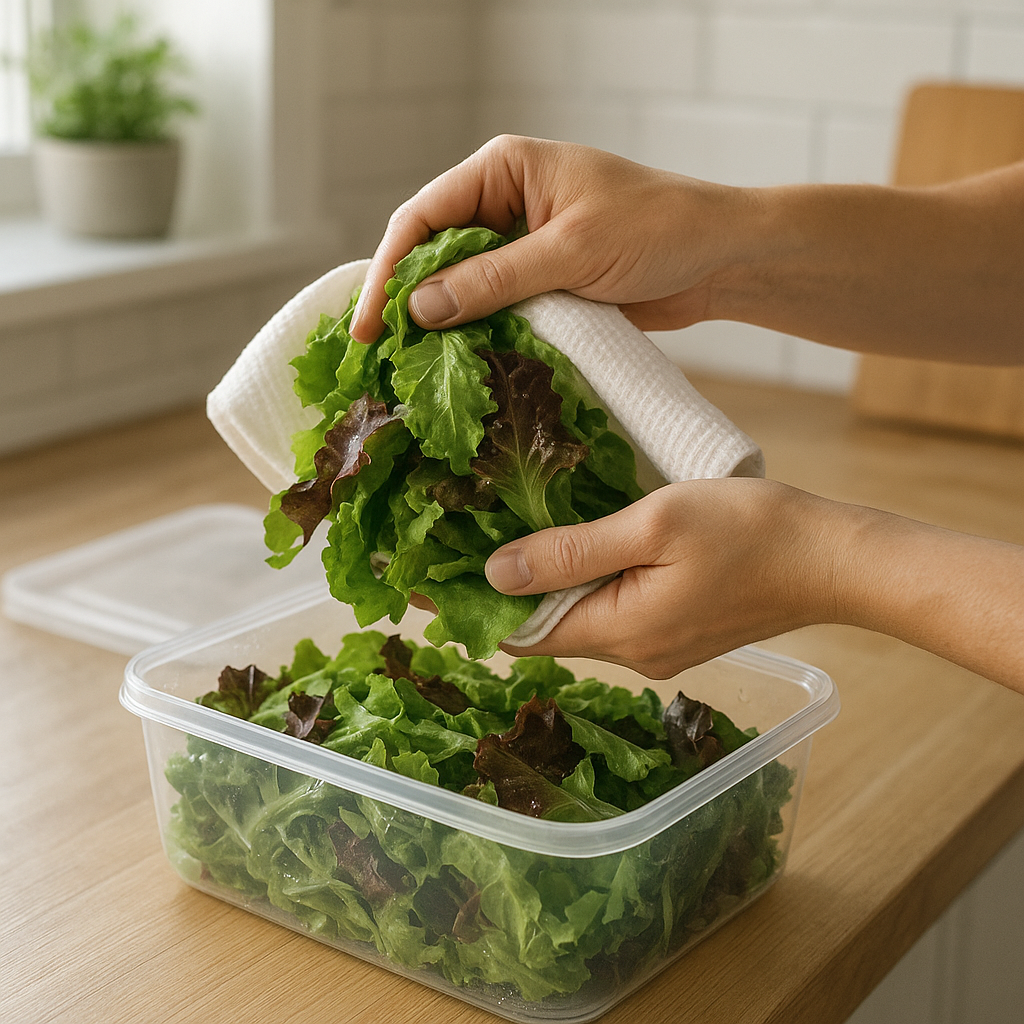
- Line the storage container. Add a layer of dry paper towel or a clean dry cloth to catch extra moisture.
- Keep the greens loose. Do not cram them into a tight box. Airflow and less pressure help the leaves last longer.
- Top with another dry towel if needed. This is especially useful for washed greens or mixed baby leaves.
- Check once midweek. Swap out any damp towel and remove any failing leaves.
A roomy container usually works better than the original plastic clamshell once the greens have been opened. The goal is not to dry the leaves out. The goal is to keep extra moisture from sitting on them.
When to wash, and when not to
If you prep greens for the week, washing ahead makes sense only if you finish the drying step properly. Wet leaves stored in a sealed container spoil faster than unwashed leaves stored dry. If you know you will use the greens tonight or tomorrow, leave them dry and wash right before serving. If you want grab-and-go lunch greens, wash, spin, and dry them thoroughly first.
That same logic shows up in other delicate produce too. A better system for moisture control is what makes green onion storage and fresh herb storage much more forgiving.
The greens that need the most care
- Spring mix and baby greens: tender, thin, and quick to bruise
- Arugula: peppery leaves that go limp fast once wet
- Spinach: holds up a bit better, but trapped moisture still causes rot
- Romaine and leaf lettuce: sturdier leaves, but damaged edges spread quickly
- Home-harvested mixed greens: often dirtier and wetter to begin with, so drying matters even more
Sturdier greens buy you a little more time, but none of them benefit from being sealed up wet.
How to revive slightly wilted greens
If the leaves are limp but not slimy, they may just need cold water and a better dry-off. A short soak in ice water can help crisp them back up. Dry them well afterward before they go back into the fridge. This is a rescue move for mild wilting, not a way to save greens that already smell sour or feel slick.
The easiest ways to use them before they slide
- build lunch bowls instead of only side salads
- layer greens into sandwiches and wraps
- tuck handfuls into omelets right at the end
- add them to grain bowls with herbs, pickles, or leftover vegetables
- wilt older greens into soup, pasta, or a quick saute
If a bunch of radishes is in the fridge too, this kind of rotation pairs well with quick-pickled radishes or a spoonful of radish greens pesto for a fast lunch that does not feel like cleanup duty.
Common mistakes
Storing washed greens while they are still wet
This is the fastest route to slime.
Ignoring one bad leaf
A soggy patch spreads faster than most people expect, especially in spring mix.
Packing the container too tightly
Compression bruises the leaves and traps moisture where you cannot see it.
Leaving them in the warmest part of the fridge
Salad greens need steady cold, not a door shelf that keeps warming up.
Troubleshooting
The greens wilted, but they are not slimy
They are probably too dry or were stored too warm. A quick ice-water soak can help, followed by thorough drying.
The container fogs up inside
There is too much trapped moisture. Replace the towels and leave a little more room around the leaves.
The bottom layer always goes bad first
That usually means water is collecting underneath. Add a dry liner and stop overfilling the container.
Bagged greens spoil the day after opening
Move them out of the original bag or clamshell once opened, dry them if needed, and reset them with fresh towels.
FAQ
Should you wash salad greens before storing them?
Only if you can dry them thoroughly. If not, it is better to keep them dry and wash them before eating.
What is the best container for lettuce and mixed greens?
A roomy container lined with something dry works well because it protects the leaves and absorbs excess moisture.
Why do my greens turn slimy instead of just wilting?
Usually because too much water is trapped around the leaves. Wet surfaces and poor airflow speed up breakdown.
Can you freeze salad greens?
Not if you want a fresh salad texture later. Freezing is better for greens you plan to cook.
The small habit that saves the bag
Salad greens do not need an elaborate system. They just need less trapped water, less crushing, and one quick midweek check before the whole container turns. Set them up dry, keep them cold, and a bag that used to fail by Wednesday becomes something you can actually finish.