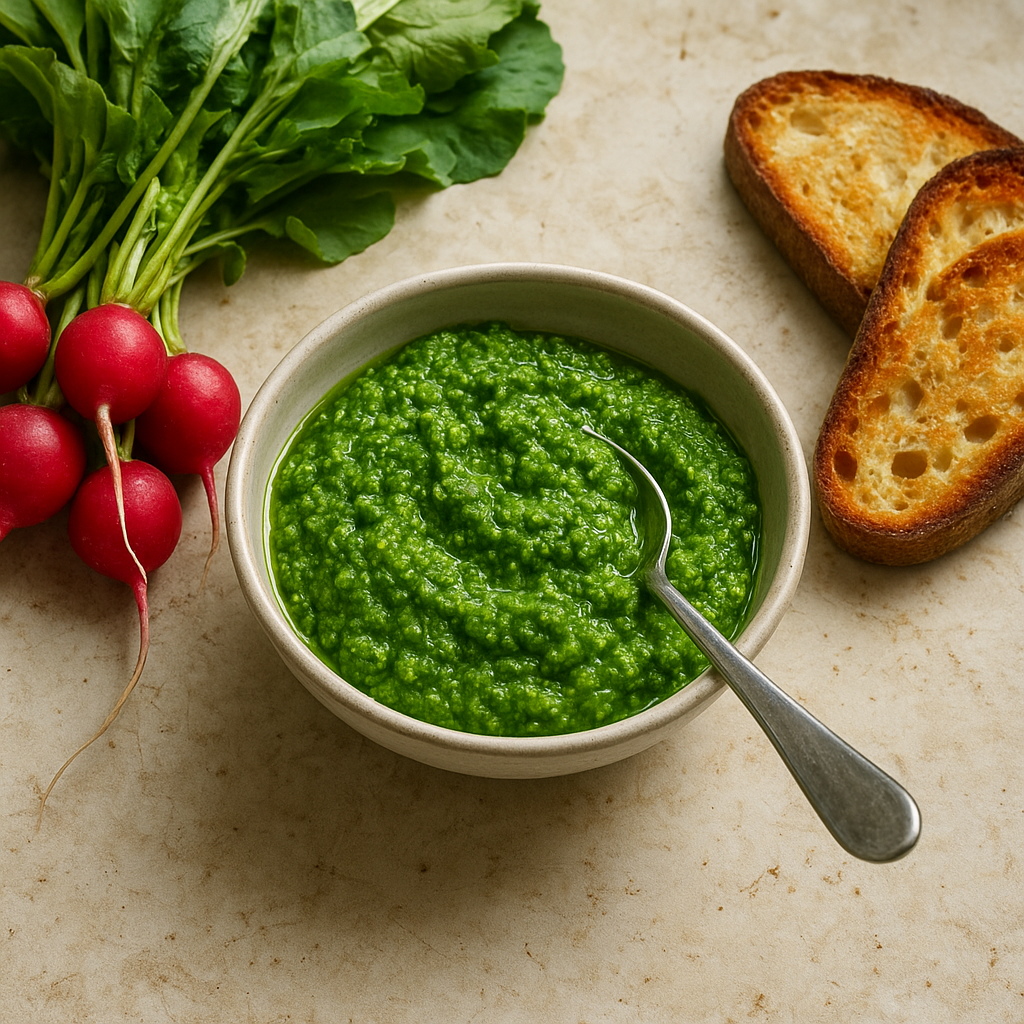
A Fast Use for the Tops Before They Wilt in the Fridge
Radishes usually get all the attention while the greens get treated like packing material. That is a waste. Fresh radish tops can make a sharp, peppery pesto that is just as useful as the roots, especially when you have a spring bunch from the market, a CSA box, or your own container garden.
This is not the same as basil pesto, and it should not try to be. Radish greens are earthier, a little more assertive, and better when you balance them with enough fat, acid, and cheese to keep the flavor lively instead of harsh.
The short answer
- Use radish greens while they still look crisp and bright, not yellow or slimy.
- Wash them well because the leaves often hold grit.
- Blend them with olive oil, nuts or seeds, Parmesan, garlic, and lemon.
- Taste and adjust because radish greens vary in bite.
- Use the pesto on toast, eggs, roasted vegetables, grain bowls, pasta, or beans.
If you bought a full bunch for spring cooking, this is one of the easiest ways to use the tops instead of throwing away half the ingredient.
Why radish greens work in pesto
Radish greens have enough body and bite to make a sauce with personality. They are not as tender or sweet as basil, but that is part of the appeal. A good batch tastes peppery, savory, and fresh rather than grassy or flat.
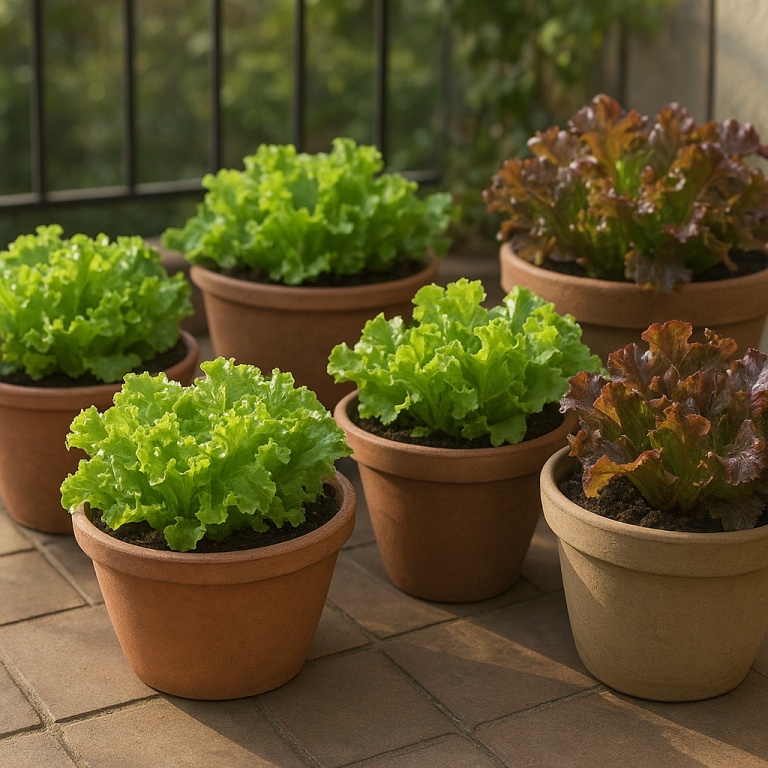
This is also a practical whole-bunch move. The roots can head toward quick-pickled radishes while the tops get blended into something you can spread, spoon, or swirl into dinner. If you are growing your own, it pairs naturally with a small-space setup like a container salad garden where radishes show up fast and often.
Choose the right greens first
The best greens are firm, leafy, and fresh enough that you would still want to cook them. Small tears are fine. Major yellowing, slime, or a sour smell are not.
- Good: bright green leaves, crisp stems, mild peppery smell
- Still workable: slightly droopy greens that perk up after washing and drying
- Not worth it: sticky, yellowing, badly bruised, or decaying tops
If you know you are not using the bunch immediately, separate the greens from the roots as soon as you get home. Leaving them attached makes both parts fade faster.
What you need
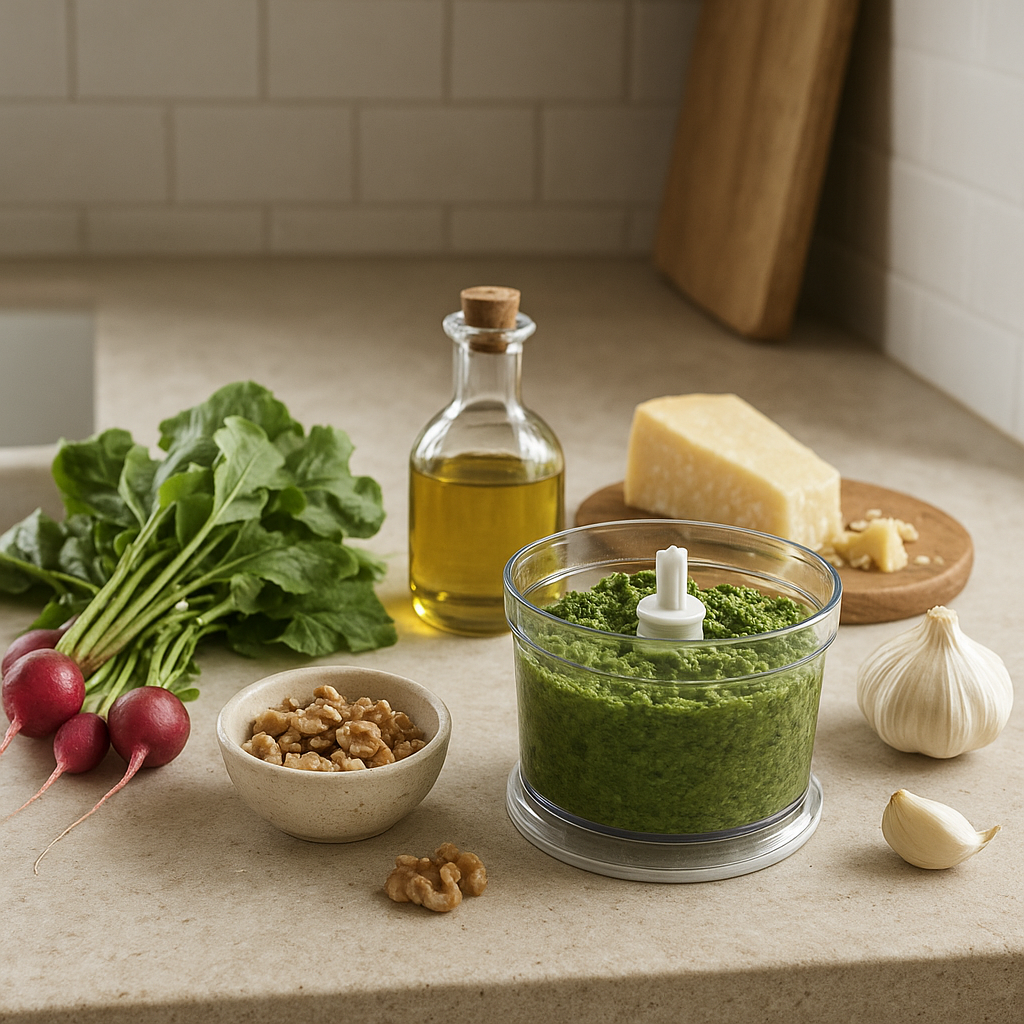
- Greens from 1 bunch of radishes
- 1 small garlic clove
- 1/4 cup toasted walnuts, almonds, sunflower seeds, or pumpkin seeds
- 1/4 cup grated Parmesan
- 1/4 to 1/3 cup olive oil
- 1 to 2 teaspoons lemon juice
- salt
- optional black pepper
Sunflower seeds are especially useful if you want a cheaper pantry version. Walnuts give a fuller flavor. Pumpkin seeds make the sauce feel a little greener and sturdier.
How to make radish greens pesto
- Wash the greens thoroughly. Radish tops hold dirt surprisingly well, so swish them in plenty of cold water and lift them out instead of pouring the grit back over them.
- Dry them well. Wet greens make a duller, thinner pesto. A salad spinner helps, but towels work too.
- Trim the thickest stems if they feel tough. Tender stems are fine to include.
- Add the greens, garlic, nuts or seeds, and Parmesan to a food processor. Pulse a few times before adding the oil.
- Stream in the olive oil gradually. Stop once the pesto looks spoonable and spreadable, not slick.
- Add lemon and salt to taste. Radish greens can lean bitter, so the acid matters.
How it should taste
A good batch should taste peppery and savory, with enough lemon and cheese to round it out. If the first spoonful tastes too aggressive, that does not mean the idea failed. It usually means the batch needs one more balancing ingredient.
- Too bitter: add more Parmesan, more nuts, or a little more lemon
- Too thick: add a small splash of olive oil
- Too sharp from garlic: blend in a little more greens or cheese
- Too flat: add salt before adding more oil
The best ways to use it
- spread on toast with a fried or soft-boiled egg
- stir into warm white beans or chickpeas
- spoon onto roasted carrots, potatoes, or radishes
- toss with hot pasta and a splash of cooking water
- swirl into grain bowls or rice
- dab onto sandwiches instead of mayo
- finish grilled chicken or salmon with a small spoonful
If you have more greens around than one pesto batch can reasonably absorb, a softer second move is something like herb butter, but radish greens do best when they stay the main flavor instead of disappearing into a mixed catch-all.
How long it keeps
Keep the pesto in a covered container in the refrigerator and press a thin film of olive oil over the surface if you want to slow darkening. It is best while the flavor still feels fresh and the color still looks lively.
If you made more than you can use in a few days, freeze small portions early instead of waiting for the jar to dull out in the fridge.
Common mistakes
Using tired greens
If the tops are already halfway to slime, the pesto will taste tired no matter what else you add.
Skipping the drying step
Extra water mutes the flavor and makes the sauce looser than it should be.
Treating it like basil pesto
Radish greens need a little more balancing. Lemon, cheese, and nuts matter more here.
Adding too much raw garlic
Radish greens already bring bite. Too much garlic can make the whole batch feel harsh instead of bright.
Troubleshooting
The pesto tastes bitter
Add more Parmesan, nuts, or lemon a little at a time. A small drizzle of honey is possible, but usually not necessary if the batch is otherwise balanced.
The texture is stringy
The stems were probably too tough or the greens needed more processing. Trim more heavily next time if the bunch is mature.
The color turned dark fast
The greens were probably too wet, too warm, or left exposed to air too long. Pack the pesto promptly and cover the surface.
I only have a small amount of greens
Make a smaller batch, or stretch the greens with parsley if you want a softer, less peppery sauce.
FAQ
Can you eat radish greens raw?
Yes. Young fresh radish greens are edible raw, though older leaves can taste stronger and feel rougher.
What nuts work best in radish greens pesto?
Walnuts are excellent, but almonds, sunflower seeds, and pumpkin seeds all work well.
Can you freeze radish greens pesto?
Yes. Freeze it in small portions so it is easy to use later.
A better use for the whole bunch
Radish greens pesto is worth making because it solves a very ordinary kitchen problem. You get the crisp roots for one meal, the tops for another, and a spring bunch that might have been half wasted suddenly feels like it earned its spot in the fridge.