A simple pruning plan for patio tomatoes that need airflow, support, and fewer tangled stems
Tomato plants in pots can go from tidy to unruly fast. One week they look manageable, and the next they are flopping over the cage, crowding nearby containers, and hiding flowers inside a mass of stems. That is usually the point where people either cut too much or give up and let the plant turn into a green knot.
Good pruning is simpler than it looks. The goal is not to force every tomato into the same shape. The goal is to keep the plant supported, improve airflow, remove growth that is clearly in the way, and hold the foliage to a size the container can actually support. In pots, that matters even more because the root zone, water supply, and nutrients are all limited compared with an in-ground plant.
The short answer
- Prune indeterminate tomatoes more actively than bush or determinate types.
- Remove suckers only when you know where they are growing from and what they will become.
- Start with lower leaves touching the pot or soil, damaged stems, and obviously crowded growth.
- Pinch small suckers early instead of waiting until they turn into thick branches.
- Never remove so much foliage at once that the fruit is suddenly exposed to harsh sun.
- Re-tie and support the plant as you prune so the remaining stems stay where you want them.
If you follow those six points, most potted tomatoes become easier to manage without losing the stems that actually produce fruit.
Why pruning matters more in pots
A tomato in the ground can often get away with becoming oversized because the roots have more soil, more moisture buffer, and more physical space. A tomato in a pot does not have that luxury. Once the top growth gets far ahead of what the container can support, the usual problems show up fast: weak airflow, slow drying after watering, stems rubbing, cages leaning, fruit hidden in damp foliage, and a plant that is harder to water or inspect.
Pruning does not replace the rest of tomato care. If the plant is in a too-small container or drying out every afternoon, fixing that still matters. These guides on growing tomatoes in grow bags, watering container vegetables in hot weather, and fertilizing vegetables in pots help with the part pruning cannot solve on its own.
Know your tomato type before you cut anything
The biggest pruning mistake is treating every tomato like an indeterminate vine.
Indeterminate tomatoes
These keep growing, flowering, and setting fruit over a long season. They make the most sense to prune because they can outgrow a cage or stake quickly, especially in pots. Many cherry tomatoes also fall into this group, though some compact cherries stay easier to manage.
Determinate or bush tomatoes
These stay more compact and set most of their crop over a shorter window. They usually need lighter pruning. If you remove too much, you can reduce the very growth that would have carried the main harvest.
Dwarf and compact patio tomatoes
These often need the least pruning of all. Focus on cleanup, support, and airflow rather than trying to create a single-stem plant.
If you are not sure what you planted, check the tag or look at the growth habit. A plant that keeps throwing new long leaders and trying to climb above the support usually wants indeterminate-style management. For a smaller fruiting plant, this guide on growing cherry tomatoes in pots pairs well with the pruning decisions here.
What a tomato sucker actually is
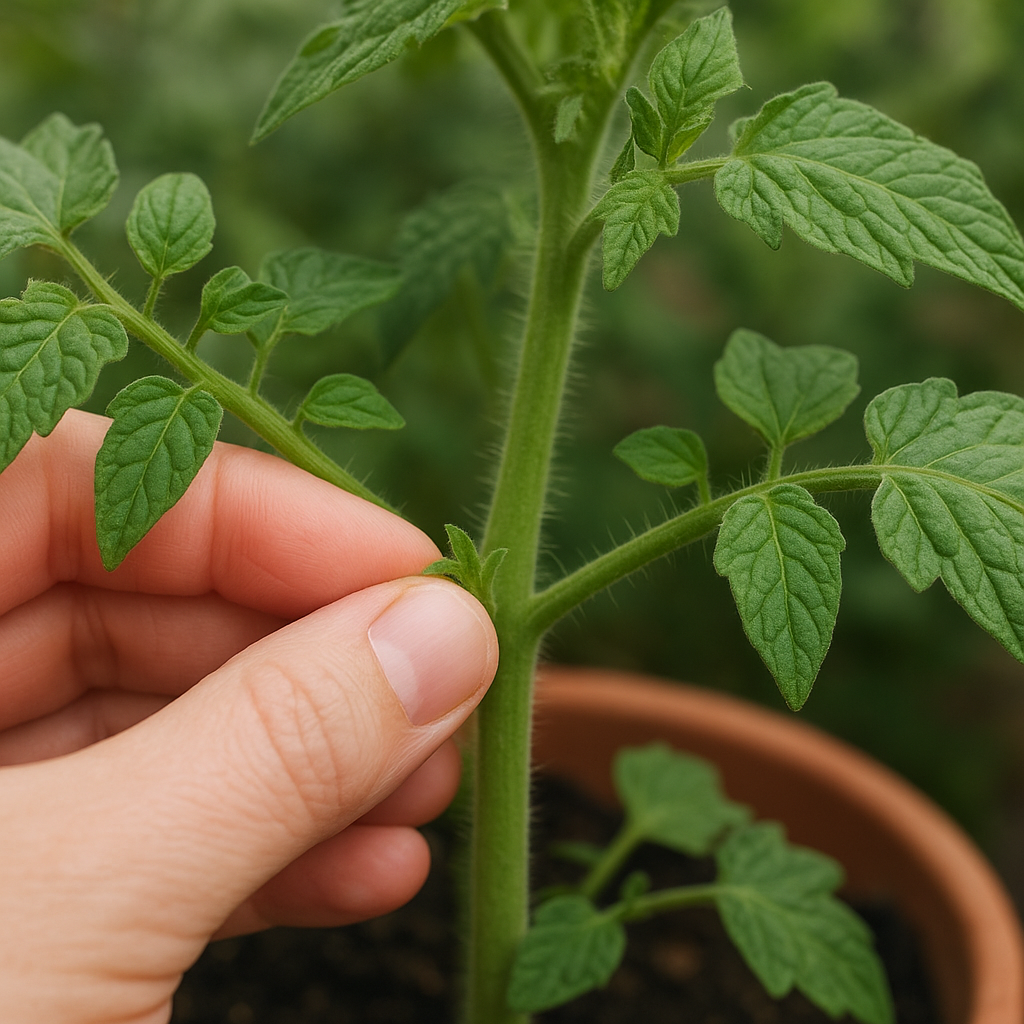
A sucker is the shoot that grows in the joint between the main stem and a leaf branch. Left alone, that sucker can become a full side stem with its own leaves, flowers, and fruit. That is why sucker removal is not automatically right or wrong. Removing one reduces crowding and keeps the plant simpler. Leaving one can increase total growth and fruiting, but it also makes the plant larger and heavier.
What to prune first
If the plant already looks messy, do not start by hunting every sucker. Start with the cuts that are clearly useful.
- Lower leaves touching the pot, mulch, or soil: these are the first leaves to remove because they trap moisture and pick up splash.
- Yellowing or damaged leaves: remove them if they are not contributing much and are only crowding the base.
- Broken, bent, or rubbing stems: tidy them before shaping anything else.
- Growth packed tightly into the center: thin only enough to let light and air move through.
- One or two obvious unwanted suckers on an indeterminate plant: remove the ones that make the structure harder to support.
That first pass often fixes most of the problem without turning the session into surgery.
How to prune indeterminate tomatoes in pots
- Choose the main stems you want to keep. One strong leader is the simplest system. Two leaders can also work well in a large pot if the support is strong enough.
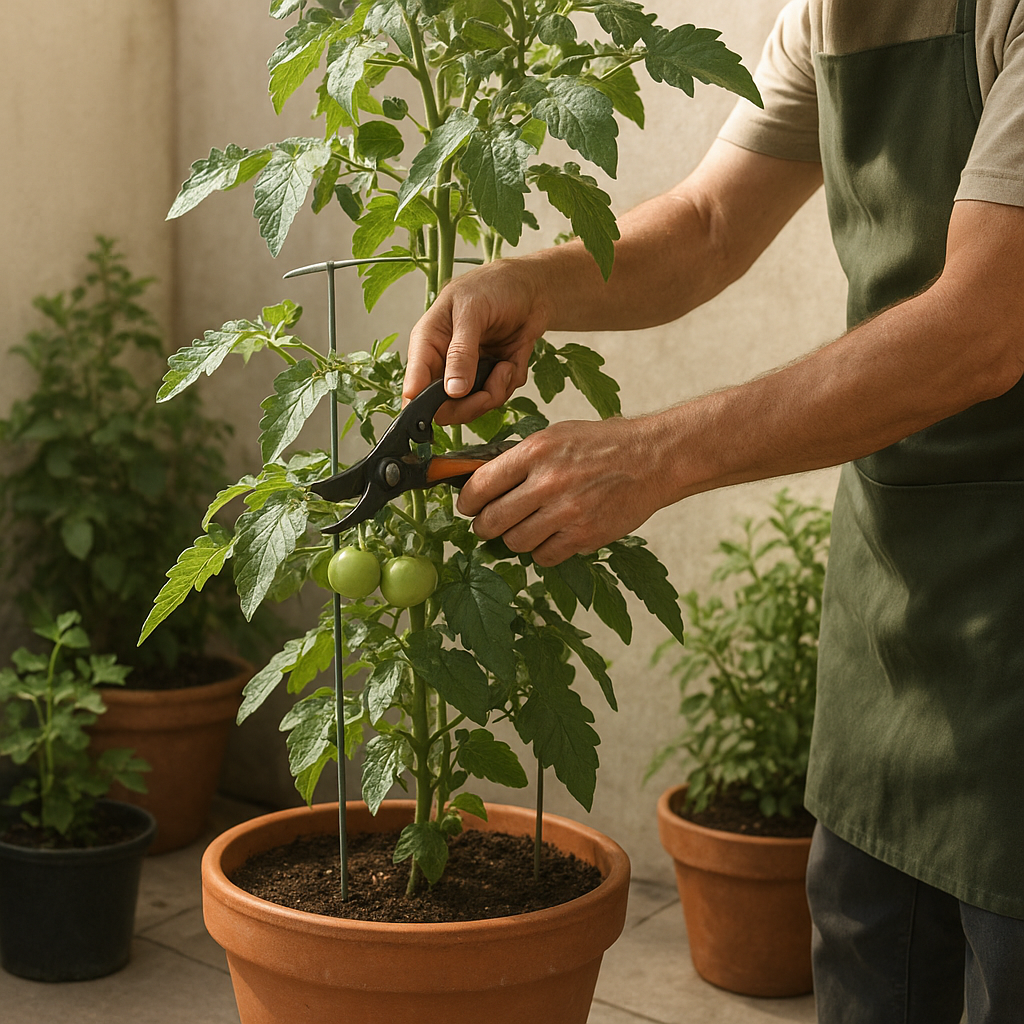
- Pinch off small suckers you do not want. Use fingers while they are still short and soft. Once they get thick, snipping is cleaner than tearing.
- Clear the lower section gradually. Remove the lowest leaves as the plant gains height so the base stays open and easier to water.
- Tie the kept stems to the support. Pruning without re-securing the plant just moves the mess around.
- Stop before the plant looks stripped. Leaves still need to shade fruit, drive growth, and protect the plant from heat.
For most patio tomatoes, a lightly managed plant with one or two trained stems is easier than either extreme. A totally untouched indeterminate can become a tangled mass, but a heavily stripped one can stall, sunscald, or simply produce less pleasant fruit.
How to handle determinate and bush tomatoes
Use a lighter hand here. These plants are not trying to become endless vines, so aggressive sucker removal is usually the wrong move.
- Remove dead or yellow leaves.
- Cut away leaves pressing into the pot rim or mulch.
- Thin only the growth that is clearly trapping moisture at the center.
- Leave most flower-bearing side shoots alone.
If the plant is compact and productive, support and steady care usually matter more than shaping it.
When to prune
Prune a little and often instead of waiting until the plant becomes overwhelming. The easiest time is when suckers are still short, the foliage is dry, and you can still see the plant structure clearly.
- Best rhythm: a quick check once or twice a week during active growth.
- Best time of day: after dew has dried and before the heat gets brutal.
- Avoid heavy pruning on a stressed plant: if the tomato is wilting hard, recently transplanted, or already struggling, fix the basic care first.
If your seedlings are only just settling outdoors, leave major shaping for later and focus on a smooth transition first. These guides on hardening off seedlings and transplanting vegetable seedlings without shock help with that stage.
How much is too much
A good rule is to remove only what you can explain. If you are cutting because a leaf is damaged, too low, or part of obvious crowding, that is usually defensible. If you are cutting because the plant looks a little wild and you want instant order, pause.
- Do not remove large amounts of foliage in one session.
- Do not expose a cluster of previously shaded fruit to full afternoon sun all at once.
- Do not chase perfection. A productive tomato still looks like a tomato, not a bare vine.
Over-pruned plants can end up with scorched fruit, slower recovery, and less leaf area to support ripening.
Common pruning mistakes
Cutting every sucker automatically
That works for some training systems, but it is not a universal rule. In a large pot with strong support, keeping one extra leader can make sense. In a cramped container, it may not.
Pruning a bush tomato like a vine tomato
Determinate plants often need cleanup, not aggressive shaping.
Leaving the bottom of the plant too dense
The lower section is where splash, humidity, and airflow problems build up first.
Ignoring support while pruning
Once you remove stems, the weight distribution changes. Re-tie the plant so the remaining structure stays stable.
Trying to fix blossom-end rot by pruning harder
Pruning can improve airflow and manage size, but it does not correct the root-zone stress that causes many fruit problems. If that issue is showing up, use this guide on preventing blossom-end rot on tomatoes in pots to address the actual cause.
Troubleshooting
The plant keeps exploding with new suckers
That is normal for vigorous indeterminate tomatoes. Stay consistent and pinch them small instead of letting them turn into thick side branches.
The tomato looks bare after pruning
Stop cutting, keep watering steady, and let the plant recover. Do not try to tidy it further right away.
The fruit is suddenly getting sunscald
You likely removed too much shade too quickly. Leave more foliage above and around fruit clusters next time.
The plant is huge but still feels crowded
The container or support may simply be undersized for the variety. A large indeterminate tomato in a small pot can outgrow even good pruning.
Quick FAQ
Should you prune cherry tomatoes in pots?
Usually yes, but lightly. Many cherry tomatoes are vigorous and benefit from removing a few suckers, clearing lower leaves, and keeping the plant tied to support. They usually do not need severe stripping.
Do determinate tomatoes need sucker removal?
Usually not much. Focus on cleanup and airflow more than shaping every side shoot.
Can you prune tomato plants when they are flowering?
Yes, as long as you do it lightly. Remove small suckers and crowded leaves, but avoid a major haircut during heavy flowering.
What leaves should come off first?
Start with yellow leaves, damaged leaves, and the lowest leaves close to the pot or soil surface.
Is it better to pinch or cut tomato suckers?
Pinching is easiest when suckers are small and soft. Use clean snips once they get thicker so you do not tear the stem.
The short version
Prune potted tomatoes to make the plant manageable, not to force it into a rigid template. Remove the lowest messy growth, keep indeterminate vines simpler than bush types, pinch small suckers early, and never take so much foliage that the plant loses its shade and balance. In a container, the best pruning plan is the one that matches the variety, the support, and the size of the root zone.