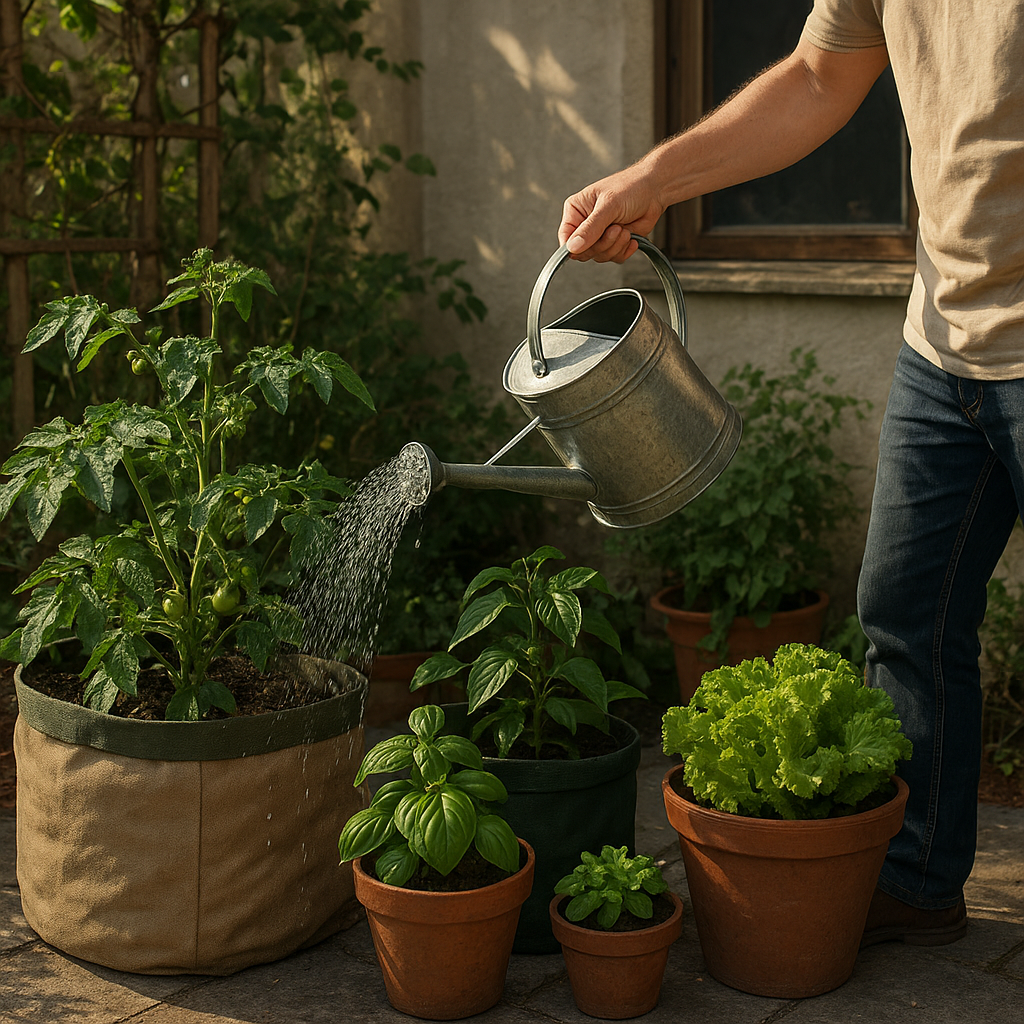
A simple way to stop guessing when patio pots dry out too fast
Hot weather changes container gardening fast. A pot that felt evenly moist yesterday can be dusty on top and bone dry near the root zone by late afternoon. That is why container vegetables fail so often in summer. People either water too lightly and too often, or they panic and keep the mix soggy until roots start to struggle.
The better approach is to stop watering by the clock alone and start reading the container, the crop, and the weather together. In hot weather, most vegetable containers need a deep watering at least once a day. Some small pots, dark containers, and fabric grow bags may need water twice a day during a heat wave. The goal is not constant dampness on the surface. The goal is evenly moist root soil from top to bottom, followed by a little air moving back into the mix before the next watering.
If you are using fabric containers, this pairs well with a solid grow bag setup. If your plants are already flowering and fruiting, also review how to fertilize vegetables in pots, because thirsty plants and hungry plants can look similar.
Start with the morning, then adjust
Morning is usually the best main watering time for container vegetables. The pot is cooler, more water reaches the roots before the sun and wind pull it back out, and the plant goes into the hottest part of the day fully hydrated. A fast evening top-up can help during extreme heat, but morning should do the heavy lifting.
- Cool to warm day, under 80°F: check once in the morning. Many medium and large containers will be fine with one deep watering or even every other day depending on crop and pot size.
- Hot day, around 80 to 90°F: most fruiting vegetables in containers need a deep morning watering.
- Heat wave, above 90°F, strong sun, or wind: expect to check morning and late afternoon. Small pots and grow bags often need a second watering.
- Rainy or humid stretch: do not water automatically. Check the mix first.
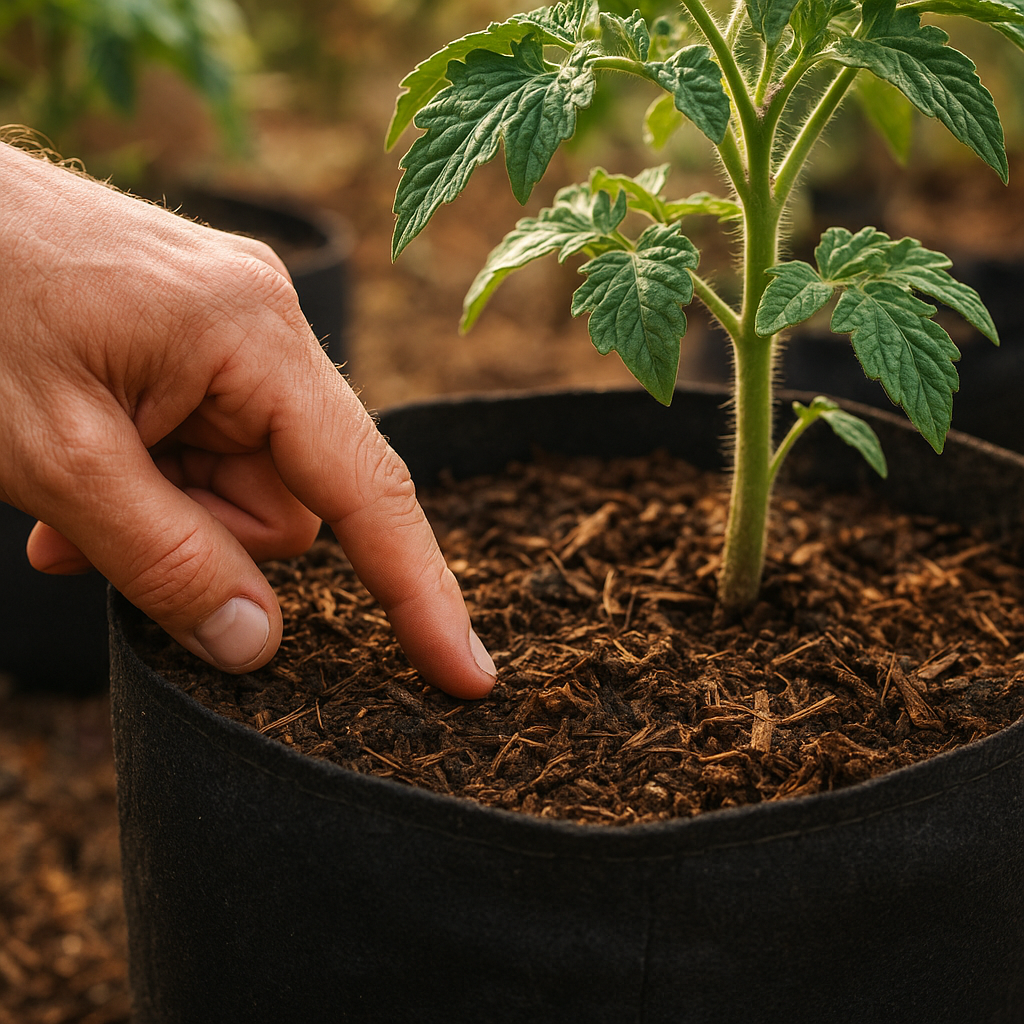
How to tell whether a container actually needs water
The fastest test is your finger. Push it 2 inches into the mix, or deeper if the container is large. If that zone feels dry, it is time to water. If the top inch is dry but the root zone below still feels cool and slightly damp, wait and check again later.
- Lift test: small pots feel surprisingly light when they are dry.
- Leaf test: leaves that look limp at midday but recover by evening may be reacting to heat, not true drought. Check the soil before watering.
- Surface test: mulch and potting mix color can be misleading. Dry on top does not always mean dry where the roots are.
- Drainage test: when you water deeply, a little should run out of the bottom. If it never drains, the mix may be compacted or the drainage holes may be blocked.
Vegetables that dry out fastest
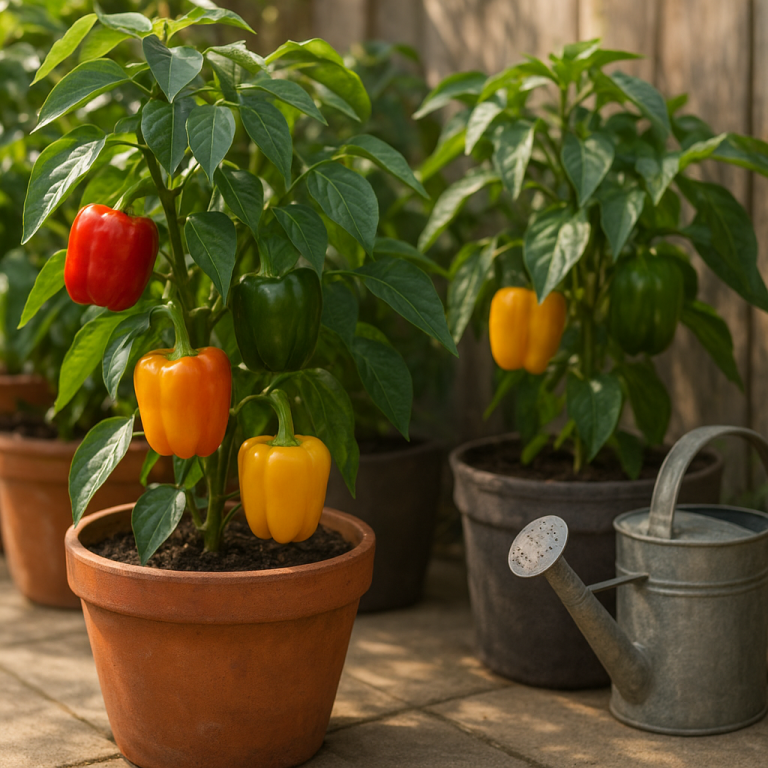
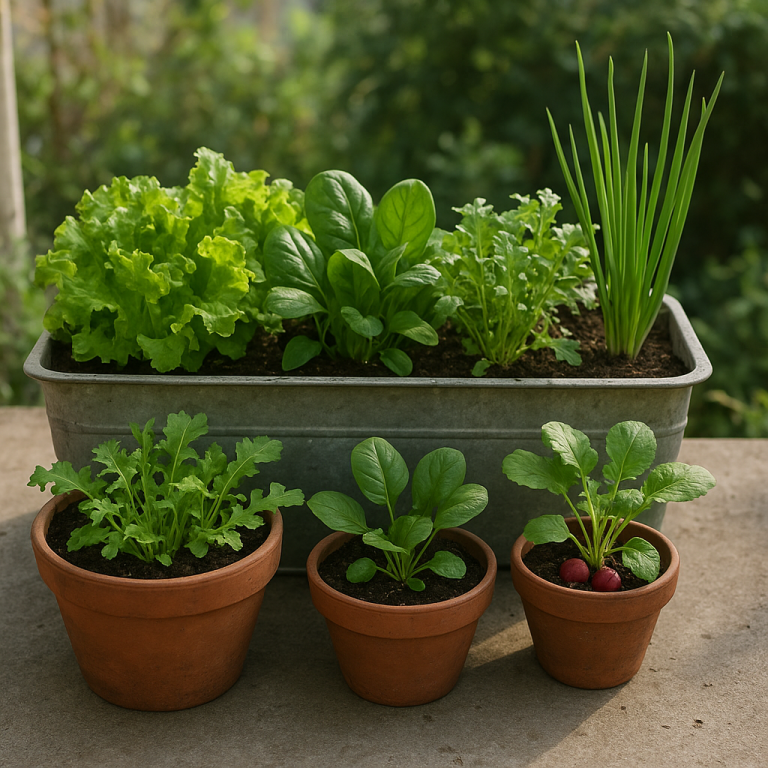
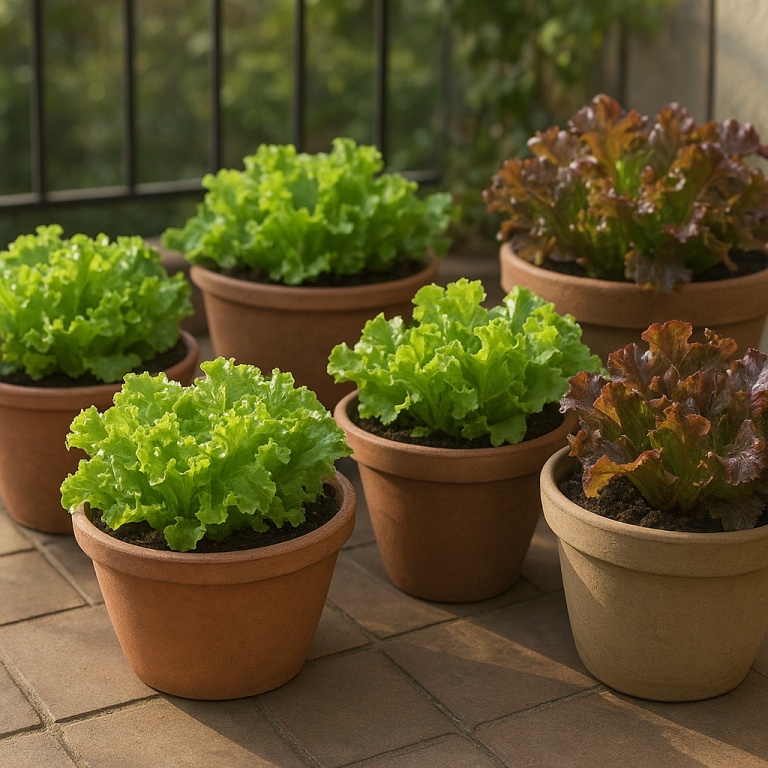
Not every crop uses water at the same speed. Fruiting plants with a large canopy pull far more moisture than a tray of young greens. Expect the most frequent watering with tomatoes, cucumbers, squash, eggplant, and peppers once they start growing hard. Herbs and leafy greens can also dry quickly in shallow containers, but they usually recover faster when you correct the routine.
- Highest demand: tomatoes, cucumbers, zucchini, eggplant, peppers, and potatoes in grow bags.
- Moderate demand: basil, parsley, chard, kale, beans, and strawberries.
- Usually lower demand: thyme, oregano, sage, and smaller spring greens in cooler weather.
If you are troubleshooting specific crops, compare this guide with tomatoes in grow bags, jalapeños in pots, and balcony herbs.
What changes how often you need to water
- Pot size: bigger containers hold more moisture and stay stable longer.
- Container material: fabric, terra-cotta, and black plastic usually dry faster than glazed ceramic or larger nursery pots.
- Plant size: a mature tomato drinks much faster than a fresh transplant. If you just planted it, use good transplanting habits before you start judging its water needs.
- Wind: breezy balconies and patios can dry pots as fast as heat does.
- Sun exposure: reflected heat from concrete, brick, or railings makes containers hotter than air temperature suggests.
- Potting mix: airy mix drains well but dries faster. Dense mix stays wet longer and can suffocate roots.
- Mulch: a light mulch layer slows evaporation and can buy you extra hours in summer.
How to water deeply instead of just wetting the top
Water slowly until the entire root ball is soaked. A quick splash on the surface does almost nothing for a large vegetable plant. It encourages shallow roots and forces you to water again too soon.
- Water the surface evenly, not just one spot near the stem.
- Pause for a moment so dry mix can absorb moisture instead of letting it run down the sides.
- Water again until excess starts draining from the bottom.
- Dump saucers after a short soak period so roots are not sitting in stagnant water for hours.
If water runs straight through a very dry pot, the mix may have pulled away from the sides. Slow down, water in two passes, or bottom-soak the container briefly to rehydrate the root ball evenly.
Signs you are underwatering
- Leaves droop and the whole plant looks dull or tired.
- Tomatoes and peppers drop blossoms during heat.
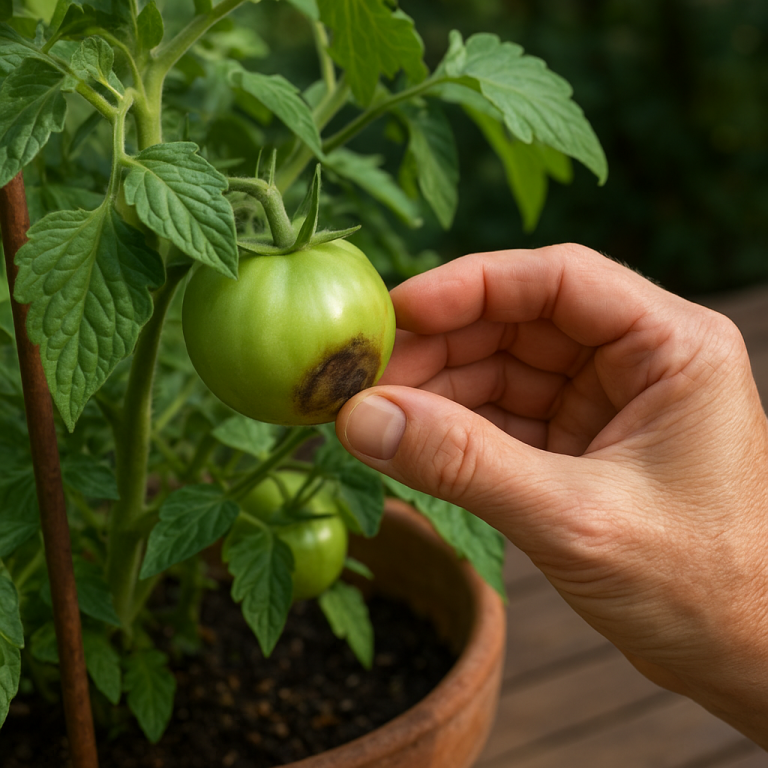
- Tomatoes develop more cracked fruit or blossom-end rot after big swings between dry and soaked soil.
- Lettuce, basil, and greens turn bitter or bolt faster.
- Potting mix shrinks away from the container edge.
Signs you are overwatering
- Leaves yellow from the bottom up while the soil stays wet.
- The pot feels heavy all the time.
- Growth slows even though the plant is not obviously dry.
- You notice sour smells, algae, or fungus gnats around the pot.
- Roots look brown instead of pale and healthy when you inspect them.
Easy ways to keep containers from drying out so fast
- Move from tiny pots to larger containers whenever the crop allows it.
- Add a thin mulch layer such as straw, shredded leaves, or fine bark.
- Group containers together so they shade one another a little at the sides.
- Use watering spikes or drip irrigation if you are gone during the hottest hours.
- Keep fruiting crops in containers big enough to buffer heat and moisture swings.
- Give very heat-stressed leafy greens a little afternoon shade.
Quick answers for common watering questions
Should you water container vegetables every day in summer?
Often, yes. Large containers may still go a day or two between waterings during mild weather, but many summer vegetables in active growth need a daily check and a daily watering once real heat arrives.
Is twice a day too much?
Not during a heat wave if the container actually dries that fast. The problem is not frequency by itself. The problem is watering again while the root zone is still wet.
Do grow bags always need more water?
Usually yes, especially in sun and wind. Fabric breathes, which helps roots, but it also loses moisture faster than many rigid pots.
Can midday wilting mean the plant is fine?
Sometimes. Plants can wilt temporarily in extreme heat even when the root zone is still moist. Check the soil before reaching for the watering can.
The simplest routine is this: check in the morning, water deeply when the root zone is dry, and expect to check again on the hottest afternoons. That keeps container vegetables hydrated without turning every pot into a swamp.