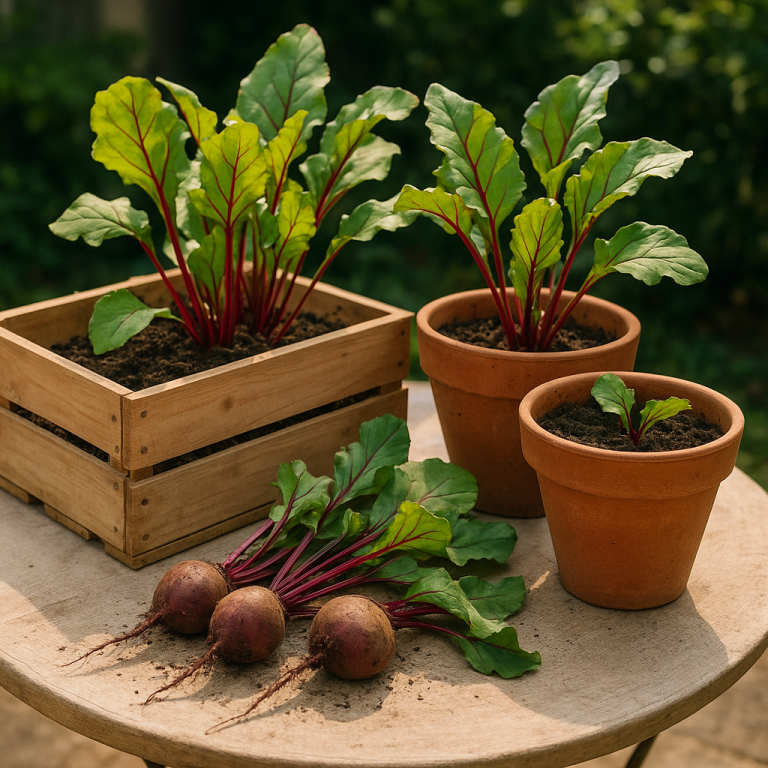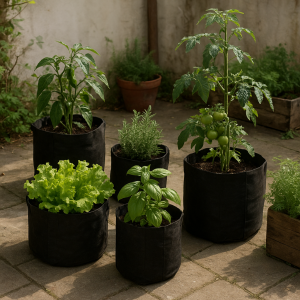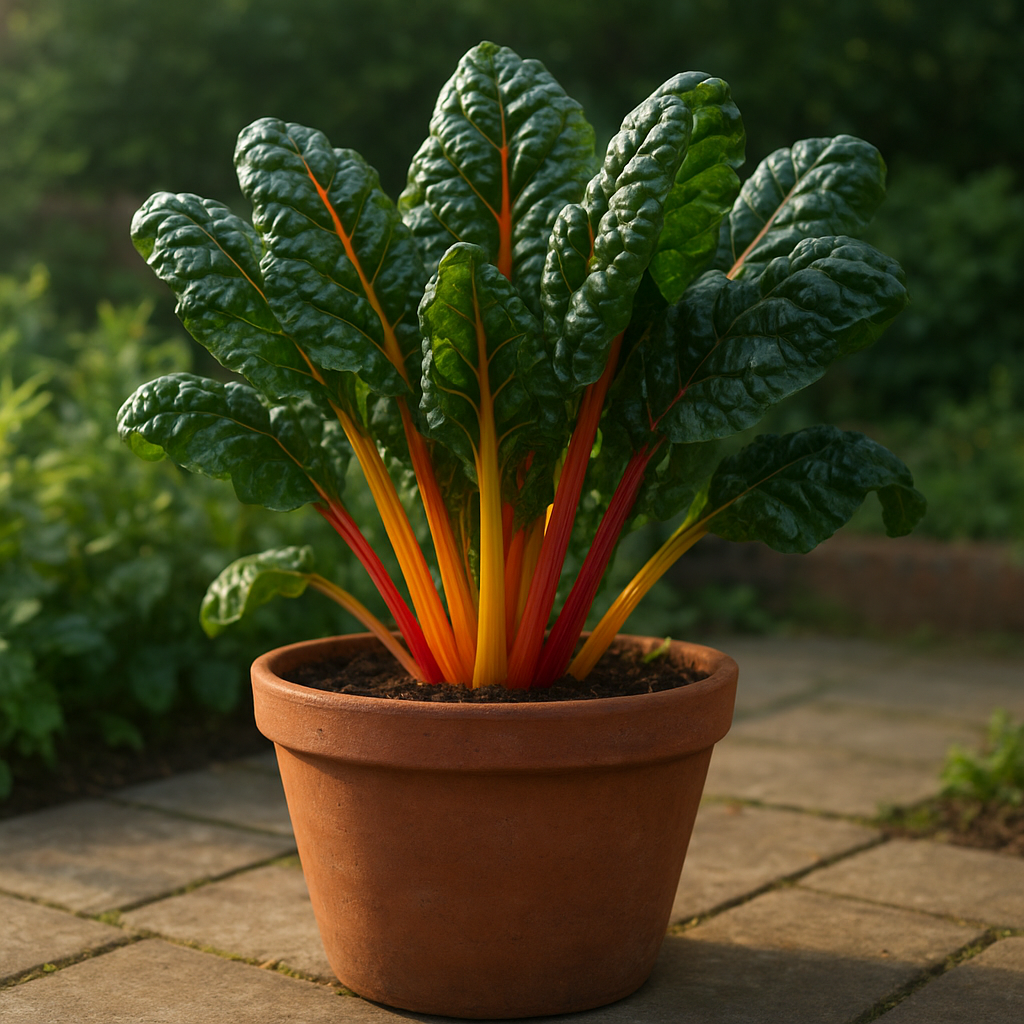
A colorful container green that keeps producing through a long stretch of the season
Swiss chard is one of the more useful vegetables you can grow in a pot because it gives you the speed of a leafy green with more heat tolerance than spinach or lettuce. The problems usually show up in a familiar order: a cramped container dries too fast, leaf miners scar the leaves, or the plant turns coarse because harvests were delayed too long. If you want a productive container, the goal is simple: enough root room, steady moisture, regular cutting, and clean leaves before pests get ahead of you.
The good news is that Swiss chard is forgiving. It handles spring weather well, keeps regrowing after harvest, and can stay useful on a patio or balcony long after some other greens have faded. Once the basics are right, it is one of the easiest crops to keep in rotation for repeated meals instead of one short flush.
What Swiss chard needs to grow well in pots
- Container depth: About 8 to 10 inches, with more width if you want several plants
- Sun: Full sun in cool weather, with some afternoon relief in hotter spots
- Soil: Rich potting mix that drains well but does not dry out too fast
- Water: Even moisture without keeping the roots soggy
- Best season: Spring through early summer, and often again in fall
Swiss chard is more tolerant of warmth than many salad greens, which is part of what makes it so useful in containers. It still grows best when the roots stay steady and the leaves are harvested before they get oversized.
Choose a container that stays moist without crowding the plants
Swiss chard does not need a giant pot, but it does need enough soil volume that the roots are not swinging from soaked to dusty in a day. A shallow decorative planter tends to create the exact stress pattern that leads to slower growth and rougher leaves. A wider container also lets you grow enough plants for real harvests without turning the middle into a crowded tangle.
A good target is a container at least 8 to 10 inches deep with drainage holes. Window boxes, trough planters, and wide round pots all work well. If you want several plants in one container, give them honest spacing instead of treating chard like a dense baby-leaf sowing.
If you are building out a mixed setup for fast harvests, this guide to a container salad garden pairs well with a separate pot of Swiss chard nearby.
Pick varieties based on how you want to cook and harvest
Most Swiss chard grows well in containers, but the best choice depends on how you use it. White-stemmed green chard is sturdy and productive. Rainbow chard brings the same basic growth habit with brighter stems that are easy to spot at harvest. If you mainly want tender leaves for sautés, soups, grain bowls, or omelets, regular harvest timing matters more than the exact variety.
- Best for visual appeal: rainbow chard
- Best for steady bulk harvests: standard green or white-stemmed types
- Best for smaller spaces: compact varieties or fewer plants harvested more often
If you want tender leaves, treat Swiss chard more like a repeat-harvest green than a giant ornamental plant.
Use fresh potting mix instead of garden soil
Swiss chard likes fertile soil, but containers need structure as much as nutrition. Dense garden soil compacts too easily in a pot and often stays wet at the wrong depth while drying into a crust on top. A fresh potting mix with some compost blended in gives the roots better airflow, steadier moisture, and cleaner growth.
If your containers dry out fast in wind or direct sun, a little extra compost can help hold moisture. If they stay wet after rain, make sure the drainage is doing the real work before you blame the plant.
Direct sow or transplant, but do not keep weak seedlings crowded
Swiss chard is easy to start either way. Direct sowing works well in cool spring weather. Transplants are useful when you want a quicker head start or are filling a container after another crop finishes. In either case, the main thing is not leaving too many plants fighting over the same patch of mix.
- Fill the container with pre-moistened potting mix.
- Sow seed about 1/2 inch deep, or set transplants at the same depth they were growing before.
- Thin or space seedlings so air can move between leaves.
- Water thoroughly so the root zone settles evenly.
If you started seedlings indoors, use this guide on hardening off seedlings before moving them outside. If you are shifting starts from cell trays into their final pot, the same handling principles in this transplanting guide help prevent a rough reset.
Give Swiss chard bright light, but watch for reflected heat
In cool weather, Swiss chard handles full sun well. As late spring warms up, containers on concrete, brick, or a bright balcony can run hotter than the forecast suggests. That is where leaves can get tougher and the whole container starts looking tired faster than expected.
If your growing space gets intense afternoon sun, morning light with some later relief often keeps the leaves more tender. Swiss chard lasts longer in warmth than spinach, but it still performs better when the pot itself does not overheat.
Keep moisture even so the leaves stay tender
Swiss chard is sturdy, but it still reacts to inconsistent watering. A pot that dries hard between soakings produces tougher stems, slower regrowth, and more stress overall. Check the container often and water deeply when the top inch starts drying out.
- Water enough that excess runs out the bottom.
- Do not let a saucer hold standing water for long.
- Add a light mulch layer if the pot surface dries too fast.
- Expect dark pots, wind, and reflected heat to increase watering demand.
If every container suddenly starts drying out faster, this guide on watering container plants in hot weather gives a better framework than following a fixed schedule.
Feed lightly but do not let the potting mix run empty
Swiss chard is a leafy crop, so it responds well to fertile mix and steady, moderate feeding. Fresh potting mix often carries the first stretch. After that, a light balanced liquid feed every couple of weeks or a slow-release fertilizer at planting time is usually enough for a container that keeps producing.
Too much fertilizer can make growth soft and create a plant that looks lush but does not stay clean and sturdy. If you want a broader container feeding plan, see how to fertilize vegetables in pots.
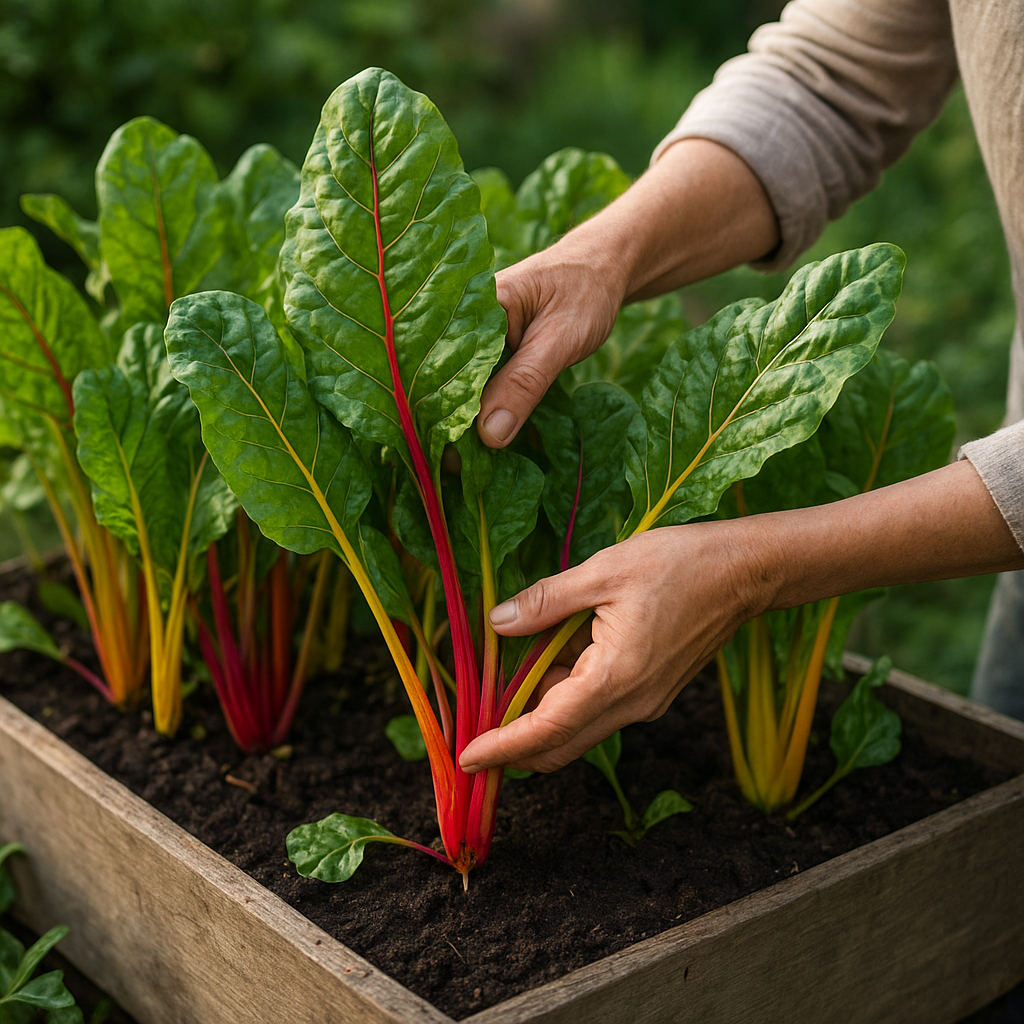
Harvest outer leaves first and keep the center growing
The easiest way to keep Swiss chard productive is to take the oldest outer leaves first and leave the center intact. That gives you a steady stream of new growth instead of one oversized harvest followed by a stall.
- Take larger outer leaves before they get thick and stringy.
- Leave the center growing point untouched.
- Harvest regularly instead of waiting for a giant bunch.
- Use younger leaves sooner if a hot stretch is coming.
Frequent light cutting usually gives you better texture than letting the plant get huge. If you want stems that stay tender, younger is better.
Common Swiss chard problems in pots and how to fix them
Leaf miner trails inside the leaves
This is one of the most common Swiss chard problems. You will see pale tunnels or blotchy translucent patches inside the leaf tissue. Remove damaged leaves early and keep the container tidy so the problem does not spread through a dense planting. Chard can keep producing well if you stay ahead of the damage instead of waiting for every leaf to look marked up.
Leaves turning ragged or chewed
Check both sides of the leaves for chewing pests and inspect the container early in the day. Clean up damaged foliage and avoid leaving old leaves collapsing around the base of the plant.
Plants are growing, but the leaves are getting coarse
Usually that comes from delayed harvests, heat, or inconsistent moisture. Cut younger, water more steadily, and give the container some relief from hard afternoon exposure if your patio runs hot.
Plants stalled after a good start
Check root space, watering, and feeding before assuming the plant is finished. A rootbound container or tired potting mix often causes a slowdown before the chard looks obviously unhealthy.
Lower leaves are yellowing
A few older lower leaves fading is normal. Broad yellowing points more toward watering stress, exhausted mix, or roots staying wet too long.
How to keep Swiss chard going longer
Instead of sowing everything at once, start a second small round a couple of weeks later. That way one pot is hitting full stride while another is getting established. In many climates, Swiss chard can also make a strong return when late-summer heat starts easing.
If you want nearby greens that share some of the same timing, Swiss chard fits well alongside kale and arugula in separate containers instead of one overcrowded planter.
Quick FAQ
Can Swiss chard grow well in pots?
Yes. Swiss chard is one of the better container vegetables because it regrows after harvest, handles cool weather well, and tolerates some warmth better than many salad greens.
How deep should a pot be for Swiss chard?
Around 8 to 10 inches deep is a solid starting point. Wider containers make it easier to grow several plants with proper spacing.
Does Swiss chard in pots need full sun?
Usually yes in cool weather. In hotter conditions, some afternoon shade can keep the leaves more tender and reduce stress.
Why does Swiss chard get leaf miner damage?
Leaf miners feed between the leaf surfaces, which creates pale tunnels and blotches. Removing damaged leaves early and keeping the planting clean helps limit the problem.
Swiss chard rewards steady care more than complicated care. Use a container with real root room, keep the moisture even, harvest outer leaves often, and remove damaged foliage before pests spread. That is what keeps the leaves tender and the pot productive for much longer.