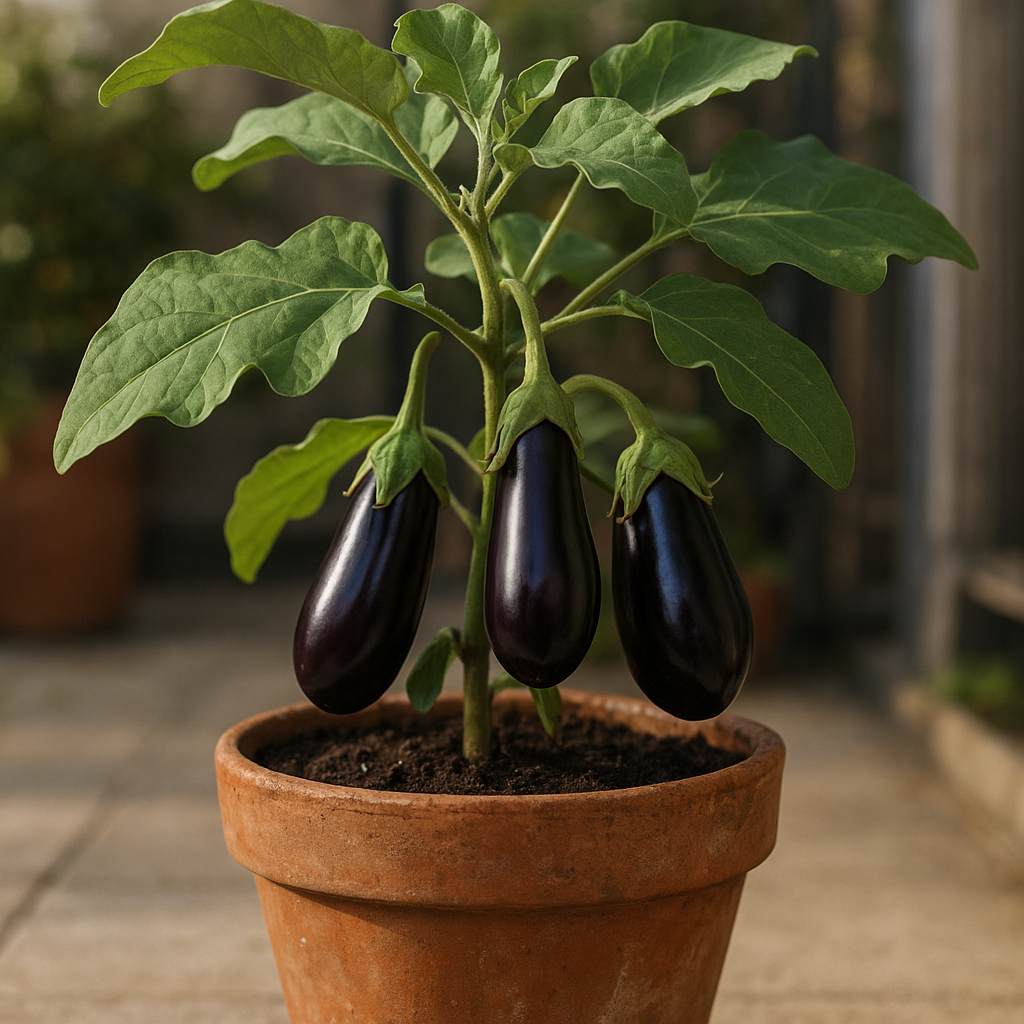
A warm-weather container setup for glossy fruit and steadier summer harvests
Eggplant is one of the best warm-season crops for a patio or balcony because one healthy plant can produce for weeks without taking over the whole space. The catch is that container eggplant needs steadier heat and steadier moisture than many gardeners expect. When it struggles, the pattern is usually the same: cool nights, a pot that dries too hard, or fruit left on the plant until it turns dull and seedy.
If you give eggplant enough root room, strong sun, and a more even watering rhythm, it becomes much more reliable. The goal is not a giant jungle of leaves. The goal is a compact plant that flowers steadily, sets fruit in warm weather, and stays productive long enough to justify the container.
If you are starting from indoor seedlings, move them outside carefully. This guide on hardening off seedlings helps avoid the slow start that warm-season crops often get after a rough transition.
The short answer
- Grow one eggplant per large container, usually at least 5 gallons and often 7 gallons or more for standard varieties.
- Wait for settled warm weather before leaving plants outdoors full time.
- Use fresh potting mix, full sun, and a container with drainage holes.
- Keep moisture even so flowers and young fruit do not abort under stress.
- Feed steadily but do not push excessive leafy growth.
- Harvest fruit while the skin is still glossy and the flesh is still tender.
That setup prevents most of the problems people run into with container eggplant.
Why eggplant works well in containers
Eggplant is a strong container crop because it likes warmth, resents soggy roots, and does not need a sprawling footprint if you choose the right variety. Compact and Asian types are especially easy in pots, but even larger globe varieties can do well if the container is big enough.
- Good heat tolerance: eggplant likes the warm conditions that patios often provide.
- Manageable size: one plant can fit into a corner, deck, or sunny balcony.
- Strong yield for the space: a healthy plant can keep producing instead of giving one short flush.
- Easy harvest timing: the fruit tells you a lot by how glossy and firm it looks.
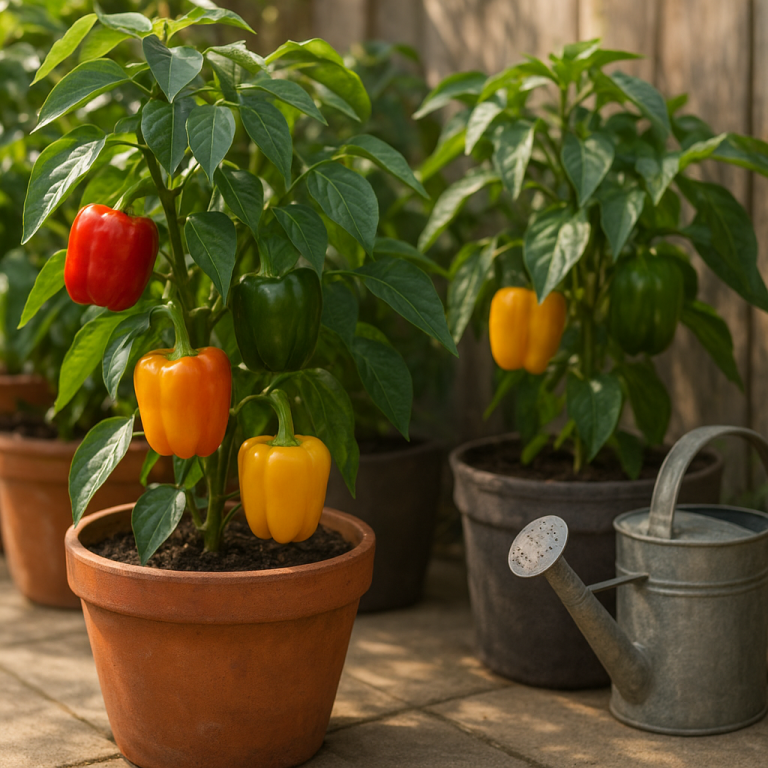
If you are growing several summer vegetables together, this guide on peppers in pots overlaps with eggplant on warmth, container size, and feeding rhythm.
Pick a variety that matches the size of your space
The easiest way to make container eggplant work is to avoid choosing a variety that outgrows the pot. Compact varieties are more forgiving on balconies and small patios, while larger classic globe types need more root volume and heavier support.
- Best for smaller spaces: compact or patio varieties.
- Best for frequent harvesting: slender Asian types that size up fast.
- Best for classic large fruit: globe types, but only in larger containers.
If space is limited, a smaller-fruited plant is usually more productive than forcing a large-fruited type into a cramped pot.
Use a container that stays stable in heat
Eggplant can survive in a smaller decorative pot, but survival is not the standard. A too-small container heats up fast, dries unevenly, and forces the plant into repeated stress right when it should be flowering and setting fruit.
- Minimum: about 5 gallons for one compact plant.
- Better: 7 gallons or more for standard varieties.
- Best shape: a wide, stable pot that will not tip once the plant is loaded with fruit.
- Non-negotiable: drainage holes that let water escape fully.
Grow one plant per pot. Crowding two eggplants together usually creates more watering trouble than extra harvest.
Use fresh potting mix instead of garden soil
Eggplant likes rich growing conditions, but containers need the right structure as much as they need nutrients. Heavy yard soil compacts in pots, slows the roots down, and makes it much easier to overwater.
- Use a quality potting mix made for containers.
- Mix in a little compost if you want more moisture-holding capacity.
- Leave some headspace at the top so water can soak in instead of running off.
- Add a light mulch layer after planting to slow summer moisture loss.
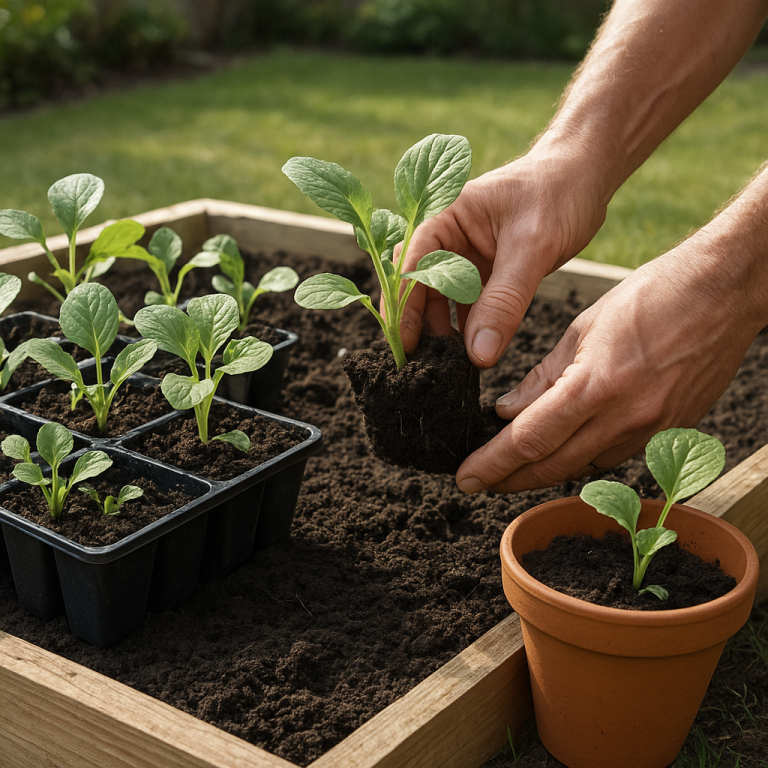
If you are moving seedlings from starter cells into their final pot, this guide on transplanting vegetable seedlings covers the handling that keeps roots from stalling.
Do not rush eggplant into cool weather
Eggplant is less forgiving of cool nights than many popular container vegetables. A plant that goes out too early often just sits there, looking alive but not truly growing. Even if daytime weather looks pleasant, chilly nights can delay flowering and reduce early vigor.
- Aim for: full sun and settled weather after frost danger has passed.
- Be cautious with: exposed balconies, windy corners, and spring nights that still dip cool.
- Remember: warm-season crops care a lot about overnight temperatures.
If growth stalls right after transplanting, the problem is often temperature before it is fertilizer.
Give eggplant as much sun as you can
Eggplant wants a bright, warm spot. In containers, that usually means the sunniest part of the patio or balcony, with enough airflow that leaves dry reasonably fast after watering or rain. Too little sun gives you a healthy-looking plant that flowers slowly and struggles to size up fruit.
Reflected heat from brick, concrete, or railings can help early in the season, but once midsummer arrives the same setup may dry the pot much faster. Watch the container, not just the forecast.
Water for consistency, not rescue mode
Blossom drop, bitter fruit, and rough texture all get worse when the plant keeps cycling between bone dry and soaked. Eggplant does best when the root zone stays evenly moist instead of swinging between extremes.
- Water deeply until excess drains from the bottom.
- Check the pot more often once the weather turns hot and the plant starts fruiting.
- Do not judge only by the surface because the top can look damp while the lower root zone is already drying.
- Use mulch to slow evaporation, but still keep checking the pot.
When every container suddenly starts drying faster, this guide on watering container plants in hot weather is the better framework than guessing from wilt alone.
Feed enough for flowering and fruiting
Eggplant is a heavier feeder than herbs and salad greens, but it still reacts badly to the more-is-better approach. Too much nitrogen gives you a handsome plant that spends more energy on leaves than fruit.
- Start with fresh potting mix.
- Use a balanced fertilizer at label rate once the plant is established.
- Keep the feeding rhythm steady instead of making big corrections.
- If the plant is huge and leafy with few flowers, do not solve that by feeding harder.
This guide on fertilizing vegetables in pots goes deeper on how to keep fruiting crops productive without burning roots or overdoing nitrogen.
Support the plant before the fruit weighs it down
Even compact eggplants can lean once several fruits begin sizing up. A simple stake, ring, or small cage added early keeps the stems from snapping later. It also helps hold fruit off the patio surface and improves airflow through the plant.
You do not need heavy pruning. Remove damaged leaves and any growth that is clearly rubbing or collapsing inward, but focus more on support and steady care than shaping the plant into something elaborate.
Know when to harvest so the fruit stays tender
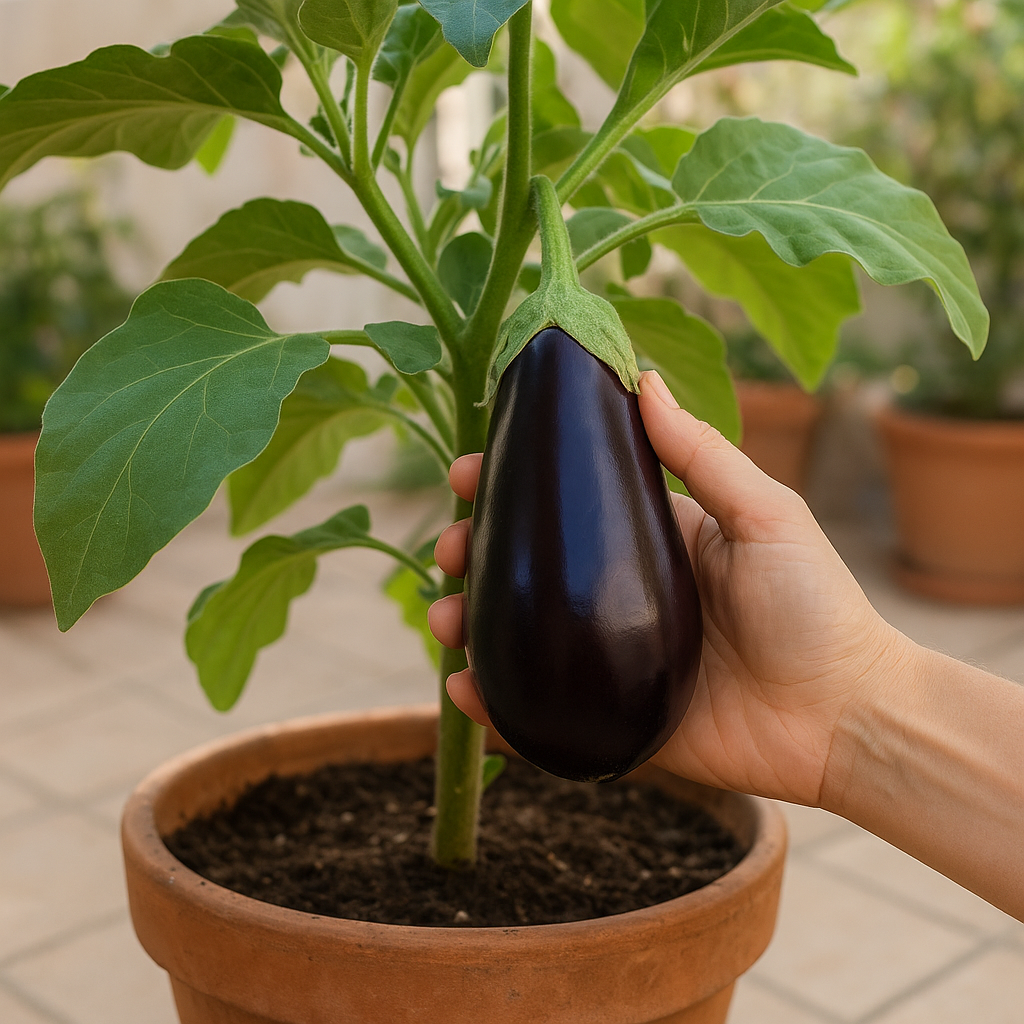
The easiest way to ruin homegrown eggplant is to leave it on the plant too long. Overmature fruit turns dull, the seeds harden, and the flesh gets spongier and more bitter.
- Harvest when: the skin looks glossy and the fruit feels firm.
- Be cautious if: the skin has gone dull or the fruit feels overly hard and oversized.
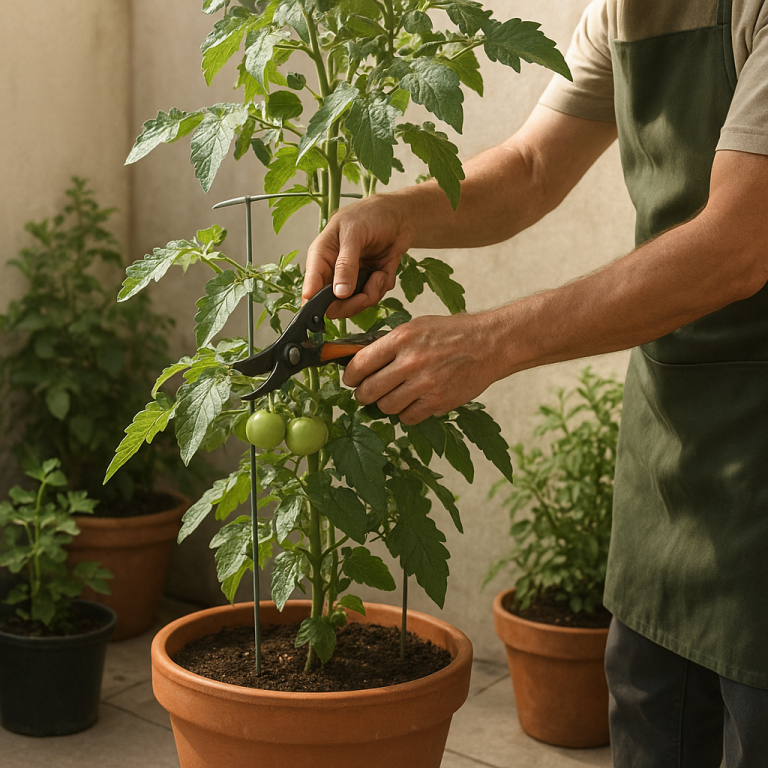
- Use pruners: cutting is cleaner than twisting thick stems by hand.
- Pick regularly: frequent harvest encourages the plant to keep setting fruit.
Smaller fruit harvested at the right stage usually tastes better than one oversized fruit left on the plant for too long.
Common eggplant problems in pots and the fastest fixes
Flowers keep dropping
This usually points to stress, not a mystery disease. Cool nights, drought swings, and a rootbound pot are common causes. Improve warmth and moisture consistency first.
Leaves are full of tiny holes
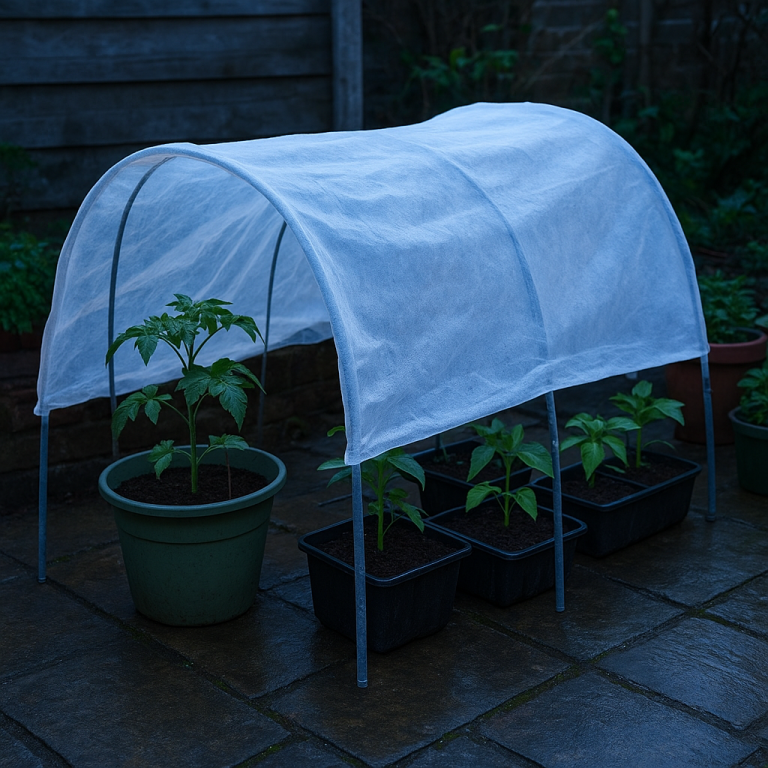
Flea beetles are a common early-season problem on eggplant. They chew many small shot holes in the leaves, especially when plants are young. Row cover or insect netting early in the season works better than waiting for the damage to spread, and stronger plants usually outgrow light feeding damage better than weak ones.
The plant is tall and leafy but not making much fruit
Check sun exposure, temperature, and fertilizer. Too little direct sun or too much nitrogen often explains this better than any exotic problem.
Fruit is dull, bitter, or full of hard seeds
The fruit was probably harvested too late, or the plant went through repeated water stress. Pick earlier and keep the moisture more even.
The plant wilts every afternoon
Some midday softness can happen in hard heat, but the plant should recover by evening. If it stays limp or the pot dries out fast day after day, the container may be too small or the watering rhythm may be too uneven.
Quick FAQ
Can eggplant really grow well in pots?
Yes. Eggplant is a strong container crop as long as the pot is large enough, the weather is warm enough, and the moisture stays reasonably even.
How big should a pot be for one eggplant plant?
A 5-gallon container is a workable minimum for compact types. Larger standard varieties usually do better in 7 gallons or more.
Why is my eggplant flowering but not setting fruit?
Stress is the most common reason. Cool nights, dry soil swings, low sun, or an overfed leafy plant can all interfere with fruit set.
When should you harvest eggplant?
Harvest when the skin is still glossy and the fruit feels firm. Waiting too long usually leads to tougher texture and bigger seeds.
The short version
Grow eggplant in a large sunny container with fresh potting mix, steady warmth, even watering, and moderate feeding. Support the plant before the fruit gets heavy, protect young plants from early flea beetle pressure, and harvest the fruit while it is still glossy. That is what keeps container eggplant tender, productive, and worth the patio space.