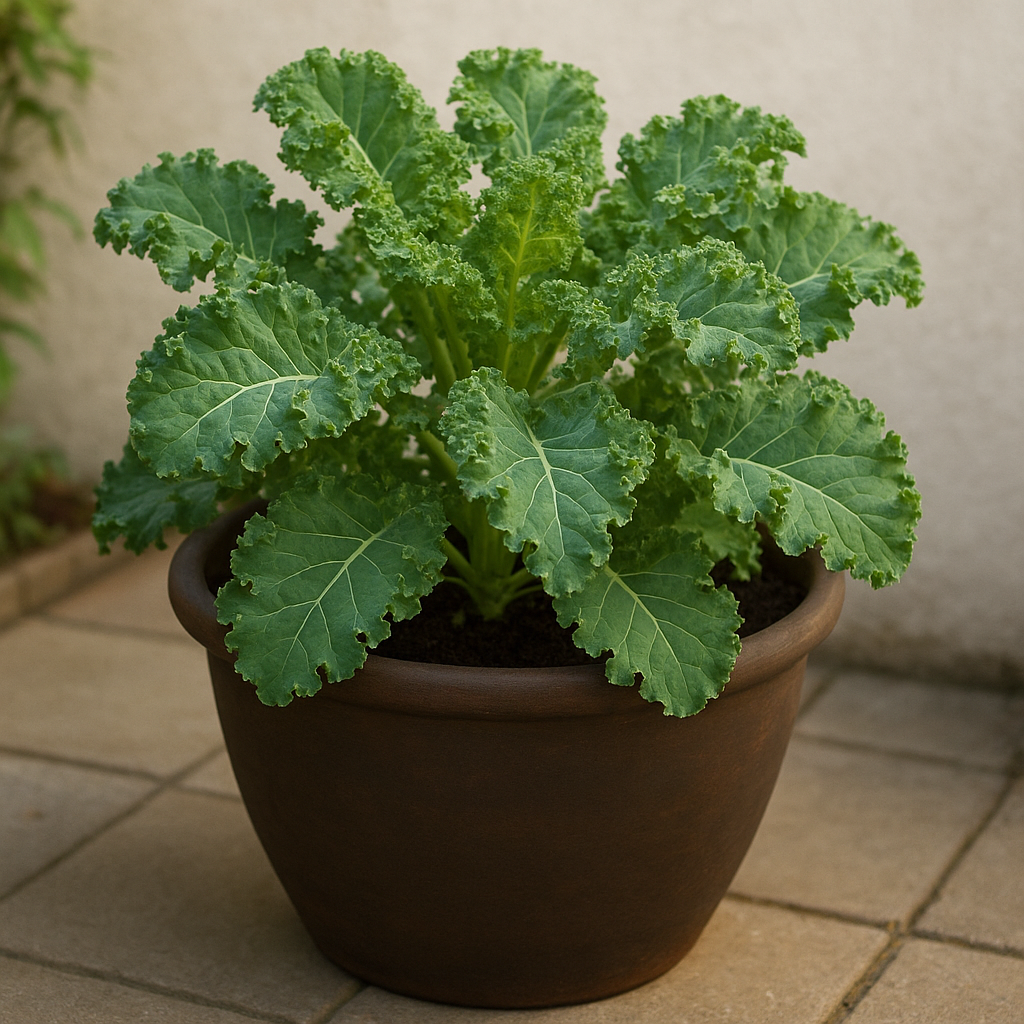
A cool-season container setup that keeps giving you usable kale
Kale is one of the most forgiving edible plants you can grow in a pot, but it still goes wrong in predictable ways. A cramped container, a dry spell, or a surprise pest wave can turn a promising planting into ragged leaves and stalled growth. If you want a container that keeps producing, the goal is simple: steady moisture, enough root space, and regular harvesting before the plant gets old and stressed.
The good news is that kale handles cool weather well, recovers after cutting, and fits naturally into patios, porches, balconies, and other small-space setups. Once the basics are right, it is one of the easier crops to keep useful for weeks instead of days.
What kale needs to grow well in pots
- Container depth: About 10 to 12 inches for steady growth
- Sun: Full sun in cool weather, with some afternoon relief in hotter spots
- Soil: Rich, loose potting mix that drains well
- Water: Even moisture without letting the pot stay soggy
- Best temperature range: Cool spring and fall weather
Kale can take cool nights better than many popular container vegetables. In many climates, spring and fall are the easiest seasons for a long, clean run.
Choose a container that buys you some margin for error
Kale does not need the huge root volume that tomatoes or zucchini need, but it does better in a pot with enough depth and width to hold moisture evenly. Tiny decorative pots dry too quickly and heat up too fast. That leads to slower growth, tougher leaves, and plants that attract stress-related problems sooner.
A good starting point is a container around 10 to 12 inches deep with drainage holes and enough surface area for proper spacing. If you want several plants in one pot, pick a wide tub, trough planter, or grow bag instead of crowding them into a narrow nursery pot.
If you are building out a broader greens setup, this guide to a container salad garden pairs well with a separate kale pot nearby.
Pick varieties that fit the way you want to harvest
Most kale can grow in containers, but the best choice depends on how you cook and harvest it. Curly kale is common and productive. Lacinato kale gives flatter, darker leaves that are easy to wash and strip from the stem. Dwarf types are convenient when space is tight.
- Best for compact containers: dwarf or compact varieties
- Best for larger bunches: lacinato and standard curly kale
- Best if you want frequent baby-leaf harvests: sow more closely and cut young
If you prefer larger leaves for sautéing, soups, or chips, give each plant more room and harvest outer leaves as they size up.
Use fresh potting mix instead of garden soil
Kale likes fertile soil, but containers need structure as much as nutrition. Dense garden soil compacts too easily in pots and can stay wet too long around the roots. A quality potting mix with some compost blended in gives better drainage, steadier moisture, and faster root growth.
If the mix drains too quickly on a windy patio, add a little compost to help hold moisture. If your containers stay wet after rain, lighten the mix and make sure excess water can escape fully.
Direct sow or transplant, but do not rush weak seedlings outside
Kale can be direct sown in containers or transplanted from starter cells. Direct sowing is simple in cool weather. Transplants help if you want a faster start or are filling a pot after another crop comes out.
- Fill the container with pre-moistened potting mix.
- Sow seed about 1/4 to 1/2 inch deep, or set transplants at the same depth they were growing before.
- Thin or space plants so air can move between them.
- Water in well so the whole root zone settles evenly.
If you started seedlings indoors, harden them off before moving them outside. This guide on hardening off seedlings helps prevent the stall that happens when tender plants hit sun and wind too fast.
If you are moving seedlings from small cells into their final container, the basic handling is the same as this guide on transplanting vegetable seedlings.
Give kale enough sun, but watch for reflected heat
In cool spring weather, kale grows well in full sun. As temperatures climb, the same patio can become much harsher than the air temperature suggests. Heat bouncing off concrete, brick, or metal railings can push the leaves toward stress even when the season still looks mild on paper.
If your growing space gets intense afternoon heat, morning sun with some later relief can keep leaves more tender. Kale tolerates warmth better than spinach, but container roots still suffer when the pot runs hot for hours.
If you are growing several leafy crops at once, the same sun logic used for spinach and arugula still applies once late spring starts heating up.
Keep moisture even so the leaves stay tender
Kale is sturdier than lettuce, but it still notices uneven watering. A pot that swings between dusty dry and soaking wet produces rougher texture and slower regrowth. Check the container often and water thoroughly when the top inch or so is drying.
- Water deeply enough that excess runs out the bottom.
- Use a saucer only if you empty standing water promptly.
- Add a light mulch layer if the surface dries too fast.
- Expect windy balconies and black pots to need closer attention.
If a warm stretch suddenly makes every container thirstier, this guide on watering container plants in hot weather helps you adjust before the crop gets stressed.
Feed lightly but consistently for a longer harvest window
Kale is a leafy crop, so it appreciates fertile mix and steady nutrition. Fresh potting mix plus compost often covers the first stretch, but containers lose nutrients faster than garden beds. A light balanced liquid feed every couple of weeks or a slow-release fertilizer mixed in at planting is usually enough.
More fertilizer is not always better. Pushing lush growth in a stressed pot can make pest pressure worse and leave you with soft leaves that do not hold as well.
For a broader feeding plan across mixed edible containers, see how to fertilize vegetables in pots.
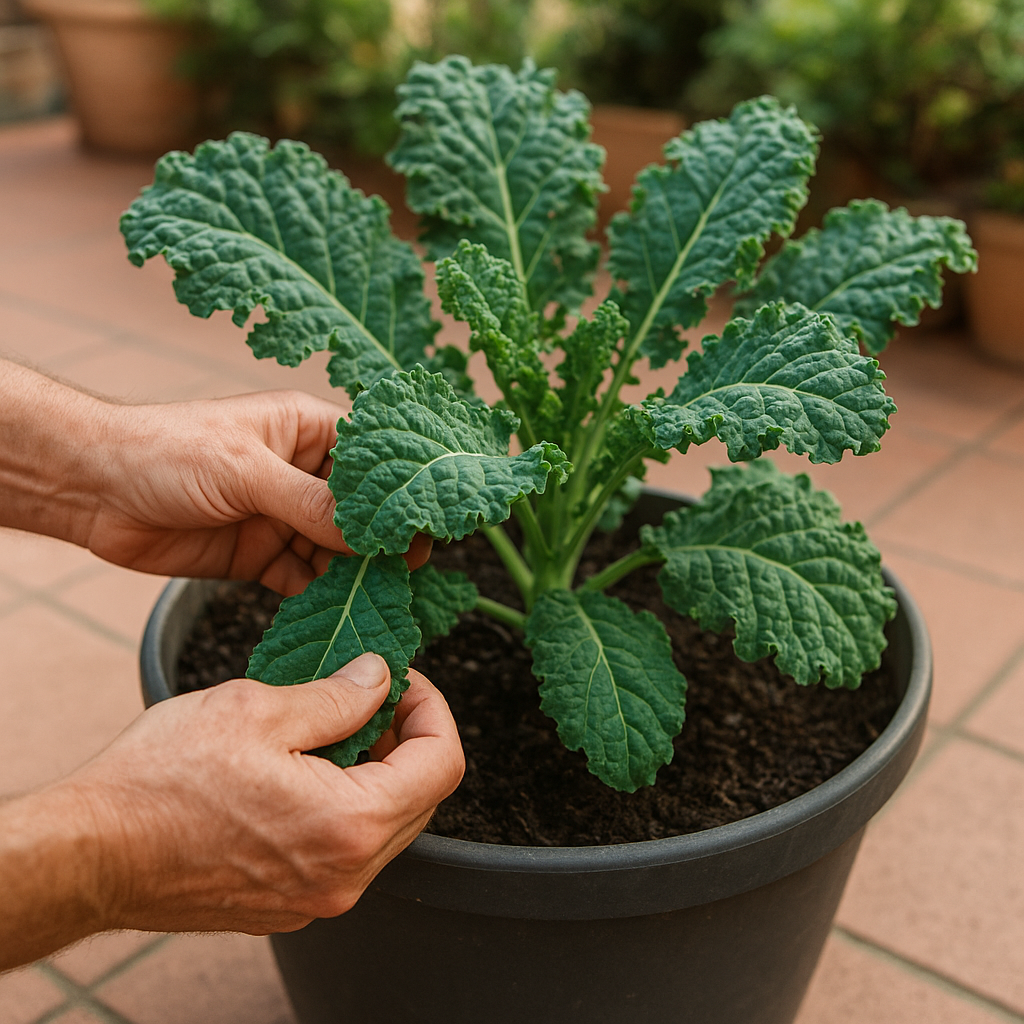
Harvest outer leaves first and keep the center growing
The simplest way to keep kale productive is to treat it like a cut-and-come-again crop. Wait until the outer leaves are large enough to use, then remove those first and leave the center untouched. That lets the plant keep pushing new growth from the middle.
- Take the oldest lower leaves first.
- Leave the central growing point intact.
- Harvest regularly instead of waiting for oversized leaves.
- Use young leaves sooner if hot weather is approaching.
Frequent light harvests usually give better texture than waiting for one huge cutting. If you want a tender baby-leaf style harvest, sow a section more closely and cut the leaves younger.
Common kale problems in pots and how to fix them
Aphids covering the inner leaves
Aphids collect on tender new growth, especially when plants are crowded or pushing very soft leaves. Check the undersides and the center of the plant often. A strong rinse, removal of badly infested leaves, and better spacing usually help early. For the broader cleanup routine, see how to get rid of common plant pests.
Cabbage worms chewing holes in the leaves
Small green caterpillars and their relatives are one of the most common kale problems. If you see ragged holes or dark droppings on the leaves, inspect the plant carefully and remove pests by hand. Fine insect netting over the pot works better than waiting until the damage is obvious.
Leaves are tough or bitter
Older leaves, hot weather, and uneven watering usually cause this. Harvest younger, water more consistently, and give the plant some relief from hard afternoon heat if your space runs hot.
Plants stopped growing after a strong start
Check root space, moisture, and fertility. A rootbound plant in tired potting mix will often stall before it looks obviously sick. Refresh the mix for the next round if the same container has already carried several crops.
Lower leaves are yellowing
A few older lower leaves fading is normal as the plant matures. Widespread yellowing points more toward exhausted mix, watering problems, or roots staying wet too long.
How to keep kale going longer
Instead of filling one giant pot all at once, stagger your sowing or transplanting in smaller rounds. That way one container is hitting full harvest just as another is getting established. In many places, you can also plant a second round when summer heat starts easing.
If you want more cool-season greens nearby, kale combines well with separate pots of lettuce and spinach rather than cramming everything into one overcrowded container.
Quick FAQ
Can kale grow well in pots?
Yes. Kale is one of the better container vegetables as long as the pot is deep enough, drains well, and does not dry out repeatedly.
How deep should a pot be for kale?
Around 10 to 12 inches deep is a solid target for steady growth and easier moisture control.
Does kale in pots need full sun?
Usually yes in cool weather. In hotter conditions, some afternoon shade can keep the leaves more tender and reduce stress.
Will kale keep growing after you harvest it?
Yes, if you harvest the outer leaves and leave the center growing point intact.
Kale rewards consistency more than fuss. Use a container with real root room, keep the moisture steady, cut outer leaves often, and stay ahead of pests before they spread through the pot. That is what keeps the leaves tender and the harvest useful for much longer.