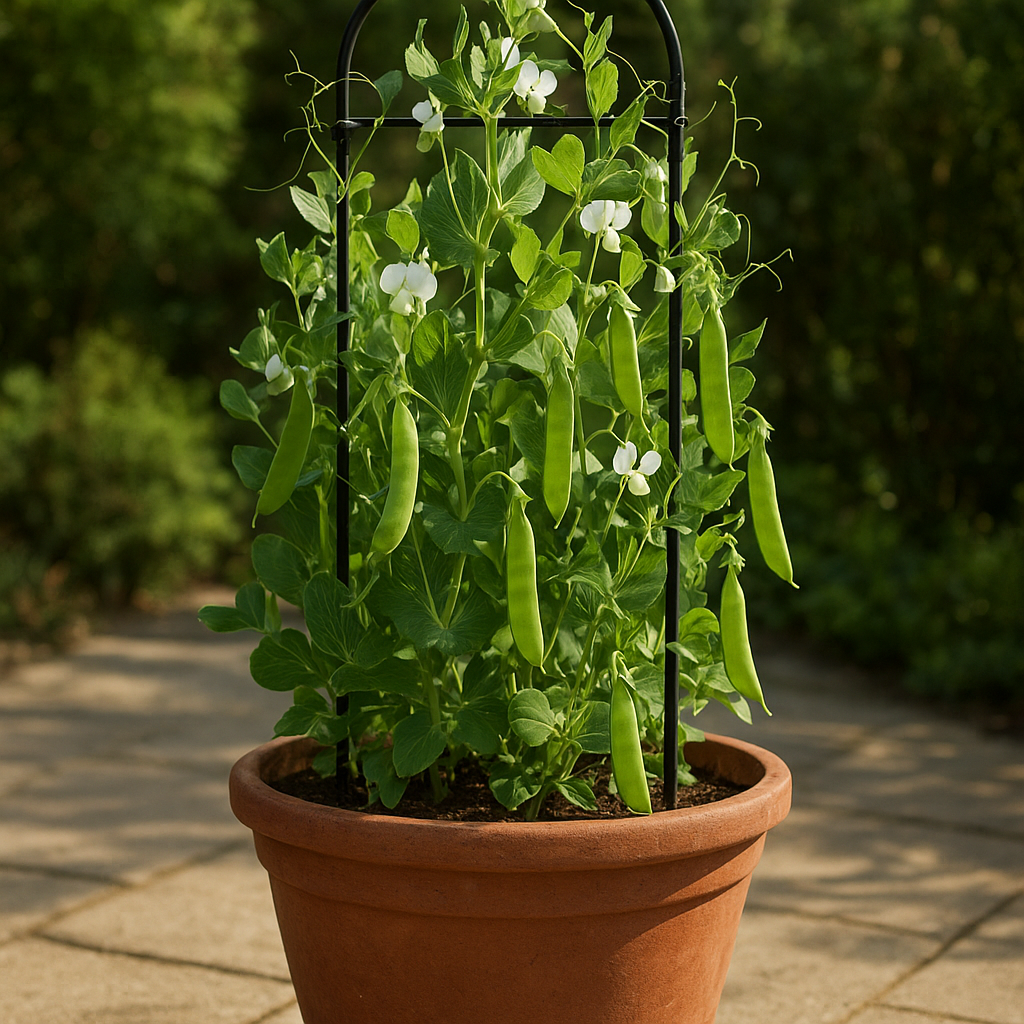
A Cool-Season Patio Crop That Climbs Fast and Harvests Best Before Summer Heat
Sugar snap peas are one of the most satisfying vegetables to grow in a container because they rise quickly, use vertical space well, and give you sweet, crisp pods in a fairly short window. They are a strong fit for balconies, patios, porches, and small yards where a trellis can do more work than extra square footage.
Most pea trouble in pots comes from timing and stress. Seeds go in too late, the container is too small, the vines outgrow weak support, or warm weather pushes the planting past its comfortable season. If you want steady picking instead of a short burst followed by decline, build the setup around cool weather, consistent moisture, and support that is ready from day one.
The short answer
- Use a container that is wide enough to hold several plants and deep enough to stay evenly moist.
- Choose sugar snap or other productive snap pea varieties rather than tall field peas meant for large in-ground rows.
- Direct-sow the seeds into cool potting mix and install the trellis at planting time.
- Give the vines full sun in cool weather and some relief once late spring turns hot.
- Keep the mix evenly moist so pods stay crisp and vines do not stall.
- Harvest often while pods are still plump, glossy, and tender.
If those six things are right, container peas are much easier than their delicate reputation suggests.
Why sugar snap peas work well in pots
Peas have a short, cool-season mission. They want to sprout in cool soil, climb before summer heat gets aggressive, flower in mild weather, and finish before the container turns into a hot box. That pattern makes them useful in small spaces because you can run them early, pick heavily for a few weeks, then free the pot for something else.
They also pair well with the same spring growing window used by lettuce, spinach, and a container salad garden if you want several quick spring harvests going at once.
Choose the right pea type for a container
If your goal is edible pods, sugar snap peas are usually the most useful choice. You harvest the whole pod, they taste sweet when picked young, and they feel worth the trellis space. Snow peas also work well in pots if you prefer flatter pods, while shelling peas are usually less rewarding in small containers because you give the plant space but throw away the pod.
- Best general choice: sugar snap peas or compact snap varieties
- Also good: snow peas, especially in mild spring weather
- Less useful in a small pot: large shelling peas unless you really want shelled peas
- Easier than very tall vines: compact or medium-height varieties with clear support needs
Read the seed packet before planting. Height matters because a 3-foot pea and a 6-foot pea are not the same container project.
Container size and support matter more than people expect
A deep, wide container gives the roots enough room to stay cool and keeps watering swings from getting extreme. For most sugar snap peas, a container around 10 to 12 inches deep works well, and more width is often more useful than going dramatically deeper.
- Use a trough, window box, wide round pot, or rectangular planter with drainage holes.
- Aim for enough width to space several seeds instead of crowding one dense clump in the middle.
- Set the container where runoff can drain away instead of collecting under the pot.
- Install a trellis, net, or bamboo support before or at planting time so roots do not get disturbed later.
Peas climb by grabbing. Thin wire, string netting, pea mesh, or slim branches are easier for tendrils to hold than a thick post with nowhere to latch.
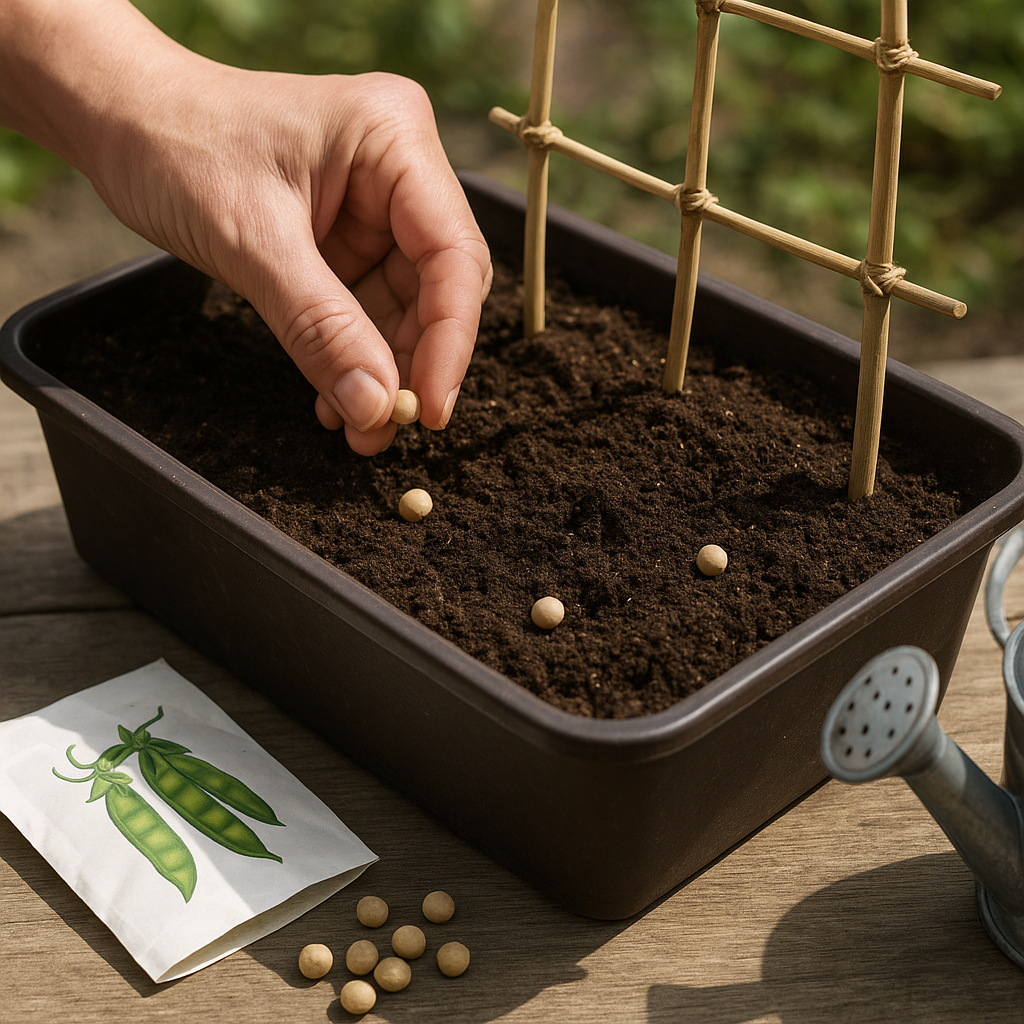
How to plant sugar snap peas in pots
- Fill the container with fresh potting mix that drains well but does not dry out instantly.
- Moisten the mix so it is evenly damp before sowing.
- Sow the seeds at the depth recommended on the packet, usually around 1 inch deep.
- Space seeds so the young plants have airflow once they leaf out.
- Water gently after sowing so the seed stays in place.
- Guide the first shoots toward the support once they are tall enough to reach it.
Peas usually do better when direct-sown into the final container than when fussed over in trays and moved later. They can be transplanted, but they are not the crop I would choose if direct sowing is an option.
Light, temperature, and timing
Peas are happiest in cool weather. Full sun is usually helpful in early spring, but the same container can become stressful once days grow hot and the potting mix starts heating up fast.
- Early spring: full sun is usually ideal.
- Warming late spring: morning sun with some afternoon relief can keep the vines productive a little longer.
- Hot patios and balconies: reflected heat from walls, glass, and concrete can end the crop early.
If your spring window is short, plant promptly and do not wait for summer vegetables to go in first. Peas want the front end of the season, not the back half.
Watering is the difference between tender pods and stressed vines
Container peas want even moisture. Not swampy, not dusty, and not a cycle of neglect followed by panic soaking. Uneven moisture can slow flowering, shrink pod quality, and make the plants collapse earlier than they should.
- Water deeply enough that the whole root zone gets moisture.
- Check containers more often once vines are tall and weather turns windy.
- Use a light mulch if the surface is drying too fast.
- Do not let the pot go bone dry during flowering and pod fill.
If late spring heat arrives fast and every container starts drying out sooner than expected, this guide on watering container plants in hot weather gives a better framework than guessing from wilt alone.
Do peas need fertilizer in pots?
Peas usually do not need aggressive feeding. Too much nitrogen can give you lots of leafy growth and fewer worthwhile pods. Fresh potting mix often carries them a long way, especially in a short spring crop.
- Start with decent potting mix rather than trying to rescue poor mix with heavy feeding.
- Use a light, balanced fertilizer only if the container mix is weak or the plants clearly stall.
- Do not chase problems by feeding over and over.
If you need a broader framework for container feeding, this vegetable container fertilizer guide helps keep the balance right.
How to harvest sugar snap peas for the best texture
Pick often. That is the easiest way to keep the vines producing and the pods tender. Sugar snaps are best when the pods look full and glossy but still feel crisp, not leathery or overblown.
- Hold the vine with one hand and pinch or snip the pod with the other.
- Harvest every day or two once production starts.
- Do not leave mature pods hanging too long if you want continued flowering.
- Use the pods soon after harvest for the sweetest texture.
If you wait until the pods turn thick, dull, and heavily bulged, the texture gets tougher and the plant starts shifting from making new pods to finishing old ones.
Common pea problems in containers and quick fixes
The plants grew, but they barely made pods
Late planting, too much heat, weak light, or too much nitrogen are common causes. Peas need cool weather more than extra fertilizer.
The vines look tired and yellow early
Check watering first. Small containers dry quickly, and roots in hot mix lose momentum fast. If the pot is tiny, the setup may simply be too small for the crop.
White or gray coating is showing on the leaves
That often points to powdery mildew, especially when air movement is poor and the planting is crowded. Thin any hopeless tangles, keep foliage drier, and avoid turning the container into a dense wall of vines.
The pods are tough or stringy
They were likely left on too long or the plants were stressed by heat and dry swings. Pick earlier and keep moisture steadier during pod fill.
Aphids showed up on the tips
Tender pea growth can attract them fast. Knock small groups off with water, remove the worst clusters, and use the cleanup steps in How to Get Rid of Aphids, Fungus Gnats, and Mealybugs if they start taking over.
Quick FAQ
Can sugar snap peas grow well in pots?
Yes. They do well in containers if the pot is large enough to hold moisture, the support is ready early, and the planting happens in cool weather.
How deep should a container be for sugar snap peas?
About 10 to 12 inches deep is a solid target for most home setups, with enough width to avoid crowding the plants into one tight cluster.
Do sugar snap peas need a trellis in a pot?
Usually yes. Even shorter varieties climb better and stay cleaner with support than when left to collapse over the rim.
Can you grow sugar snap peas in summer?
Only in places with mild summer conditions. In many areas they perform best as an early spring crop and fade once real heat arrives.
The short version
Grow sugar snap peas in a wide, well-drained container with support in place from the start. Sow them early, keep the potting mix evenly moist, harvest the pods young and often, and do not try to force the crop through hard summer heat. That is what turns a patio trellis into a real pea harvest instead of a short-lived tangle.