A Small-Space Outdoor Herb Setup That Stays Productive Instead of Crispy, Tangled, or Top-Heavy
A balcony herb garden can be one of the most useful ways to grow food in a small space, but it behaves differently from a backyard bed and differently from a windowsill. Pots heat up faster, wind dries them harder, reflected light can scorch leaves, and one bad container choice can turn easy herbs into constant rescue work.
If you want balcony herbs that stay worth cutting from, build the setup around your actual light, wind, and watering reality first. Then choose herbs that match those conditions instead of forcing every favorite plant into the same planter.
The short answer
- Check how much direct sun your balcony really gets before buying plants.
- Use fewer larger pots with drainage instead of lots of tiny decorative herb containers.
- Group herbs by water needs, not just by what looks good together.
- Expect wind and reflected heat to dry pots faster than you think.
- Water deeply, then recheck the soil instead of topping everything off on a rigid schedule.
- Harvest often so herbs stay bushy and useful instead of woody and sparse.
If those six things are right, a balcony herb garden gets much easier to maintain.
Why balcony herb gardens fail so often
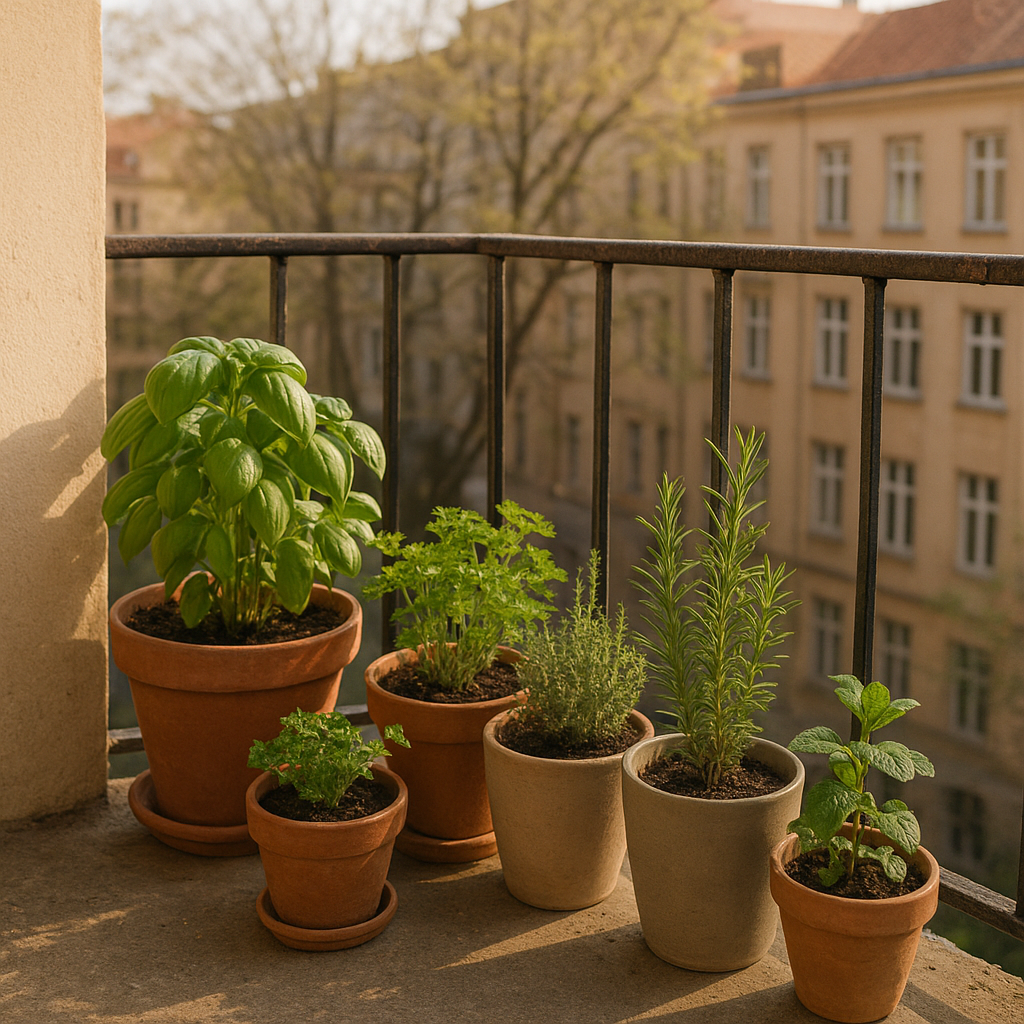
Most balcony herb problems come from mismatch, not bad luck. People buy basil, rosemary, mint, parsley, and thyme all at once, cram them into one narrow trough, set the planter in the brightest-looking spot, and then wonder why one herb rots while another dries out by lunch.
- Too much wind: tender herbs lose moisture fast and can tear or stall.
- Too many tiny pots: the root zone swings from soggy to bone dry too quickly.
- Mixed water needs: one planter keeps some herbs too wet and others too dry.
- Wrong light assumptions: balconies can be much harsher or much dimmer than expected.
- No drainage plan: runoff sits in saucers or leaks where it should not.
The fix is to treat the balcony like its own microclimate. That matters more than buying more herbs.
Check sun and wind before you choose the herbs
A bright balcony is not always a balanced one. Some get several hours of direct morning sun and then turn mild. Others get brutal reflected afternoon heat. Some are bright but windy enough to stress basil and dill every day.
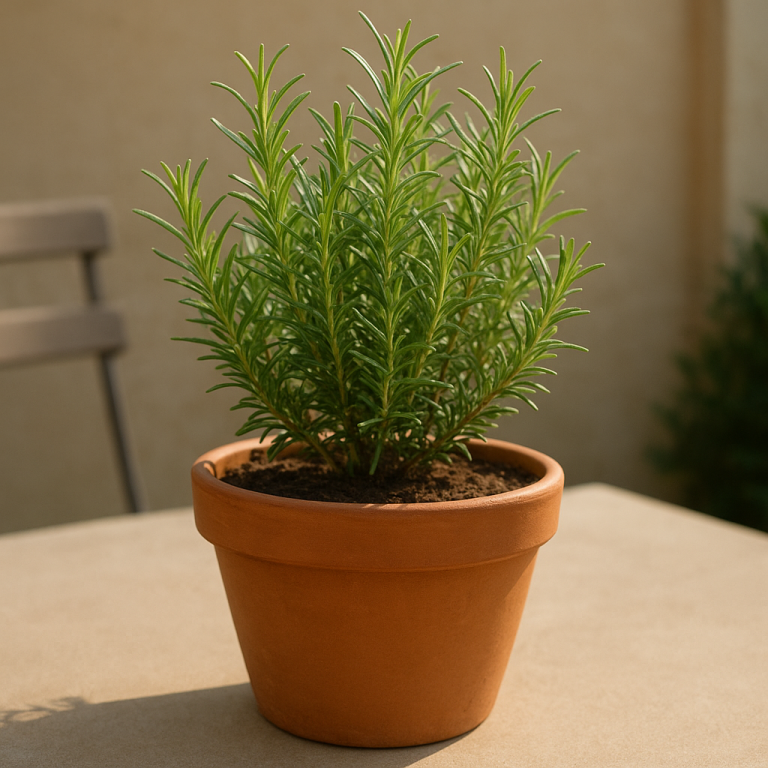
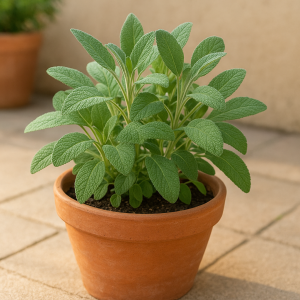
- Full sun, hotter and drier: rosemary, thyme, oregano, and sage are usually strong choices.
- Morning sun or gentler light: parsley, chives, and cilantro are often easier.
- Warm sheltered balcony: basil can do very well if it is not being whipped around constantly.
- Contained by itself: mint is useful, but it should usually live in its own pot.
If you are still deciding which herbs belong where, these individual guides help with the plant-by-plant details: basil, parsley, rosemary, thyme, oregano, and sage.
Use fewer, better containers instead of a row of tiny herb pots
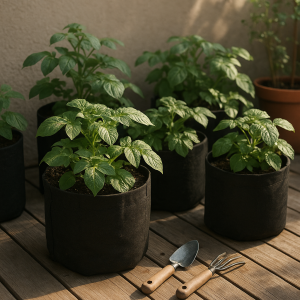
Tiny pots are the fastest way to turn herb growing into constant watering. On a balcony, small containers dry faster because they are exposed on all sides to sun, wind, and warm surfaces. A slightly larger container gives you more root room and a little more margin when weather shifts.
- Choose pots with drainage holes.
- Use larger containers for thirstier herbs like basil and parsley.
- Use breathable pots or fast-draining mix for dry-leaning herbs like thyme, oregano, rosemary, and sage.
- Make sure the total weight still makes sense for your space once the pots are watered.
If a plant is already crowded in a nursery pot, repot it before roots start circling hard and moisture swings get worse. The same basic process in How to Repot a Plant Without Shock or Root Damage works well here too.
Do not force every herb into one mixed planter
The smartest way to organize a balcony herb garden is by care rhythm.
Group 1: drier Mediterranean herbs
Rosemary, thyme, oregano, and sage usually want the sunniest spot, strong airflow, and a potting mix that dries reasonably fast.
Group 2: softer, thirstier herbs
Basil, parsley, chives, and cilantro usually need more even moisture and appreciate protection from the harshest wind.
Group 3: one-pot herbs
Mint should usually stay in its own pot because it grows aggressively and can crowd everything around it. If you want help keeping it under control, see How to Grow Mint in Pots Without It Taking Over, Wilting, or Getting Woody.
Grouping herbs this way makes watering much easier and avoids the usual problem where one planter creates winners and losers.
Use real potting mix and skip the drainage myths
Balcony containers need loose potting mix meant for pots, not dense garden soil. Heavy soil compacts, drains poorly, and makes root problems more likely. Rocks at the bottom of the pot do not fix bad drainage. They just take up space that roots could use.
- Use fresh container mix.
- Match the mix to the herb group instead of using one soggy blend for everything.
- Do not block drainage holes with gravel layers.
- Use saucers only if you will empty trapped water instead of leaving roots to sit in it.
How to water balcony herbs without drowning or baking them
Balcony watering is mostly about paying attention to what changed since yesterday. Wind, sun angle, temperature, and pot size can shift the rhythm fast. What worked three days ago may be wrong today.
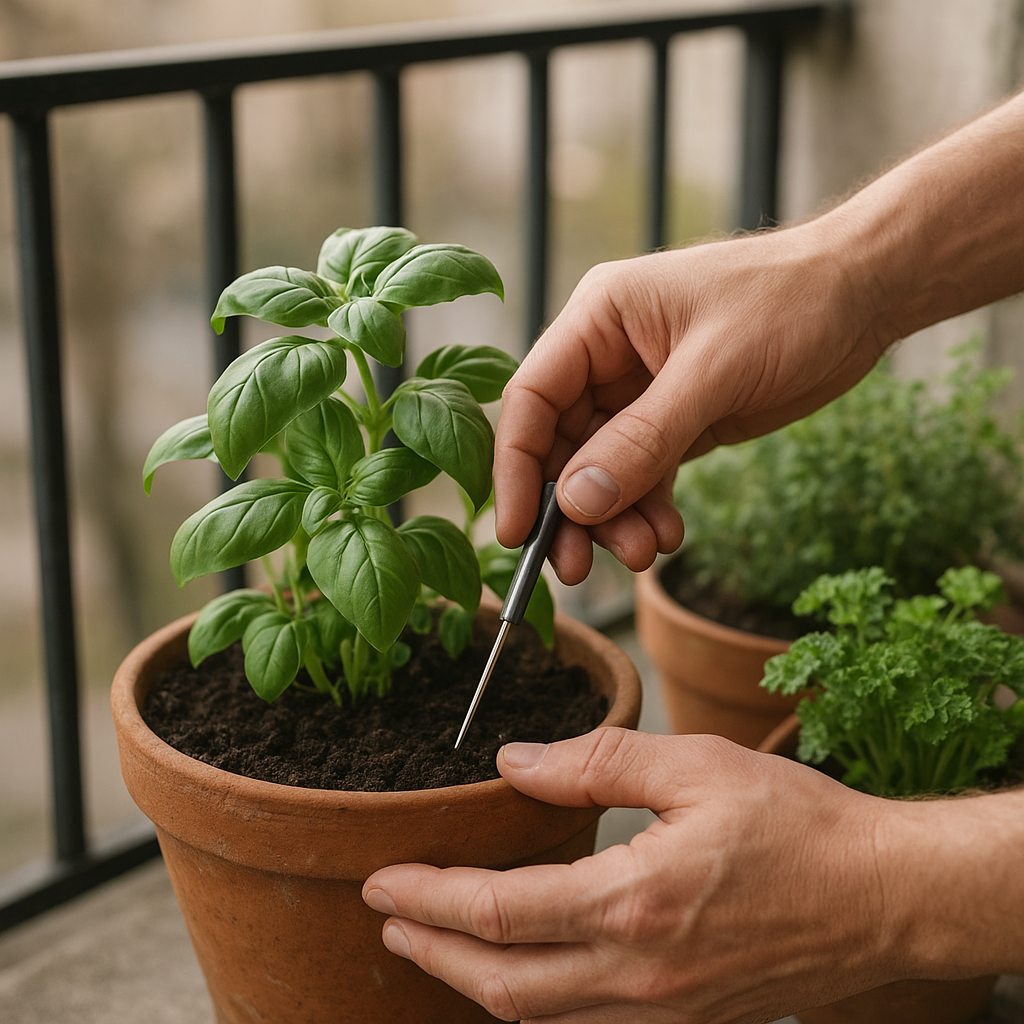
- Check the soil with your finger before watering.
- If the top inch is dry on softer herbs like basil or parsley, water thoroughly until excess drains out.
- For dry-leaning herbs such as rosemary and thyme, let the mix dry a bit deeper near the top before watering again.
- Empty standing runoff so roots are not left in trapped water.
- Check again later in hot or windy weather instead of assuming one morning watering solved everything.
If your balcony turns very hot later in the season, the same framework in How Often Should You Water Container Plants in Hot Weather? becomes even more useful.
Protect tender herbs from the worst wind
Wind does more than tip stems over. It increases water loss, roughs up leaves, and can keep tender herbs from ever settling into strong growth. Basil is usually the first herb to complain. Dill and cilantro can also get pushed around fast.
- Place tender herbs closer to a wall or sheltered corner if the balcony is exposed.
- Put sturdier herbs like rosemary or thyme in the more exposed edge positions.
- Use heavier pots so plants do not wobble every time the wind picks up.
- Avoid packing pots so tightly that airflow disappears completely.
The goal is not zero wind. It is reducing the constant blast that dries tender herbs out and beats them up all day.
Harden herbs off if they started indoors or in a protected shop display
A nursery herb or windowsill plant can look healthy and still struggle after one hard day outside. Direct sun and open-air wind are stronger than sheltered indoor conditions.
Start with a short period outside in gentler conditions, then increase exposure over several days. If you are moving home-started plants out, follow the same process in How to Harden Off Seedlings Without Stunting or Sunburn.
Harvest often so the plants stay compact and useful
Balcony herbs stay more productive when you treat harvesting like light pruning instead of random leaf removal.
- Basil: pinch above a leaf pair so the plant branches.
- Parsley: cut outer stems from the base instead of shaving the center.
- Chives: snip blades low, but leave enough for regrowth.
- Woody herbs: trim soft green tips regularly instead of hacking into old bare stems.
If pruning always feels vague, How to Prune Plants Without Cutting the Wrong Thing covers the same logic in a broader way.
Common balcony herb problems and quick fixes
The pots dry out by midday
The containers are likely too small, too exposed, or both. Move thirstier herbs to a more sheltered spot, step up pot size, and stop relying on tiny decorative planters.
Basil looks shredded or keeps wilting
This is often wind stress, not just thirst. Give basil more shelter and check whether the pot is drying too fast between waterings. For plant-specific fixes, see the basil guide.
Rosemary or thyme stays wet for too long
The mix is too heavy, the drainage is poor, or those herbs were grouped with thirstier plants. Move them into a drier setup before root problems start.
One planter has one thriving herb and two miserable ones
That usually means the herbs do not want the same light or moisture. Split them up by care needs instead of trying to rescue the mixed planter as a concept.
Aphids or other pests show up on soft new growth
Stressed herbs are easier targets. If you see clusters of insects or sticky growth, use the steps in How to Get Rid of Aphids, Fungus Gnats, and Mealybugs before the problem spreads through the whole group of pots.
Quick FAQ
What herbs grow best on a balcony?
That depends on the balcony. Sunny, hotter balconies often suit rosemary, thyme, oregano, and sage. Gentler conditions are often better for parsley, chives, cilantro, and basil.
Can you grow herbs on a windy balcony?
Yes, but placement matters. Put sturdier herbs in the exposed spots and keep tender herbs in more sheltered positions.
Should balcony herbs be watered every day?
Not automatically. Many balcony containers need daily checking in warm weather, but the right move depends on the herb, the pot size, sun, and wind.
Is one long herb planter better than separate pots?
Separate pots are usually easier because you can match water and light needs more accurately. One long planter only works well when the herbs actually want the same care.
The short version
Start with the balcony conditions, not the shopping list. Use larger draining containers, group herbs by water needs, protect tender plants from the harshest wind, and harvest often enough to keep growth compact. That is what turns a balcony herb garden into something you keep using instead of a row of stressed pots you feel guilty about.