A Practical Indoor Herb Setup That Gives You More Usable Leaves and Fewer Sad Little Pots
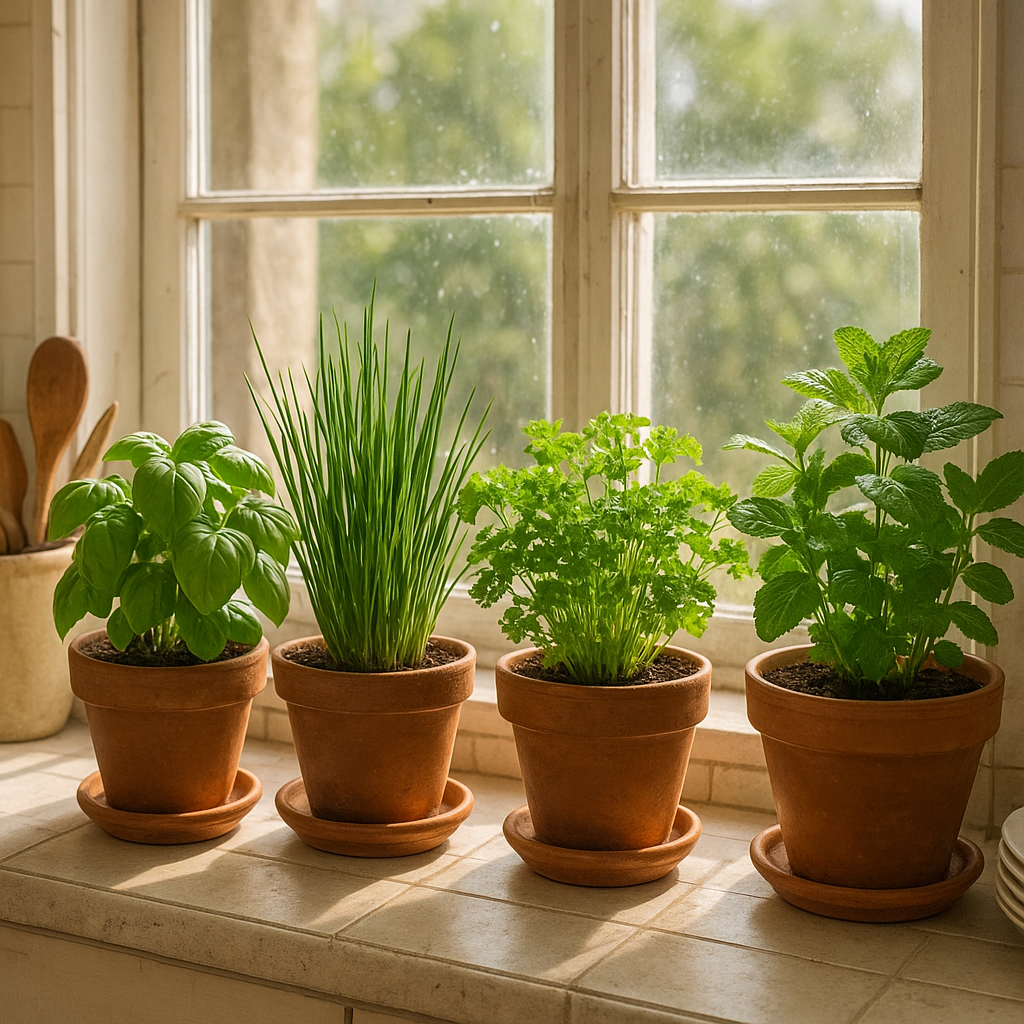
A windowsill herb garden sounds easy until the basil stretches, the mint flops, the parsley stalls, and one overwatered pot turns into a fungus gnat condo. The good news is that most indoor herb problems come from the same few mistakes: weak light, containers that stay wet too long, crowding, and picking plants that do not actually want to live in that spot.
If you want a small indoor herb setup that stays useful instead of decorative for one week and disappointing for the next month, start with the window first, then match the herbs, containers, and watering rhythm to that space.
The short answer
- Use your brightest window, ideally one that gets several hours of direct sun.
- Grow herbs in containers with drainage instead of sealed cachepots.
- Choose herbs that match indoor conditions, not just what looks good on the label.
- Water based on soil moisture, not a rigid calendar.
- Harvest in a way that keeps plants branching instead of turning thin and tired.
- Act early on mold, gnats, yellowing, or weak growth before one stressed pot affects the rest.
If those six things are right, a windowsill herb garden becomes much more reliable.
Pick the window before you pick the herbs
Most indoor herb failures are really light failures. People buy a mix of herbs first and then try to make them work in a window that is bright for humans but weak for food plants.
- Best case: a south-facing or strong west-facing window with several hours of direct sun.
- Usually workable: an east-facing window with bright morning light, especially for softer herbs.
- Usually frustrating: a dim north-facing window or any sill blocked by trees, porches, or deep overhangs.
If the light is weak, herbs often get leggy, pale, slow, and more vulnerable to pests. Basil is especially quick to tell on a bad setup. If you want a deeper look at that pattern, see How to Grow Basil in Pots Without Leggy, Wilted Plants.
The best herbs for a windowsill garden
Do not treat all herbs like they want the same life. Some handle indoor container growing better than others.
Best bets for most windowsills
- Chives: compact, forgiving, and easy to snip often. The container routine is covered in this chive guide.
- Parsley: slower, but productive once established if the pot is deep enough. More on that in this parsley guide.
- Mint: vigorous and useful, though it still needs real light and sane watering. See How to Grow Mint in Pots.
- Cilantro: possible in a cool bright window, but it is less forgiving if the space runs hot. The main pitfalls are in this cilantro guide.
Good choices if you have stronger sun
- Basil: productive, but it wants stronger light and regular pinching.
- Dill: fast and useful, but can get floppy indoors if light is weak. See How to Grow Dill in Pots.
- Rosemary: possible in a very bright window, but it hates staying soggy. For the long version, see How to Grow Rosemary in Pots.
Herbs that disappoint when the setup is weak
Basil, rosemary, and other sun-hungry herbs can survive in poor indoor light for a while, but survival is not the same as a useful plant. If your sill is marginal, start with chives, parsley, or mint instead of forcing a sun-lover into a low-energy corner.
Use separate pots instead of one crowded herb trough
Mixed herb planters look tidy at first, but they make indoor growing harder. Different herbs dry at different rates, need different root room, and grow at different speeds. One aggressive plant can crowd the others, while one overwatered section can keep the whole planter wet too long.
- Use individual pots with drainage holes.
- Match pot size to the herb instead of forcing everything into one narrow box.
- Set saucers underneath or use nursery pots inside decorative outer pots that can be emptied after watering.
If a plant is already jammed into a tiny store pot, repot it before root stress and drying swings become a constant problem. The same basic process in How to Repot a Plant Without Shock or Root Damage works well here.
The right potting mix matters more indoors
Indoor herb containers do best in loose potting mix that drains well and still holds some moisture. Garden soil compacts too easily in pots and stays wet in the wrong way. Indoors, that leads to sour soil, weak roots, and gnats faster than people expect.
Fresh container mix also gives you a cleaner starting point than reusing old, tired soil from random pots around the house.
How to water a windowsill herb garden without causing root rot
The usual indoor mistake is small, frequent splashes that keep the top of the soil damp while the lower root zone never gets a proper wet-dry rhythm. That weakens roots and invites fungus gnats.
A better method:
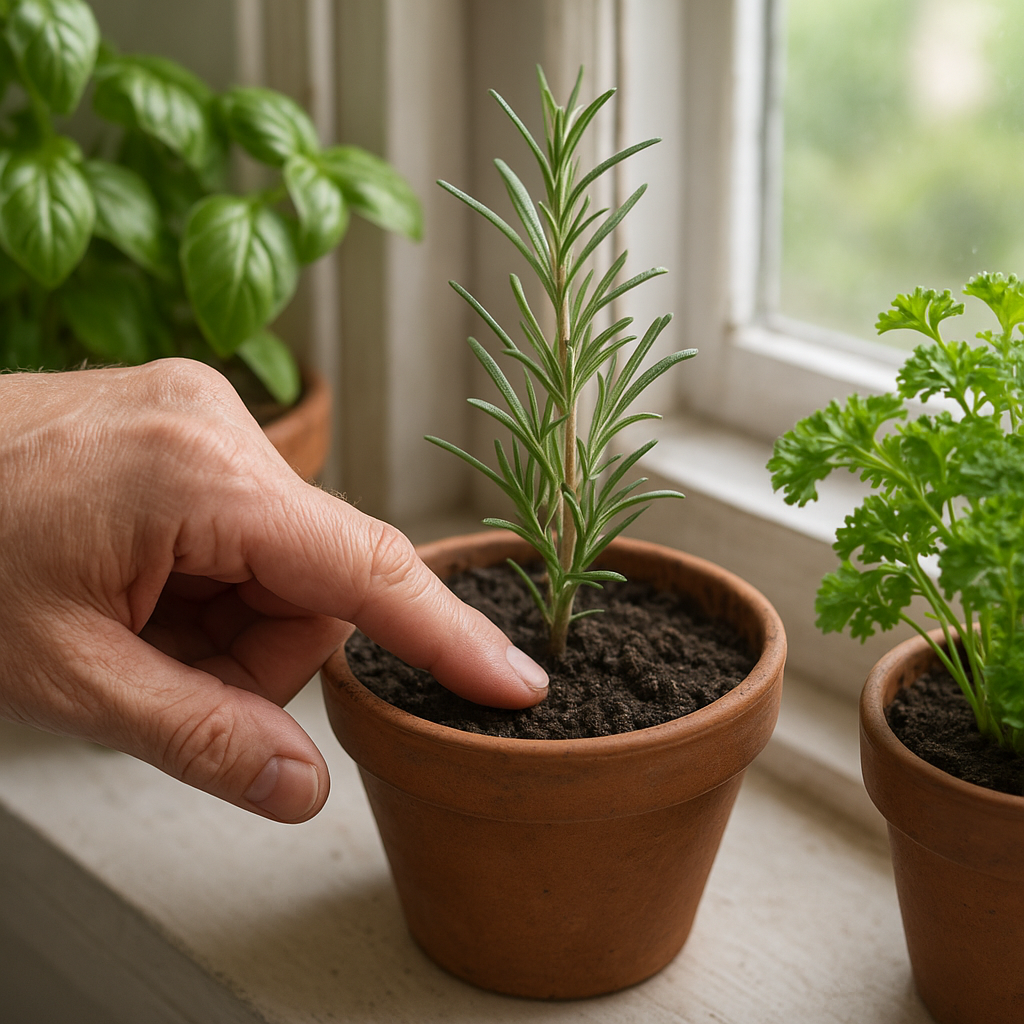
- Check the top inch of mix with your finger.
- If it feels dry, water thoroughly until excess drains out.
- Let the pot drain fully and empty any standing water from the saucer or outer pot.
- Check again later instead of topping off on autopilot.
This is the same logic that helps outdoor containers too. If you want a wider troubleshooting framework, How Often Should You Water Container Plants in Hot Weather? explains why blind schedules usually fail, even though indoor timing is slower.
How to harvest so herbs stay compact and productive
Indoor herbs stay useful longer when you harvest in a way that encourages fresh branching instead of shaving random leaves from the surface.
- Basil: pinch just above a leaf pair so the stem branches.
- Parsley: take outer stems from the base, not the center.
- Chives: snip leaves low, but leave enough blade length for regrowth.
- Mint: trim stem tips to keep the plant fuller and less woody.
The general rule is simple: make deliberate cuts that shape the plant, not random damage that leaves it thin and awkward. The same principle shows up in How to Prune Plants Without Cutting the Wrong Thing.
Common windowsill herb problems and the fastest fixes
Leggy stems and wide gaps between leaves
This is usually a light problem. Move the herb to a brighter window, rotate the pot regularly, and trim growth back to healthy nodes if the plant is still worth saving.
Yellow leaves and slow growth
Usually caused by soggy soil, weak light, exhausted potting mix, or roots packed too tightly into a tiny container. Check drainage before adding more water.
Fungus gnats hovering around the pots
Gnats usually mean the soil is staying too wet too often. Let the top layer dry appropriately between waterings, remove dead plant debris, and isolate the worst pot if one container is clearly the source. If the problem is already established, use the cleanup steps in How to Get Rid of Aphids, Fungus Gnats, and Mealybugs.
Mold on the soil surface
Surface mold usually points to stale air, overwatering, or soil that stays damp too long. Improve airflow, scrape off the worst of the mold, and fix the watering pattern instead of just treating the symptom.
One herb is thriving and another keeps collapsing
That is another reason separate pots work better. Indoor herbs are not interchangeable. What keeps mint happy can keep rosemary too wet, and what suits parsley may not give basil enough energy to stay dense.
When a grow light makes sense
If your best window still does not give enough direct light, a simple grow light is often a better fix than repeatedly replacing weak herbs. It is especially helpful in darker apartments, deep kitchens, or winter conditions when even a good window loses strength.
You do not need elaborate equipment to justify one. If the alternative is a steady cycle of stretched basil and stalled parsley, supplemental light is the more practical move.
Quick FAQ
Can herbs really grow well on a kitchen windowsill?
Yes, if the window is bright enough and the pots drain properly. The limiting factor is usually light, not the room itself.
What is the easiest herb to grow indoors for beginners?
Chives and mint are often easier than basil in average indoor conditions. Parsley is also solid if you are patient and use a deep enough pot.
Why do grocery store herb pots fail so fast indoors?
They are often crowded, rootbound, and sold in temporary containers that dry out or stay wet too unpredictably. Splitting or repotting them early usually helps.
Should you mist indoor herbs?
Usually no. Correct watering at the roots matters more, and casual misting does not fix weak light or overwatering problems.
The short version
Use the brightest workable window, keep each herb in its own draining pot, choose herbs that match the light you actually have, and water only when the mix needs it. That is what turns a windowsill herb garden from a cluttered row of declining supermarket pots into something you can keep cutting from for real meals.