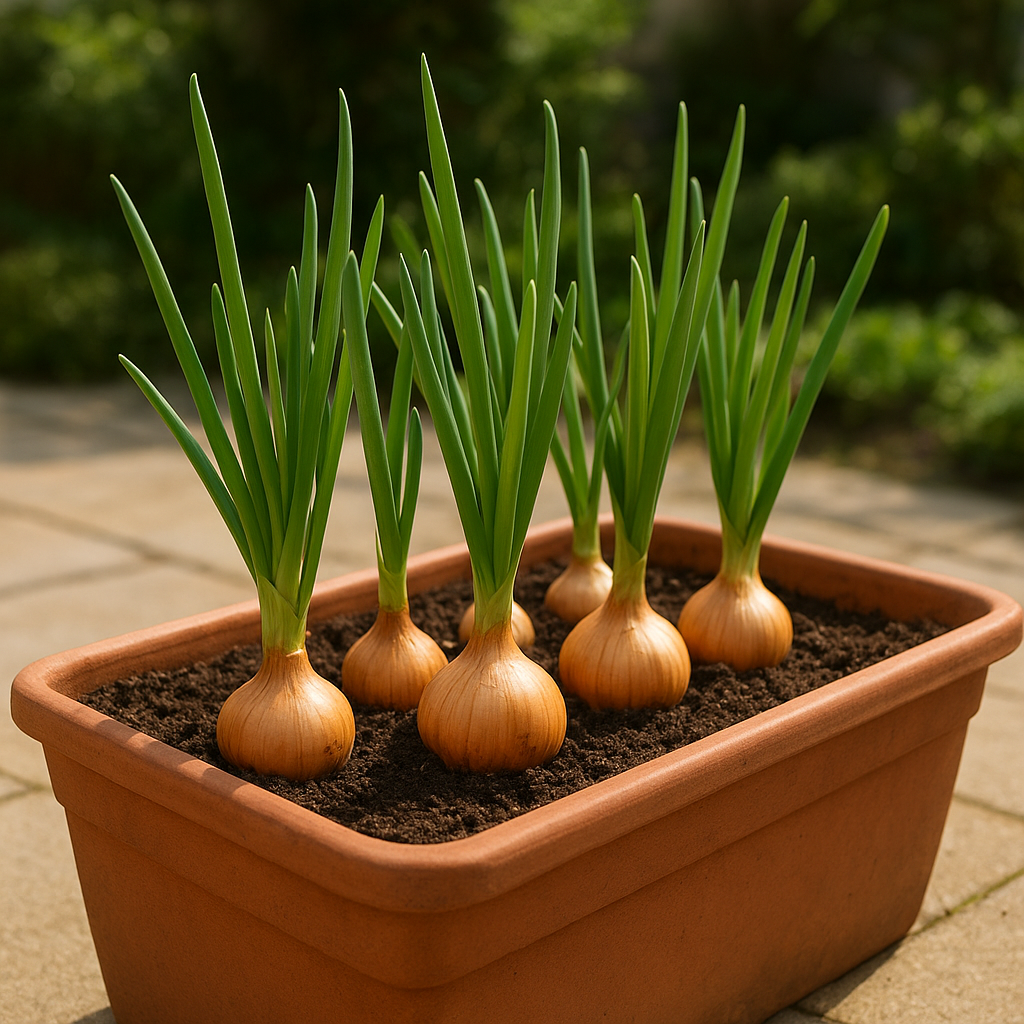
A Small-Space Onion Setup That Produces Better Bulbs
Onions can do very well in containers, but they only stay easy when the basics are right. The usual problems are predictable: the wrong onion type for your region, a pot that is too shallow, crowded spacing, soggy soil, or a plant that makes a lot of leaves without sizing up into a useful bulb.
If you want bulb onions rather than just green tops, the goal is steady growth from the start. Give them enough sun, enough root room, and enough consistency that they never have to stop and recover.
Choose the right kind of onion first
Many disappointing onion harvests have nothing to do with watering or fertilizer. They start with choosing the wrong day-length type. Bulb onions respond to daylight hours, so the best variety depends on where you live.
- Long-day onions: best for northern areas with long summer days
- Short-day onions: best for southern areas with milder winters and shorter day triggers
- Intermediate or day-neutral onions: useful in the middle range and often the easiest all-around option
If the variety is mismatched to your region, you can get healthy-looking tops and still end up with undersized bulbs. Check the label before planting, especially if you bought sets from a general store display.
Use sets for the easiest container start
You can grow onions in pots from seed, seedlings, or sets, but sets are usually the simplest route for a patio or balcony grow. They are quick to plant, less fussy in small spaces, and easier to manage than a tray of tiny onion seedlings.
- Best for simplicity: onion sets
- Best for variety choice: seeds or seedlings
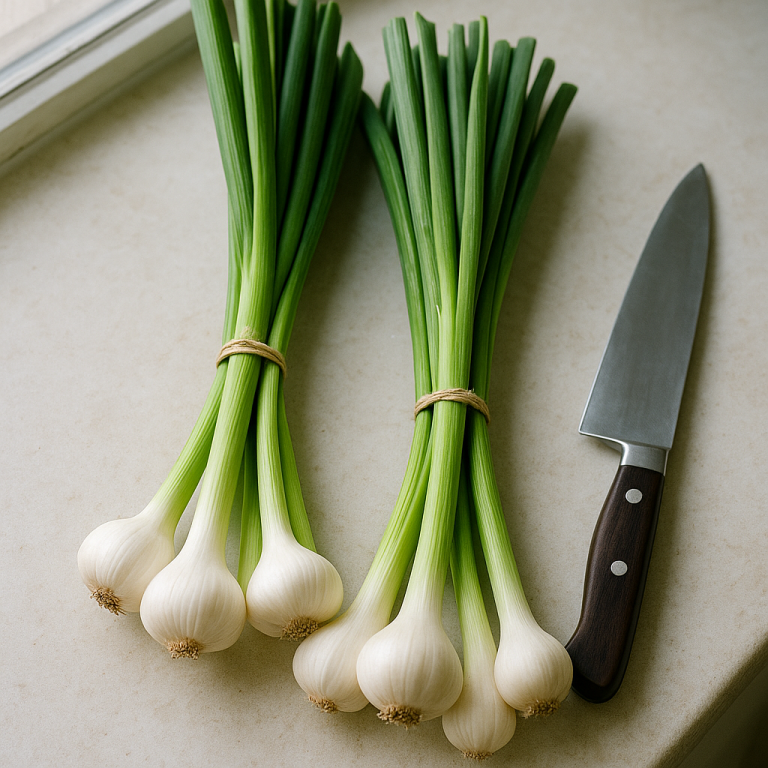
- Best if you want green tops fast: bunching onions or regrown scallions instead of bulb onions
If you want repeat cuts of green tops more than storage bulbs, this guide on regrowing green onions in water and soil is a better fit for that job.
Pick a container with real depth and drainage
Bulb onions do not need a giant barrel, but they do need enough depth and enough drainage that the roots can stay active without sitting in wet mix. A shallow decorative bowl is usually where rot and stalled growth begin.
- Good depth: about 10 to 12 inches
- Better width than extra depth: onions need spacing more than extreme depth
- Required: drainage holes that actually clear water
- Easiest materials: plastic or glazed pots for steadier moisture, fabric pots if you can water more often
A wider planter often works better than a narrow deep pot because it lets you space onions properly without crowding.
Give each onion more space than you think
Crowding is one of the biggest reasons container onions stay small. If you pack the pot for a lush look, the tops may look fine for a while, but the bulbs compete for room and never size up well.
- For full bulb onions: space plants about 4 inches apart
- For slightly smaller onions: 3 inches apart can still work
- For green onions only: you can plant more closely because bulbing is not the goal
If you want storage onions, resist the urge to overfill the container.
Use light potting mix, not heavy garden soil
Onions like loose, well-drained growing media. Dense soil in a pot stays wet too long, compacts easily, and makes it harder for bulbs to expand. Fill the container with fresh potting mix, then blend in a little compost if you want extra nutrient support.
Aim for full sun whenever possible. Bulb onions are not good low-light patio plants. If the spot only gets a half day of weak light, expect thinner tops and smaller bulbs.
How to plant onion sets in a pot
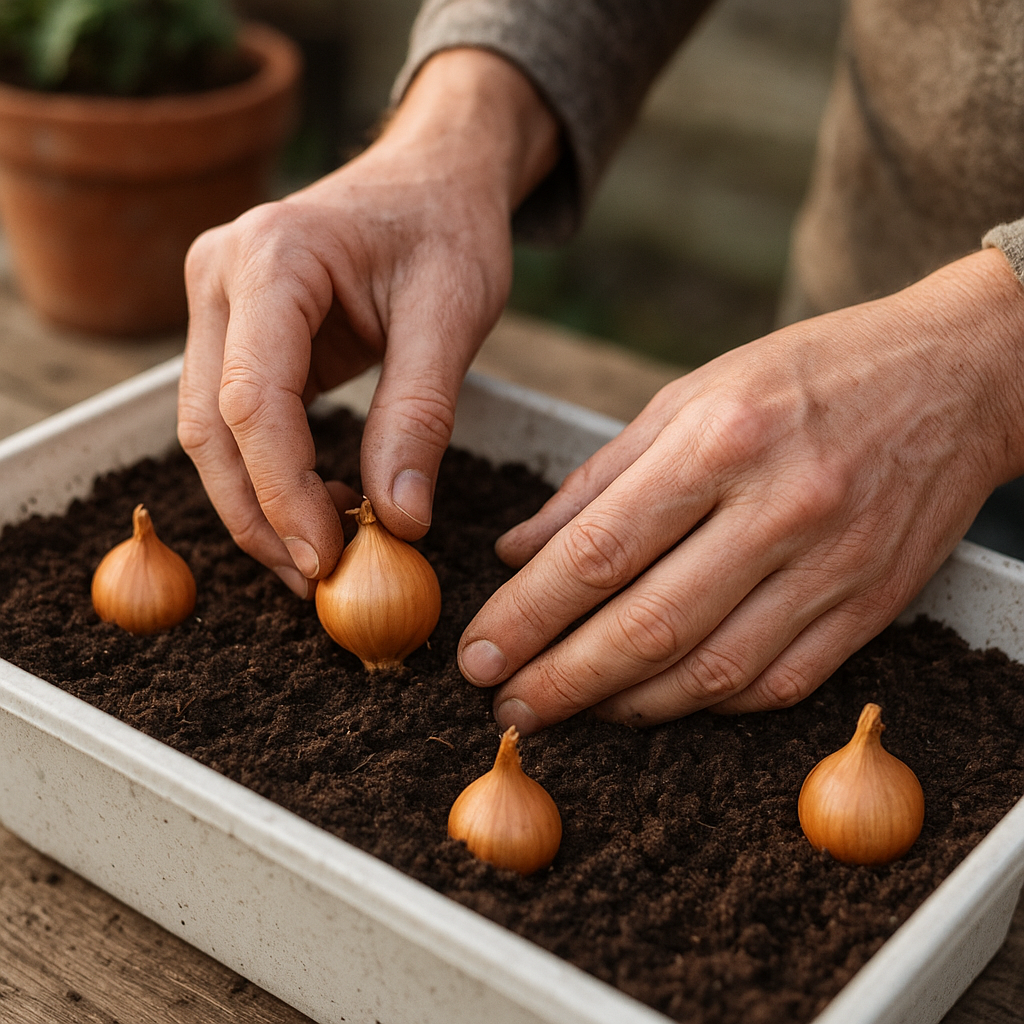
- Fill the container and water the mix lightly before planting so it is evenly moist, not muddy.
- Push each set into the mix with the pointed end up.
- Set the bulb so the tip is just at or slightly above the soil surface.
- Space the sets according to the bulb size you want.
- Water deeply once after planting so the roots settle in.
Do not bury onion sets too deeply. The root plate should be anchored, but the neck and top of the set should not be trapped under a thick layer of wet soil.
If you are planting onion seedlings instead of sets, it helps to toughen them up before they live outside full time. This guide on hardening off seedlings will help you avoid an early setback.
Water steadily, but do not keep the pot swampy
Onions need consistent moisture while they size up, but they hate standing in saturated mix. Letting the pot swing between bone dry and soaked slows growth and can split outer layers or invite rot.
- Water thoroughly when the top inch of mix starts to dry
- Reduce shallow surface splashes that leave deeper roots dry
- Use mulch if the container bakes in sun and wind
- Back off if the pot is staying heavy and wet for too long
When temperatures climb, watering speed changes fast in containers. This guide on watering container plants in hot weather gives a better way to judge what the pot actually needs.
Feed enough to support leaf growth early on
Bulb size depends on healthy leaves first. Each strong green leaf helps build the final bulb, so onions benefit from steady nutrition early in the season. A balanced fertilizer or a slightly nitrogen-forward feed during early growth is usually enough in a container.
Once the bulbs begin sizing up, avoid dumping on heavy fertilizer in an attempt to force a last-minute miracle. By then, consistency matters more than rescue feeding.
Common problems and the fastest fixes
Lots of green tops but tiny bulbs
This usually points to one of four things: the wrong day-length type, crowded spacing, not enough sun, or a late start that shortened the growing window.
Soft bottoms or rotting bulbs
Usually caused by poor drainage or planting too deeply. Make sure water can escape fast and do not keep the neck buried in constantly wet mix.
Thick necks and stalled sizing
This can happen when onions get interrupted by stress, especially inconsistent moisture or slow growth early on. Resume steady care, but accept that some plants may never form ideal storage bulbs.
Flower stalks forming
That is bolting. It is more common when sets were exposed to temperature swings or were oversized to begin with. Once an onion bolts, bulb quality usually declines, so use it sooner rather than treating it like a long-storage onion.
Silvery streaks or stressed leaf tips
Check for pest activity and correct watering stress first. If you are seeing insects gather on tender growth, this guide on getting rid of common plant pests covers a practical cleanup approach.
When to harvest onions from containers
Bulb onions are usually ready when the tops begin to yellow and fall over on their own. At that stage, stop heavy watering, let the bulbs finish drying a bit in the pot, and then lift them gently.
Brush off loose soil and cure the onions in a dry, airy place out of direct rain or hard sun until the outer skin feels papery and the necks dry down. Only the soundest bulbs should go into longer storage.
Quick FAQ
Can onions really form full bulbs in pots?
Yes. They need the right day-length type, enough sun, enough spacing, and a container that drains well.
How many onions fit in one container?
That depends on width, but a wide planter is usually better than trying to stack too many onions into a cramped pot. For full bulbs, around 4 inches of spacing is a good target.
Can I grow onions from kitchen scraps in the same way?
You can regrow some green top growth from scraps, but it is not the most reliable path to large storage bulbs.
Do onions need full sun in containers?
Yes. The more direct sun they get, the better the odds of strong leaves and useful bulb sizing.
The short version
Choose the right onion type for your region, use a wide container with good drainage, space the plants properly, and keep growth steady from planting through bulb formation. Most container onion problems come from a mismatch in variety, spacing, or moisture rather than from anything complicated.