A Simple Container Chive Setup for Thick, Useful Growth All Season
Chives look easy because they start as tidy little green clumps, but a pot can go sideways faster than people expect. One container gets thin, floppy leaves that never seem worth cutting. Another turns into a dense root mass that dries out too fast and rebounds slowly after harvest. Sometimes the flowers are pretty, but the blades get tougher and the plant stops feeling productive.
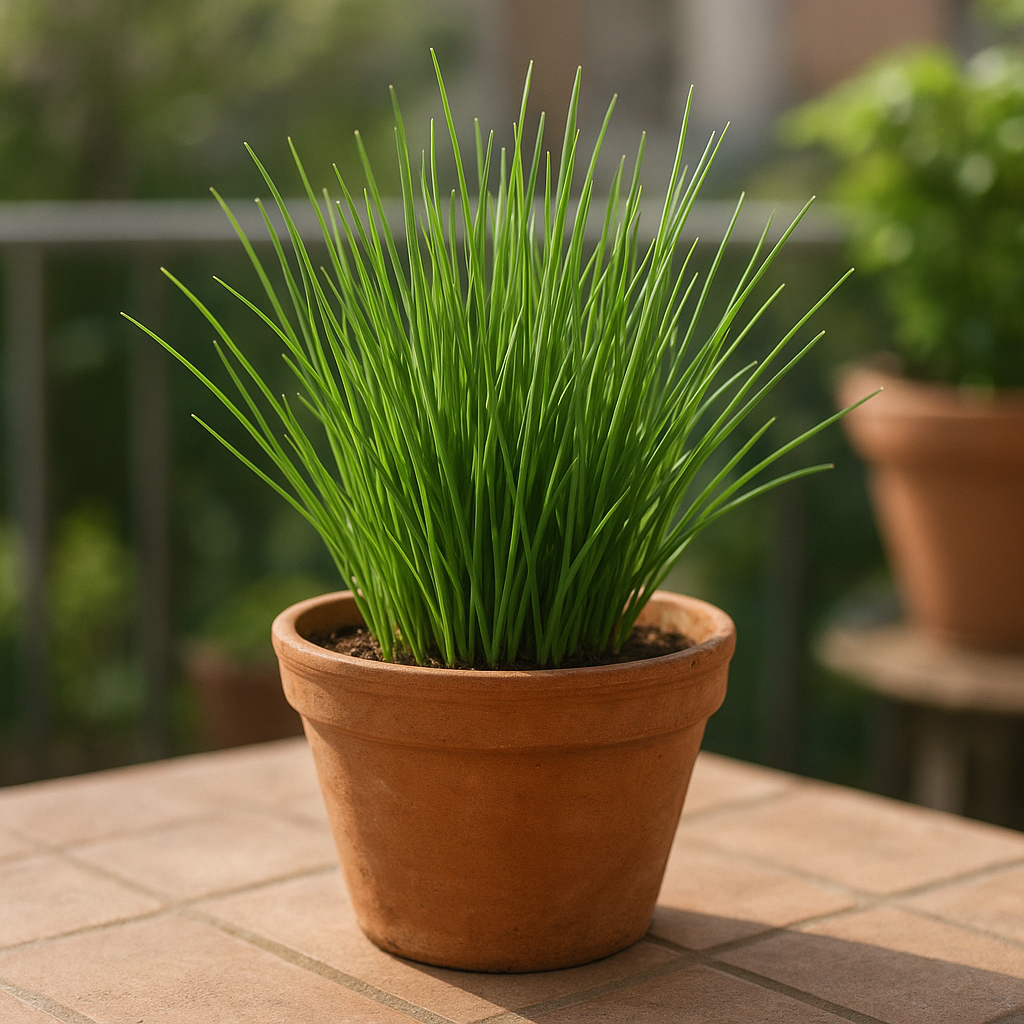
The good news is that chives usually need less fixing than fussier herbs. Give them a pot with drainage, enough sun, steady moisture, and occasional division when the clump gets crowded. Once that rhythm is in place, they become one of the easiest herbs to keep near the kitchen.
The short answer
- Use a pot with drainage that is at least 8 inches deep and wide enough for the clump to expand.
- Fill it with loose container mix instead of heavy garden soil.
- Give chives full sun or very bright partial sun.
- Keep the soil lightly and evenly moist rather than letting it stay soggy or go bone-dry.
- Harvest by snipping leaves a couple of inches above the base.
- Divide crowded clumps when growth turns thin, tight, or slower to recover.
That covers most of what chives need to stay thick, upright, and easy to use.
Why chives often get thin or tired in containers
Chives are hardy, but container conditions magnify neglect. A clump that would coast along in a garden bed can get rootbound in a pot, dry out on a warm patio, or lose vigor after repeated close shaving. The plant usually survives, but it stops being a satisfying kitchen herb.
- Crowded roots: older clumps get dense and compete with themselves.
- Too little light: leaves stretch, flop, and stay thin.
- Uneven watering: repeated drought stress makes regrowth weaker.
- Rough harvesting: cutting too low or taking everything at once slows recovery.
- Exhausted potting mix: old, compacted mix holds less air and drains unpredictably.
If you already grow herbs like parsley or rosemary, chives are usually less dramatic. They just need an occasional reset before the clump gets too crowded to stay lush.
Start with a pot that gives the clump room to spread
Chives do not need a huge container, but they do better when the roots have some elbow room. A cramped nursery pot dries quickly and becomes a dense knot of roots sooner than most people realize.
- Good minimum: 8 inches deep with drainage holes
- Better: 10 to 12 inches wide so the clump can thicken without instantly crowding itself
- Best material for hot spots: a pot that does not overheat as quickly as thin dark plastic
- Avoid: decorative containers with no drainage or shallow bowls that dry out fast
If the roots are already circling hard and water runs straight through, move the plant up or split it. The same basic approach in How to Repot a Plant Without Shock or Root Damage works well for herbs that have outgrown their containers.
Use loose mix and water before the pot swings to extremes
Chives like steady moisture, but they are not swamp plants. In containers, the goal is simple: do not let the roots sit in stale wet mix, and do not let the whole pot turn dusty between waterings.
- Use fresh potting mix rather than digging up garden soil.
- Water deeply until extra moisture drains from the bottom.
- Check the top inch of mix instead of watering by the calendar.
- Water again when that top layer starts to dry, especially once the weather warms up.
When patios heat up, smaller herb pots can go from fine to stressed in a day. If that starts happening, use the same logic in How Often Should You Water Container Plants in Hot Weather? before assuming the answer is just more water all the time.
Seedlings are faster, but division is the easiest long-term move
You can grow chives from seed, but most people get better results faster from a starter plant or a divided clump. Once you already have one healthy pot, dividing it is the easiest way to keep the herb going without buying new plants every year.
- From seed: inexpensive, but slower to turn into a full harvestable clump.
- From a seedling: the fastest route to a usable pot.
- By division: the easiest way to refresh an old plant and make more chive pots.
If you start plants indoors and move them out later, the gradual transition in How to Harden Off Seedlings Without Stunting or Sunburn helps them adjust without a rough first week outside.
Give chives strong light so the leaves stay thicker and more upright
Chives tolerate some partial shade, but thin, floppy growth usually points to not enough light. A brighter spot makes a big difference in blade thickness, color, and regrowth after cutting.
- Best setup: full sun in mild conditions
- Hotter climates: strong morning sun with some afternoon relief can still work well
- Warning signs of low light: long floppy leaves, pale color, and weak rebound after harvest
Because chives are compact, people sometimes tuck them into the shadiest corner of a mixed planter. That often keeps the pot alive but not especially productive.
Harvest without scalping the plant
The best way to keep chives useful is to cut what you need while leaving enough blade behind for quick recovery. Unlike herbs that want outer stems removed one by one, chives are usually harvested like a soft haircut rather than a full buzz cut.
- Gather a small bunch of leaves in one hand.
- Snip them about 2 inches above the base.
- Take only part of the clump if you do not need much.
- Let the plant regrow before cutting it hard again.
If you use green onions often too, regrowing green onions in water and soil is another easy way to keep fresh allium flavor close to the kitchen.
Divide crowded clumps before they turn into a dense, thirsty knot
This is the step many chive growers skip. A clump can live in the same pot for quite a while, but once the center gets dense and growth comes back thinner after cutting, dividing the plant helps more than trying to fertilize your way out of the problem.
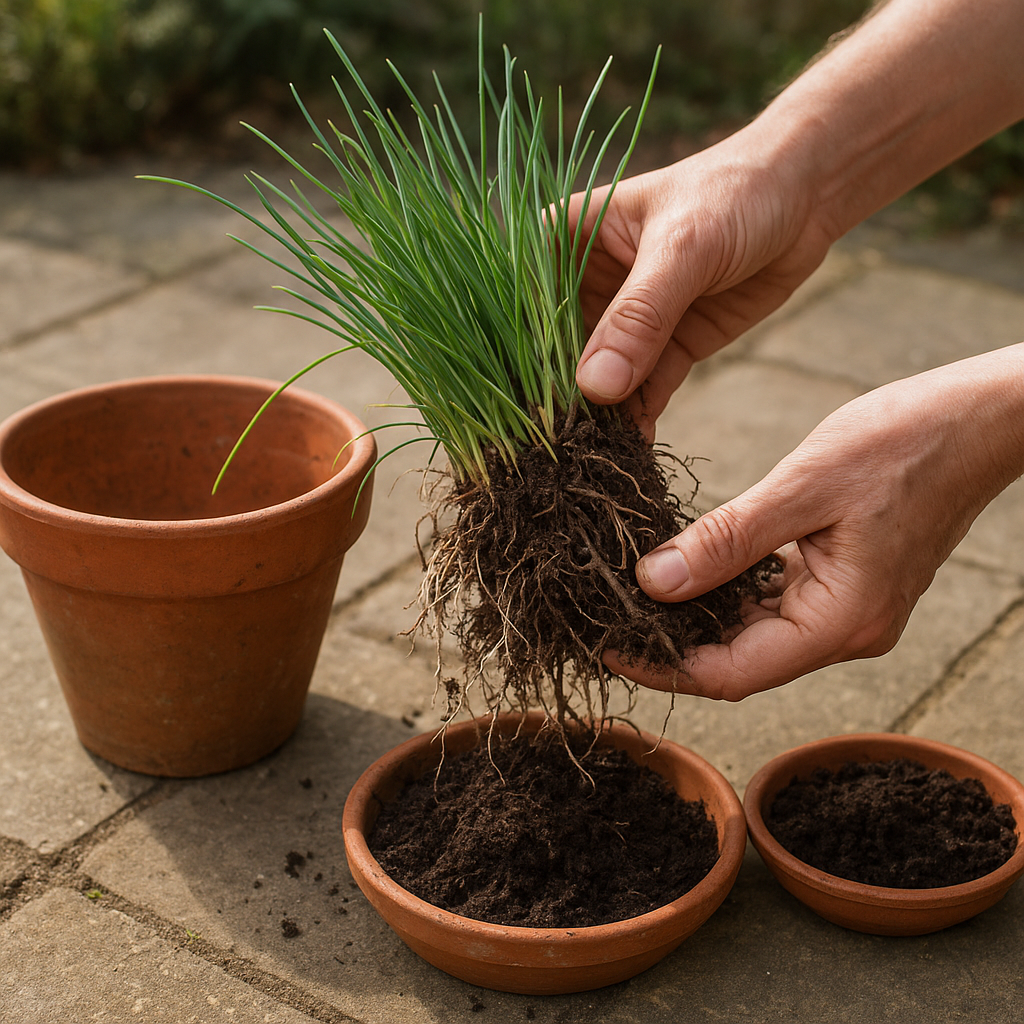
- Slide the clump out of the pot.
- Pull or cut it into smaller sections with healthy roots attached.
- Replant one section into fresh mix, or pot up several divisions.
- Water well and keep the plant from drying out while it settles back in.
Think of division as routine maintenance, not rescue surgery. It keeps older chives from turning into a crowded pot that needs constant attention.
Flowers are edible, but they can shift the plant out of leaf mode
Chive flowers are useful and attractive, but once the plant spends energy on flowering, the leaves can get a little coarser. If your goal is kitchen harvests, clip some buds or flower stems and keep the plant focused on leaf production.
- Leave some flowers if you want the look or want to use them as garnish.
- Remove fading flower heads if you want the pot to stay tidier and put more energy into fresh blades.
- Trim back spent stems so the clump does not start looking ragged.
Common chive problems in pots and the fastest fixes
Leaves stay thin and floppy
The plant usually needs more light, a less crowded root zone, or both. Move it somewhere brighter and divide it if the clump is packed tight.
The center looks dense and tired
That is a good sign the plant wants dividing. Fresh mix and a reset into smaller sections often solve the problem quickly.
The pot dries out too fast
The container may be too small, too rootbound, or sitting in harsh reflected heat. Move up a size, divide the clump, or change the pot placement.
Leaves yellow or collapse at the base
Check drainage first. Constantly soggy roots and compacted old mix can make chives rot down from the base.
Aphids show up on tender new growth
Chives are not usually pest magnets, but tender growth can still attract aphids. If you see clusters forming, use the steps in How to Get Rid of Aphids, Fungus Gnats, and Mealybugs before the problem spreads.
Quick FAQ
Do chives grow well in pots?
Yes. Chives are one of the easier herbs to grow in containers as long as the pot drains well and the clump is divided once it gets crowded.
How often should you water chives in pots?
Water when the top inch of mix starts to dry. The exact rhythm depends on heat, wind, pot size, and how rootbound the clump has become.
Should you let chives flower?
You can. The flowers are edible, but removing some buds or spent stems usually keeps the plant more focused on tender leaf growth.
When should you divide potted chives?
Divide them when the clump gets dense, dries out unusually fast, or grows back thinner after cutting. Spring is an especially easy time to do it.
The short version
Grow chives in a well-drained pot with strong light, steady moisture, and enough room for the clump to spread. Harvest by snipping above the base, and divide the plant before crowding turns a productive pot into a thin, thirsty one.