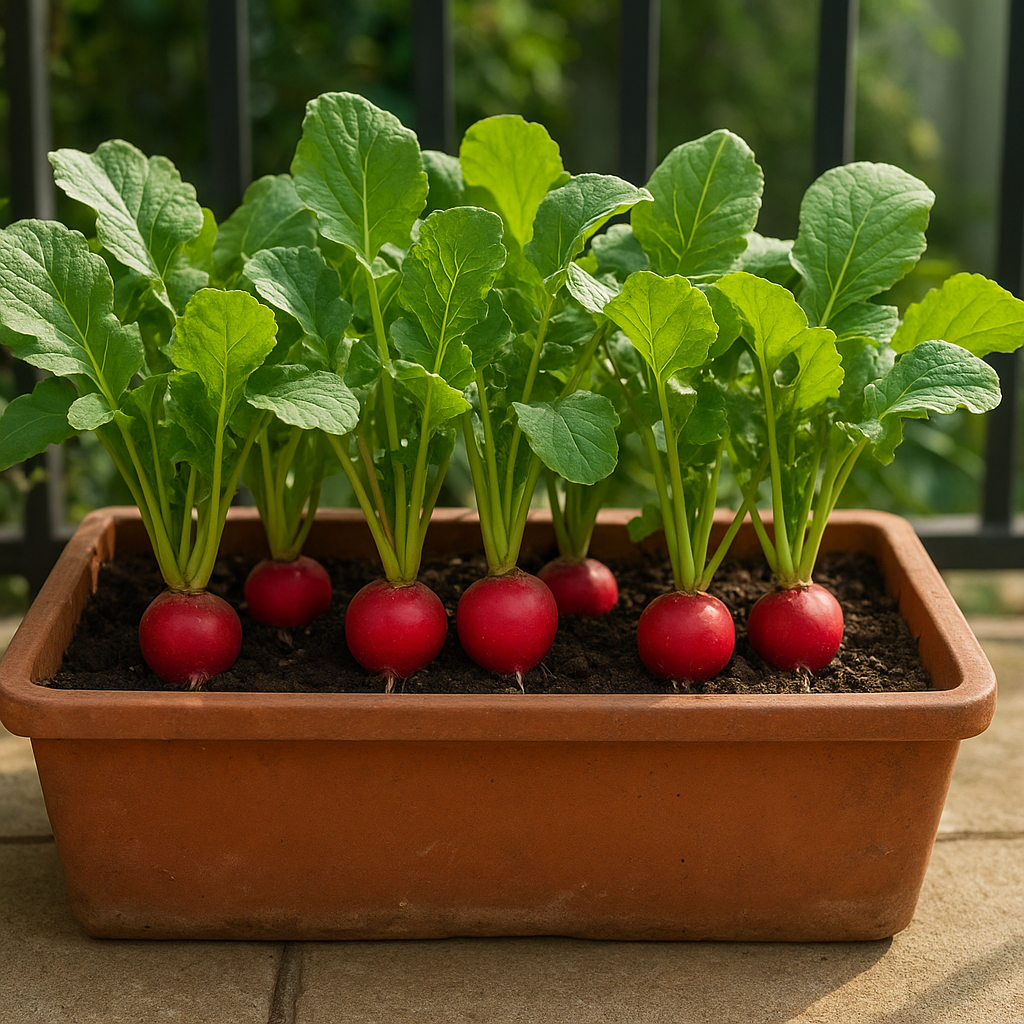
Radishes are one of the fastest crops you can grow in a container, but they only stay easy if the setup is right. When they fail, the pattern is usually the same: crowded seedlings, dry soil, too much heat, or roots left in the pot too long.
If you want crisp, peppery radishes instead of a pot full of leaves and disappointment, focus on shallow but loose soil, steady moisture, and quick harvesting. The good news is that you can get from seed to harvest in about a month with very little space.
Crisp, Fast Radishes for Balconies, Patios, and Porch Containers
Radishes are a strong container crop because they grow quickly, stay compact, and do not need a huge pot. They also fit well beside other cool-season crops. If you are building out a small edible container garden, they pair naturally with lettuce in pots, spinach in pots, and even a deeper follow-up crop like carrots in pots.
For the easiest results, grow small spring radish types rather than long daikon or storage radishes. The round and small oblong kinds mature faster and are much more forgiving in average patio containers.
Choose a Container That Matches the Crop
You do not need a giant container, but you do need enough depth for the root to swell cleanly. A pot that is 6 to 8 inches deep works for most round spring radishes. Wider containers are better than narrow ones because they let you sow a short row or a small block and harvest more from the same watering routine.
- Use a container with drainage holes.
- Fill it with loose potting mix rather than heavy garden soil.
- Avoid compacted mix with chunks, because misshapen roots start there.
- Pick a container that gets at least 6 hours of sun in cool weather.
If daytime heat is already climbing where you live, give the pot morning sun and lighter afternoon exposure. Radishes stay sweeter and crisper when they grow fast in cool conditions rather than struggling through sudden heat.
How to Plant Radish Seeds in Pots
Radishes do best when you sow them directly where they will grow. They are too fast and too sensitive to root disturbance to bother with transplanting.
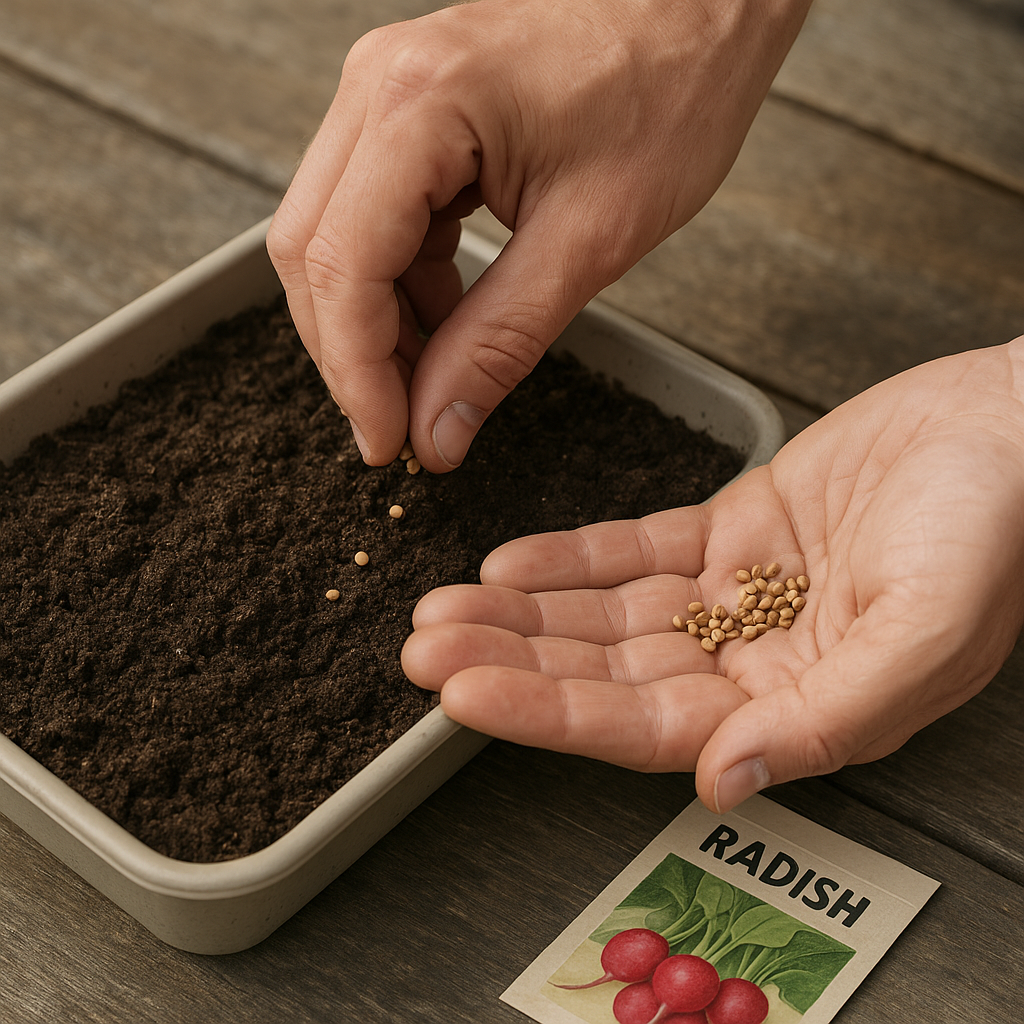
- Moisten the potting mix before sowing so the first watering does not wash seeds into a corner.
- Sow seeds about 1/2 inch deep.
- Space them about 1 inch apart if you want a dense baby harvest, or closer to 2 inches apart for fuller roots.
- Cover lightly and water gently.
- Label the pot if you plan to succession sow every week or two.
If you are starting a lot of containers indoors first, make sure you harden off seedlings properly before moving them outside. Radishes themselves are best direct sown, but nearby companion containers often are not.
Watering Is What Keeps the Roots Tender
The difference between crisp radishes and woody, spicy, cracked ones is often watering. Let the mix swing from soggy to bone dry and the roots respond badly.
Aim for evenly moist soil, not constantly soaked soil. In cool spring weather that may mean watering every couple of days. On warm, breezy patios it may mean daily checks. Push a finger into the mix; if the top inch is drying but the root zone still feels slightly damp, you are in good shape.
If your containers start drying out fast as the season turns, this guide on watering container plants in hot weather helps you adjust before crops turn tough.
Thin Early or You Will Get Leaves Instead of Bulbs
This is the step people skip, and it is the reason so many pots produce nothing but leafy tops. When seedlings are jammed together, they compete for light, water, and room. The tops grow, but the roots never size up properly.
As soon as seedlings have their first true leaves, thin them so each plant has enough elbow room. It feels wasteful, but crowding is far more wasteful. If you want more harvest from a single container, sow another short row a week later instead of forcing one crowded sowing to do everything.
When to Harvest for the Best Texture
Most spring radishes are ready in about 3 to 5 weeks. The exact timing depends on the variety and the weather, but the main rule is simple: do not wait for them to get huge.
Check the shoulder of the root where it meets the soil line. Once it looks well formed and close to the size listed on the seed packet, pull one and test it. Small to medium roots are usually crisper and milder than oversized ones.
Harvesting on time matters more than squeezing out maximum size. Radishes that sit through extra heat or extra dry spells go woody fast.
Common Problems and the Fast Fixes
Lots of leaves, barely any root
The usual causes are overcrowding, too much nitrogen, or too much shade. Thin seedlings, skip heavy feeding, and make sure the pot gets enough sun.
Roots are woody or too hot
They stayed in the pot too long or grew too slowly in heat and drought. Sow earlier, water more evenly, and harvest younger.
Roots are cracked
This usually comes from uneven moisture. A long dry stretch followed by a heavy watering pushes the root to split.
Tiny, misshapen roots
Compacted mix, stones, or crowding can all deform the crop. Use loose potting mix and give each plant enough room.
Plants bolt before making decent roots
Hot weather is the usual trigger. Radishes are a cool-season crop, so sow them early in spring or again when late-summer heat starts easing.
How to Keep Harvesting Instead of Getting One Big Glut
The easiest way to keep radishes coming is succession sowing. Plant a small section every 7 to 10 days instead of sowing the whole container at once. That gives you a steadier harvest and lowers the chance that every root matures during the same hot week.
Once radishes are done, you can replant the same container with another quick crop or roll into a warmer-season pot. That makes them useful not just as a snack crop, but as a way to keep a small-space garden producing continuously.
FAQ
Do radishes need full sun in pots?
They grow best with plenty of light, but in warmer spring weather they often appreciate morning sun and some protection from the hottest late-afternoon exposure.
Can you grow radishes indoors on a windowsill?
You can, but the results are usually better outdoors where light is stronger and temperatures stay cooler.
Should you fertilize radishes in containers?
Usually not much. Rich, nitrogen-heavy feeding often pushes leaf growth at the expense of the root.
Can you regrow radishes after harvesting?
Not for another full root. Once harvested, re-sow fresh seed instead.
Radishes reward speed and attention more than effort. Give them loose mix, steady moisture, and room to swell, and they become one of the easiest edible crops to pull from a patio pot.