A Simple Patio Bean Setup for Fast Growth and Steady Harvests
Green beans are one of the easiest crops to grow in containers when the setup matches the plant. They sprout quickly, produce fast, and do not need the giant pots that tomatoes and zucchini demand. The trouble starts when the container is too small, the vines have nothing to climb, or the pods stay on the plant until they get tough and stringy.
If you get the variety, pot size, watering rhythm, and harvest timing right, container beans can give you weeks of crisp pods from a balcony, patio, or sunny corner of the yard. Most problems come from a few fixable mistakes, not bad luck.
Choose bush beans or pole beans based on your space
The first decision is not fertilizer or soil. It is whether you want a compact plant or a climbing one. Both grow well in pots, but they behave very differently once the weather warms up.
- Best for smaller patios and simpler setups: bush beans
- Best if you want a longer picking window: pole beans with a trellis
- Least forgiving setup: vigorous pole beans in a pot with weak support
Bush beans stay shorter and are usually easier for beginners. Pole beans climb, keep producing longer, and make better use of vertical space, but only if the support is strong from day one.
Use a container with enough width and dependable drainage
Beans do not need the deepest pot in the garden, but they do need enough root room to hold moisture between waterings. A tiny decorative container dries too fast and turns mild weather into constant stress.
- Good minimum for bush beans: about 8 to 10 inches deep and wide enough for several plants with spacing
- Better for pole beans: a larger pot or planter box with room for roots and support posts
- Must have: drainage holes that let excess water leave quickly
- Avoid: shallow pots, compacted soil, and containers that stay soggy after rain
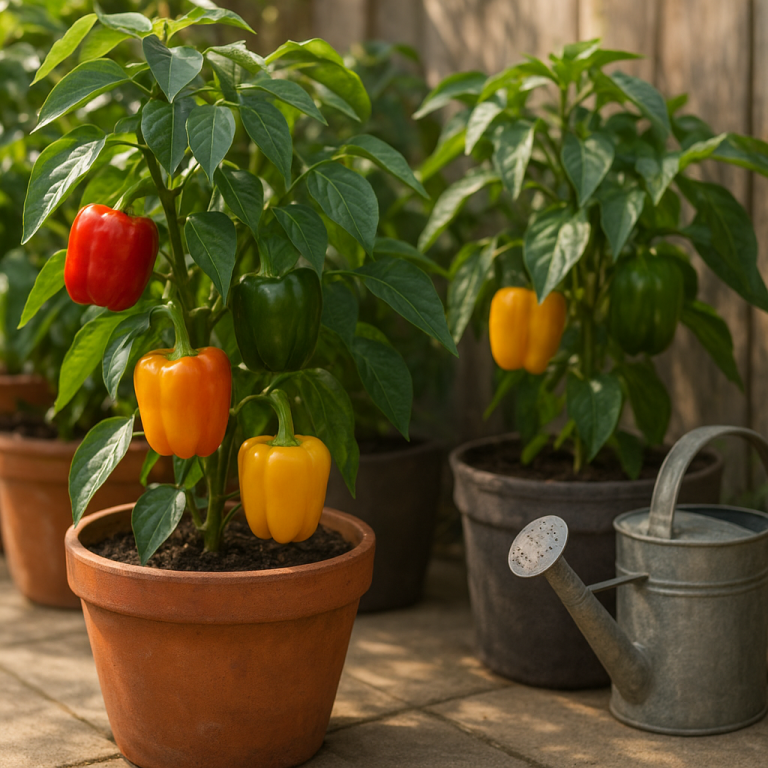
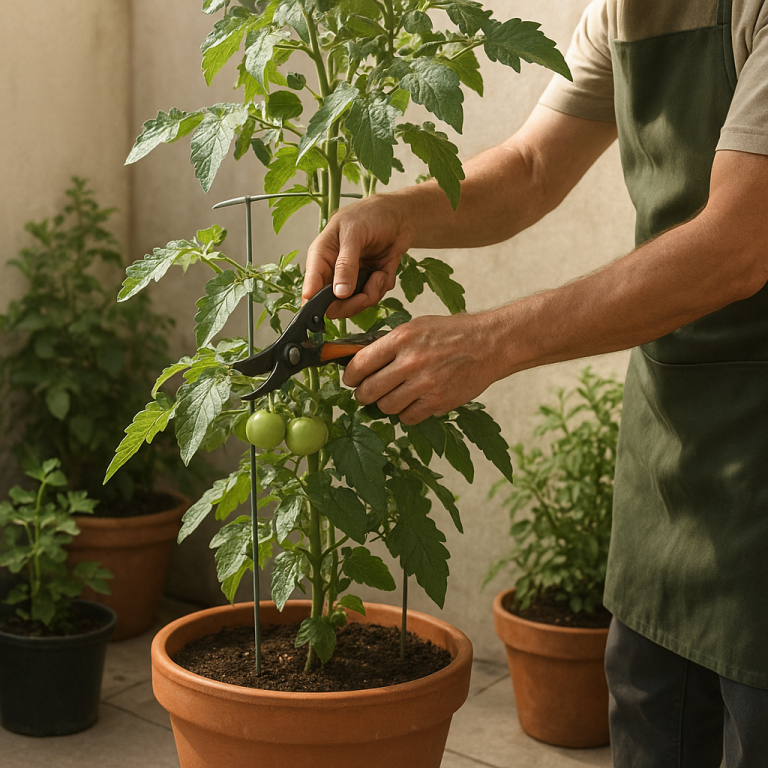
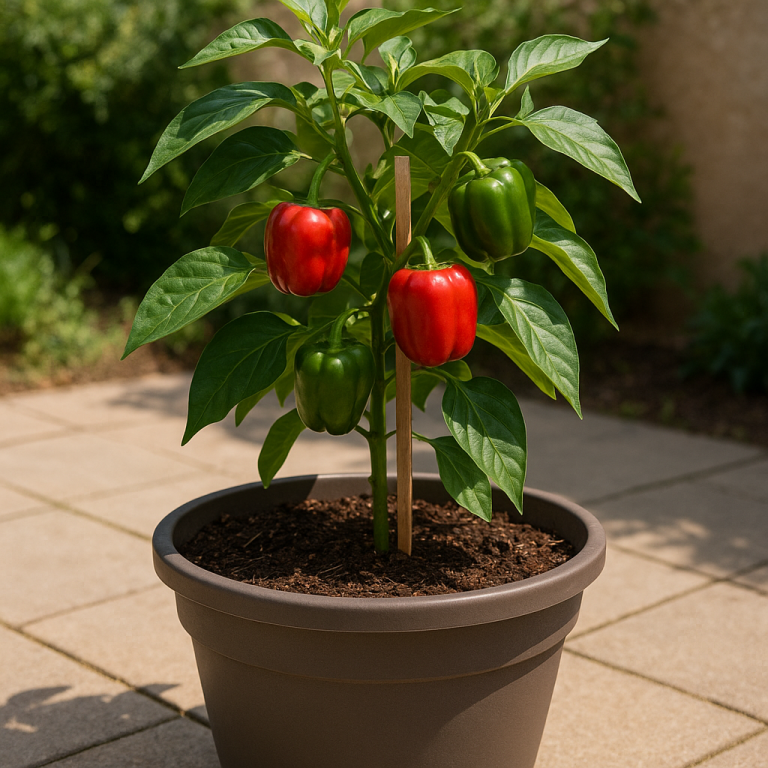
If you are already growing heavier patio crops like cherry tomatoes in pots or peppers in pots, beans can fit into the same container garden without needing the same pot volume.
Fill the pot with fresh mix and sow when the weather is warm
Green beans like warm soil and dislike cold starts. They also germinate fast enough that direct sowing is usually simpler than buying transplants. Fresh container mix works better than yard soil because it drains more evenly and leaves roots more oxygen.
- Use a quality potting mix meant for containers.
- Do not pack the mix down hard after filling the pot.
- Sow after frost danger has passed and nights are staying mild.
- Water the mix after sowing so the seed zone is evenly moist.
If you are starting any warm-season plants indoors before they move outside, this guide on hardening off seedlings helps prevent a rough transition.
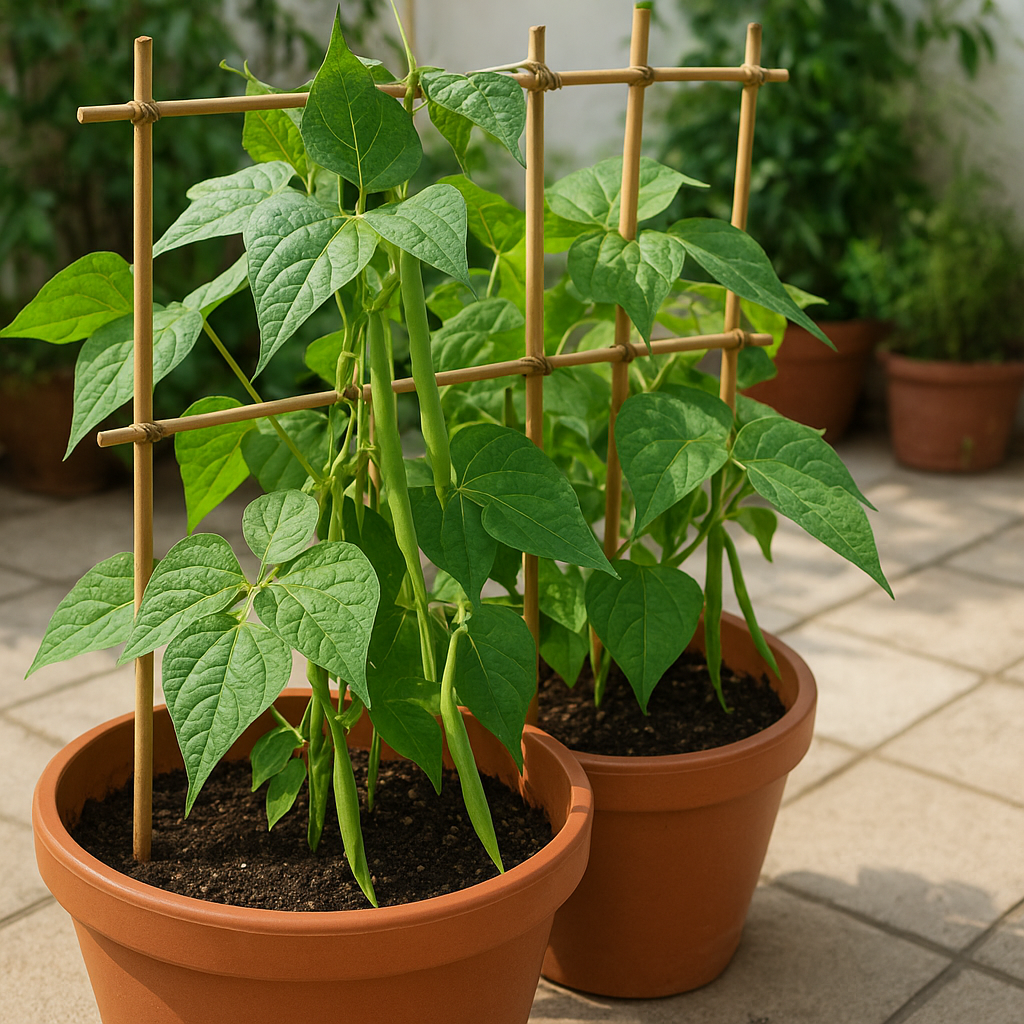
Give pole beans a trellis before the vines start wandering
Pole beans need something real to climb. Waiting until the vines are flopping over the rim of the pot makes the whole plant harder to train and easier to snap. Put the support in before or at planting time so the roots are not disturbed later.
- Good supports: bamboo teepees, netting, or a sturdy vertical trellis
- Best habit: guide young vines onto the support early
- Avoid: flimsy cages that bend once the plant is loaded with foliage and pods
This is the same basic logic that helps with cucumbers in pots: get vertical support in place early and keep the plant off the ground.
Keep watering steady once flowering starts
Beans are fairly forgiving while they are getting established, but once they start flowering and setting pods, big swings in moisture can reduce production and leave you with tough, uneven beans. The goal is not soggy soil. The goal is avoiding the hard dry-out that makes the plant stall.
- Water deeply when the top inch starts to dry.
- Check containers more often in wind and sudden heat.
- Mulch the surface lightly if the pot is drying too fast.
- Do not leave the plant limp by late afternoon over and over.
When summer heat starts pushing containers hard, this guide on watering container plants in hot weather gives a better framework than following a rigid schedule.
Feed lightly and do not overdo nitrogen
Beans do not need the same feeding intensity as hungry fruiting plants. Too much fertilizer, especially high nitrogen, can push lots of leaf growth without giving you better picking. Fresh potting mix often carries the plant surprisingly well at the start.
If growth is pale and slow, a light balanced feed can help. If the plant is huge, dark green, and stingy with pods, back off the fertilizer instead of adding more.
Harvest young and often for the best texture
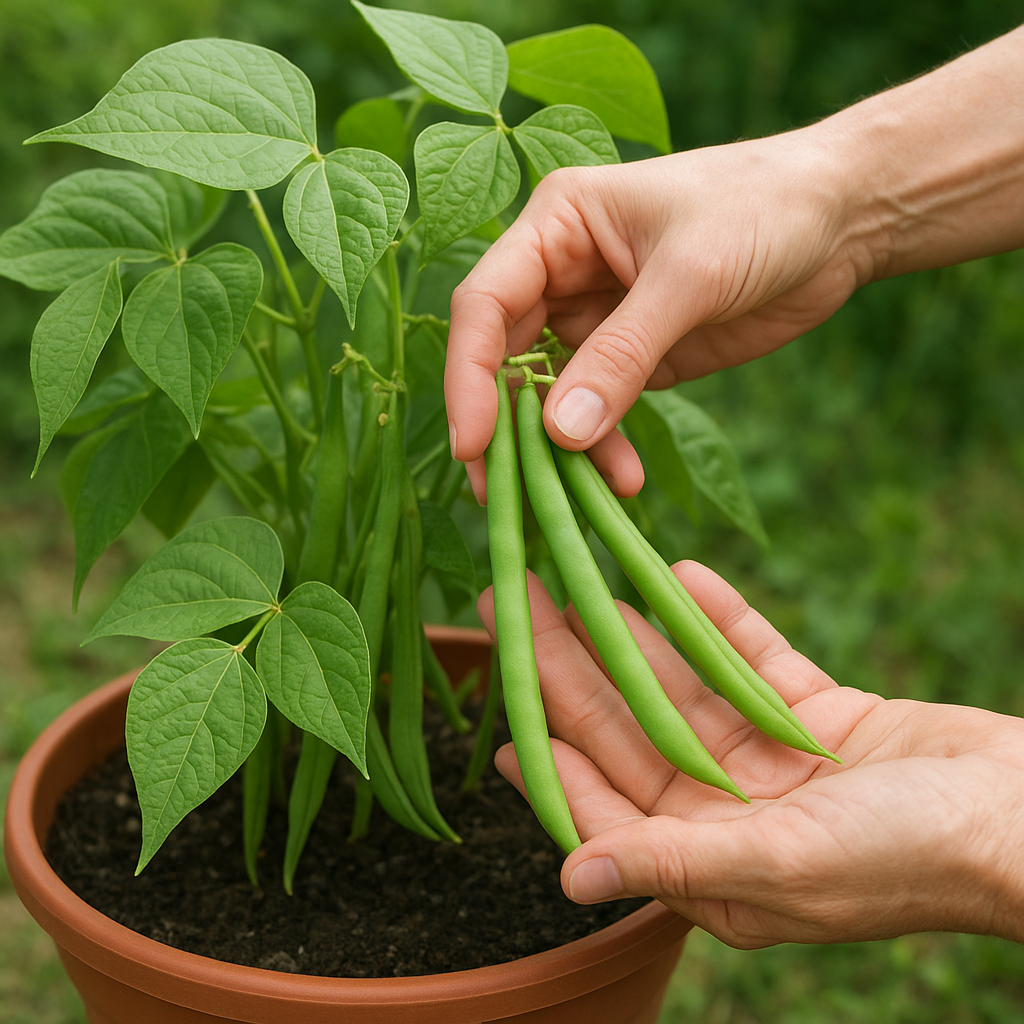
The fastest way to end up with stringy green beans is to wait too long. Pods should feel firm and look full, but they should still snap cleanly and stay tender. Regular picking also signals the plant to keep producing instead of slowing down.
- Pick every day or two once production starts.
- Use scissors or pinch carefully so you do not tear stems.
- Harvest before seeds swell hard inside the pod.
- Remove oversized pods even if you missed the ideal window.
Common green bean problems in pots and the fastest fixes
Flowers but no beans
This usually points to stress rather than a mystery disease. Sudden heat, dry soil, or a plant that was checked too hard early can interrupt pod set. Bring moisture back to a steadier rhythm and make sure the container is not staying too hot and dry between waterings.
Tough or stringy pods
Most often, the pods were left on the plant too long. Some older varieties are naturally stringier than others, but late harvest is the usual reason. Pick sooner and more often.
Leaves full of holes
Bean beetles and other chewing pests can rough up leaves quickly, especially on young plants. Check the tops and undersides of leaves often so a small problem does not become a major one. This guide on common plant pests covers the inspection habits that help you catch trouble early.
Yellow lower leaves
A few older leaves fading is normal. More widespread yellowing can mean overwatering, underwatering, or roots that are sitting too cold. Look at the whole plant before assuming it needs more fertilizer.
Plants stop growing after a cold stretch
Beans hate cold soil. If a cool spell hits right after planting, growth can pause. Warm weather often fixes the problem, but the lesson is to plant later next time rather than forcing an early start.
Quick FAQ
Can green beans really grow well in pots?
Yes. Bush beans are especially easy in containers, and pole beans can also do very well if they have a solid trellis.
How many bean plants can go in one pot?
That depends on the width of the container and whether you are growing bush or pole beans, but crowding too tightly usually reduces airflow and makes watering harder to manage. It is better to give each plant a little breathing room than to oversow the pot.
Do green beans in containers need full sun?
Usually yes. The more productive setups tend to be in strong sun, though extreme reflected heat can make small containers dry faster than expected.
Why are my beans flowering but not making pods?
Heat stress and inconsistent moisture are common causes. A plant that keeps drying hard between waterings will often drop flowers or slow pod set.
When should you pick green beans?
Pick when the pods are long enough to use, still smooth, and snap cleanly. Waiting for them to look huge usually means the texture is already getting tougher.
The short version
Choose a variety that fits your space, use a well-drained pot with fresh mix, keep moisture steady, support pole beans early, and harvest often before pods get tough. That combination solves most container bean problems before they start.