A Cool-Season Container Spinach Setup for Tender Leaves and Repeat Harvests
Spinach looks simple until a warm week makes it bolt, a shallow pot dries out too fast, or the leaves start showing pale blotches and ragged damage. The goal is not just sprouting a few leaves. The goal is getting a pot that stays productive long enough to give you multiple clean harvests while the weather is still on your side.
The good news is that spinach is a strong container crop when you treat it like the cool-season plant it is. Give it enough root room, steady moisture, and the right timing, and it can turn a balcony, porch, or patio planter into a steady source of usable greens.
If you are moving indoor seedlings outside instead of sowing directly, take the transition seriously. This guide on hardening off seedlings will help you avoid a rough first week.
Choose spinach varieties that match container growing
Most spinach can grow in pots, but some types hold up better in containers and changing spring weather than others. Smooth-leaf types are easy to wash. Savoy and semi-savoy types can be a little more textured and sturdy. Fast baby-leaf varieties are often the easiest choice if your main goal is repeat harvests instead of huge mature plants.
- Best for quick patio harvests: baby-leaf and semi-savoy varieties
- Best if you want fuller bunches: standard varieties with a little more spacing
- Least forgiving setup: sowing too late into real heat and expecting spinach to behave like summer greens
If you want a container that keeps feeding you instead of one oversized harvest, baby-leaf style cutting is usually the most practical approach.
Use a wide pot that stays evenly moist
Spinach does not need the giant root volume that tomatoes or cucumbers need, but it does noticeably better in a container that gives the roots some depth and does not swing from soaked to dusty in a day. Width matters because it lets you grow enough plants for a real harvest without crowding them into one stressed patch.
- Good minimum depth: about 6 to 8 inches for baby-leaf growing
- Better for fuller plants: 8 to 10 inches deep
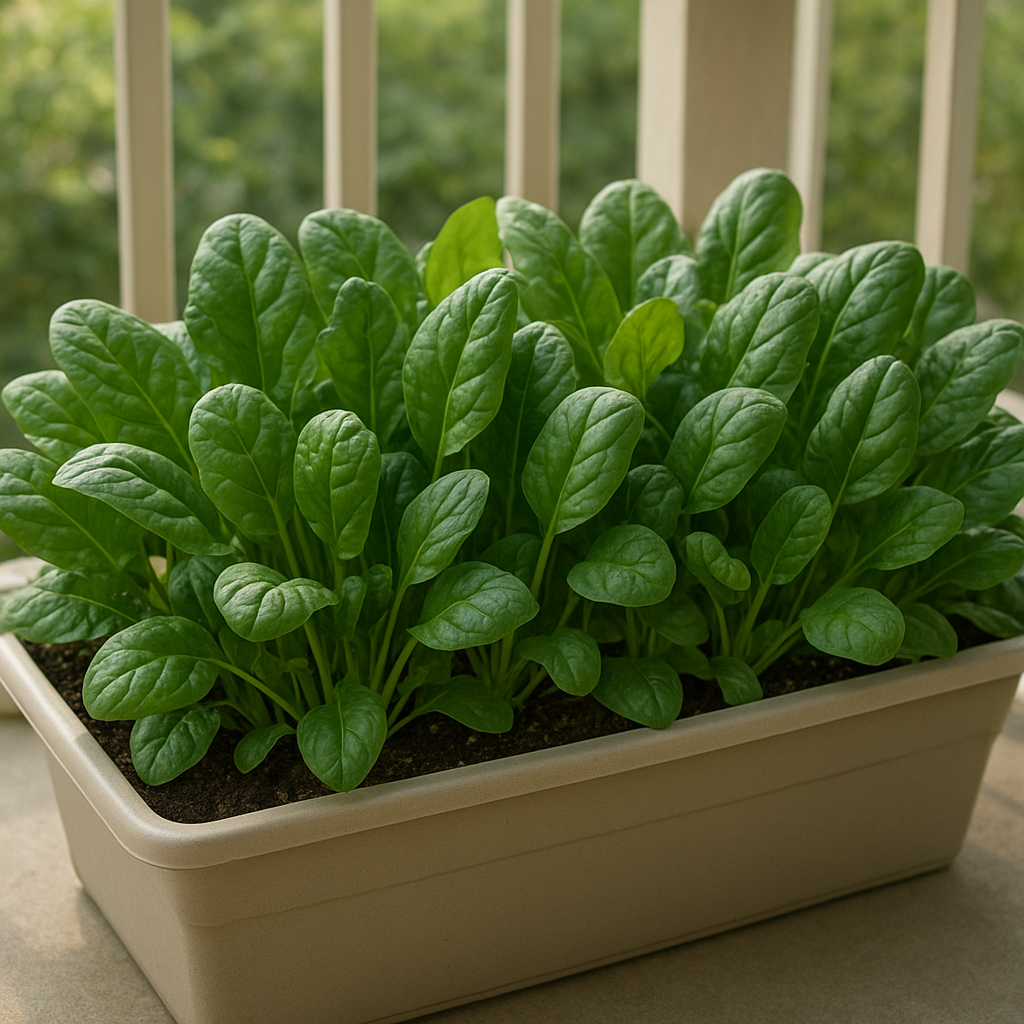
- Best shapes: window boxes, trough planters, and wide round pots with drainage holes
- Avoid: shallow decorative bowls with poor drainage
A slightly larger container buys you time when weather shifts suddenly. That matters because spinach quality drops fast once the roots keep drying out.
Plant early and keep sowing in small rounds
Spinach is a cool-weather crop. It grows best in the kind of conditions that make basil sulk. In many places, spring and fall are the main windows, and spring containers are strongest when you start early instead of waiting for the patio to feel summery.
- Best timing: early spring and again when late-summer heat starts fading
- Direct sowing: usually simple and reliable in cool weather
- Succession planting: sow a small new section every 1 to 2 weeks instead of one overloaded batch
That steady sowing rhythm helps because spinach matures quickly and also fades quickly once heat builds. Small rounds keep the harvest usable for longer.
Use loose potting mix and thin seedlings early
Fresh potting mix made for containers works much better than dense garden soil. Spinach likes even moisture, but it still needs air around the roots. Dense soil in a pot turns into a slow-draining, compacted mess much faster than people expect.
- Fill the container with quality potting mix.
- Moisten the mix before or right after sowing.
- Sow shallowly and keep the surface lightly damp while seeds start.
- Thin seedlings early so each plant has room instead of leaving a crowded tangle.
If you cannot bring yourself to thin, sow more carefully from the start. Crowding leads to weaker stems, dirtier leaves, slower airflow, and more trouble with pests and disease.
Give spinach sun, but not the kind that pushes it into panic mode
In cool spring weather, spinach handles full sun well. Once days start getting warmer, the same patio can push it into stress surprisingly fast. Morning sun with some relief from harsh late-afternoon heat is often the sweet spot for containers.
- Cool conditions: full sun is usually fine
- Warmer stretches: some afternoon shade can keep leaves tender longer
- Hot balconies and patios: watch for reflected heat from concrete, walls, and railings
If your warmest growing space is already getting intense, give that spot to heat lovers and keep spinach somewhere gentler. This guide on growing lettuce in pots uses the same cool-season logic and can help if you want a mixed greens setup.
Keep moisture even or leaves get tough fast
Spinach notices water stress quickly. If the pot dries too far, growth slows, leaves lose tenderness, and the plant is more likely to bolt once warm weather arrives. That does not mean keeping the mix soggy. It means watering before the root zone swings from comfortable to desperate.
- Water deeply when the top layer starts to dry.
- Check containers often during windy or suddenly warm weather.
- Use a light mulch if the surface is drying too fast.
- Do not rely on a fixed schedule when conditions are changing week to week.
When spring turns hotter and containers start drying out faster than expected, this guide on watering container plants in hot weather is the better framework than trying to guess from limp leaves alone.
Feed lightly and focus on speed, not giant leaves
Spinach is a relatively quick crop, so rich potting mix and a light feeding approach usually work better than aggressive fertilizer. If growth is pale and sluggish, a light balanced feed can help. If plants are already growing well, more fertilizer is rarely the missing answer.
The goal is steady leafy growth before the weather changes, not huge soft leaves that collapse the moment conditions get rough.
Harvest early and keep the center growing
Container spinach is usually best when you harvest young. Baby leaves stay tender, and cut-and-come-again harvesting often gives you more total use than waiting for every plant to get large.
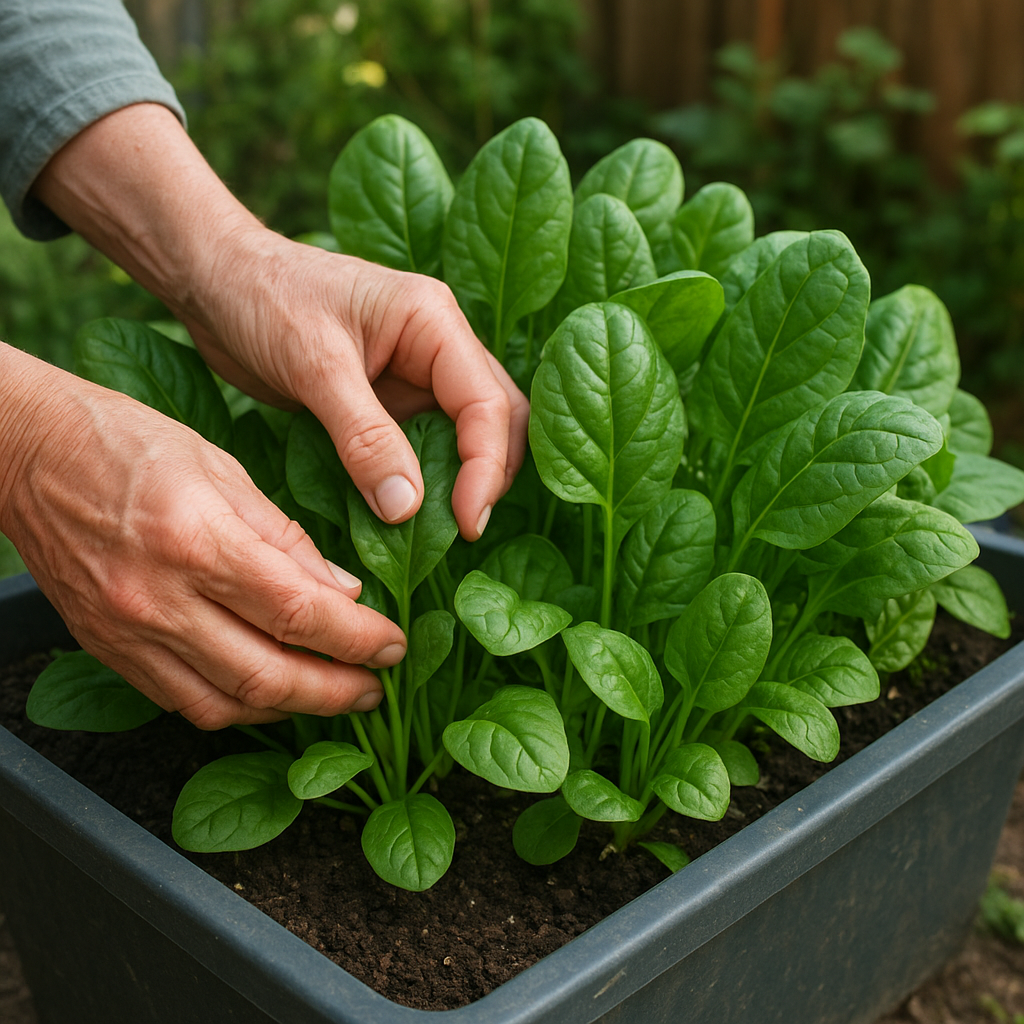
- For baby leaf: snip leaves when they are young and usable
- For larger plants: take outer leaves first and leave the center growing point intact
- Best time to harvest: cool morning hours, before leaves lose firmness
Wash and chill the harvest soon after cutting if you want the best texture. Spinach gets limp faster than people expect when it sits warm.
Common spinach problems in pots and the fastest fixes
Bolting
Bolting is when spinach starts stretching upward and shifting toward flowering. Leaves get smaller, tougher, and less worth harvesting. Warm weather, dry spells, and delayed harvesting all make it more likely.
The best fix is prevention: plant early, use succession sowing, keep moisture steady, and harvest before the plant starts acting like summer has already arrived.
Yellow leaves
Yellowing can come from exhausted potting mix, soggy roots, crowding, or temperature stress. Check moisture first. A pot that stays wet too long can cause just as much trouble as one that dries too hard.
Leaf miner trails and blotches
If you see pale winding trails or blotchy translucent patches inside the leaf tissue, leaf miners are a likely problem. Remove damaged leaves promptly, avoid letting old damaged foliage sit in the container, and keep the planting clean and thinned so problems are easier to spot early.
Aphids on new growth
Spinach can attract aphids, especially in crowded, tender growth. If leaves start curling or feeling sticky, inspect the undersides and the inner growth. This guide on getting rid of common plant pests covers the basic cleanup and inspection habits that help before a small problem spreads.
Dirty, flattened, or rotting leaves
This usually points to crowding, poor airflow, or soil staying too wet at the surface. Thin the planting, water more deliberately, and remove damaged lower leaves instead of letting them linger.
Quick FAQ
Can spinach grow well in shallow pots?
Yes, especially for baby-leaf growing, but a slightly deeper container usually gives steadier moisture and a more forgiving setup.
Does spinach in pots need full sun?
In cool weather, usually yes. As temperatures climb, some afternoon shade often helps the planting last longer.
Why did my spinach bolt so fast?
Usually because the planting started too late, the pot got too hot, the soil dried too much, or the leaves were left unharvested until the plant was already stressed.
Can you keep harvesting spinach after cutting it?
Yes, if you harvest young leaves or take the outer leaves first and leave the center growing. That usually works much better than cutting everything at once.
The short version
Use a wide container with drainage, sow spinach early, keep the pot evenly moist, and harvest before warm weather pushes the planting past its best. That combination prevents most of the usual problems and makes container spinach much more useful than the small, stressed pots people give up on too quickly.