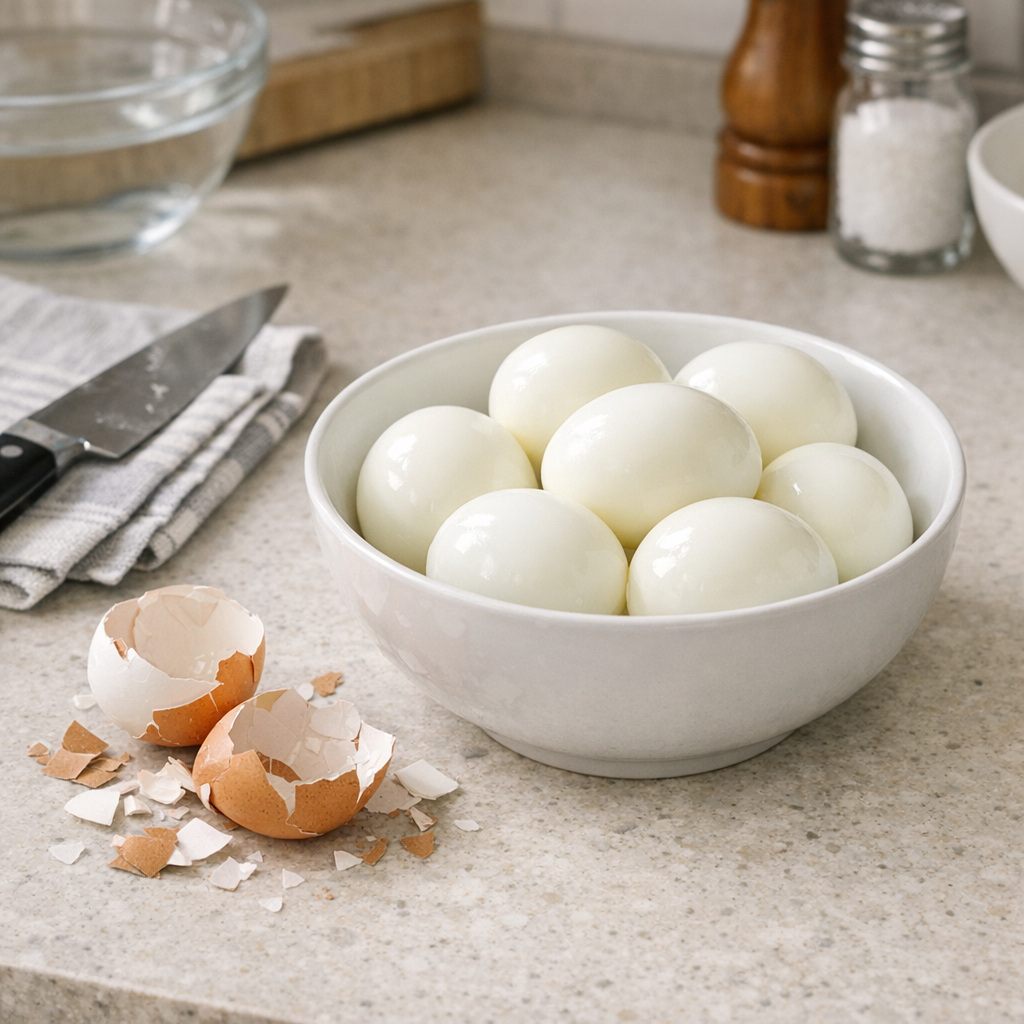
The Reliable Method for Easy-Peel Eggs Without Guesswork
Hard-boiled eggs should be easy. In practice, they often turn into a mess of torn whites, stubborn shells, and yolks with that weird gray-green ring that makes people wonder what went wrong. If your goal is eggs that peel cleanly every time, the method matters more than kitchen folklore.
If peeling is the part that always goes wrong for you, focus on the method instead of random tricks. A boiling-water start, the right timing, and a real ice bath do more than vinegar, baking soda, or luck.
The Best Basic Method
- Bring a pot of water to a gentle boil first.
- Lower the eggs in carefully. Use a spoon so they do not crack on impact.
- Boil for 10 to 12 minutes. Ten usually gives a softer center, twelve gives a firmer yolk.
- Transfer the eggs straight into an ice bath. Let them cool for at least 10 minutes.
- Crack and peel under running water if needed. This helps separate the shell from the white.
If you want the most consistent peeling results, the two biggest levers are starting with boiling water and cooling the eggs quickly in ice water.
Why Eggs Sometimes Peel So Badly
- Very fresh eggs tend to cling more stubbornly to the shell membrane.
- No ice bath means carryover cooking and harder peeling.
- Overcooking can tighten the whites and create that green ring around the yolk.
- Weak cracking leaves you peeling in tiny frustrating flakes instead of larger sections.
This is why random advice like adding vinegar, baking soda, or salt to the water only helps sometimes. The core method matters more than the hacks.
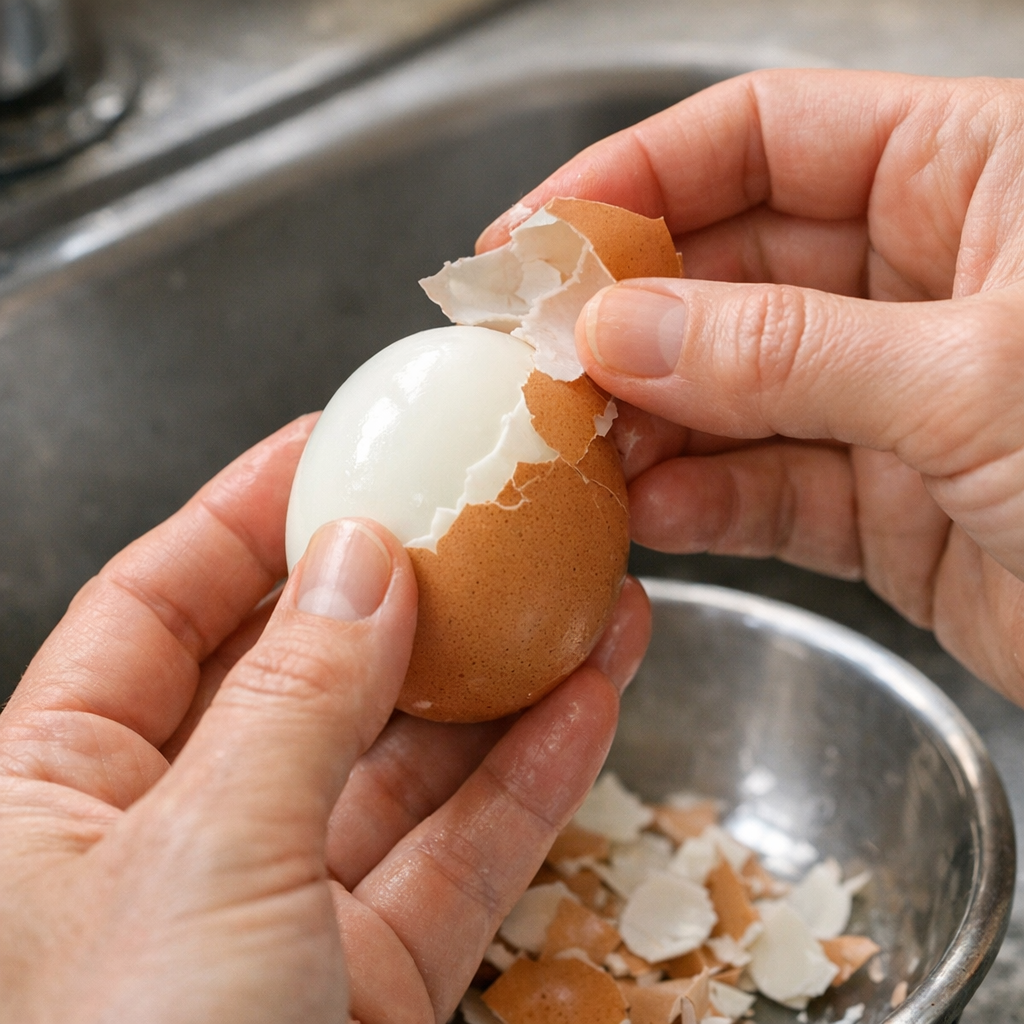
How to Peel Hard-Boiled Eggs More Easily
- Tap both ends of the egg first. There is often an air pocket at the larger end.
- Roll the egg gently on the counter. This cracks more of the shell at once.
- Peel under cool running water. Water slips under the membrane and helps release the shell.
- Start from the wider end if possible. It often lifts more cleanly there.
How Long Should You Boil Eggs?
- 10 minutes: firm whites, slightly softer yolk
- 11 minutes: balanced hard-boiled egg
- 12 minutes: fully set yolk for egg salad or deviled eggs
If you are making eggs specifically for deviled eggs, the slightly firmer side is usually easier to work with.
Should You Use Older Eggs?
Usually yes. Slightly older eggs often peel more cleanly than very fresh ones, which is why many home cooks save the freshest eggs for frying or poaching and use older ones for boiling.
That does not mean old or questionable eggs. It just means eggs that have been in the fridge a little longer are often easier to peel than brand-new ones.
Common Mistakes
Starting eggs in cold water and guessing the timing
This can work, but it adds more inconsistency across different stoves, pans, and egg sizes.
Skipping the ice bath
This is one of the easiest ways to ruin an otherwise good batch.
Overcooking the eggs
That is how you get dry yolks and the sulfur-green ring.
How to Store Hard-Boiled Eggs
Store cooled hard-boiled eggs in the refrigerator. Unpeeled eggs usually hold up better than peeled ones. If you peel them ahead of time, keep them covered so they do not dry out.
FAQ
Do baking soda or vinegar really help?
Sometimes, but they are not magic. The boiling-water start and the ice bath are more reliable than add-ins.
Why are my yolks green around the edge?
That usually means the eggs were cooked too long or cooled too slowly.
Can I make hard-boiled eggs ahead of time?
Yes. They are great for meal prep, quick breakfasts, and packed lunches.
Final Thoughts
If you want hard-boiled eggs that peel cleanly, stop chasing random tricks and use a repeatable method: boiling water first, correct timing, and an immediate ice bath. That gets you closer to consistent results than almost any viral hack.
Once peeling stops being a fight, hard-boiled eggs become a lot more useful for meal prep, quick breakfasts, salads, and deviled eggs. Clean shells make the rest of the job easier.